REVIEW · PARIS
Paris Jewish Heritage: Le Marais & Montmartre Guided Walking Tour
Book on Viator →Operated by Walks In Europe · Bookable on Viator
Jewish Paris clicks into place on foot. This guided route links Le Marais medieval streets to Montmartre’s artist energy, with exterior sights like the Art Nouveau Agoudas Hakehilos synagogue and views of the Mémorial de la Shoah.
I love the small-group feel—it’s easier to ask questions and keep a steady pace. I also love how the guide turns streets like Rue des Rosiers into storylines, not just sightseeing stops.
One catch: synagogue interiors and monument entry are not included, so a lot of the impact is from outside.
In This Review
- Key highlights to look for
- A 3.5-hour route through Jewish Paris, from Le Marais to Montmartre
- Meeting at L’Elephant du Nil and what that means for your afternoon
- Le Marais segment: medieval streets, rebuilt communities, and the Agoudas Hakehilos clue
- The Agoudas Hakehilos synagogue exterior (Art Nouveau in plain sight)
- Why I like this approach (and when it’s not for you)
- The view of the Mémorial de la Shoah: remembrance in a dense Paris pocket
- Rue des Rosiers: the heart of community life, explained street by street
- Montmartre transfer: a short ride that breaks the emotional intensity
- Montmartre’s Jewish arts chapter: cafés, studios, and the shadow of rising antisemitism
- Sacré-Cœur steps to Square Louise-Michel: ending with a view and a new lens
- Guides and pace: what changes the experience the most
- Price and value: what $102.12 gets you (and what it doesn’t)
- Who should book this tour?
- Should you book Paris Jewish Heritage: Le Marais & Montmartre?
- FAQ
- FAQ
- How long is the tour?
- What time does it start and where does it end?
- Where is the meeting point?
- Is the tour in English?
- Are synagogue interiors included?
- Do you enter the Holocaust Memorial?
- Is public transport included?
- What is the cancellation policy?
Key highlights to look for
- Small-group format (max 12) that keeps the tour flexible
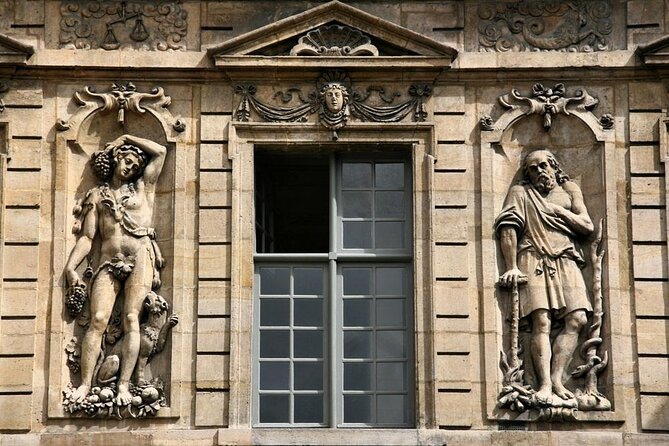
- Agoudas Hakehilos exterior by Hector Guimard, an Art Nouveau synagogue design
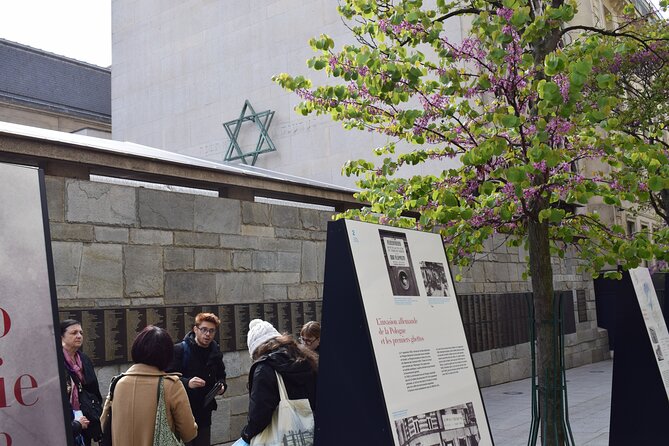
- Mémorial de la Shoah exterior view, tied to occupation, resistance, and remembrance
- Rue des Rosiers focus, so you learn the why behind the bakeries and shops
- Montmartre’s Jewish arts chapter, with names like Modigliani, Chagall, and Max Jacob
- Sacré-Cœur finish at Square Louise-Michel with a strong sense of perspective
A 3.5-hour route through Jewish Paris, from Le Marais to Montmartre
This is the kind of Paris tour that makes the city feel like a living archive. You start with the Jewish quarter energy of Le Marais, then move uphill—literally and emotionally—toward Montmartre’s artistic world. The timing works well if you want one focused afternoon without exhausting yourself into “museum blur.”
The day runs about 3 hours 30 minutes, starting at 2:30 pm. Expect a real walking pace in the streets, plus a short public transport transfer between districts. You’ll also get an English-speaking guide and a group size that stays small, with a stated maximum of 12 (and the experience is designed to stay interactive for groups up to 9).
You can also read our reviews of more walking tours in Paris



Meeting at L’Elephant du Nil and what that means for your afternoon
Your tour begins at L’Elephant du Nil, 125 Rue Saint-Antoine in the 4th arrondissement. That meeting point is handy because you’re already in the middle of the historical action in Le Marais. It also means you can arrive, check the vibe, then settle in before you start walking narrow streets.
Do yourself a favor and arrive 5 to 10 minutes early. The tour has a firm start time, and it’s not possible to join once it has begun. If you’re using public transit, this is one of those tours where being early helps you avoid the stress spiral—especially because the first stretch is mostly outside.
Le Marais segment: medieval streets, rebuilt communities, and the Agoudas Hakehilos clue
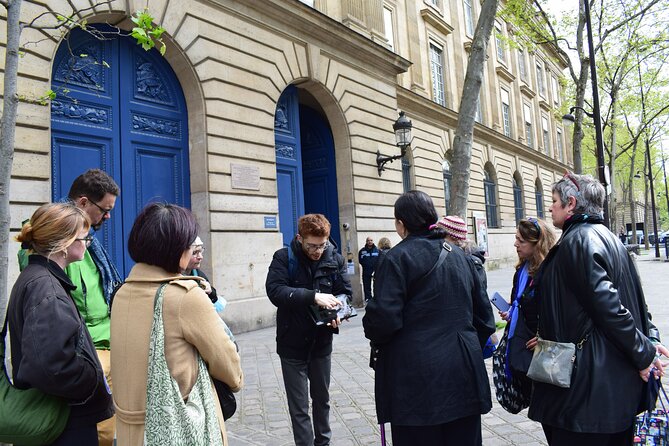
The Le Marais portion lasts about 1 hour, and it sets the tone fast: this area wasn’t just “Jewish history.” It was daily life—businesses, religious institutions, cafés, and the rhythms of community.
You’ll walk through the streets that once formed the medieval Jewish enclave, and your guide frames what you see in a bigger story: centuries of presence, wartime destruction, and the long work of rebuilding identity and community institutions afterward. The payoff is that you start to notice how the neighborhood’s layout and architecture can carry memory, even when the original buildings are gone.
The Agoudas Hakehilos synagogue exterior (Art Nouveau in plain sight)
One of the most specific stops is the exterior of the Agoudas Hakehilos Synagogue. This matters because it’s not a generic “synagogue looks like a synagogue” moment. You’re looking at a rare example of Art Nouveau synagogue architecture associated with Hector Guimard.
Even without going inside, the exterior connection helps you understand a key point the guide emphasizes: waves of Eastern European Jewish immigration in the late 19th and early 20th centuries changed this part of Paris. New institutions, schools, and cultural patterns grew out of that change. So you’re not only looking at a building—you’re learning what kind of community it represents.
Why I like this approach (and when it’s not for you)
This style is great if you want context without sprinting from one ticket booth to another. But if you strongly prefer interior visits, know this tour is built around exterior viewing. That includes synagogues and entry to historic sites. You’ll still learn, but your access is limited.
A few voices in the mix felt the route was a bit scattered because some of the surviving Jewish places are limited in number, and the stops stayed exterior. If that sounds like your style, you might pair this tour with another activity that includes museum time or interior synagogue access.
You can also read our reviews of more guided tours in Paris






The view of the Mémorial de la Shoah: remembrance in a dense Paris pocket
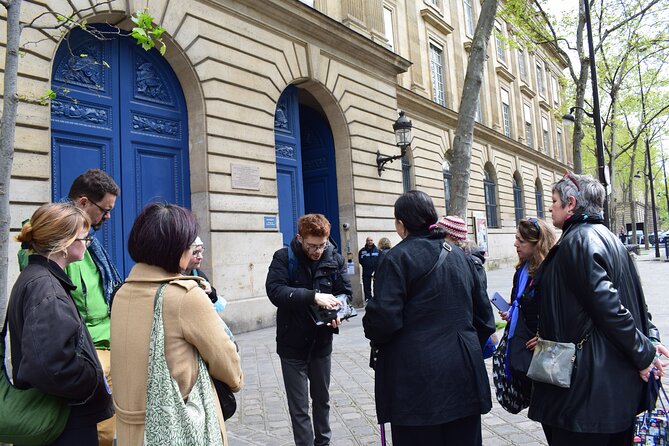
After walking deeper into the Marais, you’ll reach a stop where the Mémorial de la Shoah is seen from the exterior. This is one of those moments where your guide’s framing makes the difference between a “sad monument” photo and a deeper understanding of why it’s there.
Expect the guide to connect the memorial to the broader historical context of occupation, resistance, and remembrance—and how these chapters continue to shape Jewish identity and memory in Paris. Even from outside, the memorial’s placement in the city is part of the story. You’re seeing it from inside the modern street grid, not from an isolated museum bubble.
This part can land hard. The tour keeps a respectful tone and treats the subject with care. If you’re traveling with kids, you might want to prepare them for a serious stop; one guide-led experience in the notes was described as suitable for families, but this is still heavy material.
Rue des Rosiers: the heart of community life, explained street by street
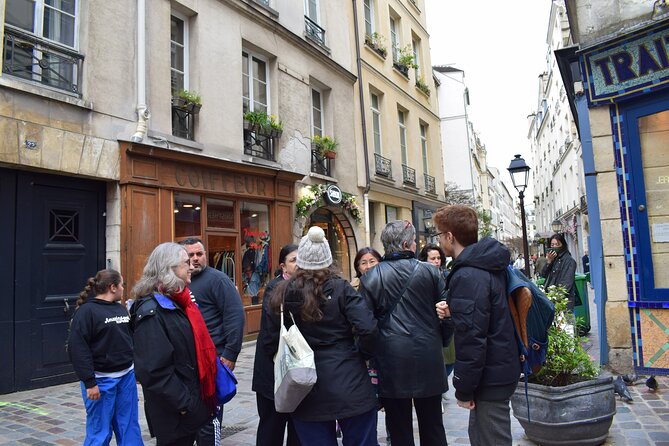
Next you’ll continue along Rue des Rosiers, which is historically tied to Jewish commercial and community life in Le Marais. Here’s the practical beauty of the tour: instead of treating the street as a grab-and-go snack strip, your guide explains how the area formed, shifted, and rebuilt across the 20th century.
You’ll see the kind of storefronts you’d expect—bakeries, delis, specialty shops—and you’ll understand why they’re there beyond modern-day tourism. The street becomes a timeline you can walk.
Food shows up in a few of the most positive guide stories. One experience noted a taste stop that included falafel from L’As du Falafel, and another mentioned falafel balls as a little bonus. That kind of moment is worth paying attention to because it makes the history feel human: community food, not just community plaques.
Montmartre transfer: a short ride that breaks the emotional intensity
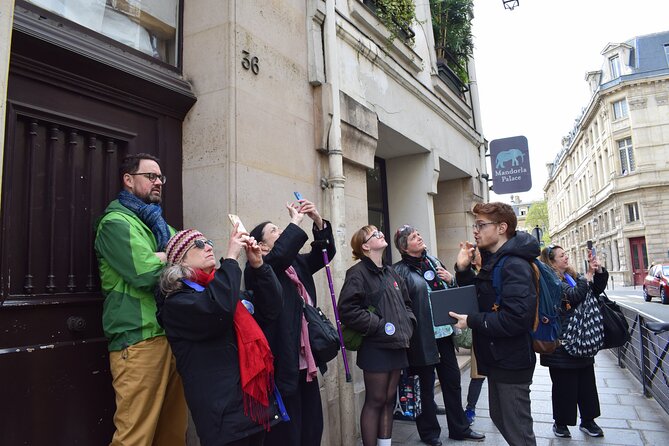
After the Marais segment ends near Hôtel de Ville, you move to Montmartre using a short public transport journey. Tickets are included, which is a relief in Paris—this isn’t the time you want to be wrestling for the right métro line while you’re already carrying emotional context.
The transfer also gives you a mental reset. Montmartre feels like another Paris. The streets are steep. The atmosphere changes. And that shift matters because the tour’s message relies on contrast.
Montmartre’s Jewish arts chapter: cafés, studios, and the shadow of rising antisemitism
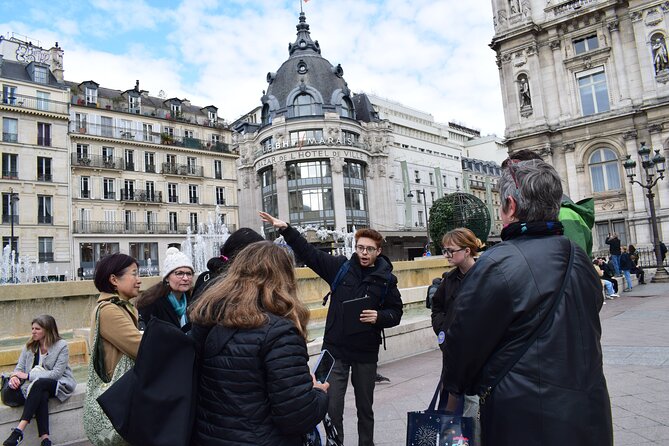
The Montmartre portion runs about 1 hour 30 minutes, and it’s where the tour shows a different face of Jewish life in Paris. This is the artistic chapter—an era when immigrant artists, writers, and musicians found community in cafés, studios, and literary circles.
Your guide connects names that many people recognize from art history and literature. You’ll hear about Amedeo Modigliani, Max Jacob, and Marc Chagall. The point isn’t to turn the route into a lecture on famous people; it’s to show why Montmartre drew them and what community looked like on the ground.
Then the guide adds the crucial edge: this creativity unfolded as Europe faced rising nationalism, antisemitism, and political uncertainty. Many of the figures connected to Montmartre later faced exile, persecution, or rupture during the Second World War. So you’re watching two realities at once: ambition and experimentation in daily life, and the dark pressure closing in over time.
I like this structure because it avoids a museum-only mindset. You’re learning how a neighborhood can generate art and community, even while history threatens that same community.
Sacré-Cœur steps to Square Louise-Michel: ending with a view and a new lens
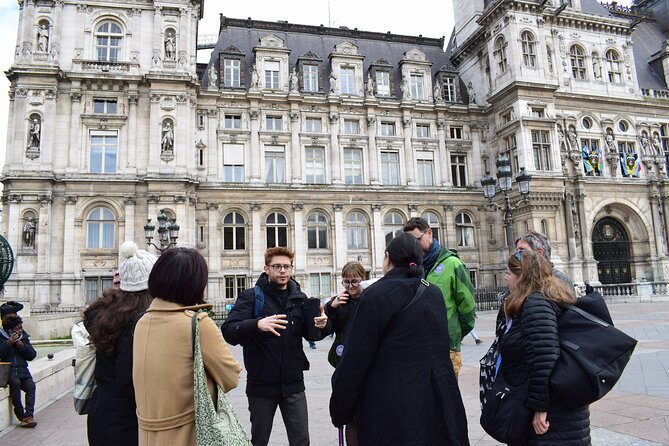
The tour closes at the Sacré-Cœur Basilica steps, one of the iconic viewpoint moments in Paris. Expect a short finish—about 15 minutes—at Square Louise-Michel.
This ending works because it gives you time to look outward after being guided through layered identity, memory, and cultural change. You’re not just seeing a postcard skyline. You’re seeing it after learning how different parts of Paris contributed to Jewish resilience, creativity, and survival.
If you’ve got energy left, linger a bit near Sacré-Cœur. The tour ends with a renewed appreciation of the layers you’ve just walked through, and that kind of “pause time” helps it stick.
Guides and pace: what changes the experience the most
The tour’s biggest strength isn’t the monuments. It’s the way the guide connects dots between architecture, streets, and history—and keeps the pace right for a walking tour.
Several guide names came up in the notes, including Thomas, Benjamin, Adrian, Boniet, and Pierre Louis (also referenced as PL / Benoit). The common thread: strong storytelling and the ability to answer questions. In one standout case, Benjamin was praised for contextual history that went beyond just local details and for handling sensitive topics with care.
That said, this kind of walking tour has one weak spot: if the guide’s English isn’t clear enough for you, you can lose the thread. One experience called out that English was difficult to follow and that the focus felt too heavy on the Shoah compared with the Marais Jewish focus. Another noted that one route felt more like long speeches than a true walking tour in the streets.
So how do you protect yourself? At the start, ask a question in your first minute like: What’s the most important thing to notice at Rue des Rosiers today? If the guide can answer clearly and point things out, you’re set.
Price and value: what $102.12 gets you (and what it doesn’t)
At $102.12 per person, this is not a bargain-basement tour. You’re paying for a live guide, a small-group format, and the structure that keeps you from guessing where to go and what you’re looking at.
Here’s the value math that matters:
- You get an expert local guide and an organized route across two major neighborhoods.
- Public transport tickets are included for the transfer.
- You’re looking at key Jewish heritage stops, including the Agoudas Hakehilos exterior and a Mémorial de la Shoah exterior view.
What’s not included is also part of the value decision:
- No interior visits to synagogues.
- No entry to monuments & historical sites.
If you want entry tickets and indoor time, plan other add-ons. If you want a guided “walk the city and understand it” experience, the price starts to make sense—especially with the small-group size and the fact you’re covering Le Marais plus Montmartre in one afternoon.
Who should book this tour?
This tour fits best if you:
- Want a focused, guided route through Jewish heritage in Paris without hopping from one museum to another.
- Enjoy walking and want the story tied directly to streets and buildings.
- Like the contrast of Le Marais tradition versus Montmartre artistic reinvention.
- Appreciate sensitive historical context handled with care.
It may not fit as well if you:
- Expect synagogue or memorial interiors. This one keeps those parts outside.
- Prefer very fact-heavy instruction with lots of “how people lived” details rather than interpretive storytelling.
- Need extremely clear English in order to enjoy the tour (because guide language can make or break your experience).
Should you book Paris Jewish Heritage: Le Marais & Montmartre?
If your goal is to understand how Jewish Paris isn’t just one story, but several overlapping ones, I think you’ll enjoy this. The structure—Le Marais’s community life, then Montmartre’s artistic chapter, then Sacré-Cœur’s view—gives your brain a shape to hold the history.
I’d book it if you want:
- a small-group afternoon,
- exterior stops that still feel meaningful,
- and a guide who can connect architecture to identity and memory.
Skip it (or pair it) if you specifically want indoor access or monument entry, or if you’re traveling with a strong preference for a purely “everyday life” route with fewer historical framing moments.
FAQ
FAQ
How long is the tour?
It runs about 3 hours 30 minutes.
What time does it start and where does it end?
It starts at 2:30 pm and ends at Square Louise Michel.
Where is the meeting point?
The meeting point is L’Elephant du Nil, 125 Rue Saint-Antoine, 75004 Paris.
Is the tour in English?
Yes, it is offered in English.
Are synagogue interiors included?
No. The tour includes exterior views, not indoor synagogue visits.
Do you enter the Holocaust Memorial?
No. You see the Mémorial de la Shoah from the exterior, and monument entry is not included.
Is public transport included?
Yes. You take a short public transfer between districts, and public transport tickets are included.
What is the cancellation policy?
Free cancellation is available up to 24 hours in advance for a full refund. Changes within 24 hours of the start aren’t accepted.