REVIEW · PARIS
Paris: Discovery Hop-On Hop-Off and Paris by Night Tour
Book on GetYourGuide →Operated by Tootbus · Bookable on GetYourGuide
Paris lights up best from a bus deck. I like that this combo gives you control over your day—hop off, walk, hop back on—while still covering the major postcard stops.
I also really value the 2-hour night tour, because it’s a simple way to see Paris lit up without trying to time multiple stops yourself. The top-deck viewpoints make the whole ride feel like a guided show.
One thing to watch: daytime can feel slower than you expect, since traffic and stop durations can eat into your touring time, and the audio narration is a mixed bag depending on the version you’re listening to.
In This Review
- Key things I’d prioritize
- Why Hop-On Hop-Off Works So Well for Paris
- The Day Route Starting at Bd des Capucines (Opéra/Grands Magasins)
- Haussmann Highlights You Can Sample Without Booking Everything
- Louvre to Notre-Dame: The Icon Chain You Can Walk Between
- Orsay, Concorde, and Champs-Élysées: Big Names Plus Good Exit Points
- Eiffel Tower and the Seine: Where the View Becomes the Point
- Trocadéro and Night Setup: How to Position Yourself
- The 2-Hour Night Tour: Illuminated Paris Without the Planning Tax
- Audio Guides, Earphones, and Kids Commentary
- Timing That Actually Works: Service Hours and How to Avoid Wasted Time
- Price and Value: Getting $65 to Go Far
- Best Fit: Who This Tour Is For
- Should You Book This Paris Day-and-Night Bus Combo?
- FAQ
- Where does the hop-on hop-off day tour start?
- Where does the night tour depart from?
- How long is the night tour?
- What languages are available for the audio guide?
- How often do buses run?
- How long is the day pass valid?
Key things I’d prioritize
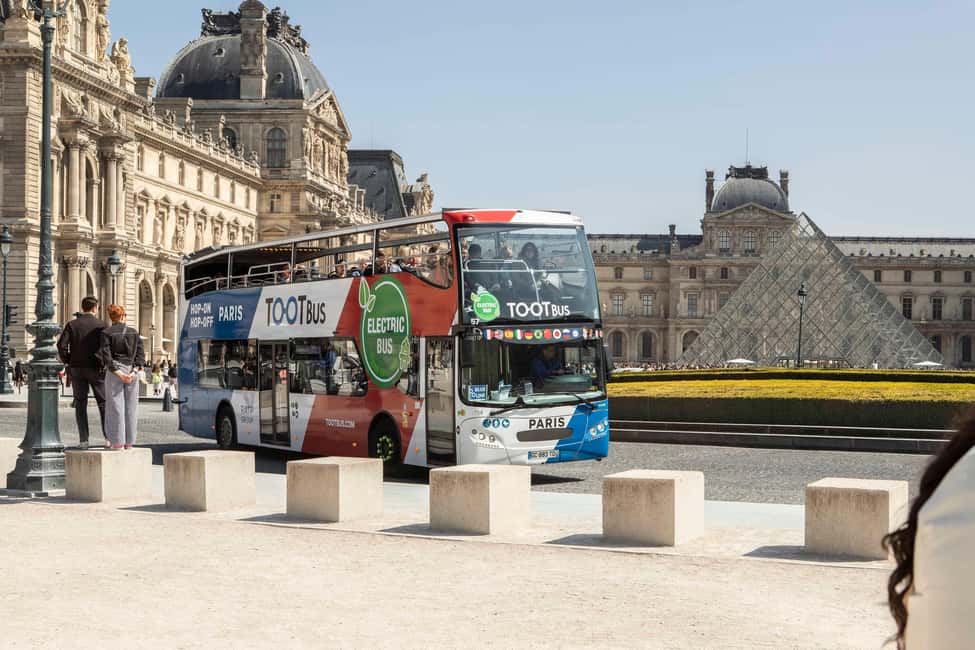
- Unlimited hop-on hop-off stops for building your own Paris route
- A focused 2-hour night loop designed for illuminated landmarks
- Audio guide with individual earphones in 10 languages, plus children’s audio in English and French
- Mobile app bus tracking so you can spend less time guessing when the next bus arrives
- Paired walking tours (including Around the Eiffel Tower, Emily, Fashion, and Montmartre) to turn bus stops into real neighborhood time
Why Hop-On Hop-Off Works So Well for Paris
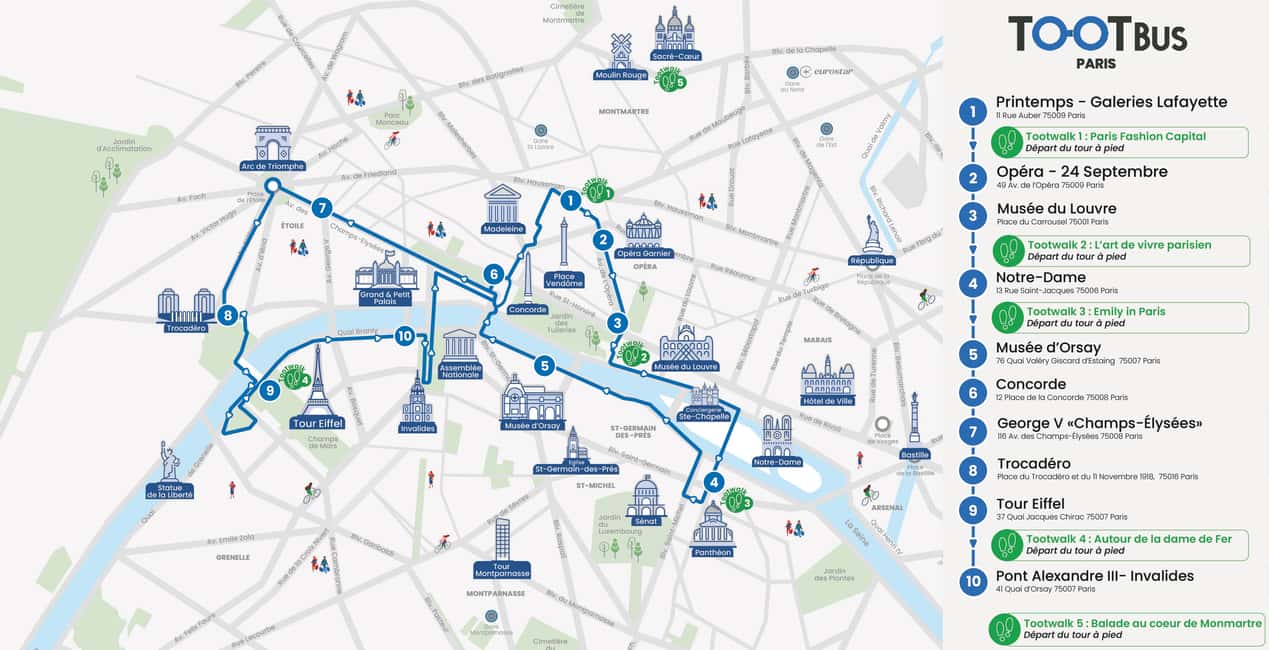
Paris is huge, but the must-sees are clustered enough that a bus loop can do real work for you. This pass lets you see the city’s big landmarks while you decide how much to walk—no rigid group pace, no sprinting between museums.
The practical win is that you’re not locked into one “best route.” You can use the day buses to stitch together neighborhoods like the Latin Quarter, the Marais area (via its general region), or the peaceful Île Saint-Louis area, then switch gears at night for the illuminated highlights.
The downside of any hop-on system in a city like Paris is timing. If you’re trying to cram in many stops back-to-back, the experience can feel more like a long loop than a fast checklist. Go in with a plan that includes downtime for walking and you’ll enjoy it more.
You can also read our reviews of more evening experiences in Paris



The Day Route Starting at Bd des Capucines (Opéra/Grands Magasins)
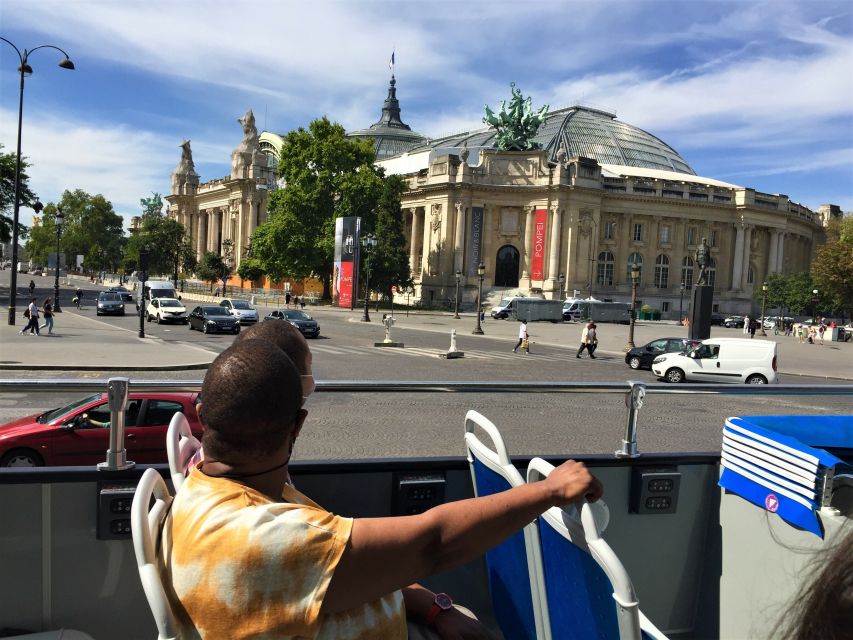
Your day begins at 23 Bd des Capucines (Opéra – Grands Magasins), which is a smart choice. You start near the classic Haussmann core, close to major shopping streets and the grand theaters—so early on you get a sense of what makes central Paris look like it does in photos.
From there, you pass by some of the city’s most famous architecture from the window seat. You’ll catch views of Printemps Haussmann and Galeries Lafayette, then cruise toward Palais Garnier. Even if you never step inside, these streetscape passes can help you orient quickly.
If you love walking, this is also a good stretch to exit the bus and do short, easy loops. You can treat the bus like a taxi for sightlines and get your steps in where you choose.
Haussmann Highlights You Can Sample Without Booking Everything
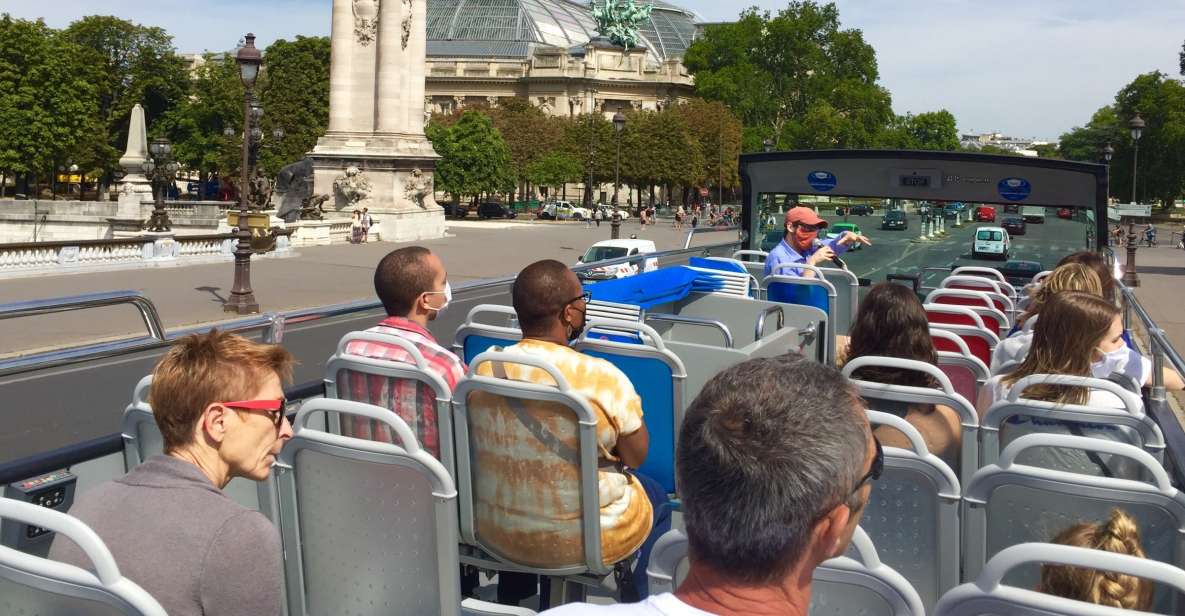
The Haussmann section matters because it’s where Paris feels most intentionally designed. Passing Printemps Haussmann, Galeries Lafayette, and Palais Garnier gives you those grand facades and sweeping boulevards without requiring a museum plan.
If you do want to go inside, you can build that choice around your interests and energy. But even without tickets, the daytime ride acts like a guided walk-through—just from a moving vantage point.
One practical caution: if your schedule is tight, don’t assume you’ll zip from stop to stop. The attraction here is that you can stop when you want, but the street grid and congestion can still slow things down.
Louvre to Notre-Dame: The Icon Chain You Can Walk Between
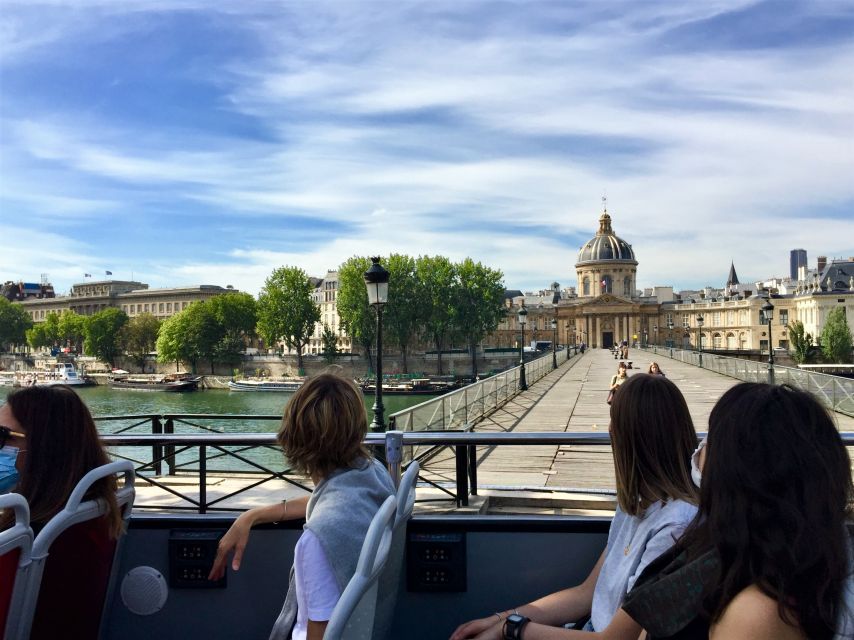
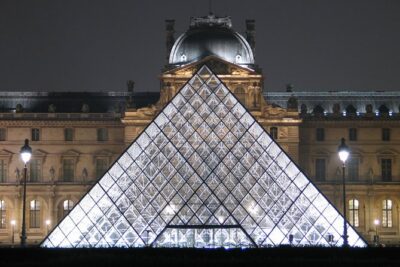
The route then takes you to Musée du Louvre at Place du Carrousel (with a note that it was temporarily relocated to near Comédie-Française, on 3 Avenue de l’Opéra until further notice). Because of that relocation note, I’d keep an eye on what your voucher indicates for the exact stop area.
Next up is Notre-Dame, with the stop at 13 Rue Saint-Jacques. This is a key moment in the day: you get an easy panoramic buffer before you decide how close you want to get on foot. The bus keeps you moving, but you still have the option to slow down.
After that, the itinerary threads into the Latin Quarter and toward the Seine museums zone. This part of the loop is valuable because you can do “short immersion.” You hop off near the sights, walk a bit, then hop back on if you want to keep the momentum.
Orsay, Concorde, and Champs-Élysées: Big Names Plus Good Exit Points
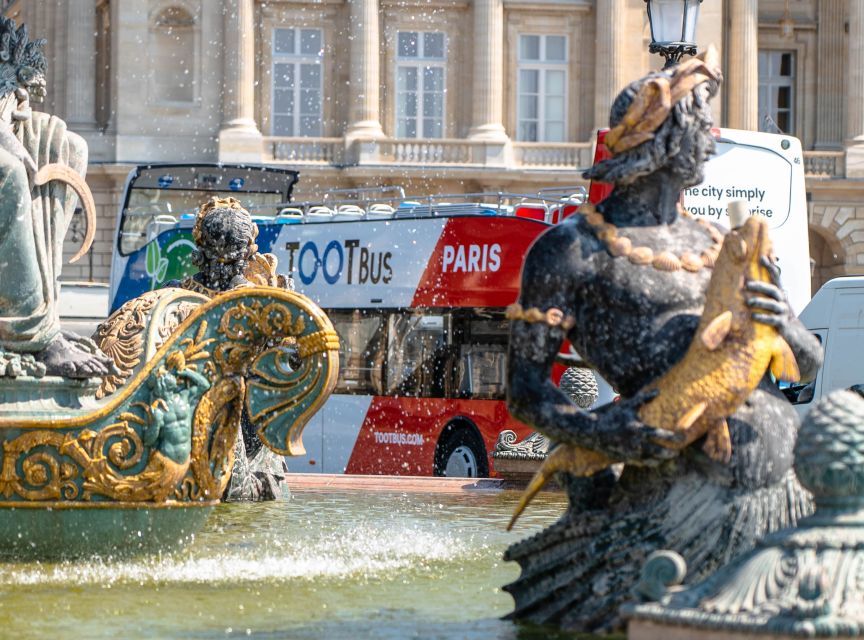
A major stop is Musée d’Orsay at 76 Quai Valéry Giscard d’Estaing. Orsay is a destination on its own, but what I like here is that the stop also places you perfectly for browsing the riverfront vibe—again, without committing to one long museum day.
From there, you head toward Place de la Concorde, with the stop at 12 Place de la Concorde. Concorde is a major visual anchor in Paris, and this is one of those locations where a bus window can give you a clean sense of scale—wide streets, big monuments, and that classic Paris geometry.
Then the route reaches Champs-Élysées, with the stop listed at 135 Avenue des Champs-Elysées. This is the kind of stretch you either love or find a bit too commercial. Either way, riding through it helps you decide if you want to get out and walk, or just enjoy the view and continue.
There’s also a Paris Lido pass-by on the route. That’s useful if you’re planning a show—at minimum, you’ll know where it sits in relation to the rest of the sights.





Eiffel Tower and the Seine: Where the View Becomes the Point
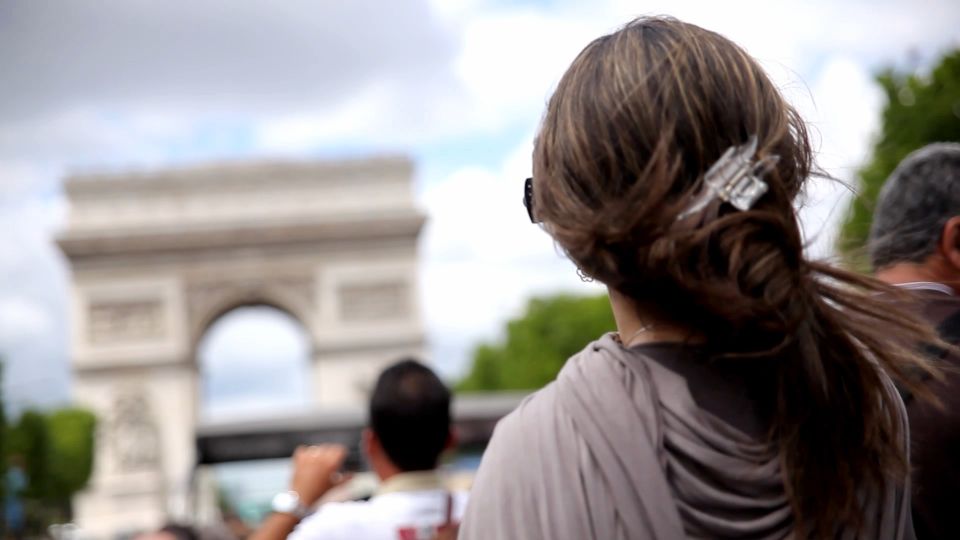
The Eiffel Tower stop is listed at 69 Quai Jacques Chirac. This is usually where the day tour turns from transport into something closer to a sightseeing moment. Even if you don’t go up, the approach and surrounding streets are part of the magic.
The route also includes Pont Alexandre III, plus a pass toward Les Invalides (stop listed at 41 Quai d’Orsay – Invalides). This cluster is great for two reasons:
1) it keeps you in central sightline territory, and
2) it helps you build a day that ends with scenery rather than just more street signage.
In the highlights, you’ll also see mention of walking tours like Around the Eiffel Tower and Montmartre. That’s a smart pairing idea: use the bus to get close, then switch to walking for the real Paris feel—small streets, viewpoints, and little detours.
Trocadéro and Night Setup: How to Position Yourself
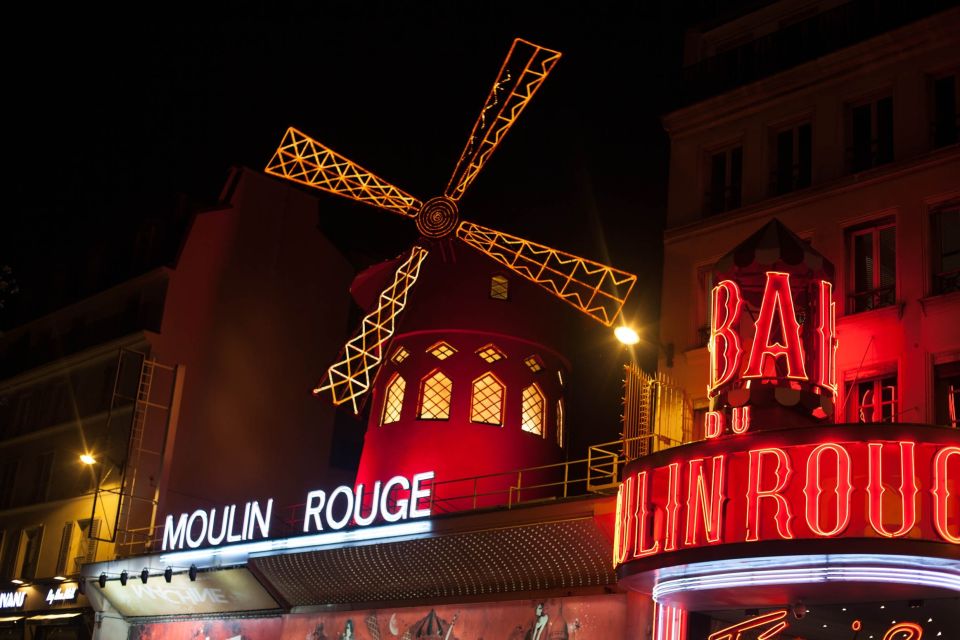
Your day route includes Trocadéro (stop listed at 1 Place du Trocadéro). If your goal is the Eiffel Tower view, Trocadéro is one of the places you’ll want on your list. Even from the bus, it helps you connect the Eiffel look with the wider river and bridge lines.
For the night portion, you’ll want to think ahead. The night tour departs from Place du Carrousel du Louvre (75001), listed as stop 2, and you should be at the meeting point 20 minutes before departure.
I like using that overlap to reduce stress. During the day, you’ll already have a feel for where Louvre sits. At night, you’re not trying to hunt for a meeting location across a distracted evening schedule.
The 2-Hour Night Tour: Illuminated Paris Without the Planning Tax
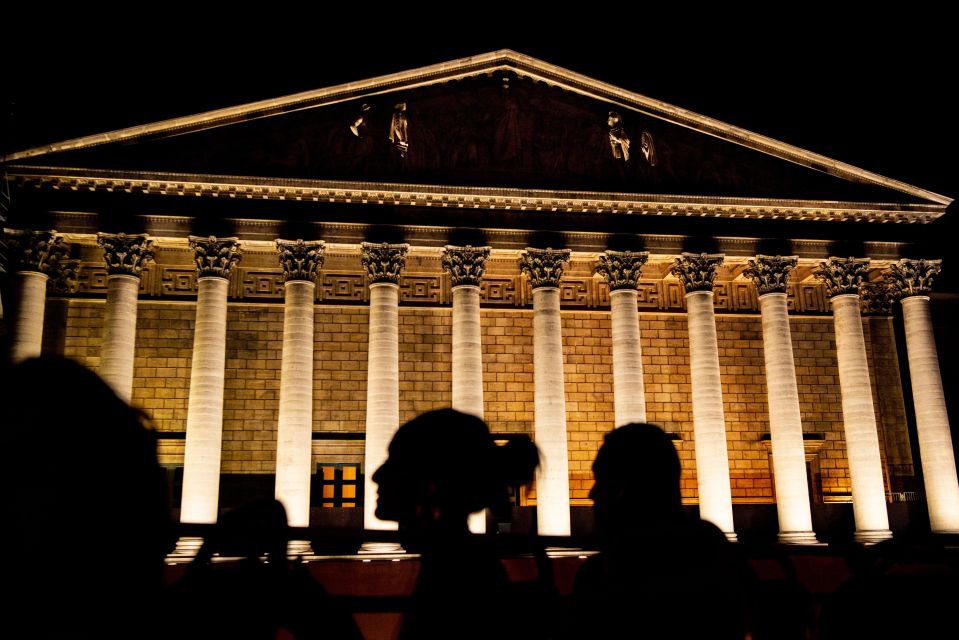
The night tour is a straightforward idea done well: a 2-hour open-top bus ride past the top landmarks, all lit up. The big value here is that you get night views in one chunk, with a route designed for the city’s best nighttime “wow” moments.
Because it’s open-top, your viewing experience depends on conditions, but in general this format gives you a better perspective than being stuck inside. You’re also working off a guided pacing system: you see where you’re going next without needing to coordinate transit and street crossings.
One thing to know from the way the narration is described: the audio can skew more playful than historical on some versions, and some people have found the comedy-style bits repetitive—especially when comparing day and night recordings. If you’re the type who wants lots of facts, you might prefer treating the narration as background and focusing on the landmarks themselves.
Audio Guides, Earphones, and Kids Commentary
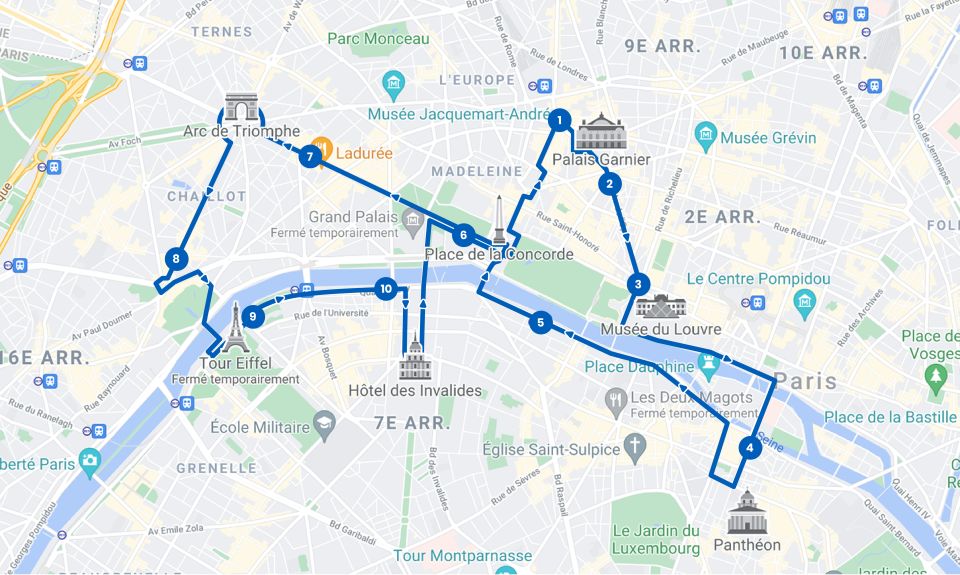
The audio guide system includes individual earphones, and the adult narration is available in 10 languages: Spanish, Chinese, English, French, German, Italian, Japanese, Arabic, Portuguese, and Russian.
If you’re traveling with children, there’s also kids commentary in English and French. That matters because a bus tour can otherwise become a long sit for younger travelers. The idea here is to keep them engaged while you keep moving.
A small practical note: even when the content is enjoyable, music or the style of the narration may not match everyone’s taste. Some people have said they’d prefer different background music for the audio guides, so think of the audio as helpful context rather than the main event.
Timing That Actually Works: Service Hours and How to Avoid Wasted Time
Your bus schedule depends on the season, and the tour info lists approximate service hours and frequency. Here’s how to interpret it:
- Late Oct to late March (27 Oct 2025 to 29 Mar 2026): first departure 9:30 AM, last 5:00 PM (from stop 1), with buses about every 10–15 minutes.
- Spring to early summer (30 Mar 2026 to 28 Jun 2026): first 9:30 AM, last 6:30 PM, and buses about every 10–15 minutes.
- Late June to late September (29 Jun 2026 to 27 Sep 2026): first 9:30 AM, last 7:00 PM, and buses more frequent, about every 7–10 minutes.
This matters because it changes how many hop cycles you can realistically fit into one day. If you want multiple museum stops plus neighborhood walking, I’d plan fewer bus hops and longer on-foot breaks. If you’re just doing landmark snapshots, you can use the loop more aggressively.
Also, use the tool they give you: there’s a mobile app with a where is my bus feature. That’s one of the best ways to reduce friction. Instead of watching the street all day, you check live tracking and time your hop-ons with less guesswork.
Price and Value: Getting $65 to Go Far
The price is listed as $65 per person, and the value comes from the structure: you get the hop-on hop-off day pass plus the 2-hour night tour, along with the audio guide and earphones.
For many people, that’s the sweet spot. You’re not paying only for sightseeing from a seat. You’re paying for flexibility during the day and a curated nighttime loop in the evening.
To judge whether it’s worth it for you, I’d ask one question: do you want to be efficient without building a complex itinerary? If you’re the kind of traveler who wants a few big landmarks plus time to wander neighborhoods, this format usually pays off. If you’re strictly museum-focused and already have a tight plan with minimal riding, you might find you’re buying a lot of bus time you won’t use.
From the feedback patterns, the night tour seems to be the part that most often lands as a standout value—people feel it’s organized and easy to manage, and the timing helps you get the Eiffel-area views in the right window.
Best Fit: Who This Tour Is For
This is a good match if you:
- want a fast way to get bearings across central Paris,
- prefer choosing walk breaks on your own schedule,
- like seeing landmarks from multiple angles (day light versus night lighting),
- are traveling with kids and want narration that’s built for them.
It’s less ideal if you hate being on buses for long stretches or if you want a very detailed, fact-heavy guided experience for every stop. The audio guide is included, but the narration style may not satisfy everyone.
Should You Book This Paris Day-and-Night Bus Combo?
I’d book it if you want an easy, flexible Paris plan that covers the major sights without forcing a strict schedule. The combination of unlimited hop-on hop-off stops and a dedicated 2-hour illuminated night route is a practical way to see a lot while still having room to wander.
I’d be cautious if your day plan is packed enough that you’ll feel frustrated by traffic and stop durations. In that case, consider using fewer hop-offs, treating the bus as an orientation tool, and saving your deeper time for just one or two neighborhoods.
If you do book, do one simple thing that can save your evening: double-check the night departure meeting point at Place du Carrousel du Louvre and plan to arrive 20 minutes early.
FAQ
Where does the hop-on hop-off day tour start?
The day tour start point is 23 Bd des Capucines (75002 Paris).
Where does the night tour depart from?
The night tour departs from Place du Carrousel du Louvre (75001 Paris). The listed stop is stop 2.
How long is the night tour?
The night tour is 2 hours.
What languages are available for the audio guide?
The audio guide is available in Spanish, Chinese, English, French, German, Italian, Japanese, Arabic, Portuguese, and Russian. Children’s audio is in English and French.
How often do buses run?
Buses run approximately every 10–15 minutes in most seasons, and about every 7–10 minutes during 29 June 2026 to 27 September 2026.
How long is the day pass valid?
The ticket is valid for 1–3 days, depending on the starting time you choose and availability.