REVIEW · PARIS
Macaron Baking Class – near Eiffel Tower
Book on Viator →Operated by Aten-Te Aute · Bookable on Viator
You can smell success before the timer even starts. In a small Paris apartment class near the Eiffel Tower, you learn French macaron technique step by step.
I especially like the hands-on format (you’re not just watching), and I love the chef storytelling that links the process to the treat’s background. One note: at $162.56, it’s a pricier souvenir than a box of macarons, so it’s best if you want the actual skill, not just a sweet photo moment.
Key Points at a Glance
- Max six people keeps it calm, conversational, and easier to get help on tricky steps.
- Chef-led history + technique: you start with mise en place, then learn what makes macarons macarons.
- Ganache filling included: the class isn’t only about shells.
- In English, with mobile ticket: straightforward for visitors, with easy-to-handle check-in.
- After baking, you get fizz and a chance to chat with your tiny group.
- Recipes via QR code: handy if you want to repeat results back home.
In This Review
- A Macaron Class Near the Eiffel Tower That Feels Like a Home Lesson
- What Happens During the 90 Minutes (Step by Step)
- 1) Mise en place: setting up so you don’t panic later
- 2) Mixing macaron batter: where most people need guidance
- 3) Ganache: making the filling part of the story
- 4) The finish: tasting and a glass of fizz
- Why the Max-Six Group Size Is the Real Value
- The Macaron Nerd Stuff You’ll Actually Use at Home
- Learn the origin and identity of macarons
- You’ll learn what separates macarons from biscuits
- Color and customization (with limits)
- Recipes you can keep
- Price and Value: Is $162.56 Worth It?
- Logistics That Make This Class Easy to Fit Into a Paris Day
- Who This Macaron Class Is Best For
- Tips to Get the Most Out of Your Shells and Ganache
- Should You Book This Macaron Baking Class?
- FAQ
- FAQ
- How long is the macaron baking class near the Eiffel Tower?
- How big is the group?
- Is the class taught in English?
- What’s included in the price?
- Can I take photos or videos during the class?
- Will I be making both macarons and filling?
- Where do I meet the class?
- Do non-participating companions cost extra?
- What if I need to cancel?
- Do they provide recipes after the class?
A Macaron Class Near the Eiffel Tower That Feels Like a Home Lesson
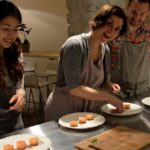
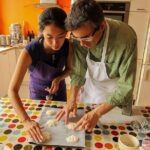
Paris has a thousand ways to eat macarons. This class gives you something better: the method. It takes place in a private Paris apartment near the Eiffel Tower area, so you trade crowds for a real kitchen feel. You’ll work with simple tools and an approach that’s meant to work in a regular home oven too, which is what makes this more useful than a quick demo.
The structure is also designed to keep your brain relaxed. You start with mise en place, then move from the basics to ganache, with the chef connecting the dots along the way. Expect an English lesson that walks you through both the how and the why, so you can make sense of what you’re doing—not just follow instructions.
What Happens During the 90 Minutes (Step by Step)
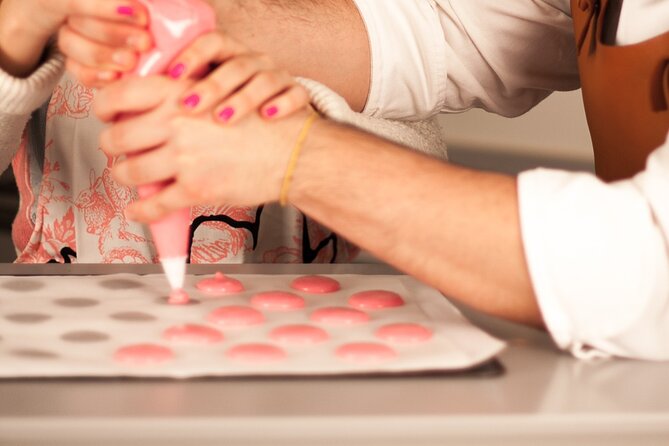
The class runs about 1 hour 30 minutes. That’s long enough to do real work, not long enough to feel like a school day. Here’s the flow you can expect.
You can also read our reviews of more cooking classes in Paris
1) Mise en place: setting up so you don’t panic later
It starts where good baking starts: mise en place. The chef organizes the ingredients and you prep your station. Reviews often point to ingredients being staged and ready, which helps a lot when you’re learning a technique where timing matters.
In a macaron class, the setup isn’t boring—it’s the difference between smooth batter and rushed batter. You’ll also use a borrowed apron and have tools/ingredients provided, so you’re not hunting for specialty items before you ever arrive.
2) Mixing macaron batter: where most people need guidance
You’ll learn the process for making the macaron shells. The key idea the chef emphasizes is that macarons are their own category, not a generic cookie. Even if you’ve never baked before, you’ll get taught the difference between a macaron and a biscuit, which is a helpful mental reset.
This is where the group size matters. With only up to six people, you’re more likely to get quick feedback rather than wait for the chef to cycle back.
3) Ganache: making the filling part of the story
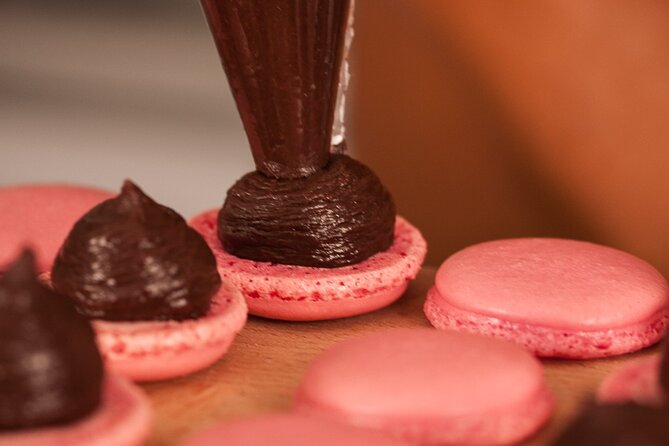
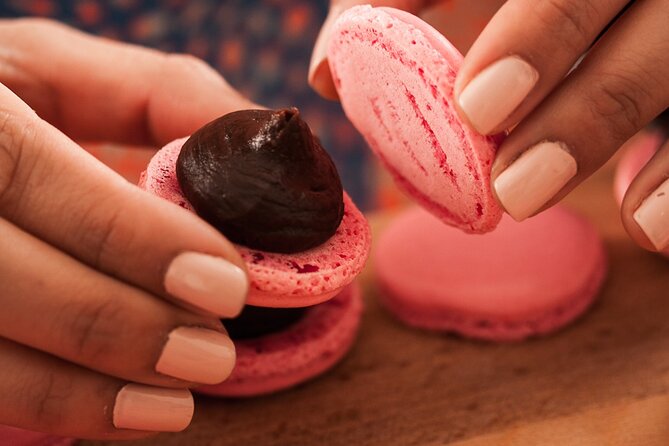
You don’t just end with shells. The class includes ganache filling, which means you learn a full macaron assembly, not a half-finished project. Ganache is also a great confidence builder. When you can finish a macaron sandwich at the end, the whole experience feels complete.
4) The finish: tasting and a glass of fizz
After baking, you’ll get to know the small group over a drink—fizz, in the spirit of French aperitif culture. Even if you come solo, you won’t feel lost in a big crowd. This bit is also where the class shifts from instruction to conversation.
Coffee and/or tea is included as well, which keeps things comfortable if you’re pacing your day around other Eiffel Tower stops.
You can also read our reviews of more tours and experiences in Paris




Why the Max-Six Group Size Is the Real Value
Max six travelers sounds like a small detail. It’s not. Macaron technique has a few touchy points, and beginners often need help at exactly the moment they’re doing the step wrong. In a room with just a handful of people, the chef can slow down for you.
This also makes the atmosphere laid-back. Several past students singled out teachers like Yasmin, Maria, Gaby, and Cristian/Christian for being organized and encouraging. You’ll typically get the same vibe: clear steps, patience, and a teacher who wants you to leave able to repeat the process.
If you’re the type who learns better by doing, not by listening, the small class is a strong match.
The Macaron Nerd Stuff You’ll Actually Use at Home
A good class doesn’t just teach a recipe. It teaches decisions. This one leans into that.
Learn the origin and identity of macarons
You’ll hear that macarons date back to the 16th century, and you’ll also get context that separates macarons from other sweets. That matters because macarons behave differently than standard cookies. If you only treat them like a cookie dough problem, you’ll miss what makes them distinct.
You’ll learn what separates macarons from biscuits
This is one of those lessons that feels almost philosophical until you bake. Getting the definition right helps you understand the texture target and the method differences. It’s also the kind of info that turns your baking from guesswork into a repeatable skill.
Color and customization (with limits)
One review noted you can choose a color, while the base/shell remains the same. That’s a fun way to personalize your batch without requiring you to invent technique on the fly. It’s also practical: macarons can be finicky, so the class keeps control of the variables.
Recipes you can keep
If you’ve ever made something in a class and then forgotten what you did, this is a fix. There’s a QR code for recipes after the workshop. One helpful link shared is atenteaute.com/recipes-eiffel. You’ll want that if you plan to bake again at home.
Price and Value: Is $162.56 Worth It?
Let’s be honest: $162.56 per person is not the cheapest thing you can do near the Eiffel Tower. But it’s not outrageous either for what you get.
Here’s the value equation as I see it:
- You’re paying for instruction + troubleshooting, not just ingredients. Macarons can go sideways quickly, and that’s where coaching matters.
- Your tools, ingredients, and apron are provided. That lowers the friction cost if you don’t want to buy everything just to try once.
- You get coffee/tea and a fizz drink, which is part of the experience, not just an extra.
- Group size is tiny (max six), so you’re not competing for the chef’s attention.
- The experience is designed to be done with a home-oven mindset. That’s what makes it more than a one-night activity.
If your goal is a hands-on skill you can repeat—then yes, the price starts to feel fair. If your goal is only to eat and take a few pictures, you may prefer a lower-cost tasting option.
Logistics That Make This Class Easy to Fit Into a Paris Day
The meeting point is 54bis Av. Mozart, 75016 Paris, France. The activity ends back at the same meeting point, so you’re not dealing with a complicated route to get back.
A few practical notes that help you plan:
- It’s near public transportation, which matters around the Eiffel Tower when foot traffic can slow you down.
- The class uses a mobile ticket, which usually means less paper scrambling.
- The session is offered in English, so you won’t be stuck piecing together instructions.
In terms of timing, book it when you’re not in a rush. Baking rewards patience. Also, give yourself a bit of buffer before or after, since it’s easier to enjoy the fizz chat without feeling late for your next stop.
Who This Macaron Class Is Best For
This is one of those experiences that fits a lot of travel styles.
You’ll love it if:
- you want a real hands-on French baking skill, especially if macarons have always looked too hard
- you prefer small groups where you can ask questions
- you enjoy the learning side of travel, where the story matters as much as the finished product
- you’re visiting with family or friends and want a shared activity
It also works for special occasions. The class description calls out private bookings like family/friends gatherings, anniversaries, corporate groups, and private events. It’s a nice alternative to a standard dinner when you want memories you can talk about later.
If you’re a true beginner, you should feel good about it. Reviews specifically mention clear, step-by-step directions and teachers who make the steps seem easy.
Tips to Get the Most Out of Your Shells and Ganache
Here are a few practical pointers that help you walk out feeling proud.
- Go in ready to follow the chef’s pace. Macarons aren’t a multitasking baking project.
- Ask questions while you still have batter on the counter. Waiting until the end usually means you’ll remember the problem, not the solution.
- Use the recipe QR code later. If you want repeat success, that’s your cheat sheet.
- Choose your color decision early. If you care about presentation, make the choice when the chef gives you the moment to do it.
- Plan for the group vibe. The fizz part is meant to be social, so don’t schedule a sprint to the next museum right after.
And yes, take pictures and videos. The class explicitly welcomes it, and you’ll want to document your first real macaron set.
Should You Book This Macaron Baking Class?
Book it if you want more than a pretty dessert. This is a focused, hands-on class in a small Paris apartment near the Eiffel Tower, with instruction that aims to be useful in a home oven. The tiny group size and the way teachers (like Yasmin, Maria, Gaby, and Cristian/Christian) are described—organized, friendly, and clear—are exactly what you want when learning something as precise as macarons.
Skip it if you only want to eat macarons with zero desire to learn. At $162.56, you’re paying for coaching, practice, and the satisfaction of making your own.
FAQ
FAQ
How long is the macaron baking class near the Eiffel Tower?
It runs for about 1 hour 30 minutes.
How big is the group?
The class has a maximum of 6 travelers, for an intimate experience.
Is the class taught in English?
Yes, it’s offered in English.
What’s included in the price?
Coffee and/or tea are included, along with ingredients, tools, and an apron borrowed during the experience.
Can I take photos or videos during the class?
Yes. You’re welcome to take as many pictures or videos as you want.
Will I be making both macarons and filling?
Yes. It’s a hands-on activity where you make macarons and also prepare the ganache filling.
Where do I meet the class?
The start meeting point is 54bis Av. Mozart, 75016 Paris, France. It ends back at the same meeting point.
Do non-participating companions cost extra?
Yes. A companion ticket for someone not participating costs 35 euros and is paid on site.
What if I need to cancel?
This experience is non-refundable and cannot be changed for any reason. If the minimum number of travelers isn’t met, you’ll be offered a different date/experience or a full refund.
Do they provide recipes after the class?
There’s a QR code with recipes available after the workshop, so you can follow along when you bake at home.