REVIEW · PARIS
Montmartre and Sacre Coeur Private Guided Tour in Paris
Book on Viator →Operated by PANAME · Bookable on Viator
Montmartre hits different when someone explains it. This private 1 hour 30 minutes walk is built around real places and real Paris stories, not just a photo stop parade. I especially like how the route blends famous names like Moulin Rouge with the quieter corners that make Montmartre feel like an art district. One thing to factor in: it’s a walking experience on a hill, and the visit needs good weather to run as planned.
Another plus: you get an actual guide for your group, in English, and that personal attention shows. Names like Hafid and Joanna come up in the feedback, and people highlight clear English plus stories that make the neighborhood click fast. The trip also uses a mobile ticket, which makes starting smooth. The main trade-off is simple—Moulin Rouge’s stop comes with a note that the admission ticket is not included, so you may pay extra if you want to go in.
If you’re looking for a short Montmartre plan that feels intentional, this fits. It starts at 35 Rue du Chevalier de la Barre (75018) and finishes at Sacré-Cœur, so you finish with the big payoff: the hilltop basilica and views.
In This Review
- Key Things You’ll Notice on This Montmartre + Sacré-Cœur Tour
- Start Smart: The Route Begins at Rue du Chevalier de la Barre
- Moulin Rouge Stop: The Can-Can Origins and Paris Nightlife Angle
- Café des Deux Moulins and the Amélie Connection
- The Picture-Postcard Street Walk: Following Artists Through Montmartre
- The Famous Plaza for Artists and Souvenir Browsing
- Sacré-Cœur Basilica: Hilltop Views and Architecture Inside and Out
- How This Tour Delivers Value (Even for a Short 1.5-Hour Plan)
- Weather and Timing: What to Do If Montmartre Is Moody
- Should You Book This Montmartre and Sacré-Cœur Private Tour?
- FAQ
- How long is the Montmartre and Sacré-Cœur private guided tour?
- Is this tour offered in English?
- Is this a private tour or shared group?
- Where do we meet for the tour?
- Where does the tour end?
- Is a mobile ticket provided?
- Are tickets included for the stops?
- Is Café des Deux Moulins included, and do you need to pay there?
- What happens if the weather is bad?
- Are service animals allowed, and is it near public transportation?
Key Things You’ll Notice on This Montmartre + Sacré-Cœur Tour
- Private, English-guided walk for only your group, for a calmer pace
- Moulin Rouge plus nightlife context, not just a quick look
- Café des Deux Moulins stop with the Amélie connection
- Artist-route streets and a souvenir plaza, built for browsing
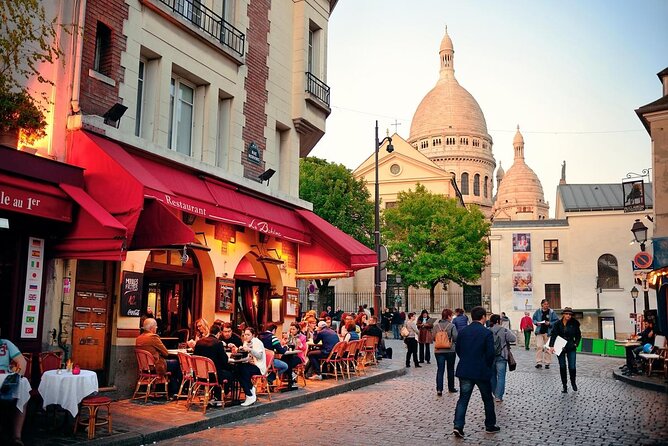
- Sacré-Cœur architecture inside and out, with hilltop views
- Mobile ticket for an easier start
Start Smart: The Route Begins at Rue du Chevalier de la Barre
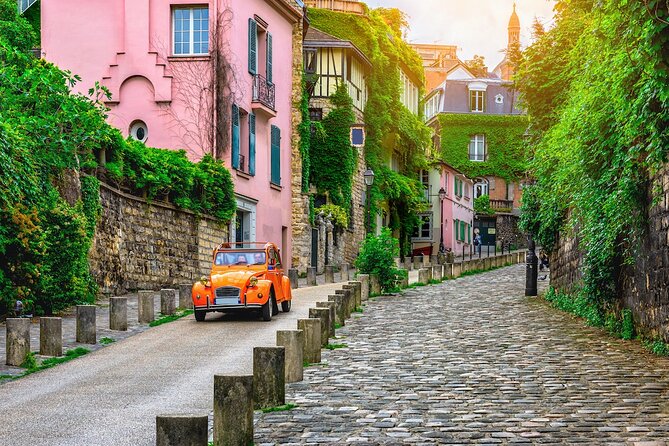
This tour is set up like a “get your bearings fast” stroll through Montmartre. You meet at 35 Rue du Chevalier de la Barre, right where the neighborhood starts to feel more winding and old-world. The ending point is also tied to Sacré-Cœur, since the tour finishes at the basilica itself.
Why that matters: Montmartre can feel like a maze if you’re wandering on your own. With a guided plan, you don’t burn time trying to guess which streets lead where. And because it’s private, you’re not trapped in a slow-moving crowd, or rushed by someone who’s already bored.
Logistically, it’s close to public transportation, which helps if you’re pairing it with other sights later. You’ll also get confirmation at booking time, and you’ll use a mobile ticket on the day.
One practical thought: the itinerary is tight—about 1 hour 30 minutes—so wear shoes you trust for city walking. Montmartre’s slope shows up fast, especially as you work your way toward Sacré-Cœur on top of the hill.
You can also read our reviews of more guided tours in Paris



Moulin Rouge Stop: The Can-Can Origins and Paris Nightlife Angle
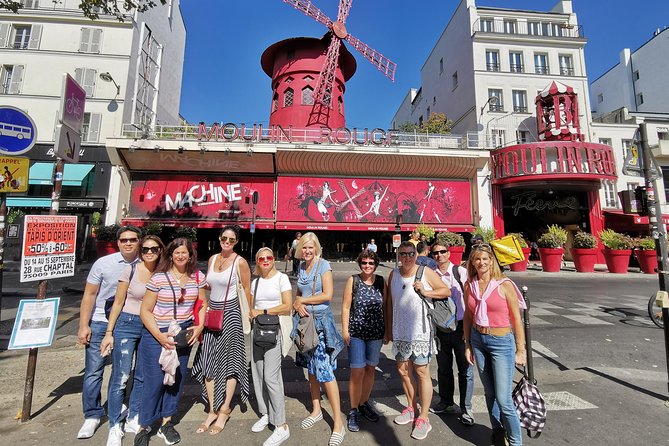
The tour’s first featured stop is Moulin Rouge, where the big theme is the home of the can-can. That’s a smart way to start, because it anchors Montmartre’s reputation in something specific instead of vague “it’s famous” talk.
You also get a short window—about 10 minutes—which is great for people who want to see the landmark without turning the whole tour into a ticket line. Just know the one key detail: the admission ticket is not included. So when you arrive, decide quickly whether you just want the exterior vibe and stories, or if you’d like to pay for entry.
What makes this stop useful on a guided walk is the context. Moulin Rouge isn’t just a postcard. It’s tied to the stage, the spectacle, and the idea of Paris nightlife as theater. Even if you’re not planning to see a show, you’ll get the background that makes later Montmartre scenes feel connected.
If you’re sensitive to crowds, this is one place where timing and expectations help. The tour keeps it brief, but you may still notice the area’s energy.
Café des Deux Moulins and the Amélie Connection
Next comes Café des Deux Moulins, a stop that makes Montmartre feel personal if you’ve ever watched the French film Amélie. This is not just name-dropping. The café’s presence in popular culture acts like a shortcut to understanding why people associate Montmartre with art, romance, and quirky Paris moments.
Time is short here—about 5 minutes—but that’s enough for a quick look and a moment to connect the neighborhood to the film’s tone. The good news: admission is free, so you’re not stuck paying for the privilege of standing near a famous facade.
Why I like putting this stop early: it gives you a theme. After Moulin Rouge’s nightlife legacy, Café des Deux Moulins shifts the mood toward cozy Paris storytelling. It helps you read the neighborhood instead of just moving through it.
If you’re the type who loves snapping photos but also wants to know what you’re photographing, this is a low-cost win. And if you’re not a movie person, you still get a calm pause to reset before the streets turn more characterful.
The Picture-Postcard Street Walk: Following Artists Through Montmartre
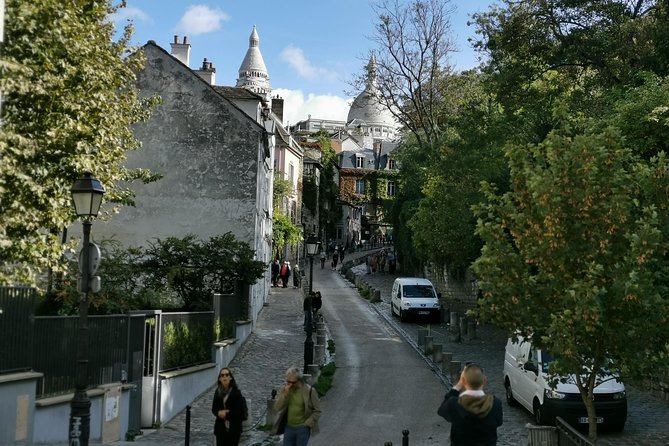
After the café, you get the heart of Montmartre: one of the most picturesque streets, winding past quaint cafés and following in the footsteps of artists like Van Gogh and Pissarro.
This part is where the tour stops feeling like a checklist and starts feeling like a neighborhood walk. Montmartre’s streets aren’t just scenic. They’re practical geography—turns, sightlines, and little “wait, that’s where the view goes” moments. A guide helps you connect the street layout to the art association, instead of treating it like scenery with no meaning.
Also, this is where the tour works especially well for first-timers. If you’ve never been to Montmartre, you might not know where to stand to feel the vibe. A guided route gives you a flow, so you’re not constantly asking yourself if you’re going the right way.
If the weather’s good, this section is the easiest part to enjoy. If rain or wind hits, you’ll likely still move through it, but you’ll have to slow your pace and keep your footing. That’s one reason the tour’s “good weather needed” condition matters.
The Famous Plaza for Artists and Souvenir Browsing
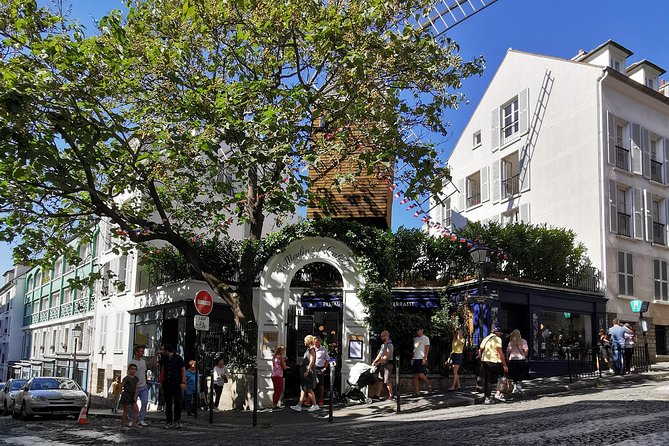
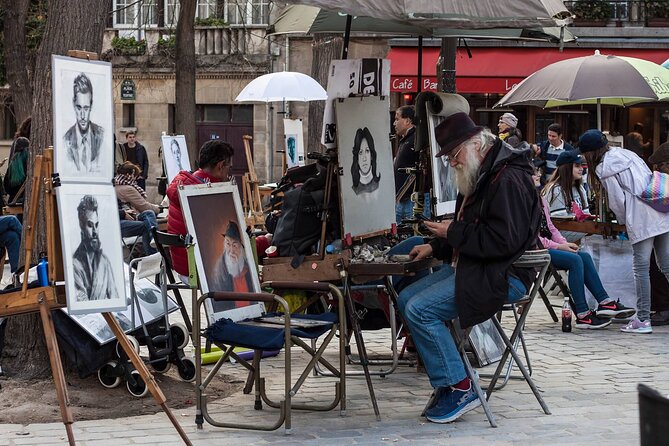
Then you reach a famous plaza filled with art, artists, and scenic terraces—the kind of place where you can slow down without feeling lost. This stop is described as perfect for souvenir hunting, and that’s exactly how it plays on a walk like this: you’re given a moment to browse, not a forced shopping stop.
What you gain here is breathing room. Montmartre can feel compressed—lots of steep lanes and quick sightlines. A plaza gives your legs a short rest, and it gives your eyes space too. You get a more open view of the “artist neighborhood” feel, with terraces and little scenes that look like they belong in a sketchbook.
If you want something practical, this is also a good place to buy small gifts without panic. You’re already in the pocket of Montmartre where local art vendors tend to set up, so you can pick something you actually like rather than grabbing the first souvenir you see while rushing toward the basilica.
You can also read our reviews of more private tours in Paris






Sacré-Cœur Basilica: Hilltop Views and Architecture Inside and Out
The tour’s finish is Basilique du Sacré-Cœur de Montmartre, a hilltop basilica famous for extraordinary architecture both inside and out. This is the payoff part of the walk, and it’s smart that the tour ends here. If you finish at the top, you can linger based on your energy level, rather than needing to leave immediately.
Even with a short visit, you can still get the core experience: exterior details and then the interior feel of the space. The outside view matters because Sacré-Cœur sits above Paris, so you’re not just looking at a church—you’re looking over a city that makes sense of why people have always loved this hill.
A guide helps because Sacré-Cœur is visually strong, but it can be overwhelming on your own. With a few pointers, you’ll notice features and understand why people talk about the architecture beyond “it’s pretty.”
One caution: because it’s a basilica on a hill, expect steps and walking. If you’re planning the tour around mobility limits, consider how you handle stairs in general. Service animals are allowed, and the walk is designed for most people, but the hill is still the hill.
How This Tour Delivers Value (Even for a Short 1.5-Hour Plan)
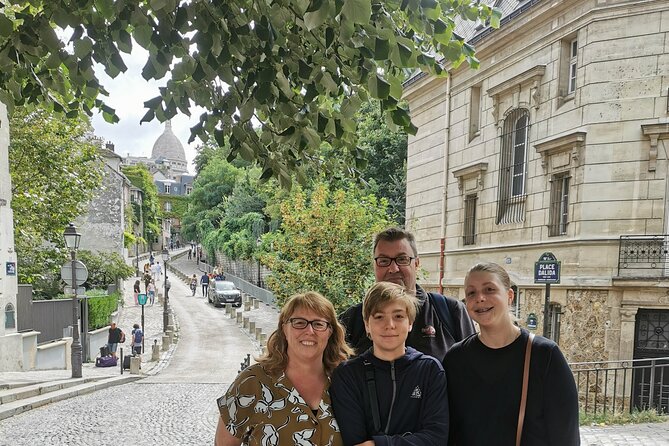
A 1 hour 30 minutes walking tour sounds short, but that can actually be the point. In Montmartre, time disappears fast because the streets twist and every corner looks photo-worthy. A guided route compresses the decision-making for you: you get the key landmarks, plus the artist-story streets in between.
Value comes from a few clear choices:
- Admission is free for some stops (Café des Deux Moulins and Sacré-Cœur are listed as free in this plan).
- Moulin Rouge’s ticket isn’t included, so you control whether you want the extra cost or just the exterior story time.
- It’s private, meaning you don’t lose time negotiating group pace.
And the guide quality matters. Feedback includes guides like Hafid being described as very kind, even with kids, and Joanna being praised for being funny while offering French-culture tips. That mix is practical: it’s not only facts, it’s also what to do next in Paris—like where to eat or how to handle interactions.
If you’re the type who likes your city time efficient but still human, this tour hits a sweet spot. It’s not an all-day commitment, but it’s not a drive-by either.
Weather and Timing: What to Do If Montmartre Is Moody
This experience requires good weather. That’s not a small detail in Montmartre. Rain, wind, or heavy clouds can make the streets slick and dull the views from Sacré-Cœur.
The good part: if it’s canceled due to poor weather, you’ll be offered a different date or a full refund. That means you’re not left stuck with “too bad” plans.
My advice is simple: if you’re planning other Montmartre stops—like more cafés or a longer walk—don’t stack them all in the same weather risk window. Treat this tour as your Montmartre anchor, then add flexible extras nearby.
Also, because the route is short, you’ll feel the weather impact more. If you go, go ready: jacket, comfortable shoes, and a plan for keeping your phone dry for photos.
Should You Book This Montmartre and Sacré-Cœur Private Tour?
Book it if you want a guided Montmartre plan that actually makes the neighborhood coherent. This is ideal for first-timers who want Moulin Rouge context, the Amélie connection at Café des Deux Moulins, and an ending at Sacré-Cœur without spending half your afternoon figuring out which streets loop back.
It’s also a strong pick if you’re traveling with teens or kids who enjoy stories and real-life tips. The feedback you have includes mentions of guides being kind with children and keeping things engaging for a range of ages.
Consider skipping or rethinking if you know you’ll only enjoy Montmartre with lots of time to wander freely. At 1 hour 30 minutes, you’re getting a focused route. And if you’re hoping for a guaranteed entry inside Moulin Rouge, remember the ticket is not included for that stop.
If you want a well-paced “Montmartre in a nutshell” that ends with the big view at Sacré-Cœur, this private tour is a solid match.
FAQ
How long is the Montmartre and Sacré-Cœur private guided tour?
It lasts about 1 hour 30 minutes.
Is this tour offered in English?
Yes, it’s offered in English.
Is this a private tour or shared group?
This is a private tour/activity, so only your group participates.
Where do we meet for the tour?
The start location is 35 Rue du Chevalier de la Barre, 75018 Paris, France.
Where does the tour end?
The tour end is at Sacré-Cœur Basilica.
Is a mobile ticket provided?
Yes. The tour includes a mobile ticket.
Are tickets included for the stops?
Admission details are listed by stop. Moulin Rouge admission is not included, while Café des Deux Moulins and Sacré-Cœur are listed as free.
Is Café des Deux Moulins included, and do you need to pay there?
Yes, Café des Deux Moulins is included, and it’s listed as free.
What happens if the weather is bad?
This experience requires good weather. If it’s canceled due to poor weather, you’ll be offered a different date or a full refund.
Are service animals allowed, and is it near public transportation?
Yes—service animals are allowed, and the meeting area is near public transportation.