REVIEW · PARIS
Paris: Pompidou Centre Private Guided Tour
Book on GetYourGuide →Operated by Paris in person private tours · Bookable on GetYourGuide
One building can teach you how a city thinks. This private Pompidou tour is interesting because it shifts your focus from art to architecture as the main story—especially since the museum is closed during reconstruction.
I like two things most: you get a clear guide to 20th-century art context (not just facts), and you’ll look at the Centre Pompidou like a piece of urban-scale design, not a backdrop. You also learn why locals call it the Notre Dame of Pipes.
The one possible drawback is simple: the tour is only 90 minutes, so if you’re hoping for a long, full museum experience, you’ll need a different plan for that.
In This Review
- Key points before you go
- Start at Stravinsky Fountain and get your bearings fast
- The Pompidou building as the main attraction (during reconstruction)
- Those famous pipes are more than a design trick
- How architecture ties into urban planning and gentrification
- Modern art clicks when the story is chronological
- Private guide quality: different styles, same payoff
- What 90 minutes really gives you
- Price and value at about $176 per person
- Operates rain or shine, so plan like a Parisian
- Who should book this Pompidou private tour
- Should you book this Pompidou Centre private guided tour?
- FAQ
- Where does the tour meet?
- How long is the Pompidou private guided tour?
- Is the tour private or shared?
- What languages are available?
- Does the tour run only in good weather?
- Is the museum included during reconstruction?
- What’s included in the price?
Key points before you go
- Pompidou’s building takes center stage because the museum is closed during reconstruction
- Architectural provocation explained in everyday terms, not academic fog
- Urban planning + gentrification links to what the museum became
- Modern art made clearer once the architecture is understood
- Private guide, small attention to your questions, offered in English, French, and Serbo-Croatian
Start at Stravinsky Fountain and get your bearings fast
Your tour begins at the Stravinsky Fountain on Rue Saint Merri (75004 Paris). Your guide will be carrying a red tote canvas bag, so it’s easy to spot the right person without playing guesswork.
What I like about starting here is that it sets the mood. This part of Paris is full of layers—older streets, newer ideas, and the kind of contrasts that make the Pompidou conversation land better. Before you reach the Centre Pompidou area, the guide can frame what you’re about to see: a building designed to provoke, and a museum that changed with the city around it.
If you’re the type who gets restless waiting for instructions, this format helps. You’ll know what to look for, which pipes to notice, and how the building connects to planning choices in the 1970s.
You can also read our reviews of more guided tours in Paris

The Pompidou building as the main attraction (during reconstruction)
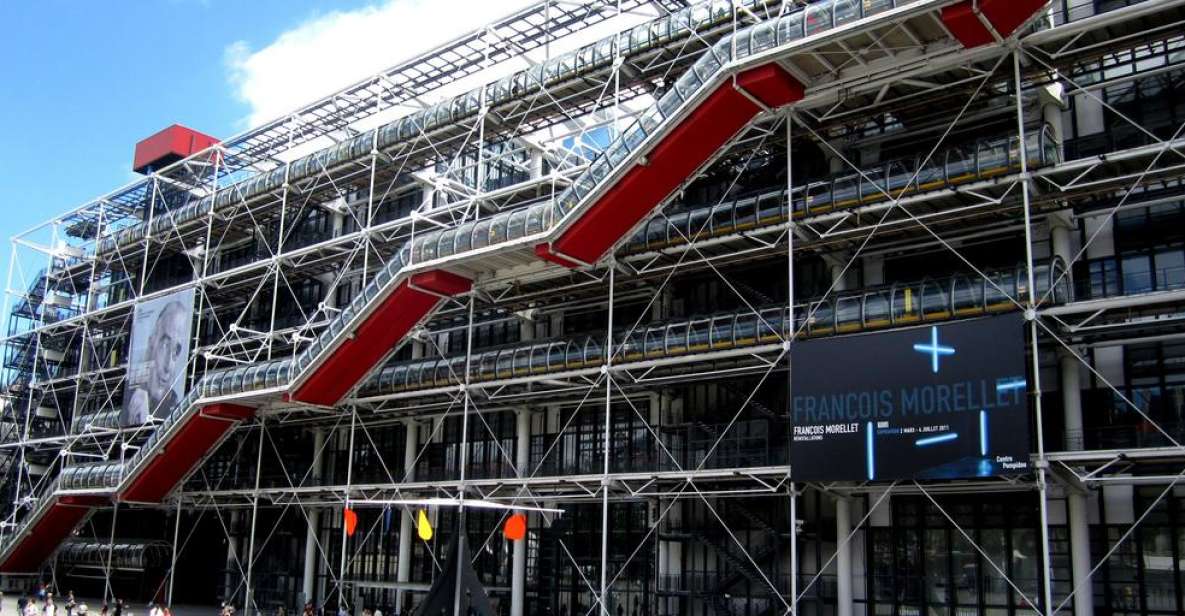
During reconstruction, the museum itself is closed. That means your visit isn’t built around wandering galleries; it’s built around the structure that houses them. In practice, you’re doing something smarter than many visitors: you’re learning why the building matters as much as the collection.
You’ll explore the history of how the Pompidou Centre was constructed and why its form became a landmark. This is especially valuable if you tend to treat museums as “containers.” Here, the container is the message. The guide talks about the Centre Pompidou as an artefact that many historians and architects consider more important than the works it normally holds.
Because the museum is closed, you avoid the common problem of modern art visits: people rush between artworks without enough context. With the building as your anchor, you can understand the bigger intention behind the art movements connected to the Centre Pompidou’s story.
Those famous pipes are more than a design trick
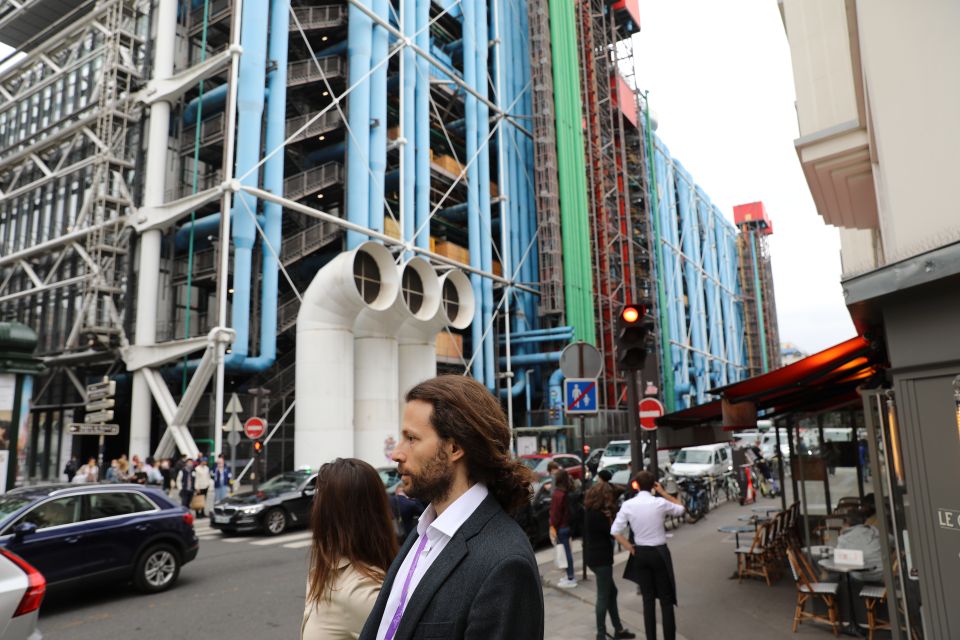
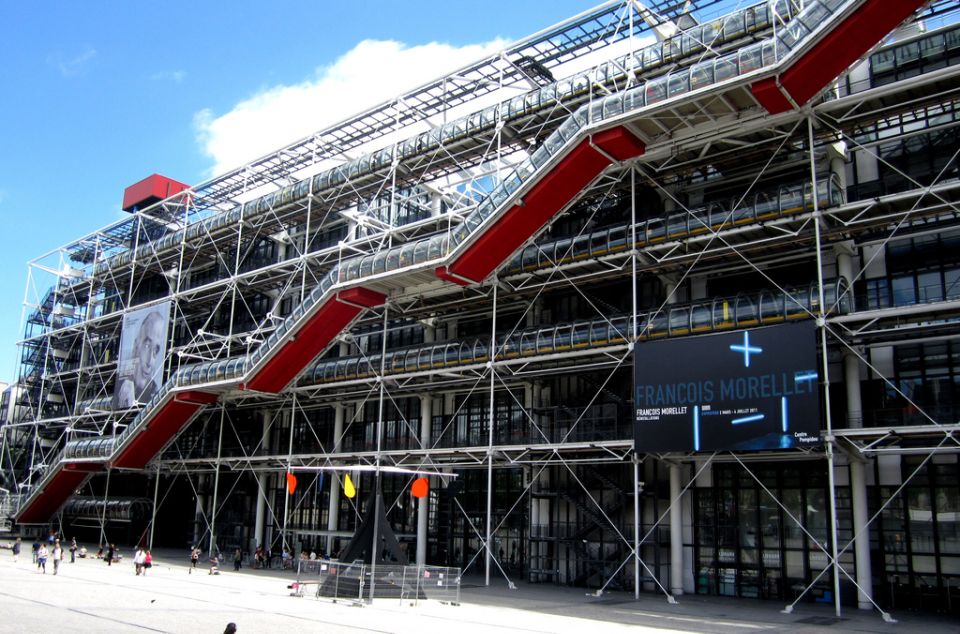
The Centre Pompidou has a nickname that locals use: Notre Dame of Pipes. That’s not just a funny label. It sums up the building’s attitude. This place refuses to blend in, and the tour helps you see why.
You’ll get a guided explanation of the architectural concept and how the building became a “provocation” in its setting. The guide also connects the architecture to the surrounding neighborhood and explains what it means for a major cultural project to challenge the place where it lands.
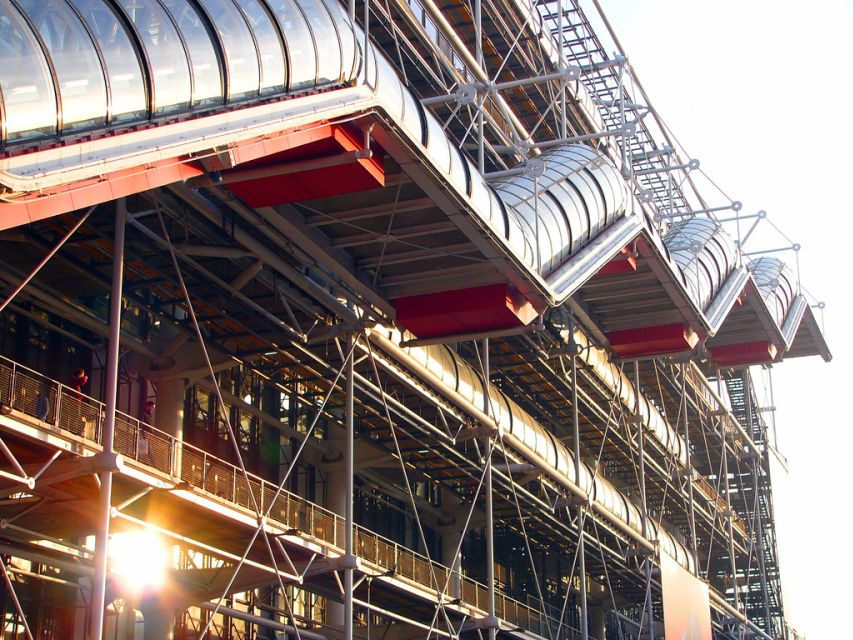
Look for how the design communicates its purpose. Those external elements make the building readable from the outside—almost like the structure is telling you what’s inside. That matters for your understanding of modern art too. Modern and contemporary art often feels strange at first because it breaks older expectations. The Pompidou building prepares you for that kind of change in expectations before you even focus on artworks.
How architecture ties into urban planning and gentrification
This tour doesn’t treat the Pompidou as an art building dropped into Paris. It treats it as a planning decision with consequences.
You’ll learn how the Centre Pompidou integrates into the neighborhood and, more importantly, how it defies it. That distinction is key. A building can be part of a city, but it can also reshape how people use space, how money moves, and how communities evolve.
The guide covers the history of gentrification and how it shaped the museum. You’ll also hear how Paris changed in the 1970s of the 20th century, and why the museum became part of that shift. It’s the kind of story that helps you read the city around the building with new eyes—less like sightseeing, more like cause-and-effect.
If you only came for art, you’ll still leave with a stronger understanding of why this museum became what it is. And if you’re already interested in cities, you’ll get a satisfying “architecture meets policy” thread.
Modern art clicks when the story is chronological
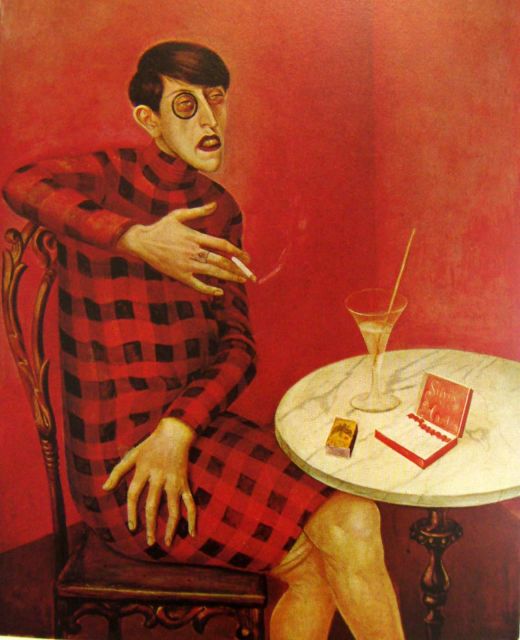
A big reason this tour rates well is the way guides explain modern art with structure. In one case, Milica delivered a lecture that traced modern art from the end of the 19th century through the end of the 1980s. In another, Bella connected artwork with historical context so the pieces made more sense.
That’s the practical value for you: modern art can feel like a list of styles unless someone builds a timeline. When you understand when ideas emerged and what they reacted to, you stop asking What is it supposed to mean? and start asking What problem is it responding to?
Even if the museum galleries are closed right now, the guide can still teach the art story and connect it back to what the Pompidou represents. That makes the tour useful for first-timers who don’t want to be overwhelmed, and it works for people who have seen modern art before but want a clearer framework.
You can also read our reviews of more private tours in Paris






Private guide quality: different styles, same payoff
This is a private group tour, which means you don’t get shoved into a one-size-fits-all rhythm. The guide can explain in a way that fits your pace and questions.
You also get multi-language support: English, French, and Serbo-Croatian. That matters if you’re traveling with family or friends who prefer a particular language, and it can also change how quickly you grasp concepts like architectural provocation and urban planning.
The reviews point to real strengths in guide delivery. Boris is praised for placing things in perspective and sharing a lot of background without making it feel like a lecture. Stephanie is described as a wonderful guide who helped explain both the history and the art movement. And there’s also feedback that the tour works well even with a 12-year-old—so don’t assume modern art talks are only for adults.
I’d plan to ask questions like: What problem was the architect trying to solve? Why did this feel radical in its time? Those questions fit the format perfectly.
What 90 minutes really gives you
Ninety minutes sounds short—until you understand the tour’s focus. This isn’t trying to replace a full museum visit. It’s trying to change how you see the Centre Pompidou and how you connect it to the art world it supports.
You’ll pack a lot in: the building’s construction story, how it sits in the neighborhood, the provocation factor, and the link to gentrification and 1970s Paris. Then you’ll connect all of that back to 20th-century art so the museum’s role feels logical instead of random.
The trade-off is that you’ll leave with a strong framework, not with a checklist of artworks you memorized. If you’re hoping for a long viewing marathon, you’ll need to pair this with an art visit on another day when galleries are accessible.
Price and value at about $176 per person
At $176 per person for 90 minutes, this isn’t a budget bargain. But it can still be good value if the goal is understanding, not just photo ops.
Here’s how I judge the value for this specific type of tour:
- Private guide time is built into the price, and you’re getting an expert-led narrative
- The museum closure means you’re not paying for a gallery walkthrough you can’t fully access; you’re paying for the building-focused story
- The content covers architecture, urban planning, and modern art context, which usually takes more time (and more tickets) when done separately
If you’re traveling solo, the cost may feel high compared with a group option. If you’re traveling as a couple or small group, it often feels more reasonable because you’re dividing the benefit of a private explanation.
If your top priority is simply seeing the biggest museum rooms as fast as possible, you might spend less elsewhere. But if you want the why behind the Pompidou, this price starts to make sense.
Operates rain or shine, so plan like a Parisian
This tour runs rain or shine, so it’s smart to treat it like an exterior-and-context experience. Bring what you need to stay comfortable—especially if you’re someone who gets cold quickly or hates soggy shoes.
The practical upside of rain or shine is that the tour isn’t dependent on perfect weather for its “main lesson.” Even with bad skies, you can still learn why the building’s structure and placement mattered. Modern art stories also don’t care about sunlight.
So pack for comfort, not for vibes. You’ll enjoy the walk and explanations more when you’re not distracted by discomfort.
Who should book this Pompidou private tour
This is a strong fit if you:
- want modern art explained with historical context rather than a checklist
- care about architecture and cities, not just paintings
- are visiting for the first time and want a framework that makes the museum make sense
- travel with teens or family members who benefit from guided structure (the tour has shown it can work for a 12-year-old)
It’s also good if you’re the type who likes to read a neighborhood. The story about gentrification and 1970s Paris helps you look at the surrounding area with more informed eyes.
If, on the other hand, you’re strictly looking for a long indoor art session right now, you may feel the scope mismatch because the museum itself is closed during reconstruction.
Should you book this Pompidou Centre private guided tour?
I’d book it if you want the Centre Pompidou experience to mean something beyond the photos. The tour’s value comes from connecting the building’s provocation to the art world’s evolution and to the city changes that shaped the museum.
I’d skip it only if your priority is a full museum gallery walk during reconstruction, or if you dislike guided talks longer than an hour and a half.
For many people, though, this is the ideal way to visit right now: you get a focused narrative, a private guide in your preferred language, and a fresh way to view one of Paris’s most recognizable modern statements—its pipes included.
FAQ
Where does the tour meet?
Meet at the Stravinsky Fountain on Rue Saint Merri, 75004 Paris. Your guide will be carrying a red tote canvas bag.
How long is the Pompidou private guided tour?
It lasts 90 minutes.
Is the tour private or shared?
It’s a private group tour.
What languages are available?
The guide can offer the tour in English, French, or Serbo-Croatian.
Does the tour run only in good weather?
No. The tour operates rain or shine.
Is the museum included during reconstruction?
During reconstruction, the museum itself will be closed, and the visit focuses on the building.
What’s included in the price?
The guide is included. Food and beverages are not included.