REVIEW · PARIS
Canadians in Normandy D-Day beaches Juno Beach and Pegasus Bridge (3/7 pax)
Book on Viator →Operated by ADRIAN ROADS · Bookable on Viator
One morning, Normandy hits differently. This small-group Canadian D-Day day trip links the big Allied story to the specific places Canadians fought and landed, from Pegasus Bridge to Juno Beach. I especially like the tight group size (max 7) and how the visit stays focused on Canada’s role, with guides such as Adrian or Rėgis who clearly care about answering your questions. The main catch is simple: it’s a long day (about 13–14 hours), so you’ll be moving and won’t linger as long as you might on a self-guided trip.
I also like that the schedule has real structure, not just a quick bus drive-by. You get transportation from central Paris in an air-conditioned vehicle, a mobile ticket, and English guidance, plus admission to the Juno Beach Centre (2 hours on site). Several other stops along the way are free to enter, which helps the day feel more complete without turning into a constant ticket hunt.
One consideration: lunch is on you. With a start time at 6:30 am and multiple stops spread across Normandy, you’ll want a plan for food and water so the day stays enjoyable rather than exhausting.
In This Review
- Key Points You’ll Actually Feel During the Day
- A Canadian Normandy Day Trip That Starts Early (and Keeps Its Promise)
- Pegasus Bridge: The D-Day Opening Moves Explained
- Bény-sur-Mer Canadian War Cemetery: Quiet Ground, Clear Meaning
- La Maison des Canadiens: A House That Makes the War Feel Real
- Juno Beach Centre: Where the Canadian Story Becomes Clear
- Croix de Lorraine and the Churchill AVRE Tank: A Strong Finish
- Price and Value: What $288.99 Gets You
- Best For: Who Should Book This One-Day Canadian Focus Route
- Should You Book This Normandy Canada Tour?
- FAQ
- How long is the tour?
- What time and where does the tour start in Paris?
- What’s included in the price?
- Is lunch included?
- Which stops are part of the tour?
- Is this tour offered in English?
- What if the weather is bad or I need to cancel?
Key Points You’ll Actually Feel During the Day
- Small group, max 7: more time for questions and a better flow between stops.
- Pegasus Bridge timing: early Allied objective context makes Juno Beach hit harder.
- Canadian War Cemetery in Bény-sur-Mer: impeccably kept grounds that you don’t rush through.
- Juno Beach Centre for the full story: films, timelines, and Canada’s WWII mobilization, not only D-Day.
- Croix de Lorraine views plus armored landing context: a strong closing memorial stop with a Churchill AVRE tank.
A Canadian Normandy Day Trip That Starts Early (and Keeps Its Promise)
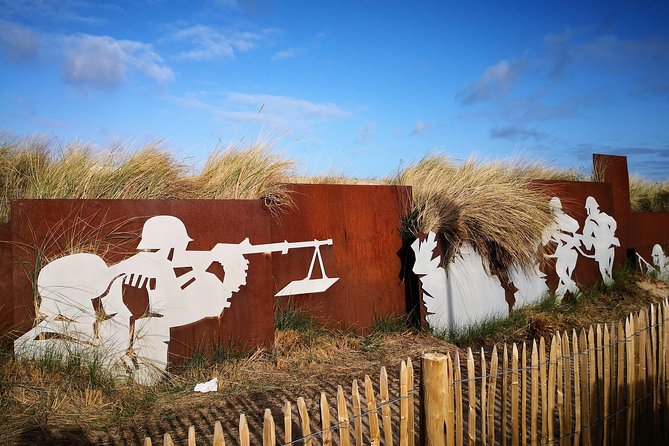
This is one of those tours where the value comes from focus. You’re not trying to cover “all of Normandy” in one day. You’re going specifically where Canadian soldiers matter most on D-Day and in the immediate follow-on fighting—then you get a guided narrative that ties each stop to the next.
The day begins at 6:30 am at Théâtre du Lido on the Champs-Élysées. That early start matters. You’re traveling far enough that the morning drive buys you daylight for outdoor memorials, plus enough time to handle the big indoor stop at the Juno Beach Centre without feeling like you’re sprinting through it.
Most of the stops are short, which sounds like a drawback until you realize it’s built for pacing. You get guided orientation and the key stories, then you’re free to step back and look at the place itself—especially at the cemetery and the shoreline areas around Juno. Several admissions are listed as free (Pegasus Bridge, the cemetery, Canada House, and the Croix de Lorraine area), so the paid “anchor” of your day is the Juno Beach Centre admission.
And yes, the day is long. If you’re the type who hates tight timing, this will feel like a lot. But if you want a guided “greatest hits” Canada route that still includes the most important learning stop, this format works.
You can also read our reviews of more tours and experiences in Paris.



Pegasus Bridge: The D-Day Opening Moves Explained
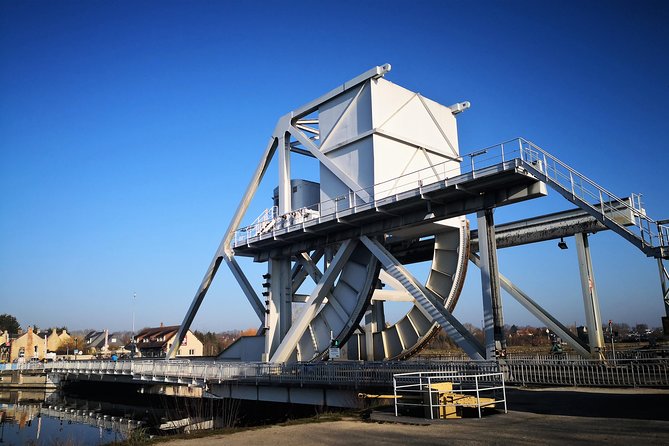
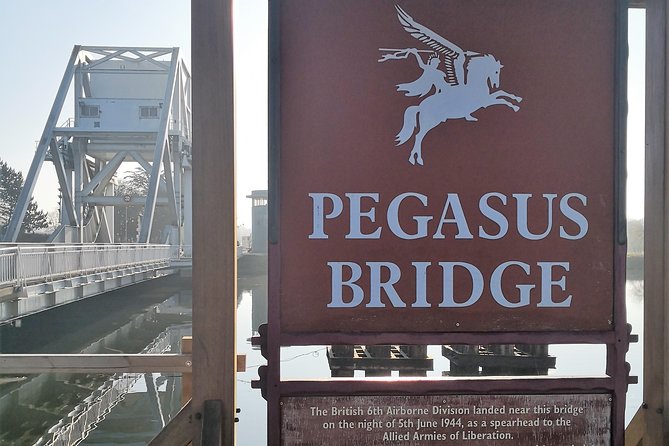
Your first real stop is Pegasus Bridge, the bascule bridge over the Caen Canal near Caen and Ouistreham. It’s also called the Bénouville Bridge, and it matters because it was a major objective in the opening minutes of the Allied invasion, Operation Deadstick (part of Operation Tonga).
The story here is sharp and practical. British airborne troops were tasked with landing by glider infantry, taking the bridges intact, and holding them until relieved. That goal sounds tactical—and that’s exactly why this stop works at the start of the day. It shows you how the invasion wasn’t just about beaches. It was also about preventing German counter-moves and controlling key crossings in the hours immediately after landing.
You’ll get time to look at the bridge and absorb the scale, but the value is really the context your guide provides. The bridge becomes a checkpoint in your mental timeline. When you later reach the Canadian landing story at Juno Beach, you’re better able to understand why early objectives mattered for what came next.
It’s also a quick visit on the schedule (about 20 minutes). That means you won’t be stuck indoors, and it avoids the common problem of turning memorials into a slow, drawn-out shuffle.
Bény-sur-Mer Canadian War Cemetery: Quiet Ground, Clear Meaning
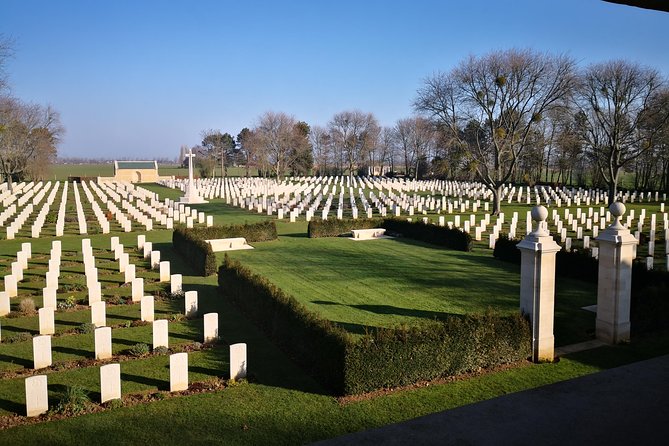
Next comes the Bény-sur-Mer Canadian War Cemetery, which is near Reviers even though it carries the Bény-sur-Mer name. This is one of the most moving stops on the itinerary because it’s not dramatic in the way a battlefield scene might be. It’s calm, perfectly kept, and designed to let you take in the human cost.
You’ll see mostly Canadian soldiers killed during the early stages of the Battle of Normandy. The grounds are landscaped and immaculate, and there’s a Cross of Sacrifice—a recognizable Commonwealth War Graves Commission design.
The cemetery holds 2,049 headstones, with the graves marking the dead of the 3rd Division, plus graves of 15 airmen. For a place like this, those numbers are heavy, but your time on site (about 30 minutes) is long enough to sit with them without feeling rushed.
A small practical tip: give yourself a moment to look at the layout before you start reading headstones. It helps you understand the planning behind the cemetery and keeps you from getting overwhelmed too fast. The design includes registry buildings with platforms from which you can see the whole area, and that overview can bring calm order to a difficult subject.
This stop is free to enter, which makes it a standout value piece of the day. You’re getting one of the most meaningful “Canada” scenes in Normandy without paying extra.
La Maison des Canadiens: A House That Makes the War Feel Real
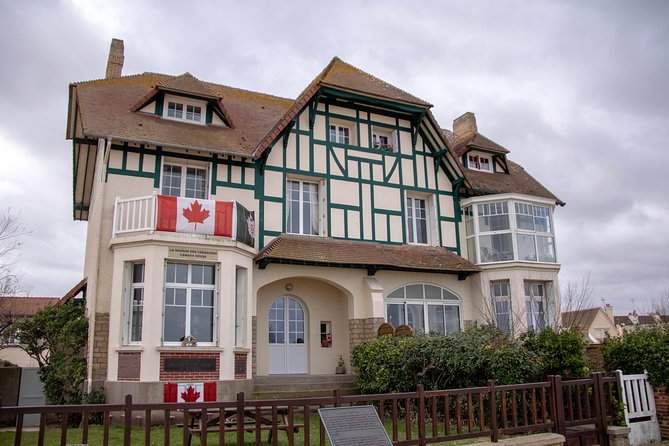
Then you shift from formal memorials to something more personal: La Maison des Canadiens (Canada House) in Bernières-sur-Mer, overlooking Juno Beach.
This is a timber-framed house with an inscription at the entrance noting that over 100 men of the Queen’s Own Rifles were killed or wounded within the first few minutes of the landings. That line hits harder when you’re standing there, because it turns the beach story into something immediate and close.
What makes the stop especially interesting is that the house was one of the few left intact. The guide framing you’ll likely get explains that it may have survived because it was the favored home of an occupying German officer. The left-hand side is connected to the family of Hervé Hoffer, whose grandfather owned the house during the war but was evicted by the Germans. That family detail matters because it shows how D-Day history can still live in local memory decades later.
This stop is short (about 20 minutes), and that can feel limiting. But you’re not visiting for a long museum experience. You’re visiting for a single, tangible anchor point. From here, Juno Beach Centre feels less like “a museum about events” and more like “a place that explains what you just stood beside.”
Juno Beach Centre: Where the Canadian Story Becomes Clear
The Juno Beach Centre is the main reason this tour is worth it. It’s not just a D-Day exhibit. It connects Canada’s wartime transformation to the battles that Canadian units fought—from Sicily and Italy through Normandy and on into the Netherlands.
You get about 2 hours, and that’s enough time to experience the heart of the permanent exhibit if you focus. The centre uses photographs, documents, multimedia, maps, and artifacts to build a timeline. It also specifically honors Canadians who lost their lives during the war, including 5,500 killed during the Battle of Normandy and 359 on D-Day.
What I like is the way the exhibit layers the story. Room A sets your mindset with a film and a simulated landing craft experience. It’s about understanding what it meant to train, land, and react in real time. Room B steps back to show Canada in the 1930s, covering geography, demographics, economics, the military, politics, and social climate. That matters because it prevents the exhibit from feeling like a single-day event. D-Day didn’t happen in a vacuum.
Room C brings you into Canada going to war, including a simulated living room where speeches play on period radios. Then the exhibit expands out into the idea that Canada mobilized on many fronts, not just soldiers on the beach.
Room D keeps it moving through campaigns—Italy, Normandy, the Scheldt, the Rhineland, and Victory—and it also flags different roles such as medical corps, war correspondents, and engineers. This makes the story feel broader than “infantry vs. the enemy,” which is exactly what you want on a tour like this.
Room E is where the human toll becomes unavoidable. You’ll see names scrolling across the ceiling and listen to period letters or essays written by Canadians in English or French. Room F closes with the film They Walk With You, which uses newsreel footage, voices of Canadian war correspondents Marcel Ouimet and Matthew Halton, and recreations to show sacrifice from an infantry soldier’s perspective.
One practical note: with only 2 hours, you’ll want to choose your own pacing. If you’re drawn to the film in Room F, plan your time so you don’t race past it. If you’re more into letters and names, spend your extra minutes in Room E. The centre gives you options, but the tour schedule keeps you honest.






Croix de Lorraine and the Churchill AVRE Tank: A Strong Finish
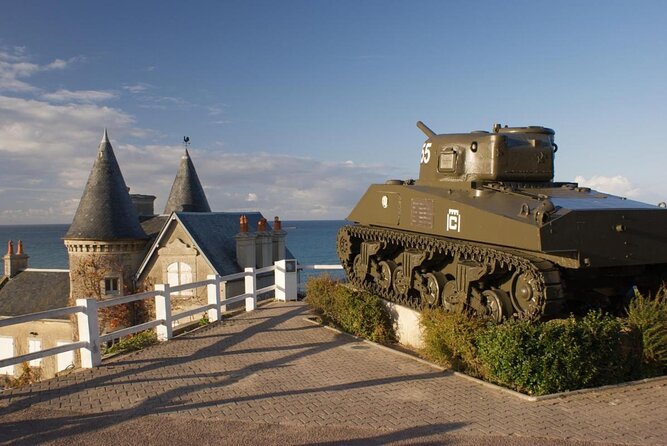
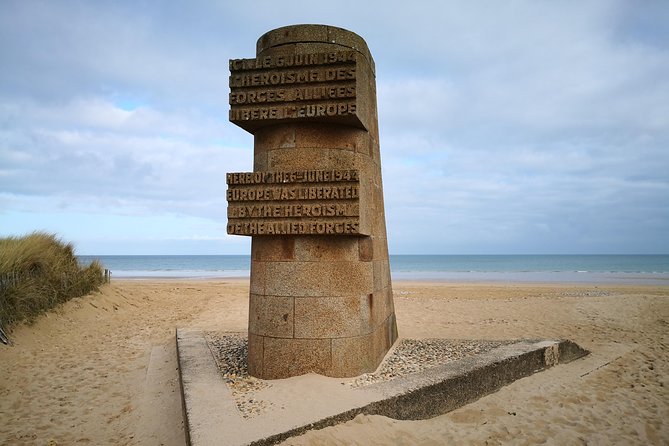
Your final major stop is Croix de Lorraine, a monument facing the sea that commemorates General de Gaulle’s return to French soil on June 14, 1944, after crossing the English Channel aboard the French destroyer La combattante.
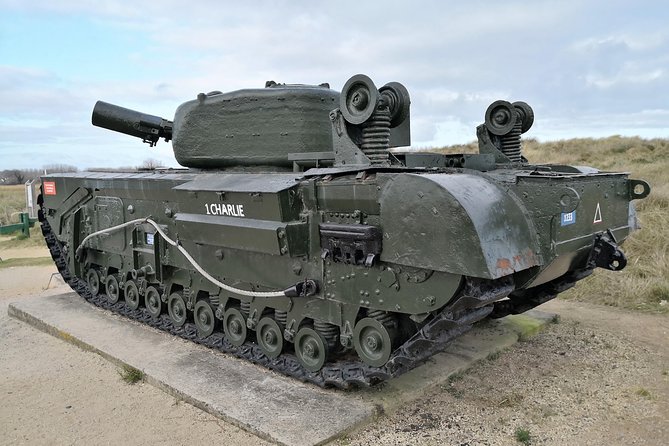
Right there, you also see a memorial item tied to D-Day engineering and landing operations: a Churchill AVRE tank—often referred to here as One Charlie. The key story is that it was unable to bridge a deep culvert about 100 yards south of the site on D-Day, and its crew had to escape under enemy fire with heavy casualties.
This stop works well as a closing note. It brings you back to the reality that D-Day involved engineering problems, terrain obstacles, and high stakes movement—not just heroic charges. It’s a reminder that success depended on getting through small, specific barriers, often under fire.
It’s also free and about 30 minutes. In other words: enough time to understand why it’s here, and enough time to feel the weight without turning the day into another long internal museum session.
Price and Value: What $288.99 Gets You
At $288.99 per person, this tour isn’t the cheapest way to reach Juno Beach from Paris. But it also isn’t just paying for seats on a bus.
Your price is doing a few important jobs:
- Transportation from Paris and back in an air-conditioned vehicle
- A guide who connects the stops into one Canadian story
- Admission to the Juno Beach Centre (the most expensive “learning” piece on your list)
Since several other stops are listed as free (Pegasus Bridge, the Canadian cemetery, La Maison des Canadiens, and the Croix de Lorraine area), you’re not paying repeatedly for tickets across the day. The spending is concentrated where it matters: the centre that turns place names into a coherent understanding of Canada’s war effort.
You are, however, paying for time efficiency. This is a one-day plan that handles big sites without you coordinating driving, parking, and timing between locations. If that sounds like your kind of trade—money for fewer logistics headaches—this price can feel fair.
The one trade-off is lunch. Since lunch isn’t included, budget for food and water and try not to treat meal breaks like optional add-ons. Starting early and walking around memorial sites can make you underestimate how quickly you’ll need something to eat.
Best For: Who Should Book This One-Day Canadian Focus Route
This tour fits you best if:
- you want a Canada-focused Normandy day rather than a generic WWII circuit
- you prefer a guide to handle the timeline so you can focus on the places
- you like small groups where you can ask questions and get real answers
It also makes sense for families with older kids or anyone who wants context without spending days driving around. The pace won’t suit someone who wants to linger for hours at each stop, but it will suit you if you want a structured day where every stop earns its place.
If you’re history-heavy and you’re the type who reads everything, you might still wish the day was longer. If you’re history-curious and want the “big meaning” explained clearly while you see the sites, this schedule is built for you.
Should You Book This Normandy Canada Tour?
If your goal is a one-day hit of Canada’s D-Day story—Pegasus Bridge first, then cemetery and Canada House, and finally the Juno Beach Centre—this is a smart choice. The strongest reason to book is the combination of small-group pacing plus the Juno Beach Centre time, which is where the day becomes more than photo stops.
Skip this if you want slow travel, lots of free time at each site, or you hate long days. Also plan for lunch and be ready to start early.
If you want maximum meaning per hour, this tour delivers.
FAQ
How long is the tour?
It runs about 13 to 14 hours.
What time and where does the tour start in Paris?
It starts at 6:30 am at Théâtre du Lido, 116 bis Av. des Champs-Élysées, 75008 Paris, France.
What’s included in the price?
The tour includes air-conditioned transportation, a guide, and entry to the Juno Beach Centre.
Is lunch included?
No. Lunch and drinks are not included unless specified.
Which stops are part of the tour?
The day includes Pegasus Bridge, Bény-sur-Mer Canadian War Cemetery, La Maison des Canadiens (Canada House), Juno Beach Centre, and Croix de Lorraine (including the Churchill AVRE tank memorial).
Is this tour offered in English?
Yes, it’s offered in English.
What if the weather is bad or I need to cancel?
The tour requires good weather. If it’s canceled due to poor weather, you’ll be offered a different date or a full refund. You can also cancel for free up to 24 hours in advance for a full refund.