REVIEW · PARIS
Louvre Masterpieces Private Guided Tour with Reserved Access
Book on GetYourGuide →Operated by ExperienceFirst · Bookable on GetYourGuide
The Louvre can feel like a maze; this tour trims the chaos. You get reserved access and a guide-led route that threads famous works with story-first commentary, including the Mona Lisa buildup everyone asks about. Guides such as Mariane, Mélina, Sébastien Cormier, and Lea came up in past feedback for clear, entertaining explanations that kept people on track. One possible drawback: the word scandal in the experience title may not match your expectations if you’re looking for shock-value only.
I like that it’s built for speed and sanity: a leisurely walk with a plan, then freedom to keep wandering. You start at the Pyramid area (with the famous “red ghost” detail), then move into the Louvre’s fortress past before hitting major crowd magnets like the Venus de Milo and Winged Victory. Still, do note a conflicting bit of info about wheelchairs—one section says wheelchair accessible, while another says not suitable for wheelchair users—so double-check before you book.
If you want the Louvre’s big names plus the human stories behind them, you’ll likely find this format satisfying. It’s also a good fit for families, based on feedback praising Sébastien Cormier as accessible to children. My only caution: it’s 2 hours, so you’ll see a lot—but you won’t see everything.
In This Review
- Key Things That Make This Louvre Tour Worth Your Time
- Where the Tour Starts: The Pyramid Area Gets You Oriented Fast
- Reserved Access and Skip-the-Line: What You Actually Gain
- The Pyramid Start and the Controversy Story You’ll Remember
- Fortress Shadows: From Medieval Foundations to a Different Louvre
- Major Stops in a 2-Hour Sprint: What You’ll Likely See
- The Great Sphinx Moment: Why This Stop Works
- Mona Lisa Finish: How to Maximize Your Self-Guided Time
- Private Guide vs Small Group: Who This Format Fits Best
- Price and Value: Why $527 Might Make Sense
- Practical Notes That Will Save You Stress
- Should You Book This Louvre Tour?
- FAQ
- How long is the Louvre Masterpieces private guided tour?
- Where do I meet the guide?
- Is there skip-the-line entrance included?
- Is the tour private?
- What language is the guide?
- What do I need to bring, and what’s not allowed?
- Is it wheelchair accessible?
Key Things That Make This Louvre Tour Worth Your Time

- Reserved access plus a skip-the-line entrance means less time queueing and more time looking
- A guide-led route that hits major highlights in a 2-hour rhythm without rushing you through
- A story-first approach to famous works, with gossip and controversies woven into the viewing
- A Pyramid start that sets the tone (including the long-running “red ghost” legend)
- A flexible setup: fully private or a small group option for up to six people
- Mona Lisa finish with smart next-step tips so you can keep exploring after the guided portion
Where the Tour Starts: The Pyramid Area Gets You Oriented Fast
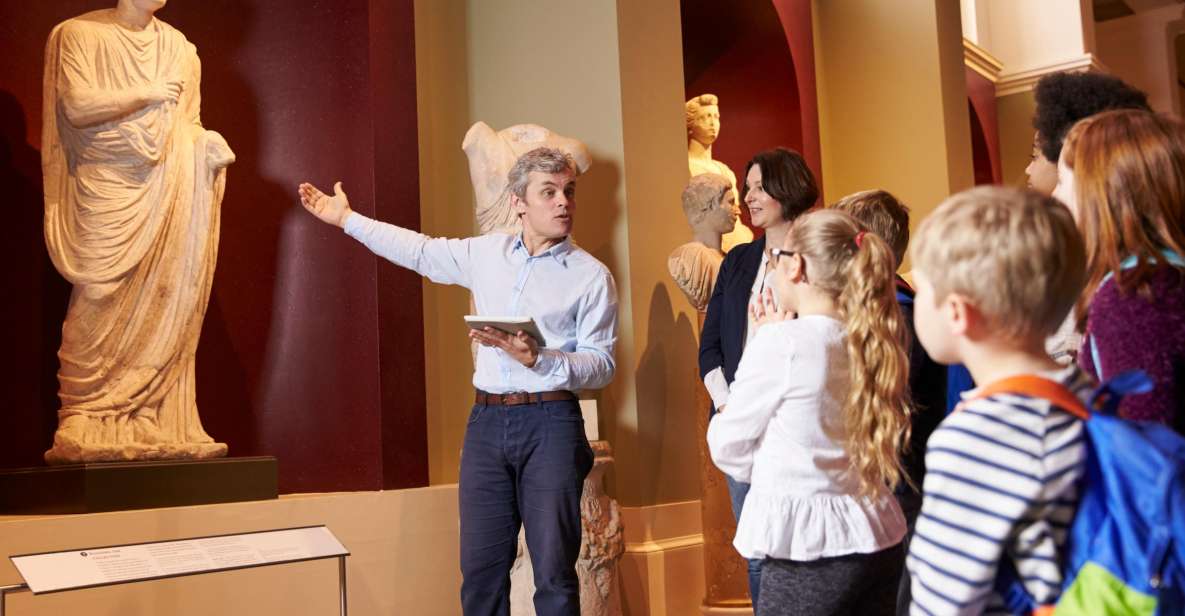
The tour begins in the Pyramid zone, right by the Tuileries Garden—so you start with a sense of place, not a guessing game. Your meeting point is at the statue of Louis XIV on horseback, directly in front of the Pyramid and near the main Louvre frontage. The stated start address is 8 Pl. du Carrousel, but the practical meet spot is that Louis XIV statue.
Why this matters: the Louvre is enormous, and the Pyramid area is the real navigation hub. Starting there lets you get your bearings quickly, and it also helps the guide point out sightlines you’d miss if you just wandered in. You’ll also get the fun setup story about the Pyramid’s controversy—why people argued about it, and how that debate stuck.
The tour framing also leans into theater. You’ll hear about the “pesky little red ghost” that’s said to have appeared around the Pyramid area for hundreds of years. It’s the kind of detail that makes the building feel alive instead of just official and museum-still.
You can also read our reviews of more guided tours in Paris



Reserved Access and Skip-the-Line: What You Actually Gain
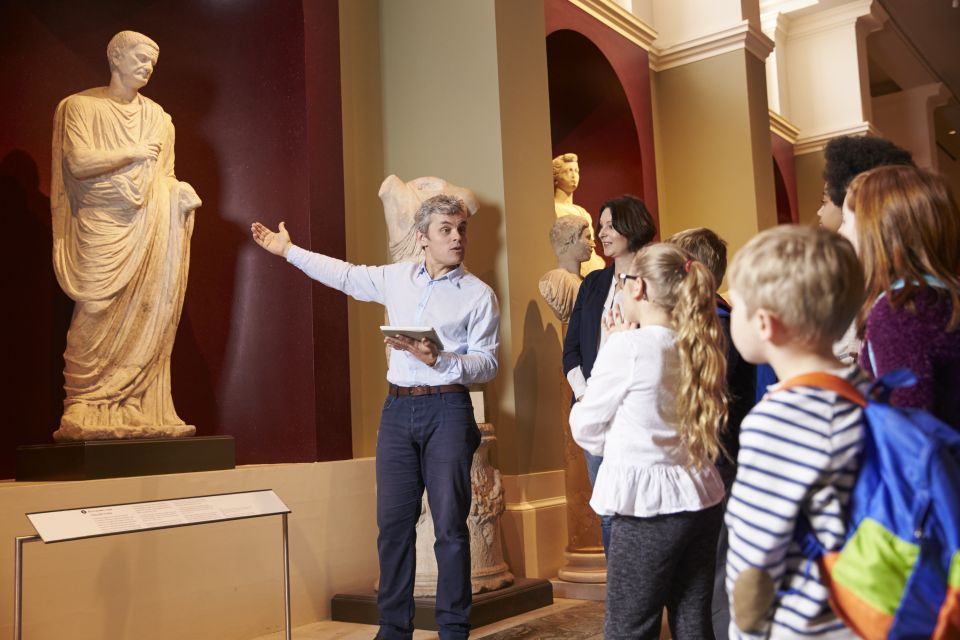
You’re paying for time saved, and with Louvre entry, time is everything. This tour includes skip-the-line entrance via a separate entrance, plus a guide who gets you moving into the museum efficiently. With only 2 hours, arriving late or getting stuck in general lines would eat the experience.
What you’ll notice is pacing. Instead of spending half your visit searching for which wing to start in, you’ll follow a plan that guides you from one major moment to the next. That also means your guide can spend their energy on interpretation—why a work looks the way it does, why it mattered, and what stories surround it—rather than repeating basic logistics.
One more practical point: you’ll need passport or ID card, and the museum rules limit bags and luggage. Items larger than 55x35x20 cm aren’t permitted, and no large bags or luggage means you may want a compact day bag.
The Pyramid Start and the Controversy Story You’ll Remember
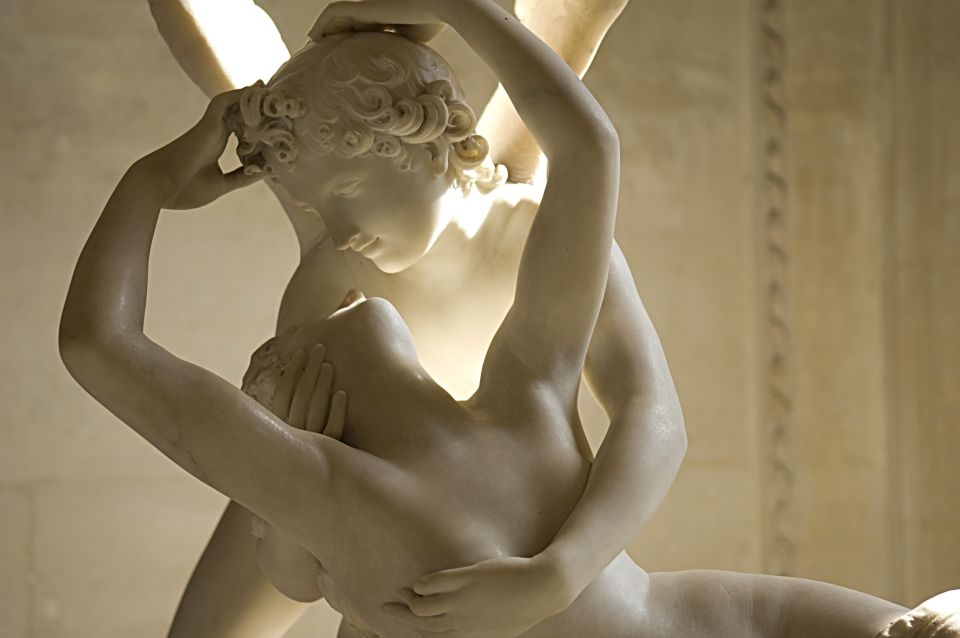
Starting at the Pyramid isn’t just tradition. It gives the tour a theme: the Louvre isn’t only about art, it’s also about architecture, power, and public argument.
You’ll hear about the controversies behind the Pyramid, and that’s useful because it changes how you see the glass and metal geometry. It’s easy to treat the Pyramid like a simple entrance now, but a controversy story helps you understand why people still have strong feelings about it.
You also get the “red ghost” legend—odd, spooky, and very Louvre-ish. Whether you treat it as folklore or just a fun legend, it helps you focus. Instead of your mind glazing over at museum scale, you’re listening for story beats as you move.
This portion is short, but it sets expectations for how the guide will talk: lively, story-forward, and focused on the human mess that history loves.
Fortress Shadows: From Medieval Foundations to a Different Louvre
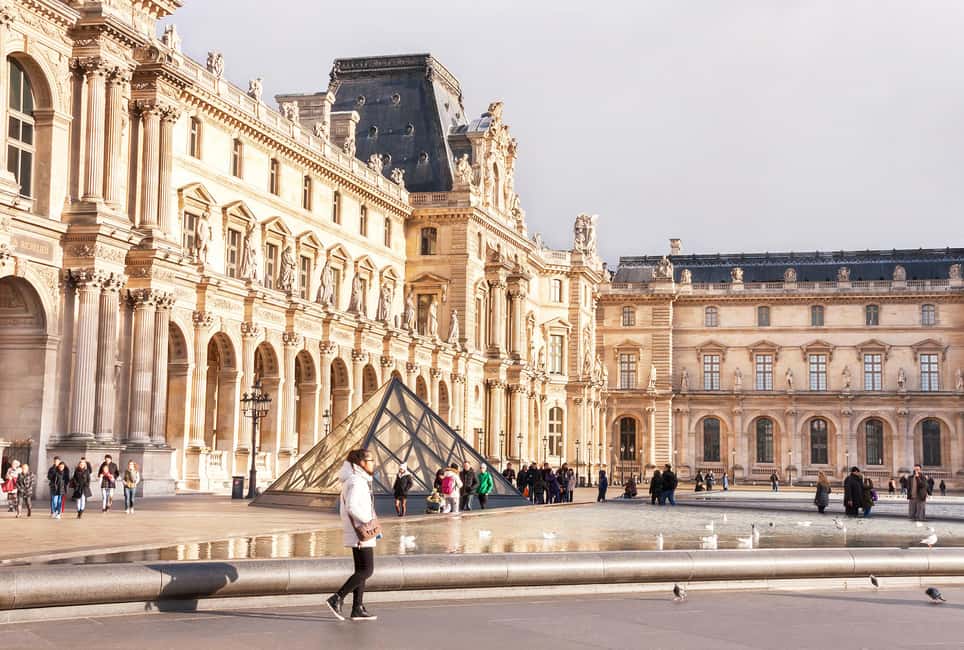
Once you move inside, the tour flips the timeline. The focus shifts from shiny highlights to the Louvre as a former fortress, which is a huge part of the building’s character.
You’ll walk through areas described as the Medieval Foundations, where the Louvre’s earlier defensive role comes through more clearly. Even if you’re not a history fanatic, it’s a smart way to reset your mindset. The museum halls are so dominant that it’s easy to forget the site started as something much more practical and guarded.
This part also helps with museum psychology. When you start with the modern high-profile works, the Louvre can feel like a whirlwind of objects. The fortress stop gives your brain a “pause and reframe,” so later masterpieces land better.
You’ll still keep moving, though. The point isn’t to slow down for a full history lecture—it’s to give you a foundation so the big art moments feel less random.
Major Stops in a 2-Hour Sprint: What You’ll Likely See
The tour is planned to stop at over a dozen world-famous works. In two hours, that doesn’t mean you’ll spend 20 minutes in front of each painting. It means you’ll see the key pieces, get the context, and move on before you lose the thread.
From the experience description, expect the route to revolve around headline works and “you’ve heard of it” masterpieces, including:
- Mona Lisa (your finale)
- Venus de Milo
- Winged Victory
- The Great Sphinx of Tanis (a real standout for scale and presence)
- Plus many additional famous paintings, sculptures, and artifacts along the way
Here’s the value of this format: you’ll learn the controversies, scandals, and dramatic historical angles tied to famous names—so the works don’t feel like detached museum posters.
You’ll also hear talk of darker stories, including references to murder and cannibalism. That’s not there to be gross for gross’s sake. It’s used as storytelling fuel to explain why certain myths and reputations stuck around particular objects and figures.
A balanced warning: one past rating flagged that the scandal angle didn’t feel as scandalous as expected. So if you’re after shock content alone, you might come away wanting more edge. If you prefer context wrapped in entertaining narrative, you’ll likely enjoy the tone.
You can also read our reviews of more private tours in Paris






The Great Sphinx Moment: Why This Stop Works
The Great Sphinx of Tanis isn’t the Louvre’s most famous “walk-up-and-photograph” icon, which is exactly why it can feel special on a highlights tour. It’s listed as part of the planned route and described as having riddles that puzzled people for thousands of years.
Even with limited time, this kind of stop gives you variety. You’re not stuck in one style, one era, or one visual rhythm. It’s also a helpful change from the European painting-sculpture-heavy flow that many visitors expect.
And it makes the museum feel global. You start with the idea of Louvre European glory, then you’re reminded that this museum collects voices across regions and centuries.
Mona Lisa Finish: How to Maximize Your Self-Guided Time

Your guide ends at the Louvre’s most famous lady of them all—Mona Lisa. From there, you’re free to stay in the museum as long as you want, and the guide provides handy tips for what to see next on your own.
That handoff is important. A guided tour can help you understand what you’re looking at, but self-guided time is where you control your pace. If you want to linger, you can. If you want to pop into an extra room while you’re still near the highlights, you can.
One practical mindset shift: treat Mona Lisa as a start signal for your own priorities. Your guide tips can help you avoid random wandering and steer you toward additional works that match what you like—paintings, sculpture, or the kind of stories that match the tone you just heard.
Private Guide vs Small Group: Who This Format Fits Best
This experience is offered as a private tour or a semi-private small group option for a customized group of up to six people. Either way, the guide has the advantage of tailoring the pacing and stopping points.
I especially like this setup for groups that want control. In a big crowded tour, you get dragged along. With a private guide or small group, you can ask questions and steer the conversation toward what you care about—art technique, the history behind the characters, or the controversies around specific works.
Feedback also suggests the guides handle different ages well. Sébastien Cormier was praised as accessible to children, which matters because Louvre visits can be either inspiring or exhausting for families.
If you’re traveling with teens or kids, this guide-led structure can keep attention from slipping. If you’re traveling solo or as a couple, the private or small group nature can make the Louvre feel less like a chore and more like a guided discovery.
Price and Value: Why $527 Might Make Sense
At $527 per person for a 2-hour tour, this is not a budget activity. So the value question is fair.
Here’s where the price can make sense:
- You’re buying reserved access and skip-the-line entry, which can be a big deal when queues swallow time.
- You get a planned route that hits the biggest works plus extra context in a short window.
- You pay for a guide who turns viewing into understanding, using story and controversy to make the art stick.
- After the guided segment, you still have time to keep exploring, with guidance on where to go next.
In plain terms, you’re paying to trade “wandering and guessing” for “seeing the right things with context.” If you only have a short visit window—or you hate lines and navigation stress—this can feel like money well spent.
If you have multiple days in the museum and you’re comfortable building your own route, you may prefer cheaper options like entry plus audio guide. But if you want the highlights plus story in one compact package, the cost isn’t out of place.
Practical Notes That Will Save You Stress
A few on-the-ground rules matter here:
- Bring passport or ID.
- The museum doesn’t allow pets, and you can’t smoke.
- No luggage or large bags, and anything over 55x35x20 cm isn’t permitted.
- The activity notes say it’s wheelchair accessible in one place, but it also says not suitable for wheelchair users elsewhere. This mismatch is worth checking directly with the operator before you commit.
Timing matters too. The tour is 2 hours, so you’ll get the most out of it if you plan to arrive early at the meeting point and stay ready for walking.
One more detail to keep your expectations clear: after the guided portion, the museum time is described as self-guided. So think of the guide as your fast “story engine,” then switch into your own exploration mode once you’re near the Mona Lisa area.
Should You Book This Louvre Tour?
Book it if you want a tight, story-driven Louvre overview with less line stress, and you only have a couple of hours. It’s a smart choice if you’d rather pay for guidance than spend your limited time figuring out where to go next.
Skip it if you’re the kind of visitor who wants to park in front of a single painting for a long stretch, or if the idea of story-led “gossip” isn’t your thing. Also, if you’re relying on wheelchair access, don’t assume—confirm because the information provided doesn’t match.
If you fall somewhere in the middle—curious, short on time, and hoping the Louvre feels human rather than intimidating—this is likely a solid way to get oriented and leave with the big works plus the stories that make them memorable.
FAQ
How long is the Louvre Masterpieces private guided tour?
It lasts 2 hours.
Where do I meet the guide?
Meet at the statue of Louis XIV (a man on a horse) in front of the big Pyramid, directly in front of the Louvre front entrance.
Is there skip-the-line entrance included?
Yes. You get skip-the-line entrance through a separate entrance.
Is the tour private?
Yes, it’s offered as a private group. There is also an option to customize for a small group of six people as a semi-private experience.
What language is the guide?
The live guide is English-speaking.
What do I need to bring, and what’s not allowed?
Bring a passport or ID card. Pets are not allowed, smoking is not allowed, and luggage or large bags aren’t allowed. Items exceeding 55x35x20 cm are not permitted.
Is it wheelchair accessible?
The details provided include wheelchair accessibility, but another note says not suitable for wheelchair users. Confirm before booking so you’re not surprised.