REVIEW · PARIS
Family Tour at the Musée d’Orsay
Book on Viator →Operated by Meet the Locals · Bookable on Viator
A great museum day starts with less waiting. This family tour at Musée d’Orsay mixes skip-the-line entry with a kid-friendly puzzle so you move through the museum with purpose, not stress.
I like that you get a professional guide just for your party, not a crowded group shuffle. I also like that kids get their own activity booklet, turning big art names into solvable questions along the way. The one thing to plan for: it’s about two hours on your feet, so you’ll want to bring water and pace the walk if anyone gets antsy.
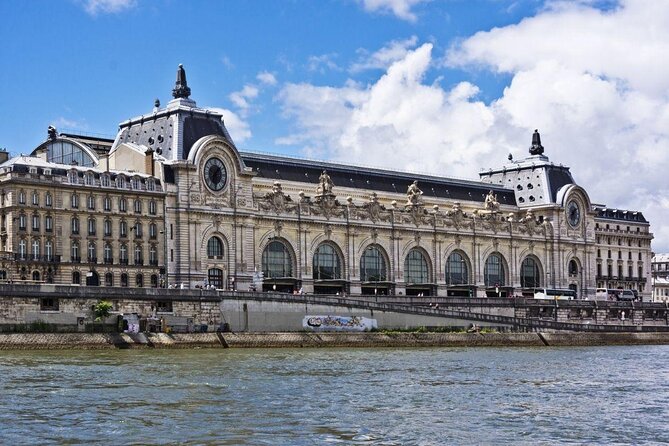
If you’re heading to Orsay anyway, this is a strong way to make the visit feel like an adventure. You’ll start outside at the Orsay façade, walk in fast thanks to skip-the-line tickets, and use a family treasure hunt to hit the best-known masterpieces without missing the fun details.
The possible drawback is simple: you’re paying a premium for a private guide and included admissions, so it’s best value when you truly have a full party (up to 2 adults and 2 kids) or you know you want guided pacing.
In This Review
- Key things that make this family Orsay tour work
- Skip-the-line Orsay with a family game plan
- Meeting at the Orsay façade and walking in fast
- The Great Clock, train-station vibes, and the first riddle
- Paris Opera House clues and the Phantom of the Opera question
- Impressionist masterpieces with kid-sized secrets (Monet to Gauguin)
- Orsay terraces, rooftops, and a quick break that feels like Paris
- Price and value: when $702.93 makes sense
- Who this family Orsay tour is best for
- Should you book this family Orsay tour?
- FAQ
- How long is the Musée d’Orsay family tour?
- Is this tour private?
- Do we get skip-the-line access?
- What’s included for kids?
- Where do we meet for the tour?
- Is food included?
Key things that make this family Orsay tour work
- Skip-the-line access gets you inside quickly, so the museum day stays fun.
- A kid activity booklet and puzzle hunt keep attention on track.
- Private group format means your guide can follow what your children care about.
- Impressionist highlights with built-in secrets like Monet, Degas, Cézanne, Van Gogh, and Gauguin.
- Museum café + architectural views add breaks and Paris atmosphere without leaving Orsay.
Skip-the-line Orsay with a family game plan
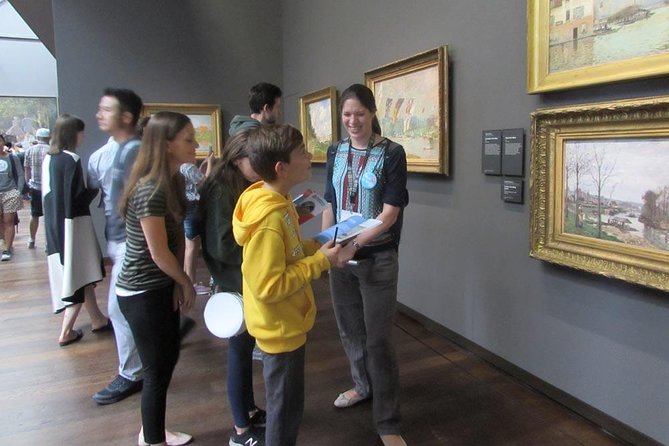
Let’s be honest: Orsay can feel like a lot for families. The museum is stunning, but it’s also packed with rooms and details that can send kids (and adults) in different directions. This tour solves the problem with a clear rhythm: quick entry, guided stops, and a treasure-hunt style activity that keeps young visitors engaged.
You’ll get skip-the-line tickets, which matters because waiting in lines is the fastest way to drain excitement. Instead, you get moving right after you meet your guide. That pacing helps kids stay curious longer. And it helps you keep control of the day without feeling like you’re herding cats.
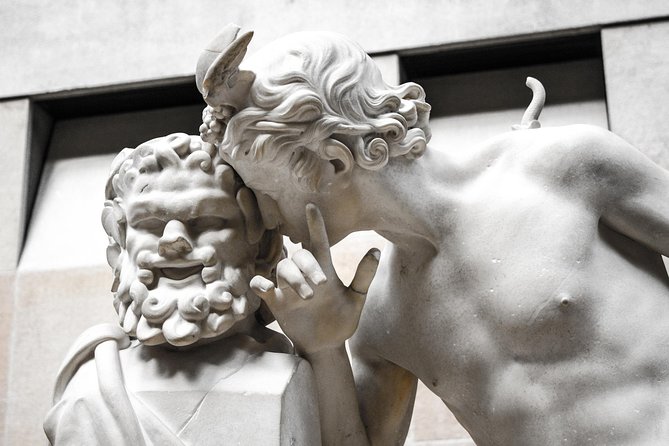
The other big advantage is that it’s a private tour. Your guide isn’t trying to please five different families with different ages and attention spans. That flexibility shows up in small choices—like whether you pause for a Rodin sculpted group or for Pompon’s Polar Bear depending on what your kids latch onto.
One more plus: the tour is built around well-known artists, but with kid-friendly angles. Rather than listing paintings and hoping your children care, the guide frames works with questions and clues that make the art feel like a story you can solve.
You can also read our reviews of more tours and experiences in Paris.



Meeting at the Orsay façade and walking in fast
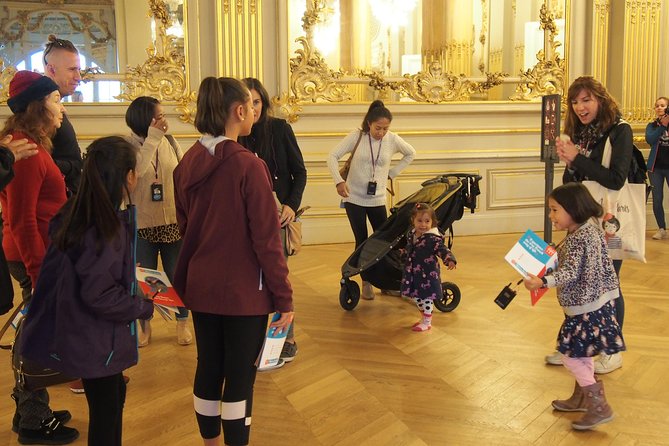
Your tour starts at the Musée d’Orsay, 75007 Paris, with the meeting point right at the front. From there, you’ll receive your skip-the-line tickets and an activity booklet for each child.
I love this setup because it removes guesswork. You’re not sprinting through confusing directions. You’re not trying to figure out where to line up. You show up at the façade, meet the guide, then you go in.
The tour uses a mobile ticket, which is handy for busy families. If you’ve ever wrestled with printed tickets while kids are scanning everything in sight, you already know why this matters.
As for timing, plan on about two hours. That’s enough time to get a meaningful slice of Orsay—especially the areas families usually find most exciting—without turning it into a full-day endurance test.
The Great Clock, train-station vibes, and the first riddle
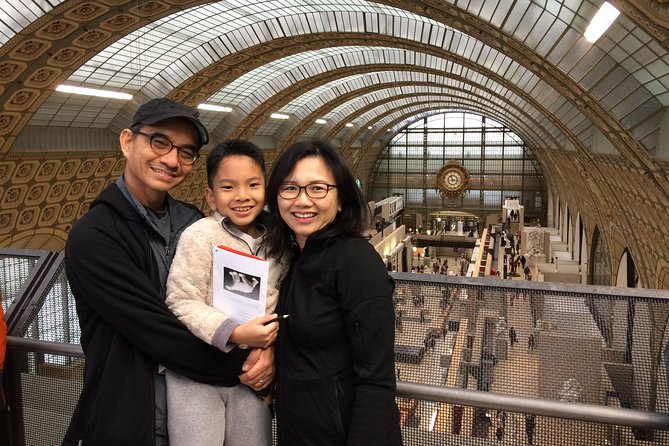
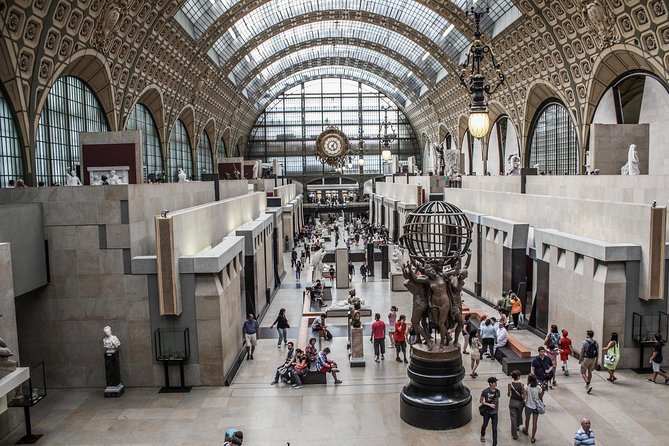
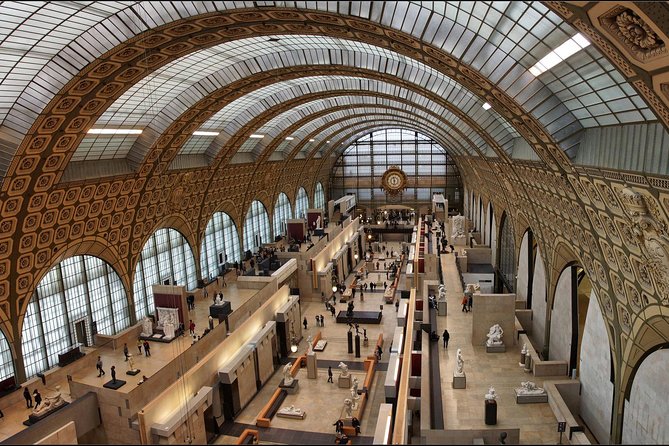
The first moment you’ll notice—before you even reach the heart of the galleries—is the museum’s sense of place. You’ll look up at the Great Clock, which ties Orsay to its earlier life as a train station. That detail isn’t just decoration. It’s a reminder that this building carries motion in its bones, even now.
Your guide uses that connection to spark conversation with a family-friendly question style. You might even get a playful explanation about the idea of trains passing from time to time, then pivot straight into the activity hunt.
Early on, your kids begin their first riddle—one clue points toward the Statue of Liberty. It’s a fun way to make the museum feel like a treasure map rather than a quiet art library. You’re giving kids a reason to look carefully, not just wander.
This is also where the private format helps again. Depending on your children’s interests, the guide may choose a stop near Rodin (through a sculpted group) or steer you toward Pompon’s Polar Bear. Those options give you variety without breaking the tour flow.
Practical tip: if your kids have a clear favorite topic—animals, sculpture, or famous landmarks—tell your guide early. The tour structure is flexible enough to respond.
Paris Opera House clues and the Phantom of the Opera question
Orsay covers a specific era, and one of the strongest ways it feels different from other Paris museums is through its coverage of cultural life in the late 1800s and early 1900s. A full section focuses on the Paris Opera House, because it was such a central symbol during the period the museum spans.
As you move through this area, your guide ties the artworks and architecture to questions that feel like mini mysteries. One example: your guide may bring up the idea of the river behind the story of The Phantom of the Opera, then ask whether it’s only a legend.
This is smart for families. It doesn’t require kids to already know the full opera story. It invites them to wonder, then prompts them to pay attention long enough to find the answer within the museum’s clues and context.
Also, this kind of stop is a good mental reset. If you’ve got one kid who gets overwhelmed by painting details and another who wants drama and story, the Opera House theme helps both feel included.
Impressionist masterpieces with kid-sized secrets (Monet to Gauguin)
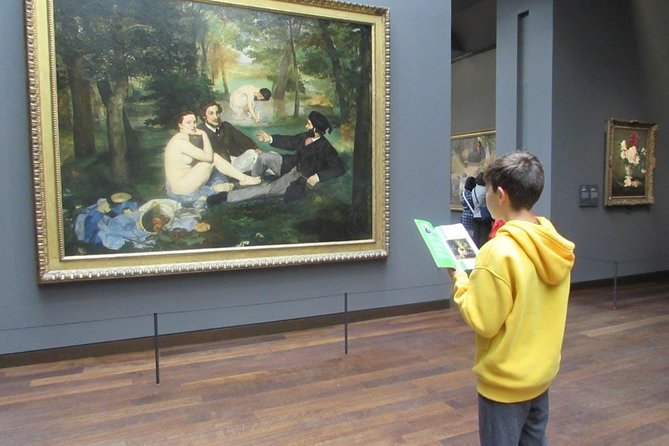
Now for the part families usually remember: the Impressionist galleries. This is where the tour’s treasure-hunt format pays off the most, because it turns looking into a game.
You’ll hear prompts that lead to close looking, like questions about who’s really shown in Claude Monet’s Poppies. Kids don’t need art-history homework. They just need a reason to spot figures and details—and the guide gives them that.
For Degas, you may discuss what’s surprising about Small Dancer Aged 14. That’s another example of how the guide frames art for younger viewers: not as a lecture, but as a question that has a punchline once you notice it.
With Cézanne, your clue may focus on the idea of whether he painted apples the way you might imagine. It nudges kids to think about how painters see, and why a familiar object can still be strange on canvas.
You’ll also cover major staples like Van Gogh’s Sunflowers and Gauguin’s Tahitian scenes. The value here is not just seeing the titles. It’s having your guide help you connect the dots between style, subject, and what makes each artist’s approach different.
And since your guide explains based on kids’ ages and levels, the tour avoids the common family-museum problem: either the explanation is too hard and kids lose interest, or it’s too shallow and adults feel bored. Here, the goal is to keep everyone in the conversation.
If your teen is reading up on art already, they’ll likely appreciate that the clues still allow for deeper thinking. If your younger child is just along for the ride, they’ll still have moments where the art feels like a puzzle they solved.



Orsay terraces, rooftops, and a quick break that feels like Paris
Orsay isn’t only paintings. The building itself has great energy. Along your route, you’ll have overviews of Orsay architecture and Paris rooftops from terraces or lookouts.
This is more useful than it sounds. When kids get tired, a view break helps reset attention. You also get a different kind of reward: not another painting name, but a lived-in Paris moment that reminds everyone they’re in the city, not inside a vault.
Then there’s a coffee break in the museum café. Food isn’t included in the tour price, but the fact that the schedule includes time to sit matters. It’s one less thing for you to manage mid-tour. Grab a snack if you need it and keep moving without turning the visit into logistical juggling.
One more fun detail: there’s even a ballroom to be seen, tied to the museum’s early 1900s feel. The tour can make that stop feel playful, like you’re momentarily in the era of waltzes and formal rooms. Even if you don’t slow down for dancing, it’s a nice shift from galleries to atmosphere.
Price and value: when $702.93 makes sense
At $702.93 per group (up to 4 people), this isn’t a cheap museum outing. But it can be good value if you compare what you’re actually getting.
You’re paying for:
- A private, professional guide
- Skip-the-line tickets
- Entrance admission included
- An activity booklet for each child
- A structured 2-hour plan designed for families
If you’re a family of four, that price often feels more reasonable because the guide time and skip-the-line access aren’t spread across strangers. It’s your family’s pace, your family’s questions, your family’s stops.
If you’re two adults with no kids, or you’re traveling with only one adult, the value drops a bit since the tour price is anchored to the family group size. It can still be worth it if you want a tight, guided highlight route, but the design is clearly for kids.
Also note: the tour is in English, so it’s straightforward if your family doesn’t want to rely on translation apps to keep everyone engaged.
Transportation is not included except for bus tickets during the tour, so you’ll still handle getting to Orsay on your own. That’s normal for city attractions, but it’s worth factoring into your day plan.
Who this family Orsay tour is best for
This tour fits best if you want:
- A museum visit that doesn’t feel like a school field trip
- A clear route through big highlights in about two hours
- A guide who can tailor explanations to kids’ ages
- Less time in lines and more time looking
It also makes sense for families with a range of ages—like tweens and teens. One reason the format works is that the clues can scale. A younger child can chase simple puzzle points, while an older kid can dig into why a painter structured a scene the way they did.
One practical note: you’ll want moderate physical fitness. You’re walking through museum spaces and moving between stops. It’s not a hike, but it’s not a sit-and-watch-the-screen kind of tour either.
If your kids are easily distracted, the treasure-hunt booklet is the difference between a memorable museum day and a strained one.
Should you book this family Orsay tour?
Book it if you know you’ll enjoy Orsay more with structure. This is a good choice when your family wants top Impressionist art, but you don’t want to spend the morning trying to guess where to go or how to keep kids engaged.
Skip it if you’re the type who loves slow wandering with no plan. If you want to spend four hours drifting room to room with no timeline, a guided treasure hunt might feel like training wheels.
My take: for most families, the sweet spot is exactly what this tour is built for—fast entry, smart pacing, and kid-focused clues that turn famous paintings into something you can actually talk about on the way out.
FAQ
How long is the Musée d’Orsay family tour?
It lasts about 2 hours.
Is this tour private?
Yes. It’s private, and only your group participates.
Do we get skip-the-line access?
Yes. The tour includes skip-the-line tickets for entry.
What’s included for kids?
Each child receives an activity booklet, used for a puzzle or treasure-hunt style experience during the museum visit.
Where do we meet for the tour?
You meet at Musée d’Orsay, 75007 Paris, France, and the tour ends back at the meeting point.
Is food included?
No. Food, snacks, and alcoholic beverages are not included, though there is time for a coffee break in the museum café during the visit.