REVIEW · PARIS
Latin Quarter Paris Guided Walking Tour Semi-Private 12ppl Max
Book on Viator →Operated by Babylon Tours Paris · Bookable on Viator
Paris has a way of rewarding slow feet.
This semi-private walking tour strings together two of the city’s most story-heavy zones—the Île de la Cité and the Latin Quarter—so you don’t just see famous spots, you understand why they matter. I especially like that the pacing stays manageable (guides such as Hugo, Eden M., and Francois are repeatedly praised for keeping a relaxed rhythm with frequent stops), and I also like the mix of big landmarks plus the quieter religious buildings and book culture that make the Left Bank feel lived-in. One thing to consider: it is still a true walking tour with a “moderate fitness level” requirement, and many stops are exterior-only or limited by security, so you’ll want to know you’re paying for context more than for full interior access.
In This Review
- Key Points I’d Prioritize
- Entering Île de la Cité: Roman Roots and Notre-Dame From the Right Angles
- Crossing the Seine to the Latin Quarter: Where Ideas Took Hold
- Fontaine Saint-Michel: A Picture-Perfect Pause With Moral Symbolism
- Shakespeare and Company: Bookshop History You Can Walk Into
- Two Ancient Churches (and Why They Matter More Than You Think)
- Musée de Cluny and the Roman Baths Story (Without Forcing a Ticket)
- The Sorbonne and the Pantheon: Big Names, Clear Context
- Luxembourg Gardens and the Left Bank’s After-Study Atmosphere
- St. Étienne du Mont and the Wall of Philip II Augustus: The Short Stops That Feel Like Wins
- Semi-Private Group Feel: What 12 People Changes
- Price and Value: $59.69 for 2.5 Hours of Real Context
- Who Should Book This Latin Quarter Walk (and Who Might Skip)
- Should You Book This Tour?
- FAQ
- What are the tour dates and language?
- How long is the walking tour?
- What is the group size for the semi-private option?
- Where does the tour start and end?
- Are tickets for Notre-Dame, the Panthéon, and Musée de Cluny included?
- Can I cancel and get a full refund?
Key Points I’d Prioritize
- Semi-private by design with a max of 12 people, which makes questions and small detours feel normal
- Two power zones in one: Roman Paris roots on Île de la Cité plus the intellectual Left Bank around the Sorbonne
- Literature at the center with time at Shakespeare and Company (and sometimes readings, depending on timing)
- Churches that frame the story from Saint Julien le Pauvre to Saint-Séverin, with major historical layers
- Pantheon and major sites as exteriors so you get the big picture without spending your whole time in lines
- Great value for a short trip at $59.69 for 2.5 hours with a professional guide and rain-or-shine operation
Entering Île de la Cité: Roman Roots and Notre-Dame From the Right Angles
Most Paris tours start in the center and call it a day. This one begins on Île de la Cité, where Paris started growing into a capital. You start at Cité75004, and you’ll get the first big lesson fast: the island’s past reaches back to Lutetia, the Roman city that preceded today’s Paris. That context matters because it changes how you read everything you see next—especially along the Seine.
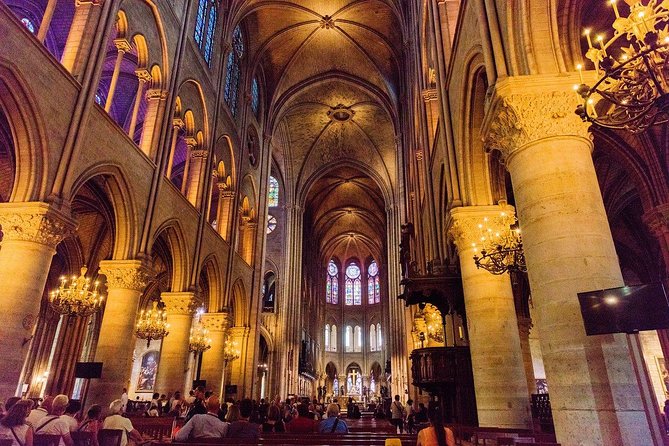
A core stop is Notre-Dame, but here’s the practical part: you’re seeing the exterior only. That’s not a drawback if you come with the right expectations. Notre-Dame’s façade and mass tell most of the story even without going inside. Your guide should help you notice the Gothic features that make it so famous—size, age, and design cues—while also tying it to why this area mattered for centuries.
Timing is fairly tight at early stops, so I recommend you arrive with comfortable shoes already broken in. You’ll walk, stop, look, and listen. The payoff is that you’re not “rushing through sights.” You’re learning the vocabulary of the neighborhood in real time.
You can also read our reviews of more walking tours in Paris



Crossing the Seine to the Latin Quarter: Where Ideas Took Hold
After Île de la Cité, you cross toward the Latin Quarter, the historic heart of the Left Bank. This is where Paris turns intellectual. The neighborhood is closely linked to the Sorbonne, and you’ll hear how the university shaped the rhythm of knowledge in France.
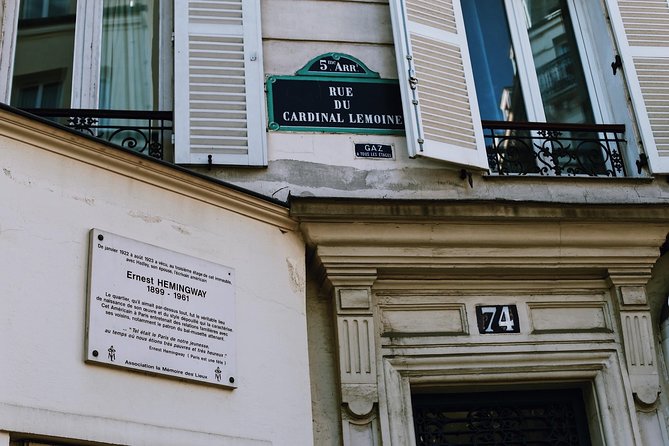
What I like most about this part is the story style: it’s not only about buildings. You’ll get the sense of who lived here and what drove the culture—think writers and thinkers, not just tourists. The tour highlights how the area connected famous names, and it even ties in 20th-century literary and artistic life, including references to figures like F. Scott Fitzgerald and Ernest Hemingway. That’s a fun bridge if you read English-language literature and want to see how it connects to actual streets in Paris.
This neighborhood also helps you understand a common Paris contrast. On the Right Bank, power and commerce tend to dominate the feeling. On the Left Bank, you get the vibe of debate, scholarship, cafés, and students—exactly the energy your guide is trying to bring to life as you move.
Fontaine Saint-Michel: A Picture-Perfect Pause With Moral Symbolism
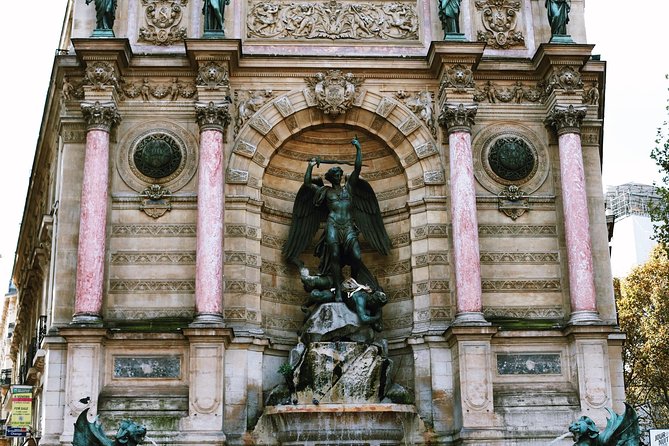
Before you dive deeper into the Left Bank’s architectural layers, you pass Fontaine Saint-Michel. It’s a Haussmann-era commission under Napoleon III, and the fountain’s design is loaded with symbolism: the archangel Michael vanquishing the Devil. That battle theme—good versus evil—sounds dramatic, but it’s also one of those “small Paris details” that makes the city feel intentional.
This stop is short, but it’s a good example of how the tour teaches you to look. Don’t just treat it like a pretty corner photo. Use the time to notice how Paris uses public art to broadcast values and stories in plain sight.
Shakespeare and Company: Bookshop History You Can Walk Into
One of the most fun stops is Shakespeare and Company, minutes from Notre-Dame. It’s not an ordinary bookstore. Even if you don’t buy anything, it’s a place that holds literary memory in a physical way—exactly why it fits this theme of the Latin Quarter.
You’ll get time there, and it’s a popular moment on this tour because it connects modern Paris culture with older patterns of writers finding community. The tour frames the bookshop’s importance through its ties to the Beatnik generation and later decades, when literary life moved through the neighborhood in a very particular way.
Here’s the practical tip: since some groups may catch special moments like readings depending on timing, keep your schedule flexible in the shop area. If you’re lucky, you get more than sightseeing—you get a real slice of the place’s ongoing character.
Two Ancient Churches (and Why They Matter More Than You Think)
The tour includes multiple churches, and that’s not just “random sightseeing.” In Paris, religious buildings are often time machines. You’ll see Saint Julien le Pauvre (noted as one of the city’s oldest religious buildings) and Saint-Séverin, one of the oldest churches still standing on the Left Bank and still used for worship.
Even when you’re only getting exterior views, you can learn to spot why people cared. Old church styles signal where communities gathered, how faith shaped neighborhoods, and how the city rebuilt itself across centuries. Your guide should help you connect these stones to the wider story of the Left Bank: students, scholars, artists, and ordinary Parisians sharing the same streets across different eras.
If you’re the type who loves architecture but hates museum overload, this is a sweet middle ground. You get architectural history with minimal indoor time—and you keep moving.
You can also read our reviews of more guided tours in Paris






Musée de Cluny and the Roman Baths Story (Without Forcing a Ticket)
Near the middle of the walk, you head toward Musée de Cluny, also called the National Museum of the Middle Ages. This area is significant because the museum is partially built on remnants of third-century Gallo-Roman baths. That alone is worth learning, since it ties the “Roman Paris” theme from the start directly into the Middle Ages.
One key detail: museum entry is not included. So you’ll likely have a chance to experience the location and decide whether to pay to go in (or simply take in the context from the outside with your guide’s explanation). I like this setup for two reasons. First, it keeps the tour moving. Second, you’re not locked into an indoor commitment when you might already feel museum-ed out.
If you want the inside experience later, this stop helps you decide with a better understanding of what you’d actually be paying for.
The Sorbonne and the Pantheon: Big Names, Clear Context
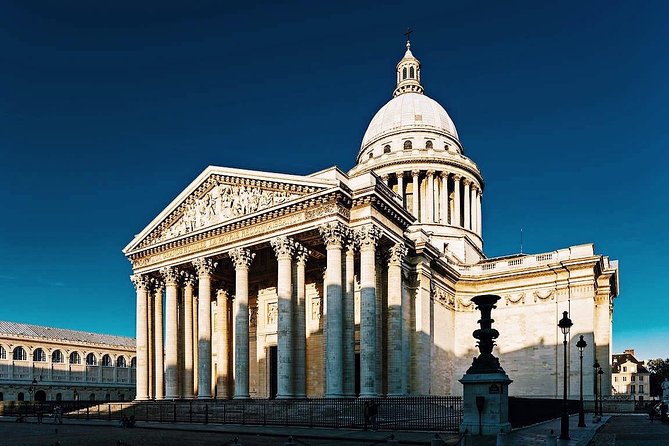
Two of the tour’s anchor moments are La Sorbonne and the Panthéon.
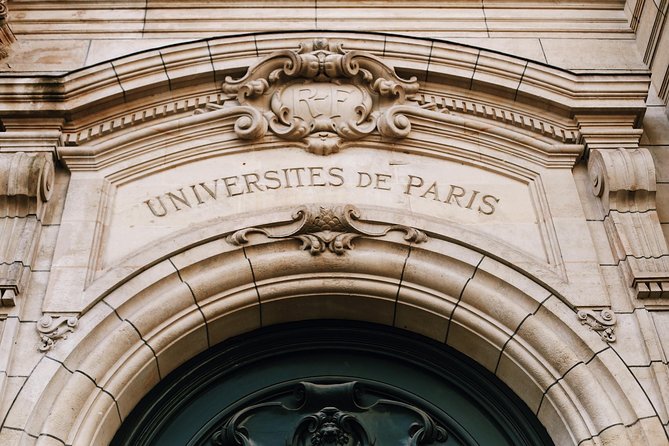
At the Sorbonne, you’re not just looking at a campus. You’re seeing a symbol of how French higher education became a center of knowledge. The guide’s job here is to make the university’s history feel connected to everyday Paris, not like a distant academic timeline.
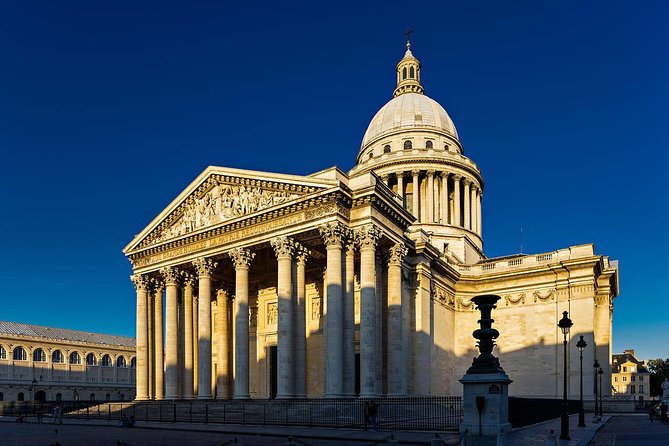
Then you reach the Pantheon. Here again, you should expect exterior only. The Pantheon started as a church dedicated to St Genevieve, but it now functions as a secular mausoleum. You’ll hear which notable French figures are interred there, including Voltaire and Rousseau. Even without going inside, that’s a powerful layer: the building’s purpose changed, but the idea of public memory remained.
If you’ve ever wondered why Paris sometimes treats philosophy like a civic monument, these stops explain it with no fluff.
Luxembourg Gardens and the Left Bank’s After-Study Atmosphere
One of the most pleasant segments is Luxembourg Gardens, near the border between Saint-Germain-des-Prés and the Latin Quarter. The gardens are tied to royal history (created in 1612 under Queen Marie de Medici, inspired by Florence’s Boboli Gardens) and they cover a sizeable area.
This stop is a reset. By the time you get here, you’ve walked through history-heavy corners—Roman roots, medieval churches, university associations—and the gardens let you breathe while still staying in the same narrative world. It’s also a natural place to ask your guide where to go next, because you’re done with the core route and ready for a smart follow-on plan.
If you’re traveling on a tight schedule, this is one of the best “still in the story” places to linger. Don’t over-plan the rest of your day—give yourself time to sit and look. Paris rewards that.
St. Étienne du Mont and the Wall of Philip II Augustus: The Short Stops That Feel Like Wins
If there’s time, you may see St. Étienne du Mont. This church is notable for the shrine of St Geneviève and the tomb of Jean Racine. It’s a smaller-feeling stop compared to the Pantheon, but that’s exactly why it works. It adds depth without turning your afternoon into a marathon of mega-sights.
The walk also may include the Wall of Philip II Augustus, described as the oldest city wall in Paris. The guide connects it to political struggles and defense decisions, including the context of Philipp II and Plantagenet tensions before the Third Crusade. When you learn that something as physical as a wall can reflect decisions made at the top of society, Paris architecture stops being decoration and becomes evidence.
These last-minute add-ons are the kind of thing you’d miss on your own unless you already knew what to look for. They make the tour feel like a guided map of the neighborhood’s hidden structure.
Semi-Private Group Feel: What 12 People Changes
Max group size is 12, and that matters more than you might think. With smaller groups, the guide can actually track questions and adjust pace. The reviews you provided repeatedly praise guides for relaxed pacing and answering questions, and that’s the benefit of keeping the group small.
You should also expect frequent short stops—this is not a “power walk” tour. The route includes many quick photo-and-story moments, plus a couple of longer listening beats. That style is ideal if you like history but don’t want to spend your whole day trapped indoors or in long lines.
Also, the tour runs rain or shine. That’s a big deal in Paris, where weather changes can be sudden. Dress for wet streets and bring a small umbrella.
Price and Value: $59.69 for 2.5 Hours of Real Context
At $59.69 per person for about 2 hours 30 minutes, this tour lands in the “reasonable for a guide” category—especially since it’s a semi-private experience and you’re getting both major landmarks and smaller, high-context stops.
You are not paying for entrance fees to everything. Some sites are explicitly not included (Notre-Dame interior isn’t part of this, and Musée de Cluny and the Pantheon are ticket-separated). But you are paying for something that’s hard to do solo: a coherent narrative that connects Roman Paris to medieval faith, then to university-era ideas and modern literary culture.
If you’re only in Paris for a short window and want to build a mental map quickly, I’d call this a strong value. It’s also a good match if you dislike chaotic self-guided wandering and prefer walking with direction.
Who Should Book This Latin Quarter Walk (and Who Might Skip)
This is a great fit if you:
- want a strong first-timer Left Bank orientation without doing a huge day of museums
- enjoy history that connects streets to writers, universities, and changing city identity
- prefer small-group pacing where you can ask questions and get answers
It’s less ideal if you:
- use a wheelchair or have significant walking limitations (it isn’t recommended for that)
- hate walking for multiple stops in one session, even at a relaxed pace
- want guaranteed interior access for major sites (many are exterior-only, and some interiors depend on security and time)
Should You Book This Tour?
Yes—if you want a smart, story-driven walk that links Île de la Cité to the Latin Quarter and gives you usable context for the rest of your Paris trip. The small-group size, professional guiding, and focus on recognizable landmarks plus the quieter church-and-book corners make it feel like more than sightseeing.
If you’re deciding between this and a museum-heavy plan, pick this when you want streets to teach you. Pick a museum when you want quiet halls and longer indoor time. This one is for the “I want Paris to make sense” part of your trip.
FAQ
What are the tour dates and language?
The tour is offered in English and you’ll receive confirmation at the time of booking. The tour operates in all weather conditions.
How long is the walking tour?
It runs for about 2 hours 30 minutes.
What is the group size for the semi-private option?
The tour is semi-private with a maximum of 12 travelers.
Where does the tour start and end?
It starts at Cité75004 Paris, France and ends in the Latin Quarter, Paris.
Are tickets for Notre-Dame, the Panthéon, and Musée de Cluny included?
No. Notre-Dame is listed as exterior only and its admission is not included. Panthéon is also exterior only with admission not included. Musée de Cluny is listed with admission not included.
Can I cancel and get a full refund?
Yes, you can cancel for a full refund if you cancel at least 24 hours before the experience’s start time.