REVIEW · PARIS
Explore Montmartre like a local – Private walking tour
Book on Viator →Operated by MY PRIVATE PARIS · Bookable on Viator
Montmartre feels like Paris with the volume turned up. This private walking tour keeps you moving at your pace while guiding you through the places locals actually use, not just postcard stops. I especially like the private guide setup for real questions and a calmer flow up the hill. I also really enjoy the mix of food market strolling and art stops, so you leave with ideas you can use beyond the tour.
One possible drawback: it’s a 2.5-hour walk with moderate stamina needed, so comfy shoes and a slower pace for breaks matter, especially if you’re not used to climbing. Also, you won’t get hotel pickup, so you’ll want to plan how you arrive near Moulin Rouge.
In This Review
- Key things that make this Montmartre tour worth it
- Starting at Moulin Rouge: a smart way to orient your Montmartre day
- Rue Lepic food market: browsing like you know where you’re going
- Local streets and hangout spots: the Montmartre beyond the obvious
- Painters market streets: art in action, not just art on walls
- Sacré-Cœur: finishing with the views (and where to take your time)
- Price and value: what $287.16 per person really buys you
- The guide matters: Audrey’s pacing and art focus
- Timing, tickets, and getting there without stress
- What to bring and how to enjoy it more
- Who should book this Montmartre private tour
- Should you book this Montmartre experience?
- FAQ
- How long is the Montmartre private walking tour?
- Where do we meet the guide?
- Where does the tour end?
- Is this tour private?
- What’s included, and what’s not included?
- Can I cancel for a full refund?
Key things that make this Montmartre tour worth it
- Private, your group only: you control the pace and the questions.
- Rue Lepic food market time: guided browsing with practical tips.
- Local streets between big landmarks: less script, more everyday life.
- Painters’ market area: see art being made and traded up close.
- Sacré-Cœur finish: you end with the views instead of starting with them.
- English guidance: clear explanations, not just pointing at buildings.
Starting at Moulin Rouge: a smart way to orient your Montmartre day
Meet your guide at Moulin Rouge (82 Bd de Clichy, 75018 Paris). That’s a great anchor point because the area around it gives you instant context: this is where Montmartre’s fame and its grit overlap. It also sets a tone—this tour isn’t only about the biggest view. It’s about understanding why people come here, and why they keep coming back.
In practice, the private format matters. You’re not stuck waiting for a slow group or rushed by a fast one. If you want to pause for a street view, ask about a shop, or slow down near a busy corner, you can. That’s the kind of flexibility that turns a “walk around” day into a guided experience that feels personal.
Also, the start location is useful logistics-wise. You’re near public transportation, so getting there is usually easier than heading to the hill by a complicated route. And because the tour ends near Sacré-Cœur, you’re not forced into backtracking.
You can also read our reviews of more walking tours in Paris



Rue Lepic food market: browsing like you know where you’re going
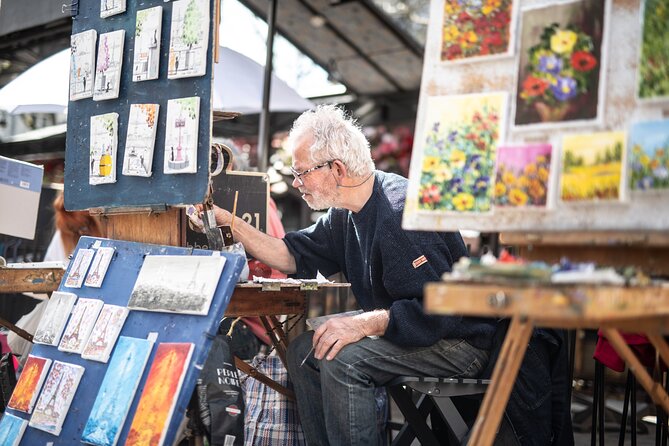
One of my favorite parts of this tour is the time spent wandering the Montmartre food market on Rue Lepic. This isn’t just a quick glance at stalls. You get a guide’s help for what to notice and how to think about what you’re seeing—so you can browse without feeling lost or intimidated.
Food markets are great for learning how a neighborhood works. You pick up small signals: what people grab for a quick meal, what gets attention, what looks seasonal, and how vendors talk to customers. Even if you don’t plan to buy much, it helps you see Montmartre as a lived-in place instead of a museum.
A practical note: food and drinks aren’t included, so treat this market time as part education, part sampling if you choose. If you do want to snack, I suggest bringing a bit of cash or using a card where possible—then you can pick what looks best in the moment rather than committing early.
Local streets and hangout spots: the Montmartre beyond the obvious
After Rue Lepic, the route shifts into that in-between zone—streets where locals shop, spend time with family, and act like the neighborhood is normal (because it is). This is where you start to understand Montmartre’s rhythm. The big attractions pull crowds, but the daily life happens on the side streets.
For me, the value here is perspective. When you walk with a guide, you start noticing details you’d likely miss alone: which lanes feel like shortcuts, which corners people linger at, and how shops tuck into steep streets. These are the small observations that make a place feel real when you’re back home telling others what to do.
There’s also an emotional payoff. You see the hill as a place people actually live on, not just a stage. That helps if you’re trying to avoid the “just crowds and stairs” feeling that can happen in heavily visited areas.
Painters market streets: art in action, not just art on walls
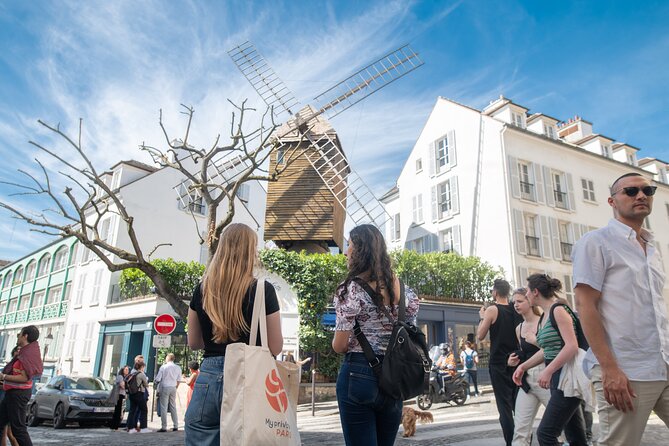
Montmartre is famous for artists, but this tour puts you near the largest painters market area, where you can watch art activity happen rather than only viewing finished work. It’s a chance to see the business side of street art culture—how pieces are displayed, how artists interact with passersby, and what people are drawn to as they browse.
I like this stop because it gives you a story. Instead of thinking, Oh, it’s where painters exist, you start thinking about how art becomes part of street life—quick conversations, visible process, and a constant flow of new work.
One consideration: art markets can get busy, especially around prime hours. If you’re sensitive to crowds, plan to use the private pacing advantage. Ask for a moment to step back and regroup. Your guide can help you move through without losing the fun.
Sacré-Cœur: finishing with the views (and where to take your time)
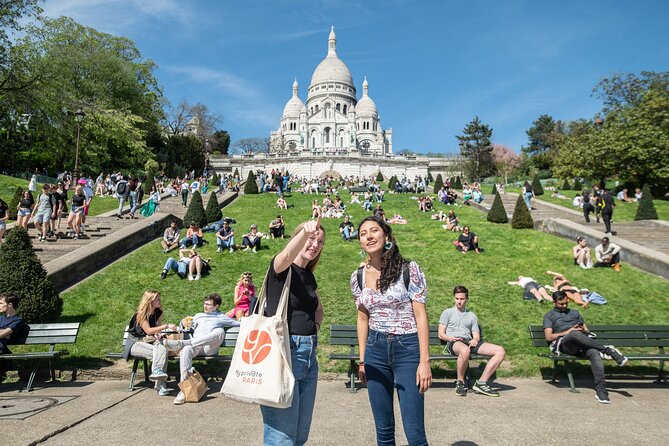
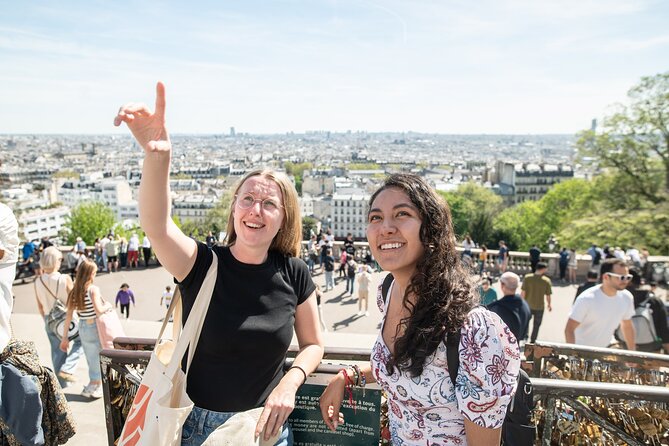
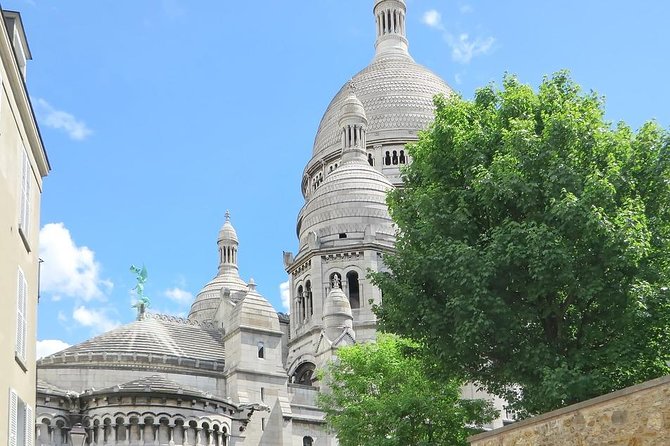
The tour ends at Parvis du Sacré-Cœur (Sacré-Cœur plaza). Ending here makes sense because the views are the payoff: you get the best sense of how Montmartre sits over Paris once you’ve already seen the streets up close.
When you reach Sacré-Cœur, take your time. Even if you’ve seen photos before, being on the ground changes everything—the scale of the city, the way the rooftops layer, and the “why this place matters” feeling becomes clearer. Also, the hill around Sacré-Cœur can be busy, so arriving after the quieter art and market stops often feels easier than starting there.
Your guide will finish the experience by walking you to a convenient spot—this might mean pointing you toward a local restaurant, taxi stand, or another easy departure point. That’s one of those small details that reduces stress at the end of a long walk.
You can also read our reviews of more private tours in Paris






Price and value: what $287.16 per person really buys you
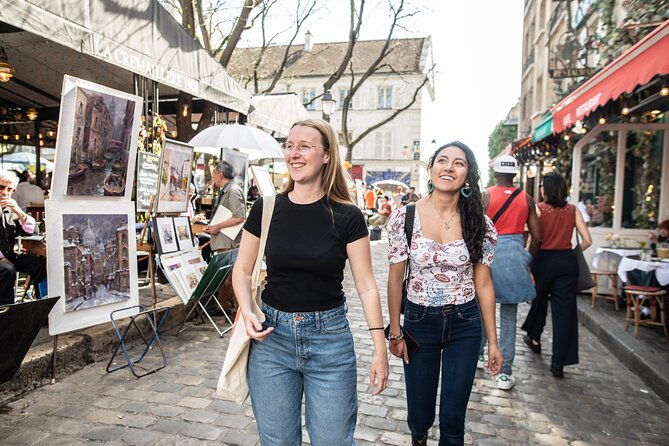
At $287.16 per person for about 2 hours 30 minutes, this is not a budget walking tour. But the value isn’t in rushing from one landmark to another. It’s in the private structure: you get a local guide for you and your party only, plus an itinerary that mixes food market time and art-focused stops.
Here’s how I’d think about the price:
- If you like asking questions (about art, local life, what things mean), a private guide tends to pay off quickly because you don’t have to wait your turn.
- If you prefer pacing that fits you—short breaks, slower crossings, more time at the market—private tours remove the guesswork.
- If you care about finding the “where locals hang out” feel instead of only famous scenery, guided navigation helps you make those connections faster.
If you’re the type who just wants the headline sights fast, you might decide this is more guide than you need. But if you want a Montmartre day that feels grounded, this is the kind of spending that can make the neighborhood click.
The guide matters: Audrey’s pacing and art focus
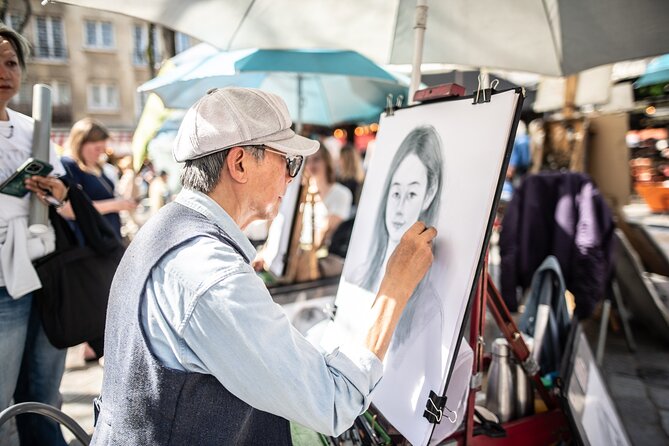
One detail that comes through strongly is the guide style. A guide named Audrey is mentioned as thoughtful and attentive, with a knack for adjusting to guests’ experiences and keeping a good walking pace. That matters in Montmartre, where steep streets and crowded pinch points can turn a tour sour if the guide doesn’t manage timing.
Audrey is also described as very knowledgeable about local flavor and art history, which fits this itinerary perfectly: food market browsing plus painters market stops plus Sacré-Cœur. The result is that the tour doesn’t feel like separate boxes (food here, art there). It feels like one connected story about how Montmartre became Montmartre.
Even if you get a different guide on your date, the lesson for you is clear: choose this tour for the human factor—someone who pays attention to pacing and context.
Timing, tickets, and getting there without stress
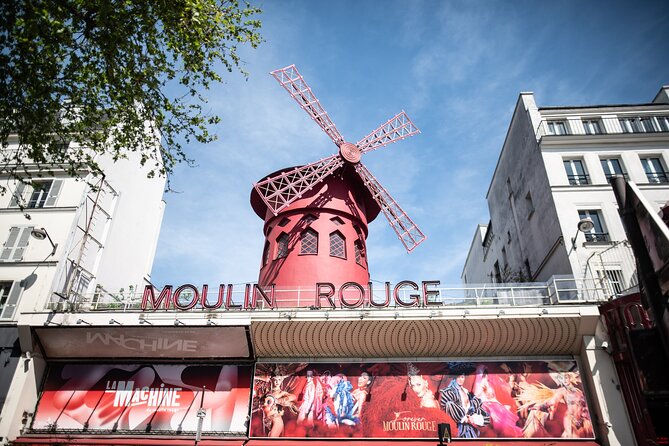
This experience uses a mobile ticket, which is convenient. You’ll meet at Moulin Rouge and start from there, then finish at Sacré-Cœur plaza, with your guide helping you find an easy next step afterward.
Because there’s no hotel pickup, plan to arrive on your own near the meeting point. The location is near public transportation, so you’re not stuck with complicated transfers. Still, Montmartre streets can be confusing on foot if you’re tired, so arriving a little early helps.
Also, keep expectations realistic: it’s a walking tour for people with moderate physical fitness. That doesn’t mean you have to be an athlete, but you should be comfortable with uneven sidewalks, hills, and the occasional crush of visitors near popular spots.
What to bring and how to enjoy it more
Small prep makes a big difference in Montmartre. I’d pack these basics:
- Comfortable walking shoes with grip
- A light layer (weather can shift on the hill)
- A phone with enough battery for maps and photos
- Cash for market snacks if you want them (since food/drinks aren’t included)
Then, use the private advantage. If something catches your eye in the food market or an art shop window, take a moment. This tour is built for looking and learning at your own pace, not sprinting between photo points.
Who should book this Montmartre private tour
This tour is a great fit if you:
- Want Montmartre to feel lived-in, not just famous.
- Enjoy food markets and art activity as part of the story.
- Prefer a calmer, flexible experience with your group only.
- Like having a guide help translate what you’re seeing into context.
It might be less ideal if you:
- Want a short, low-walking “greatest hits” tour.
- Don’t care about markets or art stops and only want major monuments.
- Are looking for a tour that includes food and drinks as part of the price.
Should you book this Montmartre experience?
If you want a Montmartre day with a real point of view—markets, art activity, local streets, then a proper finish at Sacré-Cœur—I’d say it’s a strong choice. The private setup helps you slow down, ask questions, and actually enjoy the neighborhood rather than just getting through it.
One more plus: it offers free cancellation up to 24 hours in advance for a full refund, which makes planning easier.
If your main goal is a quick photo checklist, you may find better value elsewhere. But if you want Montmartre to make sense—through food, art, and everyday street life—this private walking tour is the kind of guide-led day that tends to leave you with stories, not just pictures.
FAQ
How long is the Montmartre private walking tour?
The tour lasts about 2.5 hours.
Where do we meet the guide?
You meet at 82 Bd de Clichy, 75018 Paris, France, at Moulin Rouge.
Where does the tour end?
The tour ends at Parvis du Sacré-Cœur (Sacré-Cœur plaza), 75018 Paris.
Is this tour private?
Yes. It’s a private tour/activity with only your group participating.
What’s included, and what’s not included?
Included are a 2.5-hour private walking tour, a local guide for your group only, and time covering food markets, art shops, and off-the-beaten-path stops. Not included are hotel pickup/drop-off, food and drinks, tips/gratuities, and personal expenses.
Can I cancel for a full refund?
Yes. You can cancel up to 24 hours in advance for a full refund. If you cancel less than 24 hours before the start time, the amount paid isn’t refunded.