REVIEW · PARIS
Best of the Left Bank: Self-Guided Tour of the Latin Quarter
Book on Viator →Operated by VoiceMap Audio Tours · Bookable on Viator
Paris has stories you can hear on foot. This self-guided Latin Quarter tour uses VoiceMap audio so you can wander the Left Bank at your pace, with offline access to audio and maps. It starts in front of Shakespeare and Company, tied to literary legends like Ernest Hemmingway, Gertrude Stein, and Ezra Pound.
What I like most is the freedom. You get a route that still feels like a guided highlights package, but you can pause, look longer, or slow down for a café stop without feeling rushed. The second big win is the payoff: Sorbonne, Panthéon, Jardin des Plantes, Rue Mouffetard, and then the Roman Arènes de Lutèce bring you from medieval Paris to ancient Paris without changing locations.
One caution: you are relying on your phone and headphones. The app is designed for offline use, but if your device loses audio playback or GPS feels off, you’ll want good street-sign skills and a charged battery, plus the tour does not include headphones or a phone.
In This Review
- Key highlights at a glance
- Why this Left Bank audio walk is a smart use of 2 to 2.5 hours
- Shakespeare and Company to Le Théâtre de la Huchette: literature, then stage doors
- Eglise Saint-Severin: when architecture explains itself
- Cluny Museum and the power of the Left Bank institutions
- Panthéon and Saint Étienne du Mont: national heroes and protective saints
- Rue Mouffetard and Jardin des Plantes: market life and the King’s Garden
- Arènes de Lutèce: ending with a Roman reminder of Paris scale
- Price and what you’re really getting for $14.99
- Pacing tips: how to keep the audio and the walking from fighting each other
- Who this suits best (and who should pick a different plan)
- Should you book this Left Bank audio tour?
- FAQ
- What’s the duration of the self-guided Latin Quarter tour?
- Where does the tour start and end?
- Is the tour available in English?
- Does it work offline?
- What app do I need to use?
- Are museum tickets included?
- What do I need to bring with me?
- What’s the cancellation and refund situation?
- Is it a group tour with other people?
Key highlights at a glance

- Shakespeare and Company start with the Hemingway/Stein/Pound literary connection
- Offline audio, maps, and geodata so you’re not stuck hunting for signal
- A strong Left Bank mix of churches, schools, monuments, and markets
- Le Théâtre de la Huchette passing by the same short plays since 1957
- Rue Mouffetard as Paris’ oldest market street on the route
- Finish at Arènes de Lutèce a roughly 2,000-year-old Roman amphitheater
Why this Left Bank audio walk is a smart use of 2 to 2.5 hours

This tour is built for people who don’t want to choose between getting your bearings and seeing real landmarks. The route is short enough to fit into a day, but long enough that you actually connect the Latin Quarter’s layers instead of just hopping between photos.
At $14.99 per person with lifetime access, it feels like value if you like flexibility. You can replay the tour later, or spread it across trips if your schedule gets messy. And because it’s self-guided in English, you’re not waiting for a group pace.
The other quiet advantage is what the tour avoids: you don’t need to plan museum tickets just to enjoy the walk. You pass major sights, and if you decide you want to go inside the big ones, you can add that later—at your expense and your time.
You can also read our reviews of more guided tours in Paris



Shakespeare and Company to Le Théâtre de la Huchette: literature, then stage doors

You start at Shakespeare and Company on Rue de la Bûcherie. This is the kind of stop that sets the tone: it’s not just a bookstore with a nice façade, it’s linked to Ernest Hemmingway, Gertrude Stein, and Ezra Pound—names that basically explain why this area became a magnet for writers.
From there, the route glides toward Le Théâtre de la Huchette. This tiny theatre is famous for something practical and specific: it has been playing the same short plays since 1957, including The Bald Soprano and The Lesson by Ionesco. Even if you don’t buy a ticket, passing by helps you feel how long-running Paris theatre culture can be.
Tip: keep an eye out for street signage at transitions. Self-guided routes work best when you treat the phone as narration, not as a perfect GPS compass.
Eglise Saint-Severin: when architecture explains itself
Eglise Saint-Severin is one of those stops where you’ll probably slow down, even if you’re not the type to chase churches. The audio guides you toward the logic behind the structure: it began with the central nave, then the builders expanded by pushing the walls outward. That choice is why you see different rows of pillars.
This is the kind of detail that makes a “walk by” stop worth it. Without context, it’s just another church façade. With context, you start reading the building like a timeline.
Also, don’t be surprised if you want a moment to stand back. The best viewing angle comes from street corners, not always from right in front of the doors.
Cluny Museum and the power of the Left Bank institutions
Next up is the area around the Cluny Museum. The tour frames it in a way that helps you decide whether you want to enter: it brings together the lavish residence of the Abbot of Cluny, ancient Roman baths, and Alexandre du Sommerard’s medieval art collection. That means the museum is not one theme—it’s layers.
If you’re museum-minded, this is where you might add time. But even if you skip entry, simply knowing what’s inside helps you connect the site to the rest of your walk. You’re still on the Left Bank, but the story jumps between periods fast.
A bit later, you’ll move toward the Sorbonne area. Here the tour gives you a “who started it” anchor: Robert de Sorbon, chaplain of King Saint Louis. And it ties him to Sainte Chapelle, which helps you place the Sorbonne in the broader medieval world of Paris royal projects.
Panthéon and Saint Étienne du Mont: national heroes and protective saints
The Panthéon is one of the big, obvious stops—and the tour helps you look beyond names. It describes the shrine as commemorating French national heroes, including Marie Curie, Voltaire, Victor Hugo, Rousseau, Alexandre Dumas, André Malraux, and Josephine Baker.
Here’s how that matters for your walk: once you have a list of who’s honored, the building stops being generic and starts being personal. You’ll spot details in the façade and feel like the site is a memory bank, not just a landmark.
Then the route heads to Saint Étienne du Mont. The tour focuses on the burial of another saint, Sainte Geneviève, who protected the city from Atilla the Hun. Whether or not you treat the story literally, it’s useful because it explains why religious figures were once part of how Parisians talked about safety and identity.
If you’re the kind of person who likes quiet moments, this is a good section to slow down. The Latin Quarter can move fast, and these stops reward a slower pace.
You can also read our reviews of more tours and experiences in Paris






Rue Mouffetard and Jardin des Plantes: market life and the King’s Garden
One of the strongest “real Paris” segments is Rue Mouffetard. The tour sends you down part of it as the city’s oldest market street. That label changes how you experience it: you’re not just looking at storefronts and umbrellas, you’re walking a street with a long daily rhythm.
Even if you’re not buying food, Rue Mouffetard helps you feel the Latin Quarter as a working neighborhood. The tour’s timing works well here because you’ll naturally want a break, especially if you’re mixing sightseeing with casual eating.
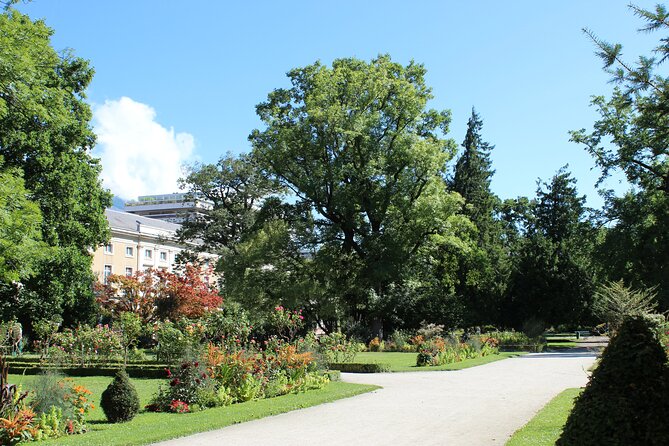
After that comes Jardin des Plantes, created in 1635 and once called the King’s Garden. That historical note gives you a lens for what you’re seeing. It’s not only a park; it’s an early institution tied to how Europe organized learning in public spaces.
Practical tip: don’t expect every garden path to feel intuitive. If your phone’s direction guidance gets fuzzy, just use it as narration while you follow your own common-sense route toward the amphitheater end point.
Arènes de Lutèce: ending with a Roman reminder of Paris scale
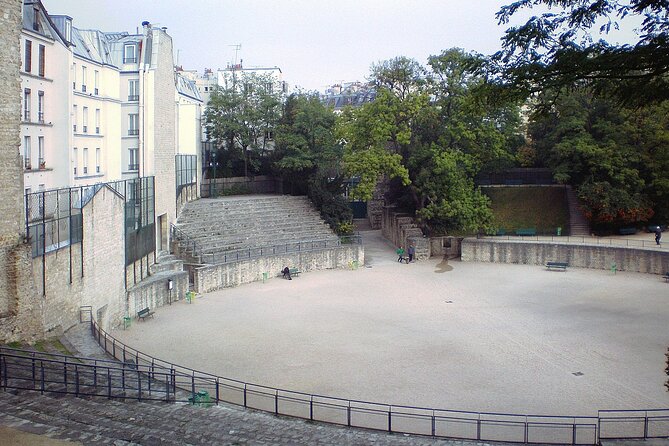
Your walk finishes at Arènes de Lutèce, a Roman amphitheater around 2,000 years old. This is a great ending because it snaps the whole route into a scale you can feel. You’ve been walking through Paris as it reinvented itself—from ancient civic life to medieval religious institutions to modern streets full of students and visitors.
If you want a “last photo” moment, take it here, but also take a second look from the edge. Amphitheaters read best from multiple angles, and the route ends in a way that encourages you to notice the space, not only the façade.
Price and what you’re really getting for $14.99

At $14.99, this isn’t trying to compete with guided tours that include tickets and a live human guide. Instead, it’s paying for something more specific: voice narration plus offline access to audio, maps, and geodata, with lifetime access.
For your money, the value depends on how you like to travel:
- If you enjoy self-paced walking and don’t mind reading streets as you go, this can be an efficient use of time.
- If you want museum entry included or you hate tech dependencies, you may feel shortchanged.
Also note what’s not included. You’ll need your own smartphone and headphones. The tour also doesn’t include tickets or entrances for museums or other sights along the way, so plan extra time and budget if you decide to go in.
Pacing tips: how to keep the audio and the walking from fighting each other
The tour runs about 2 to 2.5 hours, which is plenty of time if you treat it like a conversation, not a checklist. The narration is most useful when you pause long enough to look at the structure described—like the rows of pillars at Eglise Saint-Severin or the institutional founder at the Sorbonne.
Two practical habits make a big difference:
- Keep your phone charged. Offline audio still drains a battery.
- Watch for street-name confirmations. If GPS is slow or the app hesitates about your location, street signs will save you.
One more consideration: the experience is designed to be flexible, but the content focus is on what you’re seeing outside. If you want deeper museum-level interpretation or highly detailed food recommendations on every block, you’ll want to supplement with your own research or make targeted stops.
Who this suits best (and who should pick a different plan)
This tour fits best if you want the Latin Quarter highlights without booking a complex itinerary. It’s ideal for couples, solo walkers, and anyone who likes to control pacing—especially if you also want time to eat along the way, because Rue Mouffetard and the surrounding streets naturally invite breaks.
It’s also a good choice if you’re visiting for the first time and want structure. The route’s stops are spread across the major Left Bank themes: literature, churches, schools, national monuments, markets, gardens, and Roman ruins.
If you get frustrated when tech misbehaves, or if you’ve had trouble with audio apps on past trips, you’ll want a backup plan. Bring wired headphones if you can, download the tour before you start, and save a screenshot of the start and end points.
Should you book this Left Bank audio tour?
Book it if you like walking, want offline audio support, and feel comfortable using your phone as a guide rather than a guaranteed GPS babysitter. At $14.99 with lifetime access, it’s a low-risk way to get a solid Latin Quarter overview and end at something unforgettable like Arènes de Lutèce.
Skip it if you want a live guide, included tickets, or very detailed stop-by-stop museum guidance. This is best viewed as a smart way to explore the streets and landmarks—then decide what to step into afterward.
FAQ
What’s the duration of the self-guided Latin Quarter tour?
The tour takes about 2 hours to 2 hours 30 minutes.
Where does the tour start and end?
It starts in front of Shakespeare and Company at 37 Rue de la Bûcherie, 75005 Paris, and ends in front of Arènes de Lutèce at 49 Rue Monge, 75005 Paris.
Is the tour available in English?
Yes, the tour is offered in English.
Does it work offline?
Yes. The tour includes offline access to audio, maps, and geodata.
What app do I need to use?
You’ll use the VoiceMap app on Android and iOS.
Are museum tickets included?
No. Tickets or entrance fees are not included for museums or other attractions along the route.
What do I need to bring with me?
You’ll need your own smartphone and headphones. Food, drinks, and transportation are also not included.
What’s the cancellation and refund situation?
This experience is non-refundable and cannot be changed for any reason.
Is it a group tour with other people?
It’s described as a private tour/activity, so only your group participates.