REVIEW · PARIS
Walking tour of the Covered Passages of Paris -10 people max
Book on Viator →Operated by SLL Paris Tours · Bookable on Viator
Paris hides shopping streets above your head. This walk through the covered passages of Paris is a smart way to see a quieter, older side of the city—while still keeping your day easy to manage. I love the max 10 people group size, which keeps questions flowing and the pace human. I also love having an English-speaking guide (Sebastien) who explains why these passageways matter, not just what they look like.
One thing to plan for: it’s still a walking tour (about 1 hour 40 minutes), and a few sections can feel tight. If you want a very light stroll, wear comfortable shoes and know you’ll spend a lot of time on your feet.
In This Review
- Key Highlights You’ll Care About
- Covered Passages of Paris: Why This Walk Feels Different
- Starting at Palais-Royal: The Shortcut Into the Story
- Jardin du Palais Royal: Where the Covered Galleries Begin to Make Sense
- Passage des 2 Pavillons: The Tiny One That Steals Attention
- Galerie Vivienne and Its Mosaic Floor Moment
- Place de la Bourse: From Arcades to Old Finance
- Passage des Panoramas: The Oldest Covered Passage
- Passage Jouffroy: Metal, Glass, and Fun Shops
- Passage Verdeau: Art Galleries in a Pretty Passage Setting
- Ending at Faubourg-Montmartre: A Food Payoff After the Walk
- Price and Value: What $59.17 Gets You
- Group Size, Pace, and How the Guide Works With You
- Practical Tips: Shoes, Weather, and Your Best Use of Time
- Should You Book This Covered Passages Tour?
- FAQ
- How long is the Covered Passages of Paris walking tour?
- What is the group size limit?
- Is the tour offered in English?
- Where do we meet and where does the tour end?
- Do I need to buy admission tickets for the stops?
- What’s included in the price?
- What is not included?
- How do I receive my ticket?
- Are service animals allowed?
- What is the cancellation policy?
Key Highlights You’ll Care About
- Max 10 people means more personal attention and easier navigation through narrow passages
- Sebastien’s English keeps the history clear and practical, with lots of room for questions
- Covered routes help on hot days since you can duck into shade under glass and metal
- Free entry at each stop, so you’re paying for guiding—not ticket hassles
- Classic passage variety: from the tiniest Passage des 2 Pavillons to the oldest Passage des Panoramas
- Ends at a traditional French restaurant where the prices are said to be reasonable
Covered Passages of Paris: Why This Walk Feels Different
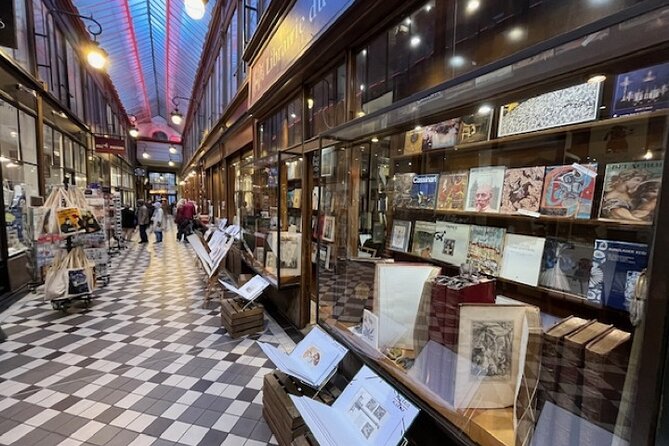
The covered passages of Paris are the kind of place you usually miss while you’re chasing big landmarks. Here, the city changes texture. You go from open streets into corridors of shops, mosaics, and old storefronts, all under canopies that make the walking feel sheltered. It’s an easy win when you want something off the usual route, without committing a full day to museums.
This tour also works because it’s small. With 10 people max, you don’t feel like a number in a line. You can actually hear the guide, ask questions, and move as a group at a pace that fits the day.
And yes, the passages are pretty. But the real value is what you learn about how these spaces developed and why people used them. The guide’s explanations focus on the purpose of the architecture and the evolution of the covered galleries—so you come away seeing more than just window displays.
You can also read our reviews of more walking tours in Paris



Starting at Palais-Royal: The Shortcut Into the Story
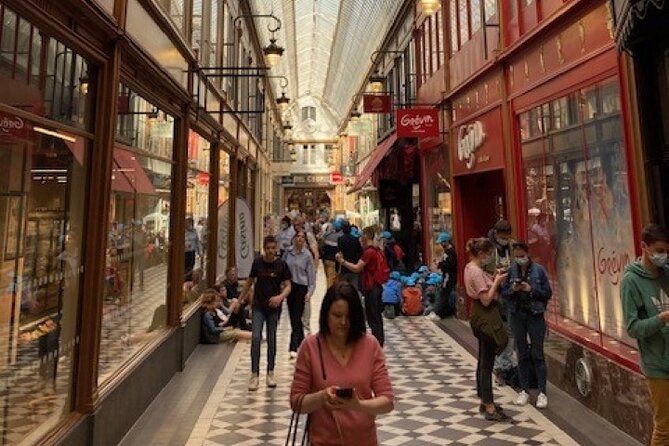
You begin at Palais Royal (near Musée du Louvre), 75001 Paris. This is a good starting point because it puts you near a major transit and sightseeing hub, so getting there doesn’t eat your day. It also sets the tone: you’re not starting with a random alley. You’re starting with a place people have long associated with Parisian life.
From there, the first stretch is about orientation. You’ll learn about the covered galleries and some key context for how Paris’s shopping arcades took shape. Even if you’ve walked past areas like this before, the guide’s framing helps you notice details you’d otherwise ignore—like how the passage layout affects foot traffic and experience.
The time here is about 20 minutes, so it’s enough to get your bearings fast, not so long that you’re bored before the fun part.
Jardin du Palais Royal: Where the Covered Galleries Begin to Make Sense
Next you head into the Jardin du Palais Royal, walking over to the Palais Royal area again as the story expands. This stop is about 15 minutes, and it’s the kind of segment that turns architecture into understanding. You’re not just seeing a pretty transition space—you’re being guided to connect the setting to the first covered gallery idea.
If you’re thinking: okay, but what’s the point of a garden stop on a shopping-arcade tour, this is why it works. The garden moment gives you a breather, and it also helps you read the area as a coordinated space rather than separate sights.
If it’s warm out, gardens can also be a quick comfort break before you start moving through more indoor-like corridors.
Passage des 2 Pavillons: The Tiny One That Steals Attention
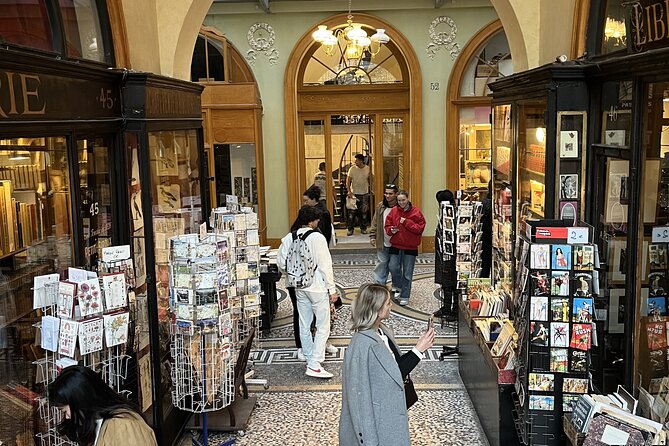
Then you step into Passage des 2 Pavillons for about 3 minutes. This passage is notable for being the smallest covered passage in Paris (at least in the way your guide frames it). The short timing matters: you get the payoff without the drag.
This is a great stop to do early in the walk because it resets your expectations. Paris has lots of “covered” spaces that feel like long corridors. This one feels more like a pocket—short, deliberate, and packed with visual detail for its size.
It’s the kind of moment that makes the whole tour feel personal. You see that these passages aren’t all the same template.
Galerie Vivienne and Its Mosaic Floor Moment
After the short passage, you move to Galerie Vivienne for around 15 minutes. This is one of the stops where people usually stop taking photos of exteriors and start watching the floor.
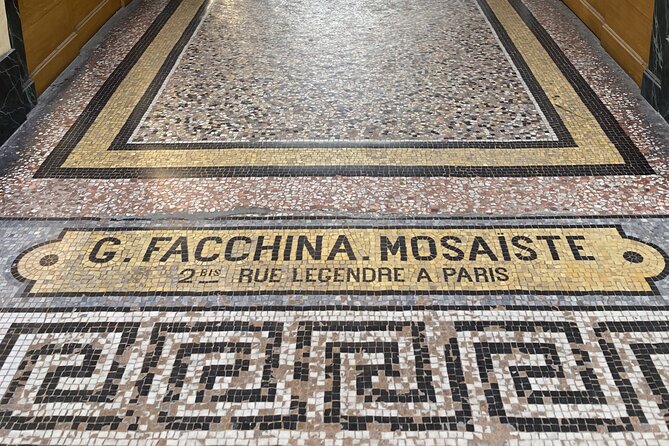
The big detail here is the beautiful mosaic floor. It’s the sort of thing you can appreciate in a quick glance, but you’ll enjoy it more after you hear why the space was designed this way and how it supports strolling. The guide’s tone keeps it grounded. You’re not just chasing beauty; you’re learning how form supports function.
One practical benefit: mosaics and covered interiors tend to feel cooler than the street in hot weather. If you’re visiting on a sunny day, this stop is a good place to catch your breath, water included.






Place de la Bourse: From Arcades to Old Finance
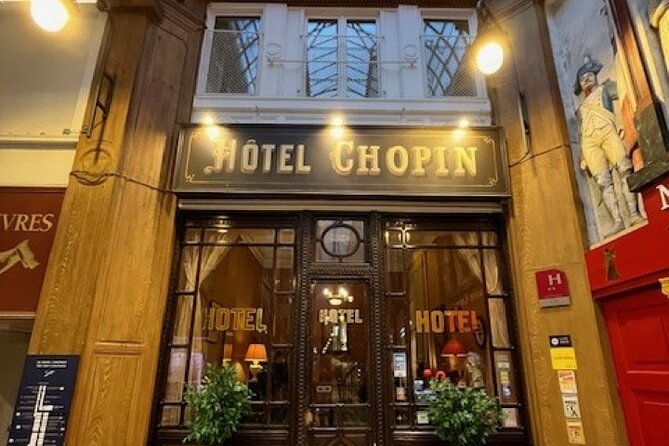
A short walk brings you to Place de la Bourse for about 5 minutes. This is where you get a different angle on Paris’s old commercial life. The focus here is the location of Paris’s old stock exchange.
Even with only a few minutes, it adds a layer you don’t get from pure “shopping street” tours. It helps connect commerce in Paris to physical spaces—public squares, covered galleries, and the movement between them.
Think of it as the guide drawing a line between big economic history and the smaller everyday world of passage shopping.
Passage des Panoramas: The Oldest Covered Passage
Next is Passage des Panoramas for about 15 minutes. This one is called out as the oldest of the covered passages of Paris, which makes it a must-see on this route.
What I like about this stop is the mix of old and still-useful. Even if you don’t come for shopping, you’ll understand why these corridors became cultural magnets. The guide explains not just what’s there, but how the passage concept evolved and why it kept attracting foot traffic.
In practice, you’ll also enjoy the atmosphere. Covered passages change sound and pace. The city doesn’t vanish, but it softens. That makes this a nice mental break, especially if you’ve already done time in crowded areas.
Passage Jouffroy: Metal, Glass, and Fun Shops
You then reach Passage Jouffroy for about 15 minutes. This part is all about the experience under the canopy: fun shops under a metal-and-glass structure.
This stop is where the tour leans more playful. You’ll still get explanations, but visually it’s more about the arcade vibe—rows of storefronts, the light filtering through glass, and that feeling of strolling through a mini world.
If your group likes to mix in some shopping, this is where you can enjoy it without feeling like you’re skipping the tour. From the guide’s approach, he’s also willing to adjust on the fly to group needs and interests.
Passage Verdeau: Art Galleries in a Pretty Passage Setting
After that, you go to Passage Verdeau for about 10 minutes. This one is described as picturesque, with many art galleries.
This is a good stop if you like browsing without committing. Art galleries can be quiet and slow-moving, and ten minutes is just enough to look, read a few displays, and move on without getting stuck in decision fatigue.
It also adds variety to the tour. So far you’ve seen mosaic details, old finance context, and a classic oldest passage. Passage Verdeau brings the art-focused side of these covered corridors into the mix.
Ending at Faubourg-Montmartre: A Food Payoff After the Walk
The tour finishes with a short walk to rue Faubourg-Montmartre, ending in front of a traditional French restaurant known for reasonable prices and good food. This is about 2 minutes of walking, so you’re not scrambling at the end.
I like ending tours this way. You’re already warmed up from the walking, and you don’t have to instantly figure out where to eat. You can also ask the guide for practical restaurant ideas if your plans aren’t locked in.
The route ends at 7 Rue du Faubourg Montmartre, 75009 Paris, which is a helpful location if you’re planning to keep exploring the neighborhood after.
Price and Value: What $59.17 Gets You
At $59.17 per person for about 1 hour 40 minutes, this tour is priced like a focused walking experience. For the money, you get:
- a guiding expert (your guide, included)
- bottled water (included)
- a small group experience (10 people max)
- a route with multiple featured stops
One more value point: each stop lists admission as free. So you’re not paying surprise entry fees to see the passages you came for. You’re paying for the person connecting the details, not for tickets.
In my book, this is the sweet spot for short Paris days: enough time to feel you’ve seen something real and different, without turning it into an all-day commitment.
Group Size, Pace, and How the Guide Works With You
The small group is more than a comfort perk. It changes how the whole tour feels. In a larger group, you’d be stuck watching from behind and repeating yourself louder than you need to. With a cap at 10, you can hear the guide and the guide can read the group.
On hot days, the guide brings water and keeps an eye on comfort. You don’t feel like you’re being pushed forward just to hit every photo stop. The guide also takes requests seriously. For example, Sebastien has accommodated shopping-type interests by adjusting the route on the fly, even working in an extra stop like a Jellycat Patisserie detour when the group wanted it.
That flexibility is a real plus for families and mixed-interest groups, as long as everyone’s still okay with a walking-centered tour.
Practical Tips: Shoes, Weather, and Your Best Use of Time
This isn’t a sit-down experience. Plan for steady walking. The passages do offer shelter, so weather matters less than it would on an outdoor-only route—but you’ll still connect between areas.
Here’s how I’d prepare:
- Wear comfortable, grippy shoes since passage floors can be uneven or polished
- Bring light layers for temperature swings between covered interiors and open streets
- Use the water breaks built into the tour, especially in summer
- If your day is already packed, this tour is still easy to slot in because the total duration is under two hours
Also, it helps to have a little curiosity. These passages reward attention. Read shop signs, notice floor patterns, look up at canopy details. The guide will point things out, but you’ll enjoy it more if you’re willing to slow down for moments.
Should You Book This Covered Passages Tour?
Book it if you want a short, high-reward Paris experience that swaps big crowds for sheltered streets. This is a strong choice when:
- you like architecture and want a story that explains why spaces exist
- you want a small-group format with clear English guidance from Sebastien
- you’re on a tight schedule and still want something authentic-feeling
- you appreciate browsing (and not just sightseeing from the curb)
Skip it if you strongly dislike walking or you’re looking for a museum-style, ticketed deep dive. This is built around moving, looking, and learning as you go.
If you’re deciding between a generic city tour and something more specific, this one is the more interesting option. It’s Paris you don’t usually see unless you choose to look down and up at the same time.
FAQ
How long is the Covered Passages of Paris walking tour?
It lasts about 1 hour 40 minutes.
What is the group size limit?
The tour has a maximum of 10 travelers.
Is the tour offered in English?
Yes, it’s offered in English.
Where do we meet and where does the tour end?
You start at Palais Royal – Musée du Louvre, 75001 Paris, France, and the tour ends at 7 Rue du Faubourg Montmartre, 75009 Paris, France.
Do I need to buy admission tickets for the stops?
No. The stops listed on the walk have admission ticket free.
What’s included in the price?
Bottled water and a guide are included.
What is not included?
Tips and personal expenses are not included.
How do I receive my ticket?
You get a mobile ticket.
Are service animals allowed?
Yes, service animals are allowed.
What is the cancellation policy?
You can cancel for a full refund up to 24 hours before the experience start time. Free cancellation is available, and confirmations are received at booking.