REVIEW · PARIS
Walking Tour in Montmartre with a guide
Book on Viator →Operated by Touristica · Bookable on Viator
Montmartre feels like a movie set. This guided walk pulls you into the real vibe of the hill fast, with a live guide pointing out the Wall of Love in 250 languages and taking you up to Basilique du Sacré-Cœur without you doing homework first. I love how efficiently it covers the big landmarks in just about 1 hour 45 minutes, and I also like the mix of art legends and everyday neighborhood squares.
One possible drawback: like any small-group tour, there can be day-of changes if a guide has to swap in or adjust the timing. If you’re the type who hates uncertainty, plan with a little buffer and keep your expectations flexible.
In This Review
- Key highlights at a glance
- Montmartre by Foot: Why 1 hour 45 minutes feels like magic
- Start at Métro Abbesses, Finish at Sacré-Cœur
- Stop 1: Le mur des je t’aime and instant Paris romance
- Stop 2: Eglise de St Jean Montmartre and the art nouveau details
- Stop 3: Le Bateau-Lavoir and the artists who lived the life
- Stop 4: Chateau d’Eau de Montmartre and a “why this hill matters” moment
- Stops 5 and 6: Place du Tertre and Place Dalida
- The vineyard moment: the only vineyard still in Paris
- Stop 7: Saint-Denis, and why small landmarks stick with you
- Stop 8: Eglise Saint-Pierre de Montmartre and the oldest-feeling corners
- Stop 9: Basilique du Sacré-Cœur—big views, white stone, and the final payoff
- Stop 10: Au Lapin Agile and the cabaret side of Montmartre
- Value and pace: is $35 a good deal?
- What to expect from the guide (and how to get the most)
- Who should book this Montmartre tour
- Should you book?
- FAQ
- How long is the walking tour?
- What does the tour cost?
- What time does the tour start?
- Where do I meet the guide?
- Where does the tour end?
- What’s included in the price?
- Is dinner or transportation included?
- How many travelers are in the group?
- Are the stops free to enter?
- Is the tour accessible for everyone and are service animals allowed?
- FAQ
- How far in advance is the tour usually booked?
- Can I cancel for a full refund?
- Do I need to bring extra tickets?
- What Montmartre highlights will I see?
- Where is the tour offered from?
Key highlights at a glance
- Wall of Love: 250 languages, right where you want your first photos
- Montmartre art stops: Le Bateau-Lavoir and Picasso-era stories in plain language
- Scenic, not stressful: the hill sights come in a sensible walking flow
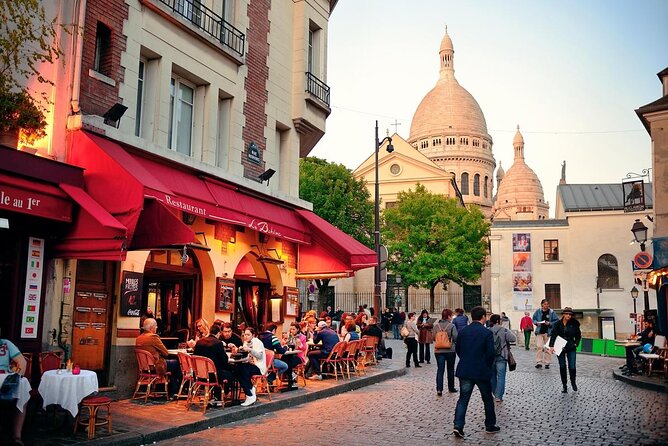
- Neighborhood squares: Place du Tertre, Place Dalida, and busker energy
- Sacré-Cœur finale: a classic view end point you’ll recognize instantly
Montmartre by Foot: Why 1 hour 45 minutes feels like magic
Montmartre is famous, but that fame can also make it chaotic. This walking tour keeps it simple: you follow your live guide on foot and you get your bearings quickly, especially if it’s your first time in Paris. The timing is also smart, starting at 6:00 pm, when the hill feels more like a story and less like a rush.
The best part for me is that the route is built for moving without constantly checking your phone. You’ll get a guided narrative that connects Montmartre’s art world (Picasso, Van Gogh) with the singing and show-business side (Dalida and the cabaret scene). And since the walk is about 1h45, you get the Montmartre hits without eating up your whole evening.
You can also read our reviews of more walking tours in Paris



Start at Métro Abbesses, Finish at Sacré-Cœur
You meet near Métro Abbesses, at 9 Rue des Trois Frères (75018 Paris), and you end at Sacré-Cœur Basilica, 35 Rue du Chevalier de la Barre (75018 Paris). That matters more than it sounds. Starting at Abbesses helps you avoid backtracking later, and ending at Sacré-Cœur gives you a built-in finale that’s easy to build the rest of your night around.
The tour caps at 25 travelers, so it doesn’t feel like a school field trip with a megaphone. It’s also why the guide can keep the pace conversational—questions can actually get answered.
Practical tip: Montmartre is hilly and streets can be uneven. Even if the tour is mostly manageable for most people, wear shoes you trust on cobblestones.
Stop 1: Le mur des je t’aime and instant Paris romance
Your first stop is Le mur des je t’aime—the Wall of Love where the word love appears in 250 different languages. This is the kind of place you’d normally spot while doing your own wandering, but the guided context makes it feel more than just a photo wall. It’s a quick hit that sets the tone: Montmartre has always been part inspiration, part theater.
Why I like starting here: it’s easy, it’s free, and it gives you something visual right away. If you’re jet-lagged or still figuring out the neighborhood, you’ll already feel oriented.
Stop 2: Eglise de St Jean Montmartre and the art nouveau details
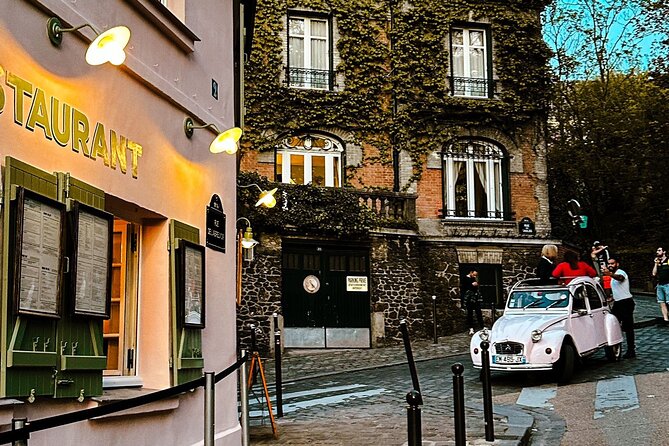
Next up is Eglise de St Jean Montmartre, a red-brick church completed in 1904. Even if churches aren’t your thing, the mention of art nouveau-style stained glass, mosaics, and sculptures is a good hint that this isn’t a plain stop.
This is one of those moments where you benefit from a guide. Without someone pointing things out, it’s easy to walk past the most interesting visual parts because you’re thinking about the next landmark.
Drawback to consider: you only have a short window here (about 10 minutes). Treat it as a look-and-learn pause, not a slow museum-style visit.
Stop 3: Le Bateau-Lavoir and the artists who lived the life
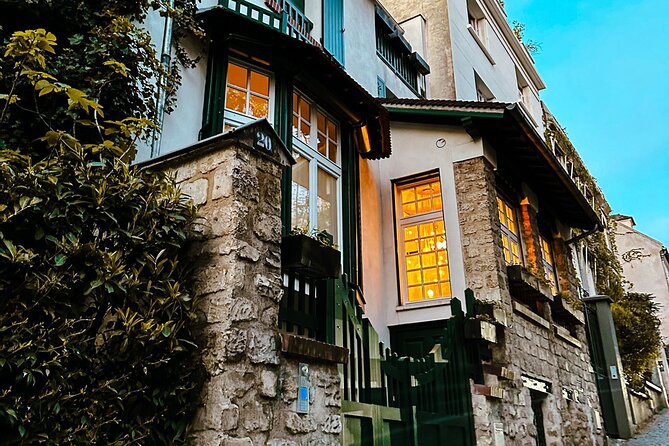
Then you hit Le Bateau-Lavoir, the nickname for a building tied to early 20th-century artists. It’s remembered as a residence and meeting place connected with big names like Pablo Picasso, plus other creative figures—writers, theatre people, and art dealers.
What makes this stop valuable is the way it puts art history in human terms. You’re not just hearing names. You’re imagining the social scene: people hanging out, trading ideas, and building reputations in the same neighborhood where tourists now crowd around the next photo.
You’ll likely move through this stop quickly (about 10 minutes), but it’s still a strong story anchor for the rest of your walk.
You can also read our reviews of more guided tours in Paris






Stop 4: Chateau d’Eau de Montmartre and a “why this hill matters” moment
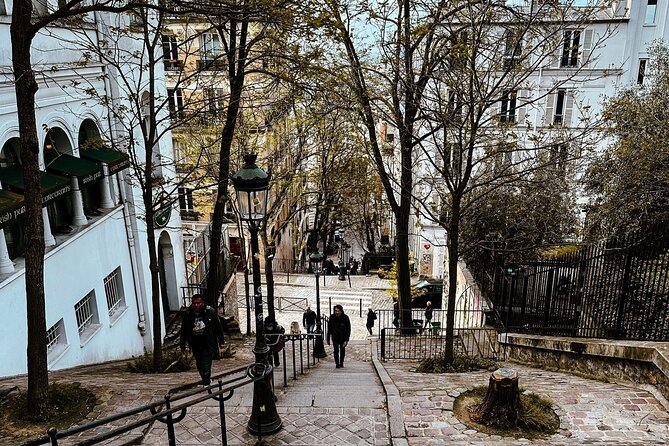
The Chateau d’Eau de Montmartre (Montmartre Water Tower) is about 40 meters high and distributes water to the highest parts of the hill. It doesn’t sound romantic, but it’s actually a big clue to why Montmartre developed the way it did.
When you understand that the hill’s top had to be served with water, the neighborhood makes more sense. Montmartre isn’t just slopes and views—it’s infrastructure, too. A guide helps you see that kind of connection without turning the walk into a textbook.
This stop is also a reminder that not every great moment in Montmartre is a postcard scene. Some of the most interesting details are the practical ones.
Stops 5 and 6: Place du Tertre and Place Dalida
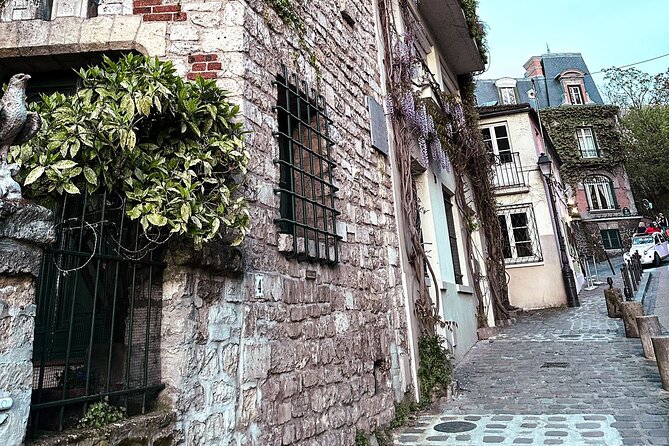
Next come the two squares that help you feel the day-to-day Montmartre vibe.
Place du Tertre is a small, cafe-lined cobbled square, known for buskers and portrait artists. If you want that classic Montmartre soundtrack—music, chatter, the sense of performance—this is where you’ll feel it.
Then you move to Place Dalida. It’s on the corner of two picturesque streets—Rue Girardon and Rue de l’Abreuvoir—forming an L-shaped layout. This is also the tour’s nod to Montmartre’s star energy, tied to the singer Dalida.
My advice here: if you want a portrait or a quick chat with a performer, do it when you’re at the square, not while you’re still thinking about whether you’ll have time later. The pace is steady, and the guide will keep you moving.
The vineyard moment: the only vineyard still in Paris
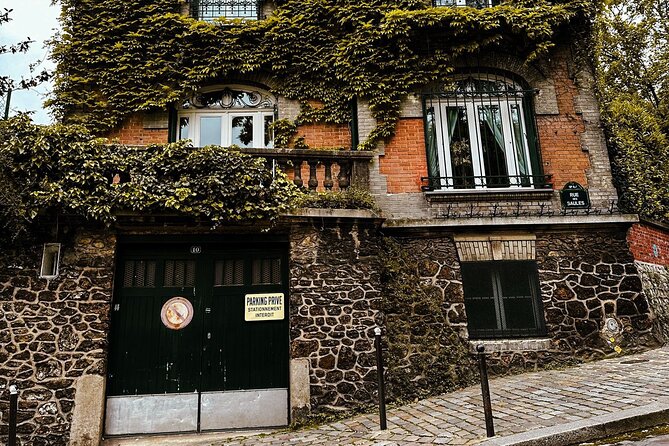
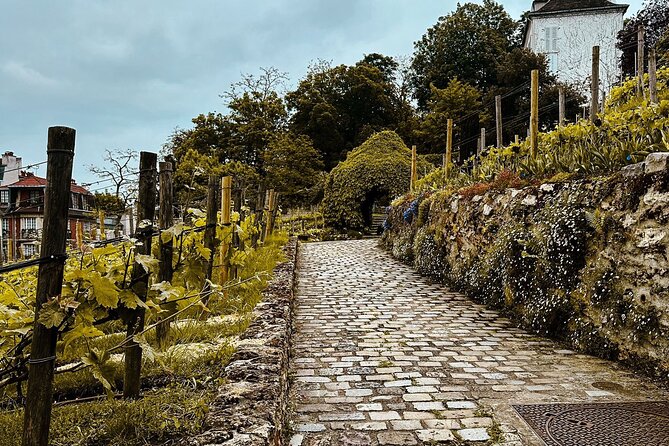
One of the neat surprises in Montmartre is seeing Paris’s only vineyard that still exists. You’ll get a chance to spot it during the walk, and it’s a great reminder that this hill isn’t only about 19th-century cafés and modern visitors. There’s still a living, producing piece of Paris here.
Even if you’re not a wine person, it’s worth a look because it changes how you picture the area. Montmartre becomes less like a theme park and more like a real neighborhood with real traditions.
Stop 7: Saint-Denis, and why small landmarks stick with you
After the vineyard moment, you’ll reach Saint-Denis, labeled as a historical landmark. The time here is short (about 10 minutes), so this isn’t a deep stop where you go in-depth on every detail.
But short stops are often the point on a walking tour like this: the guide gives you enough context so the place stops being random. You’ll walk away knowing why this spot matters, not just where it is.
Stop 8: Eglise Saint-Pierre de Montmartre and the oldest-feeling corners
Next is Eglise Saint-Pierre de Montmartre, dating back to the 12th century. It’s one of the oldest churches in Paris, and it changes the tone of the walk in a good way.
Standing near something that old makes the surrounding streets feel more layered. It also helps connect Montmartre’s bohemian story to the deeper timeline beneath it.
A quick note: because the tour stays time-conscious (about 8 minutes at this stop), you won’t get a long browse of every angle. Go in with the mindset of choosing a few details you want to actually look at.
Stop 9: Basilique du Sacré-Cœur—big views, white stone, and the final payoff
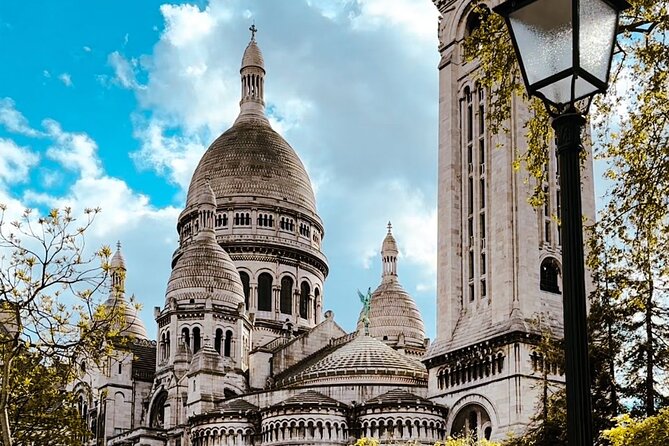
You finish at Basilique du Sacré-Cœur de Montmartre, completed in 1914, with mosaics, stained-glass windows, and a crypt. It’s iconic for a reason, but the guided approach makes it more than just a “wow, it’s white” moment.
The best part of ending here on a guided evening walk is that you can linger for the view without feeling like you abandoned the tour. You’ll recognize the basilica immediately, and you’ll be able to orient yourself for what comes next—dinner, a drink, or more wandering.
If you want great photos, take a moment before you head inside (if you do). The light and angles around Sacré-Cœur are often the difference between a flat picture and one that feels like Paris.
Stop 10: Au Lapin Agile and the cabaret side of Montmartre
The walk also includes Au Lapin Agile, a landmark venue in a 19th-century stone house. It’s known for chanteuses singing classic French songs—a reminder that Montmartre isn’t only about painters. It’s also about performance, nightlife, and the kind of Paris where music and storytelling blend together.
This stop gives your walk balance. After all the art history and church stops, you get a sense of the entertainment legacy that kept Montmartre culturally loud long after it became a tourist magnet.
Value and pace: is $35 a good deal?
At $35 per person for about 1h45, this is strong value if you’re the type who likes having a guide translate the place into something you can actually remember. You’re not paying for a ticketed museum. You’re paying for a live person to connect the dots—why each stop matters and what to notice when you’re standing right there.
Also, the inclusions are practical: bottled water and a live guide. That’s helpful because Montmartre’s streets can drain you faster than you expect, especially in the evening when you’re already walking and taking photos.
Group size is capped at 25, which helps keep the experience from turning into a rushed line-walk. For a short tour, that’s exactly what you want.
What to expect from the guide (and how to get the most)
The tour’s strongest feedback centers on guide personality and storytelling. One guide, Kateryna, was praised for giving a neighborhood rundown in a fun mood and delivering history in a way that stayed enjoyable. That’s the kind of guiding style that makes landmarks feel connected instead of random.
That said, keep one thing in mind: there can be day-of adjustments if a guide change happens. If your plan is fragile, build in a little flexibility, because the walking experience is better when you’re not racing the clock.
How you can get more out of the walk:
- Ask quick questions at the start while your guide’s pacing is calm
- Take photos fast, then look up again—Montmartre rewards your eyes more than your screen
- Save your bigger questions for Sacré-Cœur, because that’s where the context often clicks
Who should book this Montmartre tour
This is a good match if you want:
- a quick way to see Montmartre without doing research on the spot
- art-and-music storytelling from someone who can point out what matters
- a route that ends right at Sacré-Cœur, so your evening stays easy
It’s also a nice option if you like cultural stops but don’t want to feel like every stop is a long indoor visit. Most stops are brief and free to enter, which keeps the pacing moving.
If you’re the kind of traveler who loves total freedom with no structure at all, you might prefer independent wandering. But you’ll still be paying attention to the hills—so a guide can really save time and energy.
Should you book?
I’d book this tour if you want Montmartre in a compact, story-driven walk with minimal friction. The price makes sense for the length, and the guided context turns the big sights—Wall of Love, Le Bateau-Lavoir, Sacré-Cœur—into something you’ll remember.
I’d think twice only if you hate any possibility of timing changes due to guide swapping. Otherwise, it’s a solid way to spend an evening on the hill without losing the magic to logistics.
FAQ
How long is the walking tour?
The tour is approximately 1 hour 45 minutes.
What does the tour cost?
It costs $35.00 per person.
What time does the tour start?
The start time is 6:00 pm.
Where do I meet the guide?
You meet at Métro Abbesses, 9 Rue des Trois Frères, 75018 Paris, France.
Where does the tour end?
The tour ends at Sacré-Cœur Basilica, 35 Rue du Chevalier de la Barre, 75018 Paris, France.
What’s included in the price?
The tour includes bottled water and a live guide.
Is dinner or transportation included?
No. Dinner and private transportation are not included.
How many travelers are in the group?
The tour has a maximum of 25 travelers.
Are the stops free to enter?
The listed stops are marked as free admissions in the tour details.
Is the tour accessible for everyone and are service animals allowed?
Most travelers can participate, and service animals are allowed. The tour is near public transportation.
FAQ
How far in advance is the tour usually booked?
On average, it’s booked about 53 days in advance.
Can I cancel for a full refund?
Yes. You can cancel up to 24 hours in advance for a full refund. If you cancel less than 24 hours before the start time, you won’t get a refund.
Do I need to bring extra tickets?
Based on the provided details, admission tickets for the listed stops are free, and bottled water is included.
What Montmartre highlights will I see?
You’ll see the Wall of Love, Eglise de St Jean Montmartre, Le Bateau-Lavoir, Chateau d’Eau de Montmartre, Place du Tertre, Place Dalida, Saint-Denis, Eglise Saint-Pierre de Montmartre, Basilique du Sacré-Cœur, and Au Lapin Agile. You’ll also see Paris’s only vineyard that still exists.
Where is the tour offered from?
The experience provider is Touristica, in Paris, France.