REVIEW · PARIS
Trendy Marais, smartphone audioguided walking tour
Book on Viator →Operated by REWIND · Bookable on Viator
Le Marais can feel new again, right in your pocket. This smartphone audioguided stroll through Paris’s trendiest streets pairs auto-triggering audio with built-in turn support, so you hear the story exactly where you’re standing. You’ll also pass key moments from the Jewish quarter (the Pletz) and the LGBT community’s history, then finish at Hôtel de Ville.
What I like most is how smoothly it lets you set the pace. You can pause for a terrace moment or duck into a shop, then resume without messing up your route. I also appreciate that the route is built around concrete, walkable stops, so the audio feels grounded rather than abstract.
One thing to consider: this experience lives or dies by your phone. You’ll want a charged smartphone and working headphones/earbuds, because you’re relying on the audio and the on-screen directions.
In This Review
- Key highlights in the Marais, stop by stop
- A Smartphone Audio Walk Through Le Marais, Without Getting Lost
- Place des Vosges: The Oldest Square’s Royal-Style Atmosphere
- Hôtel Carnavalet and the Marquise de Sévigné Mansion
- Rue Pavée: Old Stones, an Ancient Wall, and a Surprise Library Connection
- Rue Ferdinand Duval and the Pletz Jewish Neighborhood
- Rue des Francs Bourgeois: The Bartolomew Massacre and LGBT Community History
- Hôtel de Ville Finish Line: Ending at Paris City Hall
- Price and Time: Is $11.55 Worth It?
- What You’ll Be Doing for 90 Minutes (And How to Get the Best Experience)
- Who Should Book This Marais Smartphone Tour
- Should You Book This Marais Smartphone Tour?
- FAQ
- How long is the Trendy Marais smartphone audioguided walking tour?
- How much does the tour cost?
- Where does the tour start and end?
- Do I need to download anything or use my own phone?
- How do the audio directions work while walking?
- What stops are included on the route?
- What’s included in the price?
- Is transportation included?
Key highlights in the Marais, stop by stop

- Auto-triggered audio that plays right where you are, with a map that helps you keep moving
- Pause and resume on your schedule, not on a group schedule
- Place des Vosges and its royal-square vibe in the oldest square of Paris
- Jewish and LGBT neighborhood storytelling, including the Pletz and historical context around major events
- Historic streets that still look ancient, like Rue Pavée and its 1,000-year-old wall
- A finish at Hôtel de Ville, a logical end point in the heart of Paris
A Smartphone Audio Walk Through Le Marais, Without Getting Lost
This is one of those Paris walks that’s made for people who hate feeling rushed. Instead of booking a fixed-time guided group, you carry a guided experience on your phone. After purchase, you get an email with an activation code, and then you’re set up to follow the route using your own device.
The clever part is how the audio behaves. The stories are designed to trigger automatically as you move through the neighborhood, so you don’t have to keep stopping to press play. And if you do wander off line, the experience uses geo-localization to help you get back on track. It’s not just convenience. It means you can actually look around—signs, storefronts, courtyards—without losing the thread.
I also like that the audio supports a natural rhythm. You can take a break at a terrace or shop, then resume right where you paused. That sounds small, but in a neighborhood like Le Marais—where you’ll naturally want to stop—it keeps your walk from turning into a checklist.
You can also read our reviews of more walking tours in Paris



Place des Vosges: The Oldest Square’s Royal-Style Atmosphere

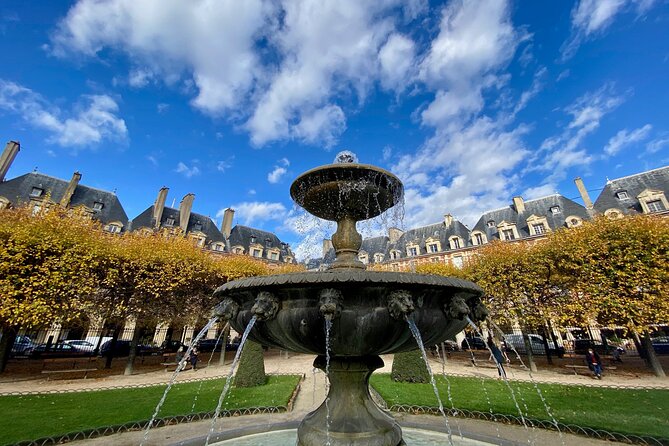
Your walk begins at Place des Vosges, right in the Marais’s central grid. This is the oldest square in Paris, and it has that rare feeling of order and symmetry, even though the area around it has never been quiet. I love how the space sets the tone: you start with a view that feels both formal and lived-in.
Expect the audio to frame what makes a square like this important. You’ll hear why it’s often described as a royal square, then look at the details that keep pulling your eyes across the façades. It’s a good starting point because you’ll immediately understand the neighborhood’s layout. From here, the streets start making sense.
Possible drawback: since Place des Vosges is a big name spot, it can be crowded. If you’re hoping for calm photos, go a little slower at the edges and give yourself a moment before you step into the narrower streets.
Hôtel Carnavalet and the Marquise de Sévigné Mansion
Next you move to Hôtel Carnavalet. This isn’t just another historic building; it’s tied to a specific person from the Marais story—Madame de Sévigné, better known through the name Marquise de Sévigné. The audio points out the mansion’s significance and helps you connect the architecture to the life lived inside.
I like this stop because it turns the Marais from trend-and-food into culture-with-context. You get a sense of how Parisian power and influence once sat in this neighborhood. Even if you’ve strolled past a lot of mansions in your travels, this one adds a human angle, and that makes it easier to remember.
What to do as you listen: don’t rush your ears through the story. Take a slow turn, watch how the street angles change your view, and let the audio match your angle. It’s one of those “sounds better when you’re actually there” moments.
Rue Pavée: Old Stones, an Ancient Wall, and a Surprise Library Connection
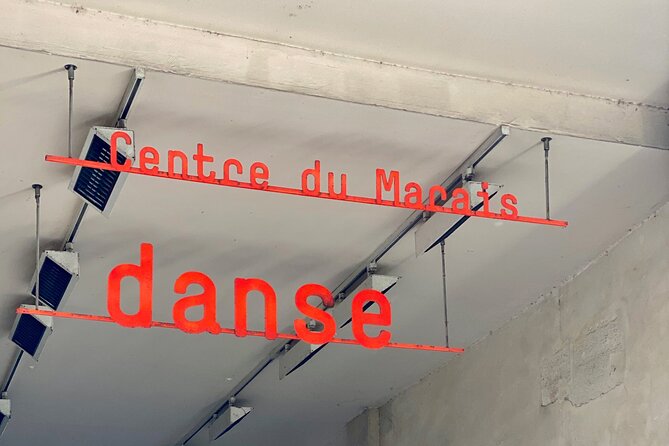
Rue Pavée is where the Marais stops being a general neighborhood and becomes a specific place with layers. The focus here is twofold: the street’s long timeline and a remarkable clue about Paris’s older learning history.
The audio introduces the oldest library in Paris and pairs that with a wall that’s more than 1,000 years old. That’s the kind of fact that can sound dramatic—until you’re standing on the street that carries it. The stones and the tight street feel make the age feel real.
I love this stop because it teaches you how to notice. Instead of treating the “old” parts of Paris as a single postcard layer, you start separating what’s medieval, what’s preserved, and what’s been rebuilt or adapted. You also get a pause-friendly stretch of walking, so you can slow down without feeling like you’re falling behind.
Possible drawback: Rue Pavée is narrow and can be a bit crowded depending on time of day. If you’re sensitive to tight spaces, give yourself extra room when you stop to listen, or step to the side so you’re not holding up foot traffic.
Rue Ferdinand Duval and the Pletz Jewish Neighborhood
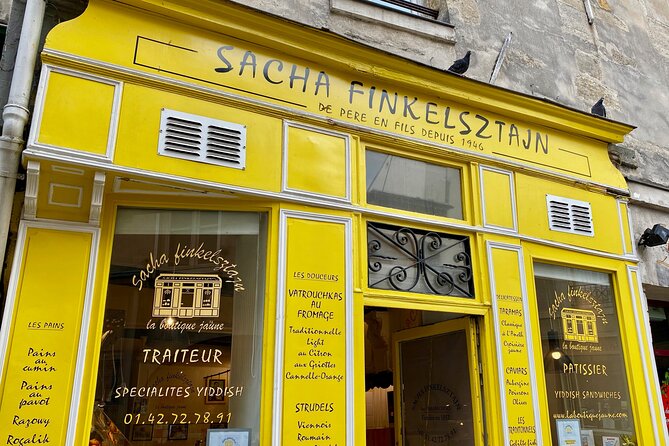
Then the route shifts into the Jewish neighborhood known as the Pletz. Rue Ferdinand Duval is the corridor where you’ll feel how the Marais became a patchwork of communities over time, not just a fashionable shopping district.
The audio doesn’t just label an area; it gives you a way to read the street. You’ll hear about what the neighborhood represented, and that’s key. If you only look at storefronts, you miss the fact that the Marais has been shaped by real people and real history for generations.
I like how this stop helps you travel with respect. It nudges you away from “I’m just passing through” and toward “I’m walking through a place with identity.” That’s especially important in a city where some neighborhoods get flattened into stereotypes.
You can also read our reviews of more tours and experiences in Paris






Rue des Francs Bourgeois: The Bartolomew Massacre and LGBT Community History
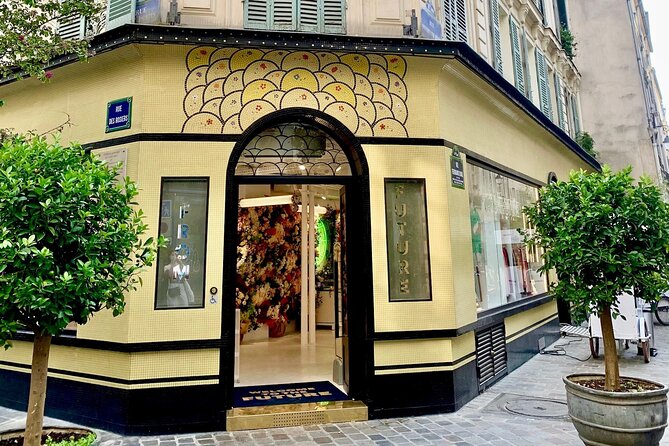
Rue des Francs Bourgeois is one of the most meaningful stops on the whole walk. The audio connects two heavy strands of history: the historical Bartolomew Massacre and the broader history of the LGBT community in Paris.
I appreciate this structure because it doesn’t keep everything cheerful. The Marais is known for style, but the neighborhood is also where Paris’s darker moments and social changes have left marks. By pairing those stories, the audio helps you understand how the city’s history isn’t a straight line. It’s conflict, survival, and change—sometimes close together on the same streets.
Practical tip for listening: since this is an emotionally loaded topic, you might want a slower pace here. Step into a quieter spot when the audio asks you to focus, and give yourself a moment to absorb what you hear before moving on.
Possible drawback: if you’re expecting purely light entertainment, this segment may feel heavier than the rest. On the other hand, that’s exactly why it works as a Marais walk with substance.
Hôtel de Ville Finish Line: Ending at Paris City Hall
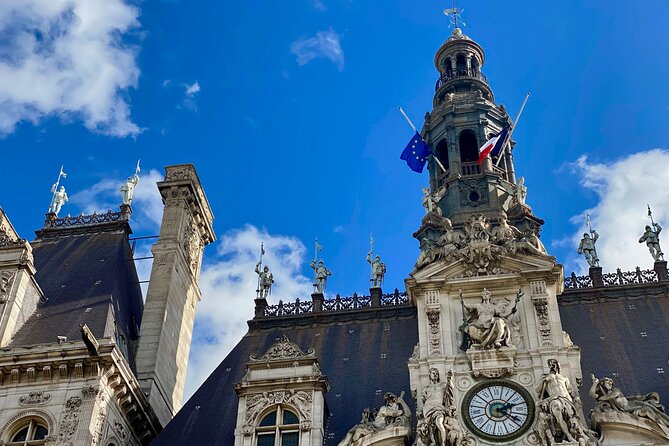
Your tour ends at Hôtel de Ville, Paris’s City Hall. Finishing here is smart. It’s central, recognizable, and it gives you an easy “I’m done” landmark when your phone has done its job guiding you.
The audio shares the history behind the building, which turns your final minutes into more than just transit. You get a sense of why the City Hall matters in Paris’s political story—then you naturally step back out into the city.
One helpful consideration: Hôtel de Ville has public hours listed from morning to early evening (Monday through Sunday, 7:00 AM–6:00 PM in the provided information). If your timing is late in the day, plan to arrive with enough cushion so you can still enjoy the area around the finish.
Price and Time: Is $11.55 Worth It?

At about $11.55 per person for roughly 1 hour 30 minutes, this is priced like a low-cost activity that can still be meaningful. For me, the value isn’t just the price. It’s that you’re buying freedom: you’re not stuck to a live-group schedule.
You also get a lot of payoff per minute because the route is designed around stops that are already interesting on their own. You’re not walking just to reach landmarks. You’re walking because the audio gives you a reason to look at each spot—Place des Vosges, Hôtel Carnavalet, Rue Pavée, the Pletz area, and Rue des Francs Bourgeois.
A balanced way to think about it:
- If you like independent pacing and you enjoy learning while walking, this is excellent value.
- If you want a “live Q&A” or face-to-face storytelling, a phone guide won’t replace that. You’ll still get strong content, but the interaction is one-way.
Also note: admission tickets for the listed stops are marked free in the route information. That helps keep costs predictable. Your biggest variable cost is what you choose to buy or eat along the way.
What You’ll Be Doing for 90 Minutes (And How to Get the Best Experience)
This tour is built like a walking loop through Le Marais’s main threads. You’ll start at Place des Vosges, then gradually move toward City Hall while hitting historic and community-based stops.
For a smooth experience, I’d plan for:
- Headphones/earbuds that work well in the street (Paris has ambient noise)
- A charged phone battery
- A comfy pace, because you’ll want to pause more than once
The experience encourages you to treat it like a self-guided walk with guardrails. The map and real-time direction support means you can stay oriented. That matters because Le Marais can turn into a maze of charming streets fast. You don’t have to memorize anything, which makes it more relaxing for day-to-day tourists and even for locals who know the neighborhood by sight but not by story.
Also, keep an eye out for breaks. The concept specifically supports small stops at terraces or shops. That’s where the neighborhood’s modern side comes in, and it’s usually when you’ll notice how people actually live in the Marais.
Who Should Book This Marais Smartphone Tour
This is a strong match if you:
- Want a self-paced experience in a neighborhood you might revisit later
- Prefer learning from stories tied to specific streets and buildings
- Like neighborhoods with layered identities, including Jewish and LGBT history
- Want an affordable, low-commitment activity that still feels like more than “just walking”
It may be less ideal if you need a lot of face-to-face interaction or if you’re likely to drain your phone battery quickly.
Should You Book This Marais Smartphone Tour?
Yes, if you’re planning a Paris day that includes time to wander and you want your walking to feel purposeful. The price is low enough that you can take it without stress, and the audio design—automatic triggers, map guidance, and the ability to pause—adds real structure to a free-form neighborhood like Le Marais.
If you love cities best when you can control the pace, this is the kind of tour that fits your style. And if you’re a Paris regular, the route still makes a convincing case: even well-known streets can feel new when someone explains what happened there and why it matters.
FAQ
How long is the Trendy Marais smartphone audioguided walking tour?
It runs for about 1 hour 30 minutes.
How much does the tour cost?
The price is $11.55 per person.
Where does the tour start and end?
It starts at 1 Pl. des Vosges, 75004 Paris, France (Place des Vosges) and ends at Hôtel de Ville, 75004 Paris.
Do I need to download anything or use my own phone?
You use your own smartphone for the audio-guided experience. After booking, you receive an email with an activation code.
How do the audio directions work while walking?
The audio commentaries trigger automatically as you stroll, and there’s a map that provides clear directions. If you take a wrong turn, geo-localization helps you get back on track.
What stops are included on the route?
The route includes Place des Vosges, Hôtel Carnavalet, Rue Pavée, Rue Ferdinand Duval, Rue des Francs Bourgeois, and Hôtel de Ville, with short themed stops at each.
What’s included in the price?
A unique experience on your own smartphone is included, with the activation code sent by email.
Is transportation included?
No. Transportation and personal expenses are not included.