REVIEW · PARIS
Paris: Anzac Day Day Tour to Villers Bretonneux
Book on GetYourGuide →Operated by Paris' TRIP · Bookable on GetYourGuide
Anzac Day on the Somme hits different. This full-day trip pairs the Anzac Day Dawn Service in Villers-Bretonneux with a well-planned run of World War I sites across the Somme region. I really like the way it links remembrance with place: the town’s Victoria School connection to Australia comes first, then you move through major memorials and cemeteries. One thing to consider: the schedule is tight around dawn, so you should expect a quick tempo at stops.
I also appreciate that you’re not doing logistics solo. You get an English-speaking guide plus round-trip transport from Paris, and the day is designed as one continuous sweep through the Somme battle area. Price is a little steep at $330 per person, but you’re paying for the guided, all-day structure and transport—just remember food and drinks are not included.
In This Review
- Key Highlights I’d Prioritize
- Why the Somme on Anzac Day Feels Like More Than Sightseeing
- From Paris: The 12-Hour Run North and Back
- Villers-Bretonneux and the Victoria School Connection
- Adelaide Cemetery: A Respect-First Stop
- La Boiselle’s Lochnagar Crater: The 1916 Scar You Can Still See
- Pozières and Thiepval: Remembering the Missing of the Somme
- Péronne and Mont Saint-Quentin: A View With Weight
- Price and Value: What $330 Covers, and How to Budget for Food
- Guide Style and Group Management: What Often Works, and What to Watch
- Who This Tour Is Best For (and Who Should Skip It)
- Should You Book This Anzac Day Villers-Bretonneux Somme Tour?
- FAQ
- How long is the Paris to Somme Anzac Day tour?
- Where do I meet in Paris?
- Is the tour guided in English?
- What transportation is included?
- Is food and drinks included?
- Is this tour wheelchair accessible?
- Is the Australian National Memorial tower open during the dawn service?
- What is the cancellation policy?
Key Highlights I’d Prioritize
- Anzac Day Dawn Service experience in Villers-Bretonneux, timed around the ceremony
- Victoria School connection in 1923–1927, built with support from Australia’s state of Victoria
- Adelaide Cemetery for a focused moment of respect
- Lochnagar Crater at La Boiselle as a stark, physical reminder from 1916
- Thiepval Memorial to the Missing of the Somme and other major remembrance sites
- Péronne’s Mont Saint-Quentin memorial overlooking the Somme River area
Why the Somme on Anzac Day Feels Like More Than Sightseeing
A standard battlefield tour can feel like history class with bus windows. This one is different because it’s built around a real-time moment of remembrance: the dawn service in Villers-Bretonneux. You’re not just looking at monuments after the fact—you’re arriving with the ceremony in mind, which changes how you notice everything else.
The Somme region itself is heavy with meaning. You’ll spend the day moving between cemeteries, memorials, and battlefield sites that translate loss into names, locations, and symbols. The guide helps connect those stops, so you’re not just reading plaques—you understand why each place matters.
You can also read our reviews of more tours and experiences in Paris.



From Paris: The 12-Hour Run North and Back
The tour starts in Paris at Opera Garnier (meet in front of the opera; Metro Opera or bus lines 3, 7, and 8). From there, you transfer north to the Somme area in a minibus, 15-seater coach, or coach depending on participant numbers.
That transport piece matters more than it sounds. You’re spending roughly 12 hours on the trip, so having everything scheduled as one route keeps you from wasting time on timing, tickets, and transfers. Do note that this isn’t a relaxed, walk-the-town kind of day. It’s structured, with repeated boarding and disembarking.
Practical tip: wear shoes you can stand in for a while. Dawn services and memorial visits aren’t the kind of sightseeing where you can duck out early.
Villers-Bretonneux and the Victoria School Connection
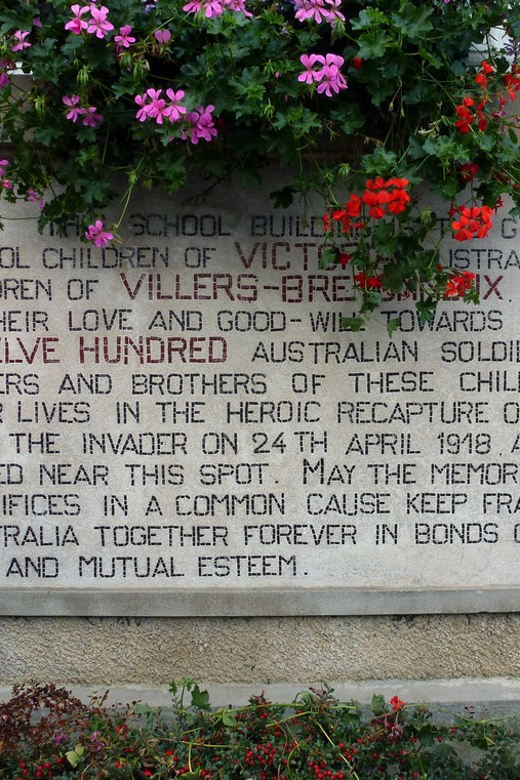
Villers-Bretonneux is the emotional center of the day. Before you get to the ceremony atmosphere, you’ll visit the Victoria School, built 1923–1927 as a gift from children in the Australian state of Victoria to the children of Villers-Bretonneux. It was meant as proof of love and goodwill between the communities.
That school detail is a clever anchor. It’s not only about the war years; it’s about what came after—how relationships were rebuilt and how remembrance extended into education and everyday life. You’ll likely notice that the tone here feels communal and cross-generational, not just solemn.
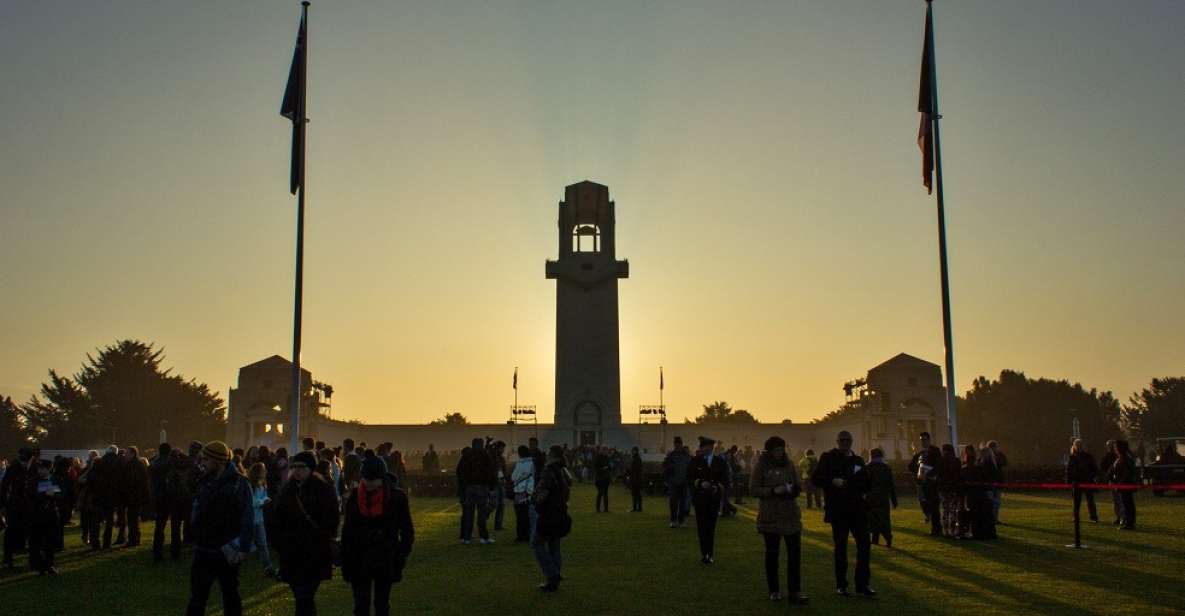
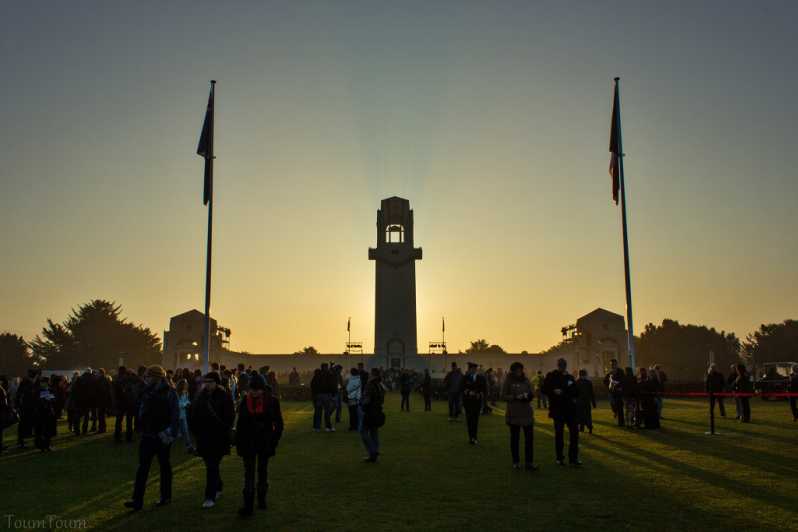
Then comes the Anzac Day Dawn Service. One important heads-up: due to technical equipment setup, the central tower of the Australian National Memorial won’t be open to the public. So if you were picturing climbing viewpoints or full access to that feature, plan around what’s available from the surrounding areas.
Adelaide Cemetery: A Respect-First Stop
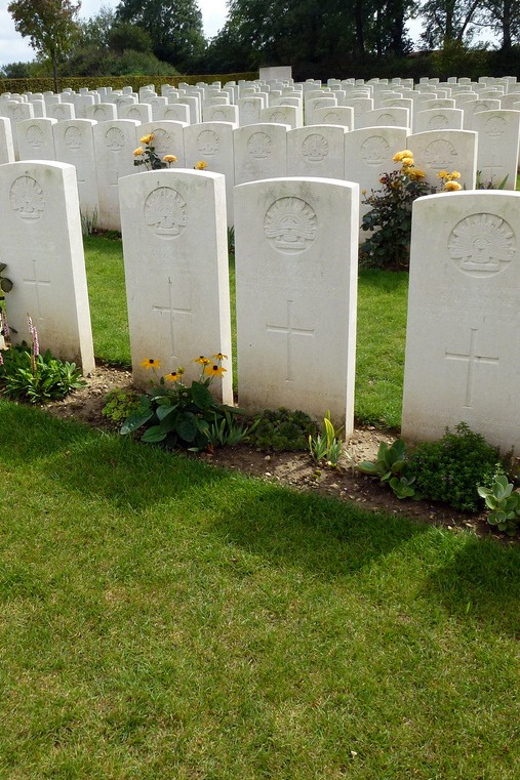
Next, you’ll head to Adelaide Cemetery, where you pay your respects to the fallen soldiers. This kind of stop is all about pace. You don’t rush through a cemetery like you might a museum hall.
What you’ll take away here is the difference between a memorial and a cemetery. A memorial often speaks in names and collective remembrance; a cemetery makes it immediate and physical. Either way, you leave with a fuller sense of how the Somme region holds both grief and identity.
If you’re the type who likes to read carefully, give yourself a little extra time when the group moves. The tour is organized, but your best experience comes when you slow down for a few moments where you need it.
La Boiselle’s Lochnagar Crater: The 1916 Scar You Can Still See
At La Boiselle, you’ll see the Lochnagar Crater, left behind from 1916. This is the part of the day that tends to feel almost unreal. It’s one thing to imagine trench warfare. It’s another to stand near an enduring mark of it.
The guide’s job here is crucial. Without context, it can look like a random hole in the earth. With context, it becomes a physical record of destructive scale—something you can visually process faster than reading page after page.
Practical note: crater sites can be uneven. Keep your footing in mind, especially if the weather is cold in the early hours.



Pozières and Thiepval: Remembering the Missing of the Somme
Your route continues through the Battle of Pozières site area, followed by one of the most meaningful stops on the day: the Memorial to the Missing of the Somme at Thiepval.
This is where the idea of remembrance shifts again. You’re no longer just looking at one event or one burial ground. You’re confronted with the scale of people who can’t be placed in a simple, final location. A missing-soldiers memorial brings that reality forward—without solving it.
If you want a tip that actually helps: slow down at Thiepval to read as much as you can. Even a few minutes of careful looking makes the memorial feel personal instead of abstract.
Péronne and Mont Saint-Quentin: A View With Weight
After the major memorial focus, the tour includes Péronne and the war memorial of Mont Saint-Quentin overlooking the Somme River area.
This stop gives you a different kind of perspective. Elevated vantage points can trick you into thinking the past was calm and scenic. But the entire region tells the opposite story. The view doesn’t erase the war—it highlights how the land was fought over, controlled, and endured.
If you’re someone who likes photographs, this is often a good moment to take them. Just remember to keep a few minutes for quiet looking too. This tour is built for respect, not just shutter clicks.
Price and Value: What $330 Covers, and How to Budget for Food
At $330 per person for a 12-hour day, you’re paying for three main things: transport from Paris, an English-speaking guide, and a route that links multiple major sites without you planning each turn.
Food and drinks are not included. That’s the part that can surprise people. You’ll want to budget for lunch and any snacks you might want during gaps between stops. If you’re attending dawn and then spending the morning moving between sites, having at least some backup snacks can keep you comfortable, especially in cold weather.
Here’s how I’d think about value: the price makes sense when you’d otherwise have to pay for a private driver, build a tight itinerary yourself, and still try to coordinate with ceremony timing. If you’re happy to do that planning solo, you could save money. But if you want everything handled and interpreted, this is the kind of day where guided structure is genuinely useful.
Guide Style and Group Management: What Often Works, and What to Watch
The positive pattern in the tour experience is clear: smooth day flow, a comfortable bus, and guides who are friendly and enthusiastic. When a tour around remembrance runs well, it feels almost effortless—like you can focus on the places instead of the schedule.
That said, there’s also a caution worth taking seriously. One less-satisfied experience pointed to problems around arrival and documentation at the Villers-Bretonneux turn-off due to security needing correct paperwork. That kind of delay can cause real stress when the dawn service timing is strict and when you need the right access to be seated.
So here’s my practical advice: treat dawn day like an airport. Double-check that your details and required documents are correct before you go. And don’t assume there will be an easy, unhurried buffer to linger for wreaths or extra moments after the ceremony. Plan mentally for a quick transition from service to bus.
Also note: some people felt directions about stops, lunch timing, and what to bring were lacking. Even if that’s not your experience, it’s smart to come prepared—comfortable layers, warm clothing, and your own water/snacks plan.
Who This Tour Is Best For (and Who Should Skip It)
This tour fits best if you want:
- A structured Anzac Day experience tied directly to Villers-Bretonneux
- A guided route across major Somme memorials and battle-related sites
- An English-speaking guide shaping what you see into something meaningful
It may not be a great match if you:
- Need step-free access. This tour is not wheelchair accessible and is not suitable for people with mobility impairments.
- Prefer long, free time at each stop. This day runs on transitions, and the dawn service is the anchor that sets the pace.
Should You Book This Anzac Day Villers-Bretonneux Somme Tour?
If you’re coming to Paris specifically for Anzac Day and you want the dawn service to be part of your plan, this is one of those days where booking saves effort and adds depth. The best-case scenario is a smooth ride, a guide who keeps you oriented, and a sequence of memorial stops that feel respectful instead of rushed.
I’d book it if you’re comfortable with a tight schedule and you’ll prepare for cold early-morning conditions. I’d also book it if you value transport + guidance over DIY route planning.
I might hesitate if you’re very sensitive to delays or if you can’t handle the idea of moving quickly between stops. Dawn services bring strict timing and security checks, and the tour’s structure won’t be built for leisurely wandering.
If you do book, come prepared: warm clothing, comfortable shoes, and a personal food plan since nothing is included. Get your paperwork straight, treat it like a timed event, and you’ll be in the right headspace to let the places speak for themselves.
FAQ
How long is the Paris to Somme Anzac Day tour?
The tour duration is 12 hours.
Where do I meet in Paris?
Meet in front of Opera Garnier (Metro Opera or bus lines 3, 7, and 8).
Is the tour guided in English?
Yes. The tour includes an English-speaking guide.
What transportation is included?
You get round-trip transportation by minibus, 15 seater coach, or coach, depending on the number of participants.
Is food and drinks included?
No. Food and drinks are not included.
Is this tour wheelchair accessible?
No. The tour is not wheelchair accessible and is not suitable for people with mobility impairments.
Is the Australian National Memorial tower open during the dawn service?
No. Due to technical equipment for the Dawn Service, the central tower of the Australian National Memorial will not be open to the public.
What is the cancellation policy?
The tour offers free cancellation up to 24 hours in advance for a full refund, and there are no cancellations, modifications, or refunds 5 days prior to the scheduled tour date.