REVIEW · PARIS
Sacré-Cœur de Montmartre Guided Tour
Book on GetYourGuide →Operated by Touristca Tours · Bookable on GetYourGuide
A hilltop walk in Montmartre is never just a stroll. This guided route strings together key art and culture stops, from the Wall of Love to the views from Sacré-Cœur, with a local guide to connect the dots fast. I especially like the Wall of Love at Square Jehan Rictus and the way Le Bateau-Lavoir is tied to Picasso’s Cubism story.
One thing to plan for: it’s a walking tour on cobblestones and up a hill, so comfortable shoes and warm layers matter more than you’d think.
You start at Metro Abbesses, then you’ll work your way through the neighborhood’s most famous corners—plus a few quieter moments that help the whole place make sense. The final payoff is at Sacré-Cœur, where the height finally explains why Montmartre became a magnet for artists, writers, and dreamers.
In This Review
- Key things that make this tour worth your time
- Starting at Metro Abbesses: quick orientation, no wandering
- Square Jehan Rictus and the I Love You Wall: a modern warm-up
- Le Bateau-Lavoir: where Picasso’s Cubism era has street-level context
- A quiet garden moment: Saint Denis and the legend behind Montmartre
- Dalida, Moulin de la Galette, and Lapin Agile: bohemian Paris in real-world stops
- Clos Montmartre vineyard and Place du Tertres: the artist square vibe, plus the working landscape
- Saint Pierre Church: a historic pause before the big finale
- Basilica of Sacré-Cœur: the payoff views from the hilltop
- Price and value: is $41 worth it?
- What to bring (and how to prepare) so you enjoy it
- Who should book this Montmartre tour?
- Should you book the Sacré-Cœur de Montmartre Guided Tour?
- FAQ
- Where does the tour start?
- How long is the guided tour?
- What is included in the price?
- Is food or drinks included?
- What language is the live guide?
- Which major places are included on the route?
- What should I bring with me?
- What are the cancellation terms?
Key things that make this tour worth your time
- Square Jehan Rictus and the Wall of Love: quick, modern Montmartre energy before the art history starts
- Le Bateau-Lavoir: where Picasso’s Cubism era links to the streets you’re walking on
- Saint Denis garden stop: a calm nod to the legend behind Montmartre’s name
- Dalida, Moulin de la Galette, and Lapin Agile: pop culture and bohemian Paris in the same route
- Clos Montmartre vineyard + Place du Tertres: you get both the working landscape and the artist square feel
- Finish at Sacré-Cœur: views that make the climb feel like a smart investment
Starting at Metro Abbesses: quick orientation, no wandering
Your guide meets you at the exit of Metro Abbesses holding a sign and wearing a name tag. Aim to arrive about 15 minutes early so you can start on time and avoid the awkward scramble with other groups. Once you’re together, the tour stays tightly focused on Montmartre’s story, not just a list of landmarks.
This matters because Montmartre can feel like a maze if you go alone. Streets twist, stairs appear out of nowhere, and suddenly you’re turned around with no idea which direction Sacré-Cœur is pulling you. A guide helps you keep the big picture as you move from modern icons to art and legends—without you needing to do heavy research on your phone.
You can also read our reviews of more guided tours in Paris



Square Jehan Rictus and the I Love You Wall: a modern warm-up
The first major stop is the Wall of Love at Square Jehan Rictus. It’s one of those places that works even if you’re not trying to be romantic. It’s bright, graphic, and very Montmartre: part street art, part collective message, part people-watching.
I like how this stop sets the tone. You’re in a neighborhood that’s famous for artists, but the vibe here is more about today’s travelers and locals leaving little marks. It also gives you a visual reset before the tour shifts into older art history themes around Le Bateau-Lavoir.
Practical tip: bring your camera, because the wall is made for close shots and wider angles. You’ll also see how the area frames views toward the hilltop direction you’re heading.
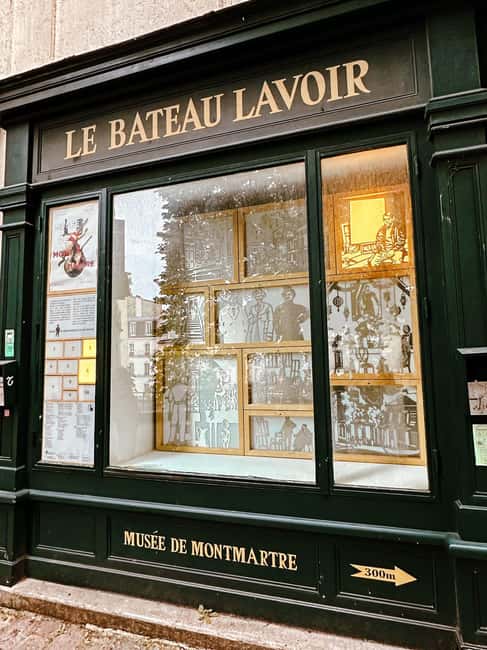
Le Bateau-Lavoir: where Picasso’s Cubism era has street-level context
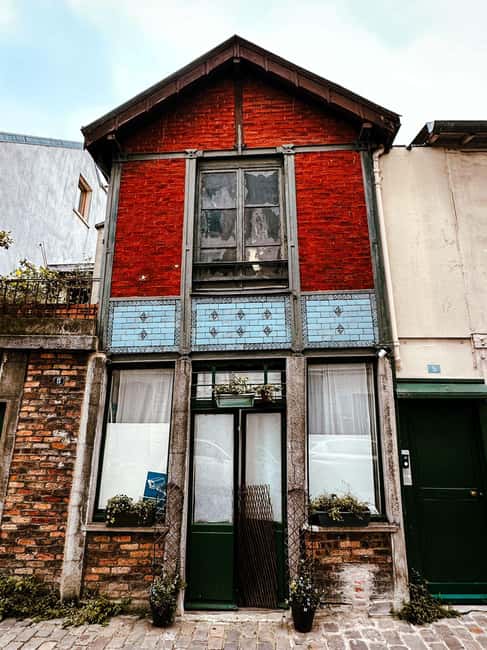
Next comes Le Bateau-Lavoir, one of Montmartre’s most important art sites. The tour connects it to Picasso and the start of Cubism—this isn’t just a “there’s a famous place” stop. You’ll get a sense of why artists clustered here in the first place: creative communities need space, cheap experimentation, and neighbors who don’t mind noise and ambition.
The value for you is context. When you understand the setting, Cubism feels less like a textbook term and more like a logical break from the old rules. You can look around the area with new eyes and think, I get why someone would want to redraw reality right here.
One consideration: if you’re expecting a museum-style presentation, this is still a walking tour. You’ll learn key ideas, then move on. That works best if you’re okay with short, guided explanations tied directly to the streets.
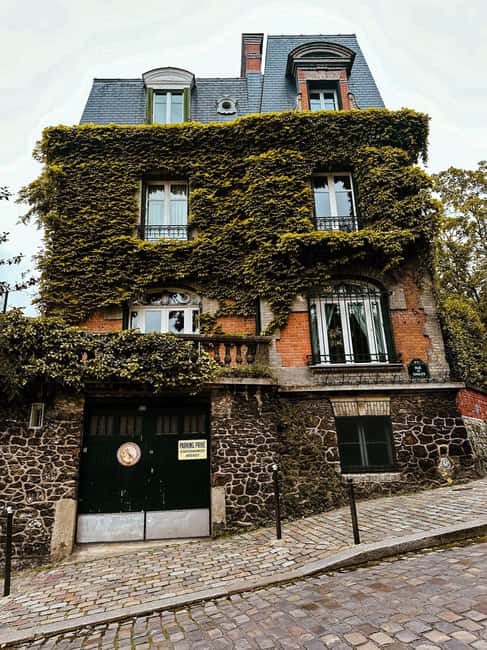
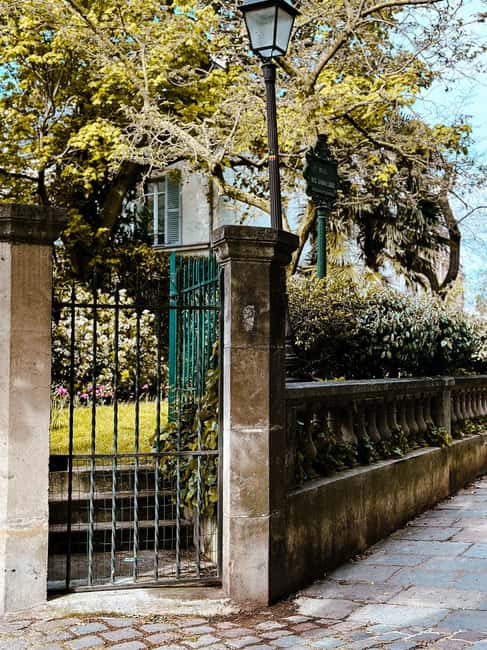
A quiet garden moment: Saint Denis and the legend behind Montmartre
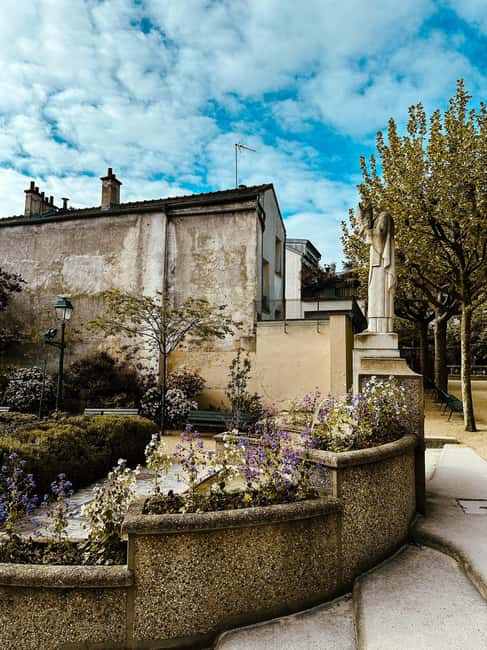
After the art-heavy stops, you’ll hit a peaceful garden featuring a statue of Saint Denis. The guide’s framing here is useful: Saint Denis is tied to the legendary figure who helped give Montmartre its name.
This is more than a religious footnote. In a neighborhood known for reinvention—artists reinventing styles, performers reinventing audiences—this statue adds the older layer: where the identity started. It also breaks up the walk so you’re not just moving from one loud landmark to the next.
If you like slow moments, this stop is a good reset. Take a breath, look at how the garden feels protected compared to the surrounding streets, and then get ready for the more energetic parts of Montmartre.
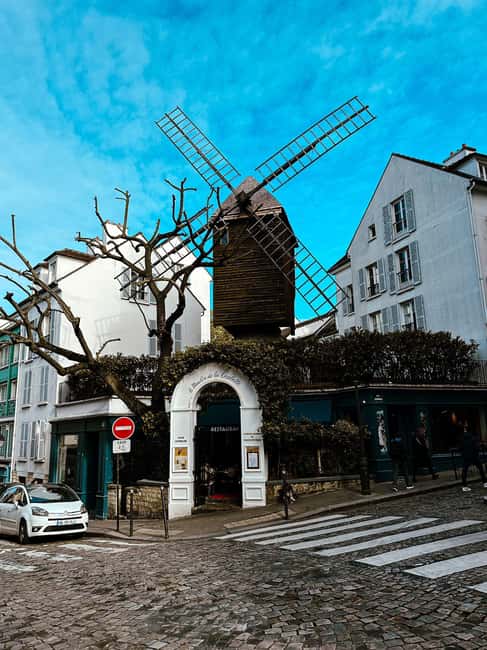
Dalida, Moulin de la Galette, and Lapin Agile: bohemian Paris in real-world stops
Now the tour turns lively, and it’s one of the best parts for keeping the story fun. You’ll visit spots connected to disco queen Dalida, then move toward Moulin de la Galette, and on to Cabaret Lapin Agile, a longtime haunt associated with Picasso.
Here’s why this works for you: Montmartre isn’t only about painting techniques. It’s also about entertainment, music, nightlife, and the culture that grew around artists. By mixing Dalida with the cabaret scene, the guide makes it feel like a living neighborhood rather than an old postcard.
- Dalida’s house connection gives you a pop-culture bridge, so the tour reaches beyond classic art eras.
- Moulin de la Galette helps you understand why this area became so famous for leisure and performance.
- Cabaret Lapin Agile brings the bohemian “hangout” idea into focus—especially with the Picasso connection, which helps explain why artists kept returning to places where they could meet, talk, and experiment.
One drawback to keep in mind: if you’re not that interested in the entertainment side, you might want to pay extra attention to the guide’s links between each stop. The tour moves fast because it’s built to cover a lot in 2 hours.






Clos Montmartre vineyard and Place du Tertres: the artist square vibe, plus the working landscape
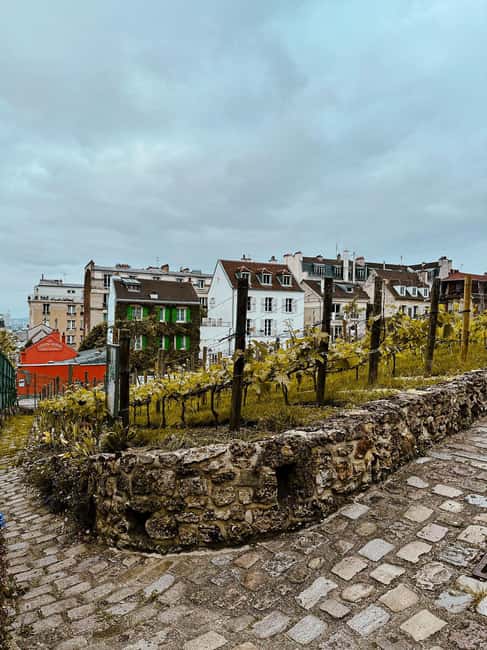
After the cabaret and classic landmark energy, you’ll wander through the vineyard area—the Vigne du Clos Montmartre—and then reach Place du Tertres, known for its artist presence.
I love pairing these two stops. The vineyard gives you the practical, grounded view that Montmartre isn’t only monuments. Then Place du Tertres shows the “artist at work” feeling that people come to see, with the square acting like a stage for drawing and portrait-making.
What you’ll get from the guide here is more than how to take a good photo. You’ll understand how Montmartre’s creative image is tied to both landscape and street life. The vineyard makes the neighborhood feel physical, while Place du Tertres makes it feel social.
Tip: wear shoes with traction. Even if you love sightseeing, you’ll want your footing when you’re walking through uneven paths and up-and-down streets.
Saint Pierre Church: a historic pause before the big finale
Next up is Saint Pierre Church. This part of the tour helps you slow down again. Churches in Montmartre aren’t just scenic stops—they add weight to the neighborhood’s timeline, blending religion, architecture, and the feel of a hilltop district where stories stack over time.
This is a nice moment to regroup. By now you’ve taken in modern street art energy, art history framing around Le Bateau-Lavoir, and bohemian culture sites. Saint Pierre gives you a calmer setting and a chance to look at details and surroundings before you reach Sacré-Cœur.
If you’re short on time in Paris, I like that the tour doesn’t only chase the most famous landmark. It includes a stop that supports the neighborhood’s identity.
Basilica of Sacré-Cœur: the payoff views from the hilltop
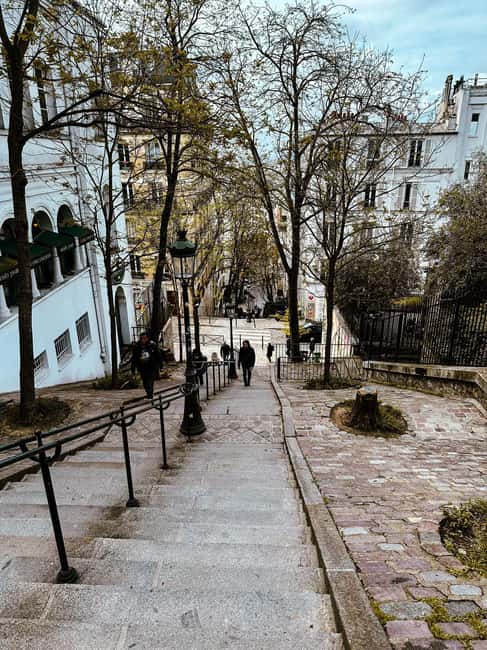
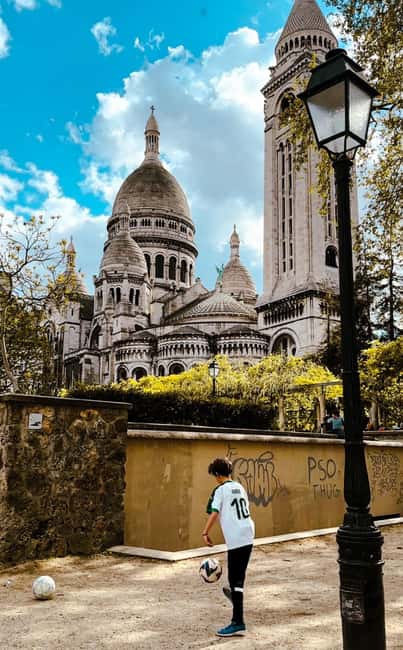
You finish at the Basilique du Sacre-Coeur de Montmartre, and the timing is smart. After you’ve seen the neighborhood’s layers, the basilica’s size and location finally make sense. This is where the climb earns its keep.
You’ll enjoy sweeping views of Paris—exactly why Montmartre became a magnet for people who wanted to look out over the city. It’s the kind of viewpoint that changes how you understand where everything sits: neighborhoods, streets, and the spread of the city feel more readable from up here.
Practical note: the tour data specifically suggests warm clothes for the hilltop breeze. I’m with that. Even on mild days, the air up top can feel sharper than the streets below.
Price and value: is $41 worth it?
At $41 per person for a 2-hour guided walk, this tour is priced for people who want structure without spending all day on logistics. You’re paying for a local guide to connect stops and explain why they matter—especially at Le Bateau-Lavoir and around the Cubism link tied to Picasso.
What makes it good value is that it includes multiple famous Montmartre anchors, not just one big-ticket attraction. You also get a route that ends at Sacré-Cœur so you don’t have to puzzle out how to return or where to go next.
What isn’t included: food and drinks. That’s normal for a 2-hour tour, but it changes how you plan your day. If you tend to get hungry while walking, you may want a snack before you start, or plan to eat right after your basilica finish.
What to bring (and how to prepare) so you enjoy it
This is a walking tour through cobblestone streets and an elevated area. Based on the tour info, I’d prepare like this:
- Wear comfortable shoes with grip for uneven surfaces
- Bring warm layers for the hilltop breeze
- Bring a camera for the Wall of Love, vineyard areas, and Sacré-Cœur views
Also, if you’re the type who likes to take breaks, remember this route is built to cover a lot. You can still pause for photos, but keep moving so you don’t slow the group too much.
Who should book this Montmartre tour?
I think this tour fits best if you want:
- A guided Montmartre walk that ties together art, legends, and culture
- A clear route from Metro Abbesses to Sacré-Cœur without map-work
- A mix of famous sights (Sacré-Cœur) and story-driven stops (Le Bateau-Lavoir, Saint Denis, Cabaret Lapin Agile)
It’s a strong pick for first-timers who want the highlights with meaning. If you already know Montmartre’s art history deeply and want long museum time, you might find this a bit too “walk-and-learn.” But if you want a compact, confident overview, this is the right format.
Should you book the Sacré-Cœur de Montmartre Guided Tour?
Yes—if you want a smart, time-efficient Montmartre experience that ends with iconic views. The biggest reason I’d book it is the way the guide connects major stops: Square Jehan Rictus, Le Bateau-Lavoir and the Picasso/Cubism angle, then the neighborhood’s bohemian culture before finishing at Sacré-Cœur.
Skip it (or consider a different style tour) if you hate walking hills, need lots of inside time, or expect food to be part of the experience. Otherwise, grab comfortable shoes, plan for cool air at the top, and let the route do the planning for you.
FAQ
Where does the tour start?
The meeting point is at Metro Abbesses. Your guide will be waiting at the station exit with a sign and a name tag.
How long is the guided tour?
The duration is 2 hours.
What is included in the price?
The price includes a local guide.
Is food or drinks included?
No. Food and drinks are not included.
What language is the live guide?
The live tour guide is in English.
Which major places are included on the route?
You’ll visit key Montmartre stops including the Wall of Love at Square Jehan Rictus, Le Bateau-Lavoir, the Vigne du Clos Montmartre, and the Basilique du Sacre-Coeur de Montmartre, along with other famous nearby sights mentioned in the tour description.
What should I bring with me?
The tour info recommends bringing a camera and wearing warm clothes.
What are the cancellation terms?
The tour offers free cancellation up to 24 hours in advance for a full refund.