REVIEW · PARIS
Paris: VR Experience “L’Horizon de Khéops”
Book on GetYourGuide →Operated by Eclipso Paris · Bookable on GetYourGuide
Giza feels close when it’s built into your walk. I love the free-moving VR setup and the realistic 3D look the program aims for, and you’ll get a guided story that’s both entertaining and cultural. A possible downside: you only get about 45 minutes inside the world, so you may wish for a bit more time in some of the key scenes.
This is a VR expedition to Egypt, staged in a 1,000m2 space where you can roam around while a virtual guide and other visitors are part of the experience. The production starts at sunrise over the Giza Necropolis, then steers you toward the Sphinx and into a VIP-style visit at pyramid base level during nightfall, including views of areas that are typically closed to the public.
In This Review
- Key things to know
- The VR story: Giza at sunrise, then VIP nightfall
- Why the 1,000m2, free-moving VR setup feels different
- What happens when you become a giant avatar
- The Sphinx moment: a visual cue for scale and orientation
- The pyramid foot at nightfall: why that sequence works
- Realism, 3D quality, and the script (the stuff that makes it worth $37)
- Who should book this VR Egypt adventure
- Practicalities in Paris-area terms (what affects your day)
- What you’ll learn (without needing a history degree)
- Should you book L’Horizon de Khéops?
- FAQ
- Where does this VR experience take place?
- How much does L’Horizon de Khéops cost?
- How long is the experience?
- How much of the time do you wear the headset?
- What languages are available during the visit?
- Is this experience wheelchair accessible?
- Is it suitable for children?
- Is it safe for people with epilepsy or heart problems?
- What is the cancellation policy?
- Is there an option to pay later?
Key things to know
- 1,000m2 free-roaming space: you’re not stuck in a tiny platform setup
- 45 minutes of VR: the full session is about an hour on site
- Sunrise to nightfall storytelling: the time-of-day shift drives the drama
- Sphinx + pyramid foot focus: you follow the route the production wants you to see
- VIP access angle: it’s designed to show places you can’t just stroll to normally
- French or English guidance: staff are there to help in both languages
The VR story: Giza at sunrise, then VIP nightfall
The experience opens like a film still—sun rising over the Giza Necropolis. Instead of generic pyramid photos, the program paints a layered view of the site, including the silhouettes of mastabas (tombs of deceased monarchs’ inner circles and families). That matters because it frames Giza as more than three pyramids. You’re looking at a whole ancient ecosystem of monuments and tombs.
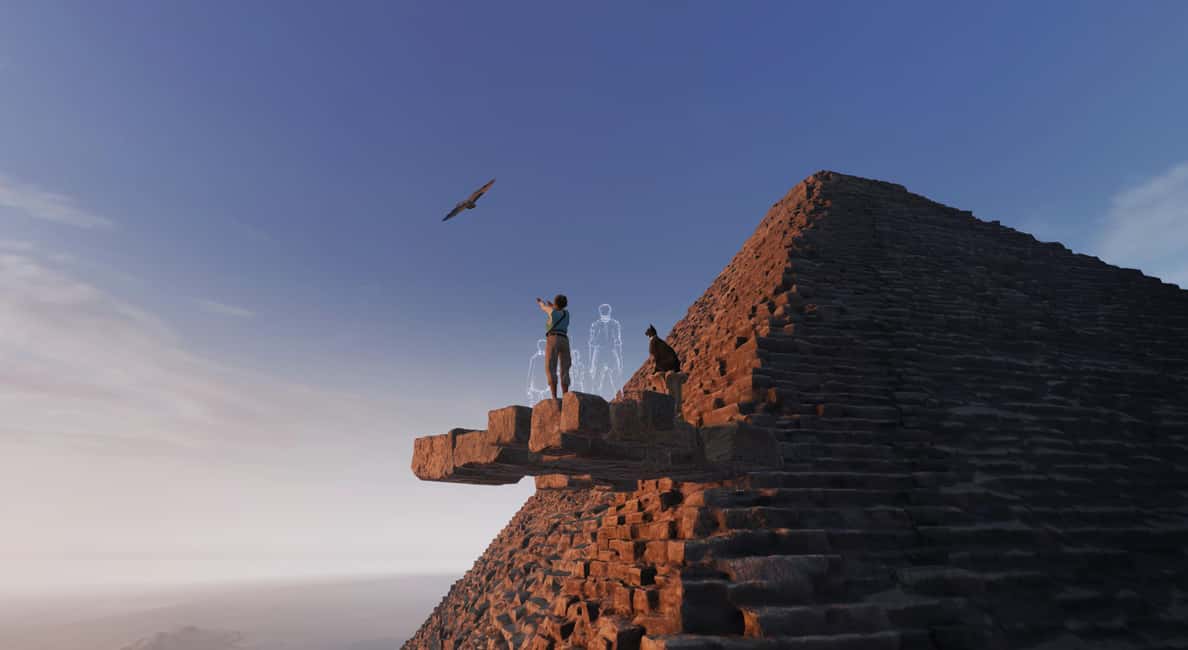
From there, you start as a giant avatar walking across the Giza Plateau. The production nudges you forward step by step: you head toward the Sphinx, then it routes you to the foot of the pyramid for a nighttime moment. That sunrise-to-nightfall arc is more than mood. It’s a clever way to change lighting, scale, and atmosphere in a way your brain reads as a real journey.
The highlight is the VIP visit at nightfall. It’s positioned as access to spaces that are normally closed to the public. Even if you’ve read about Giza for years, it’s the kind of framing that gives you a different angle: not just “here’s what exists,” but “here’s what it can feel like to be there at a different moment.”
You can also read our reviews of more tours and experiences in Paris.


Why the 1,000m2, free-moving VR setup feels different
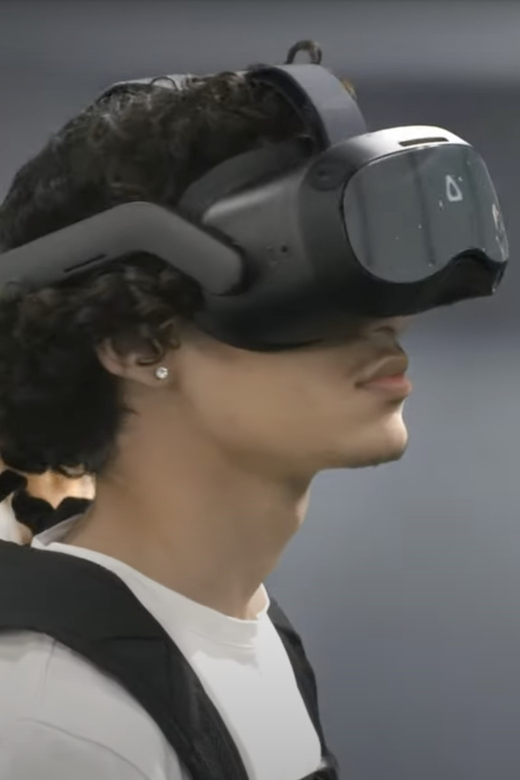
A lot of VR experiences keep you in one spot. Here, the program gives you room—1,000m2—and lets you move freely for roughly 45 minutes inside the world. That single detail changes how the experience lands. You’re not just watching the scenery; you’re making the path with your body.
In practical terms, it also helps with orientation. When you can physically turn, step, and approach points of interest, you get a stronger sense of scale—pyramids feel huge in VR when you can walk toward their base rather than just stare at them from a fixed distance. If you like hands-on museums, this has that same “movement = understanding” vibe, even though it’s virtual.
Just keep your expectations aligned with the format. The world is interactive, but it still moves you along a planned route. So you’ll want to lean into the story the production is telling—especially the transition from daytime exploration to the nightfall “VIP” sequence.
What happens when you become a giant avatar
Starting as a giant avatar is the program’s way of solving a basic problem: you can’t shrink yourself to ancient scale. The workaround is dramatic. It gives you a bird’s-eye sense of the Giza Plateau while still guiding you on foot toward major landmarks.
This approach also supports the educational angle. When the program shows tomb structures like mastabas as silhouettes, it’s easier for you to register them when you’re not stuck looking only at one small human viewpoint. You’re seeing the layout like an oversized observer, which makes the site feel like a planned city of monuments rather than a few isolated icons.
The payoff is that you aren’t just consuming information. You’re moving through it. The “giant avatar” framing nudges you to look around—toward the Sphinx, toward the pyramid base—so your brain maps the geography more naturally.
The Sphinx moment: a visual cue for scale and orientation
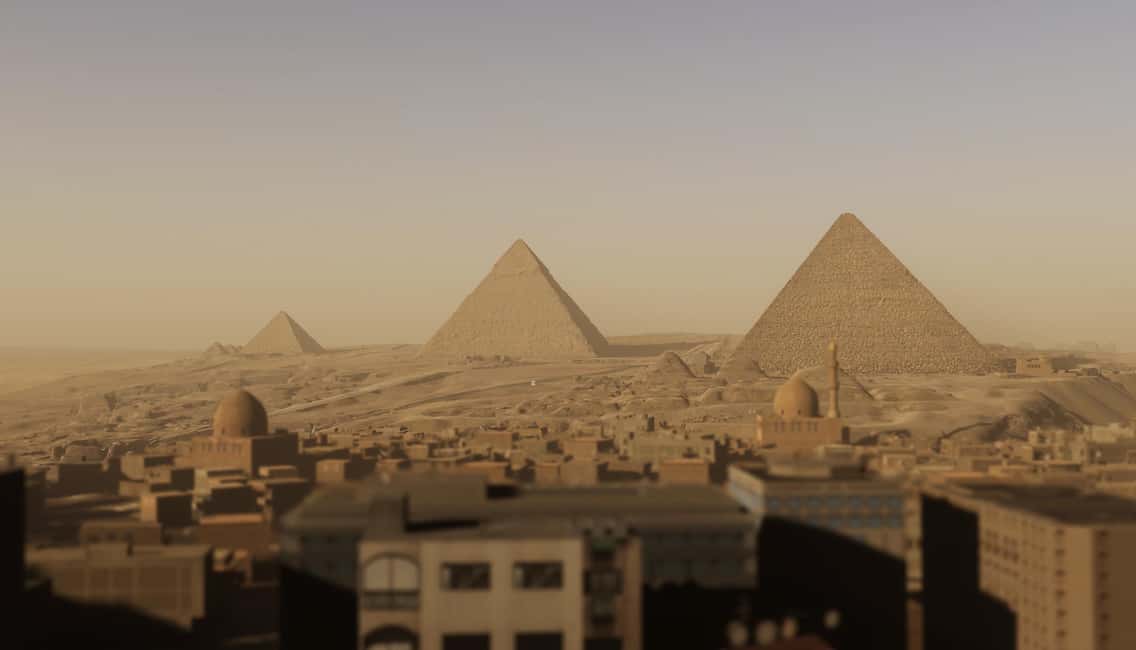
The production specifically routes you toward the Sphinx. That’s smart, because the Sphinx works like a landmark in real life and in VR. Once you have that reference point, everything else—mastabas, plateau stretches, pyramid placement—makes more sense.
What I like about this kind of landmark staging is that it reduces the need for prior knowledge. You don’t have to already know every angle of Giza to enjoy the route. You follow the visuals, and your understanding builds as you go: Sphinx first for scale and orientation, then the pyramids for destination.
If you’re a fan of ancient sites, this is also the moment where the realism matters most. When the visuals look convincingly three-dimensional, your mind accepts the environment faster, and you spend less time wondering whether it’s believable and more time paying attention to the story beats.
The pyramid foot at nightfall: why that sequence works
The “VIP at nightfall” portion is where the program turns educational travel into something more emotional. Nightfall changes the feel of stone architecture. Shadows get sharper. The scene becomes more dramatic. In VR, that sort of lighting shift is a strong storytelling tool because it signals a change of chapter.
You go to the foot of the pyramid at this stage, which is a good choice. Base-level views create a different relationship than skyline views. You sense mass and proximity. It’s also a way to support the promise of previously closed spaces—nightfall helps the production justify a special access moment without you needing to know the backstory.
This sequence is also a good time to pay attention to how the narration or guide frames what you’re seeing. A script that’s designed to be enriching and cultural can make the night scene do more than look cool—it can connect the visuals to the meaning behind the site.






Realism, 3D quality, and the script (the stuff that makes it worth $37)
At $37 per person for about an hour on site (with 45 minutes in the headset), the price makes sense only if the experience delivers more than spectacle. The best sign here is that the program aims for realistic visuals and a structured story. The feedback around the visuals points to strong 3D quality and an impressively realistic look for a current production.
The other big value driver is the script. When a VR experience includes cultural context instead of only chasing effects, it becomes a legit “learning trip” even if you don’t leave Paris. You’re getting a guided narrative that tries to explain what you’re seeing—mastabas, Giza Plateau geography, the Sphinx, and the pyramid base—while giving you those landmark moments that feel cinematic.
So how should you judge the value as a buyer? Think of it like this:
- If you’re excited by authentic-feeling staging and a story you can follow, the price is easier to justify.
- If you only want 3D wow and don’t care about cultural framing, you might wish for a longer run time or a deeper level of exploration.
Who should book this VR Egypt adventure
This is a good match if you like museum-style storytelling, you enjoy technology that still has an actual narrative, and you want a structured way to experience Giza without planning logistics or guides in Egypt.
It’s also a decent choice for people who want an Egypt taste in Paris—especially if the idea of visiting Giza is exciting but you’re not ready for the time, cost, and travel complexity of a full trip.
On the other hand, it’s not for everyone. It’s not suitable for children under 8, people with heart problems, or people with epilepsy. If any of these apply, skip it and choose a different format that’s safer and calmer.
If you’re traveling with a group, this is also a straightforward “one activity” plan. You’re not piecing together multiple stops; you’re doing one guided experience in a defined time window.
Practicalities in Paris-area terms (what affects your day)
Even though it’s VR, you should still treat it like a time-slot activity. The total duration is listed as 1 hour, with 45 minutes actually spent in the headset portion. That means you’ll want to plan your schedule around a clean arrival, check-in, and a full hour buffer.
Language is simple: the host or greeter is available in French and English, so you won’t feel stuck if you prefer one of those languages. And it’s wheelchair accessible, which is a real plus for travelers who want an activity that isn’t automatically limited by steps or stairs.
Because the experience is staged in a large 1,000m2 space, it also tends to feel more like a guided walk than a sit-and-watch video. If you’re the type of person who gets restless in long indoor productions, you’ll likely appreciate the movement-based format and the fact that the journey has multiple scenes.
What you’ll learn (without needing a history degree)
The program isn’t trying to replace museum reading. It does something more practical: it gives you a guided mental map. You start at sunrise over the Giza Necropolis, you get visuals of mastabas as part of the broader site, and you follow the route toward the Sphinx and then the pyramid base at nightfall.
That route matters because it anchors your understanding in location, scale, and atmosphere. Even if your Egypt knowledge is light, the landmarks do the teaching. You’re more likely to remember:
- what mastabas are and how they fit visually into Giza
- why the Sphinx is a strong orientation point
- how base-level views change your sense of the pyramids
- how the program frames access and the idea of seeing spaces usually closed
Think of it as a “pre-trip primer” if you’re planning to see Egypt someday—or a “compressed experience” if you just want the feeling of being there without the travel days.
Should you book L’Horizon de Khéops?
I’d book it if you want a story-driven VR journey that’s designed to feel realistic, educational, and cinematic, not just a gimmick. The combination of free-moving 1,000m2 VR, a clear narrative arc from sunrise to nightfall, and the promise of previously closed-to-the-public style access makes it a strong value at $37—especially if you’re the type who likes landmarks and guided interpretation.
I’d skip it if you need a longer experience than 45 minutes in VR, or if any safety criteria apply (heart problems, epilepsy, and children under 8). Also, if you’re only chasing technical novelty and don’t care about cultural context, you may find the runtime a bit short.
If you’re deciding last-minute, the experience includes free cancellation up to 24 hours in advance and offers a reserve-now, pay-later option. That flexibility makes it easier to fit into a busy Paris schedule without stress.
FAQ
Where does this VR experience take place?
It’s listed as being in Ile-de-France, France, with the provider listed as Eclipso Paris.
How much does L’Horizon de Khéops cost?
The price is $37 per person.
How long is the experience?
The experience is 1 hour in total, including a 45-minute virtual reality session.
How much of the time do you wear the headset?
You spend 45 minutes in the virtual reality experience with the headset.
What languages are available during the visit?
The host or greeter offers French and English.
Is this experience wheelchair accessible?
Yes, it is listed as wheelchair accessible.
Is it suitable for children?
No. It is not suitable for children under 8.
Is it safe for people with epilepsy or heart problems?
No. It is not suitable for people with epilepsy or people with heart problems.
What is the cancellation policy?
You can cancel up to 24 hours in advance for a full refund.
Is there an option to pay later?
Yes. It offers reserve now & pay later, with you paying nothing today.