REVIEW · PARIS
Private tour of various Monuments in Paris
Book on Viator →Operated by Paris Golfette · Bookable on Viator
Paris stacks its most iconic sights fast.
This private ride is a 3-hour whirlwind of Paris landmarks, with quick photo stops and explanations that help you understand what you’re looking at. I like that you get a private group (up to 3) and don’t spend your day wrestling transit lines between far-flung spots.
I also like the “just enough” format. You’ll hit major hits like the Arc de Triomphe and Eiffel Tower without needing a full-day plan, and you get done in a morning/afternoon window that works for most trips. The downside is time pressure: most stops are very short, so if you want long viewing time, you’ll need to come back on your own later.
One more consideration: Paris can throw curveballs. On unusual days with big events and road closures, timing can get messy, and you’ll feel it more on a tight route than on an all-day walking plan.
In This Review
- Key things to know before you go
- A 3-hour Monument Sprint: how the tour really feels
- Meeting at Place Vauban and using the car wisely
- Arc de Triomphe to Opera/Bourse: the western postcard wall
- Place Vendôme, the Louvre, and Notre-Dame in photo-stop form
- Pantheon and Place de la Sorbonne: Paris academia vibes
- Fontaine Saint-Michel to Musée d’Orsay: two art moods in one stretch
- Invalides to Eiffel Tower: the power-to-icon finale
- Pont Alexandre III and Grand Palais: finishing with style
- Price and value: $432.28 per group for up to 3
- Who should book this private monument loop?
- The real pros and cons (based on how the tour runs)
- Should you book this tour?
- FAQ
- What’s the duration of the private monument tour?
- How much does the tour cost?
- Is the tour offered in English?
- Where do we meet, and where does it end?
- Are admission tickets included?
- What’s included in the price?
- Do I need to bring a paper ticket?
- Is cancellation allowed if plans change?
- Is this tour suitable for people with mobility concerns?
Key things to know before you go
- Private transportation for up to 3 people: you move as a group, not with crowds.
- Mostly photo-stop timing (about 5 minutes per stop): you’ll learn fast, then move on.
- English explanations with a clear, practical pace.
- A classic monument sweep: Arc de Triomphe, Sacré-Cœur, Notre-Dame, Louvre, Eiffel Tower.
- Mobile ticket included, so you’re not scrambling for paper.
A 3-hour Monument Sprint: how the tour really feels
This tour is designed for one job: getting you oriented quickly. In about 3 hours, you’ll be taken to a long list of Paris icons and given just enough background to turn your photos into something more than postcard filler. It’s not a “slow sit and stare” experience. It’s a fast, guided loop that helps you get your bearings fast.
The value here is efficiency. If you’re new to Paris, or you only have a short window, the idea makes sense: you’ll see a lot of famous landmarks without spending time figuring out routes, lines, and walking distances. If you already know Paris well and want deep museum time, this is probably not your best use of a morning.
You’ll also feel the format in the pacing. Many stops are brief, so your guide’s explanations come in tight bursts. One of the best parts is that the guide keeps moving while still giving context. One of the most common frustrations with fast itineraries is simple: you’ll want a few extra seconds for that “perfect” shot.
You can also read our reviews of more private tours in Paris



Meeting at Place Vauban and using the car wisely
You start at Place Vauban in the 7th arrondissement. That’s handy because it’s a central place for a starting point that doesn’t feel too far from a lot of visitor neighborhoods. The tour ends back at the meeting point, so you don’t have to plan a second hop across town afterward.
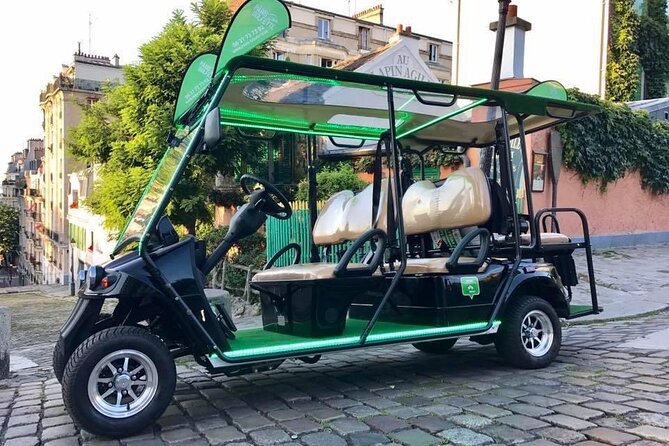
Because you have private transportation and a driver, the car becomes your secret weapon. Paris landmarks are spread out in a way that’s scenic, but not always convenient. Here, you trade some street-level exploration for speed and comfort. You’re also spared the “how do we get there” stress.
Here’s my practical advice: treat the ride as your orientation map. Once you’ve seen the landmarks from key angles, you’ll know where you want to return later for a longer visit, a meal, or a second look after the crowd wave passes.
Arc de Triomphe to Opera/Bourse: the western postcard wall
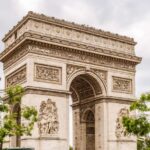
The tour kicks off at the Arc de Triomphe. Even if you don’t go inside, the stop is great for understanding its purpose and why this spot matters in Paris. It’s one of the few places where Paris feels like it’s speaking in big statements.
Next comes Basilique du Sacré-Cœur de Montmartre. This is one of those “stop for the photo, then instantly understand the hype” sights. You’ll get an explanation during the photo break, which helps you see Sacré-Cœur as more than a hilltop silhouette.
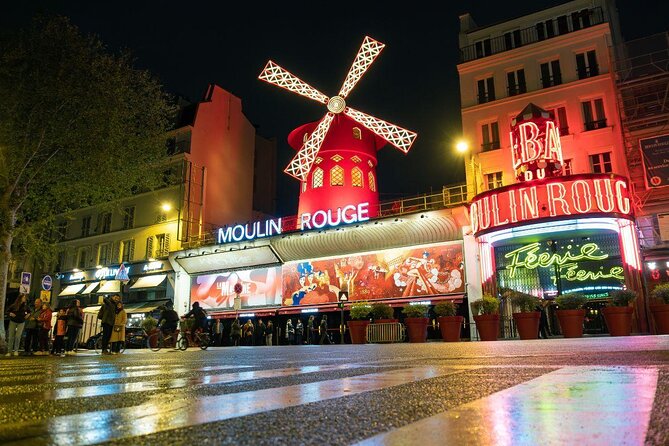
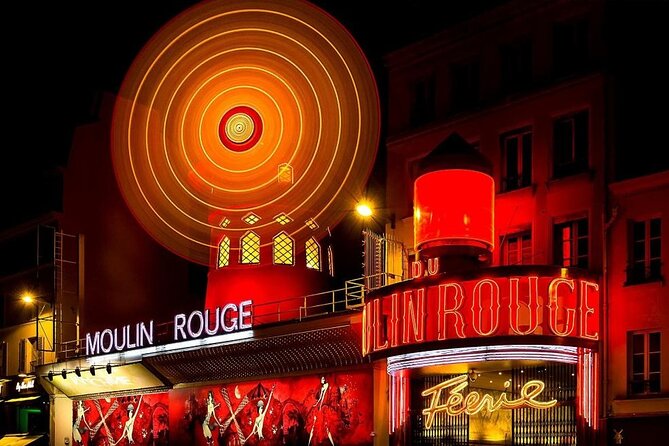
Then you swing by Moulin Rouge. The photo stop gives you the chance to connect the landmark to its cultural role. This area can feel like a theme-park version of Paris to some people, but with a quick guide context, you’ll see why it became part of the city’s identity.
After that, you’ll stop at the Opera / Bourse area. From a quick pull-over, you’ll get a sense of the “grand city” energy—architecture, streetscape, and the feeling that Paris wasn’t built to whisper. If you like urban design and street-level scale, this section is especially satisfying.
Quick note on timing: because these are short stops, your best strategy is to keep your camera ready. Paris is quick, and you don’t want to spend your explanation fumbling with settings.
Place Vendôme, the Louvre, and Notre-Dame in photo-stop form

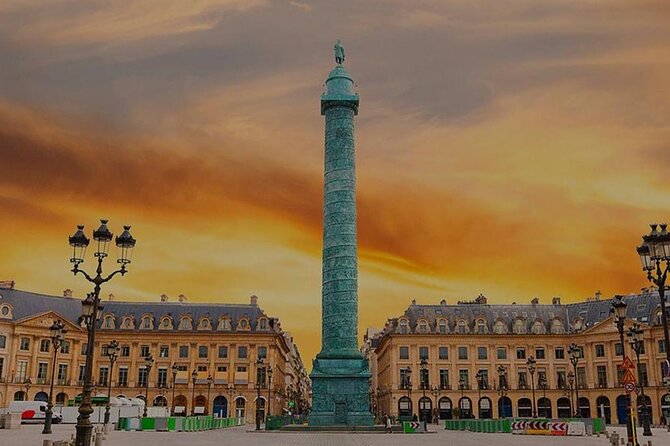
After the Montmartre-to-center swing, you reach Place Vendôme. This is classic Paris geometry—clean, formal, and very “royal.” It’s a great stop for capturing a sense of Paris elegance without needing a long walk.
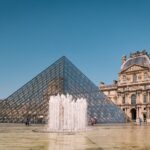
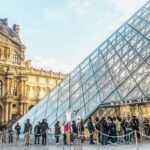
Then you get a photo stop at the Louvre Museum. The Louvre is one of the hardest places to do justice in a short visit because it’s huge. Here, you’re not getting a gallery crawl; you’re getting a guided “this is what matters” stop. You’ll leave knowing what to aim for later if you return for a ticketed museum day.
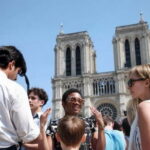
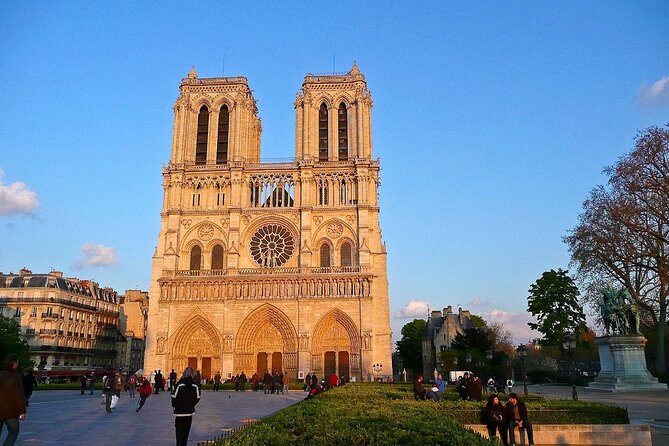
Next is Cathedrale Notre-Dame de Paris. Even with a brief stop, Notre-Dame has a gravity that pulls your attention. The guide’s explanation helps you understand what you’re seeing and why this cathedral sits in the middle of so many Paris stories.
The tradeoff is the same everywhere: you’ll learn quickly, but you won’t linger. If Notre-Dame or the Louvre are must-do priorities for you, treat this tour as your “set the target” day, not your “complete the experience” day.
Pantheon and Place de la Sorbonne: Paris academia vibes
The Pantheon stop is a short photo moment with explanations, but it’s still a strong one. It gives you a feel for how France talks about memory and civic identity—how a building can function as a national statement.
Then you visit Place de la Sorbonne. This is where Paris starts to feel more intellectual and student-like in spirit. Even if you’re not stepping inside anything on this tour, the stop helps you connect the dots between streets, institutions, and how neighborhoods evolved.
If you’re the type who likes to understand why a neighborhood looks the way it does, these two stops are worth paying attention to. The guide can help you read Paris like a map instead of a blur of scenes.


Fontaine Saint-Michel to Musée d’Orsay: two art moods in one stretch
You’ll pause at Fontaine Saint-Michel, a recognizable landmark that works well as a photo anchor. It’s also a good “break” moment in the schedule—less monumental than some of the big-name stops, but still highly Paris.
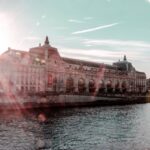
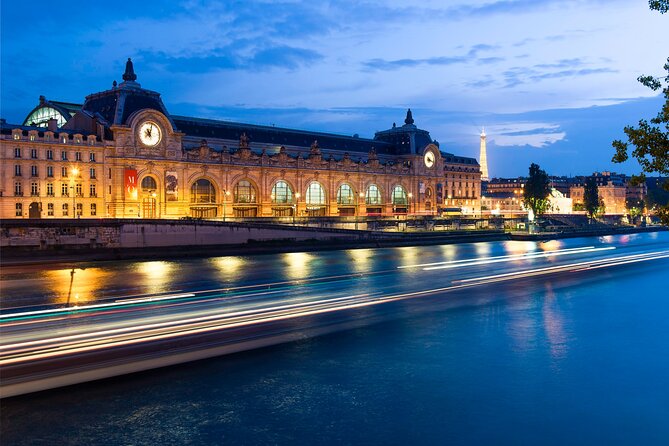
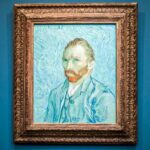
Then comes Musée d’Orsay. Like the Louvre, this is often a destination you’d normally plan a ticketed visit around. On this format, you’ll mainly capture the spot and understand what makes Orsay special as a museum location and cultural point. You won’t be doing the exhibits end-to-end here, but you’ll know why people plan an entire afternoon around it.
My tip: if you’re trying to fit a museum day somewhere later, look at how you feel after this stop. If Orsay sparks your interest, you’ll likely be happiest returning for a slower visit on another day, ideally with a plan for just a few galleries.
Invalides to Eiffel Tower: the power-to-icon finale
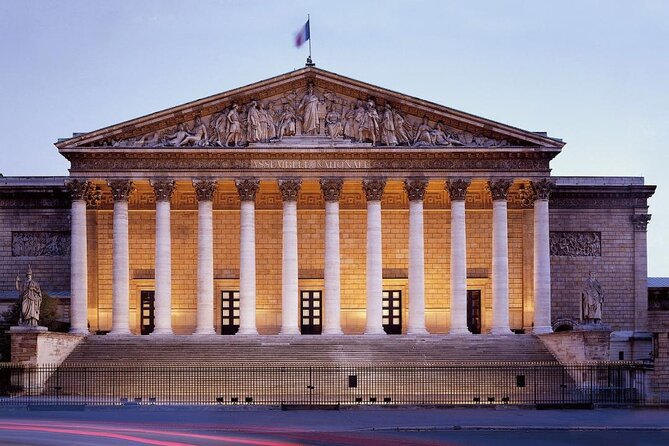
Next is Invalides. It’s a major landmark and it often surprises first-timers: it doesn’t just look impressive; it signals importance. This is another stop where the quick explanation helps you place it in the story of Paris.
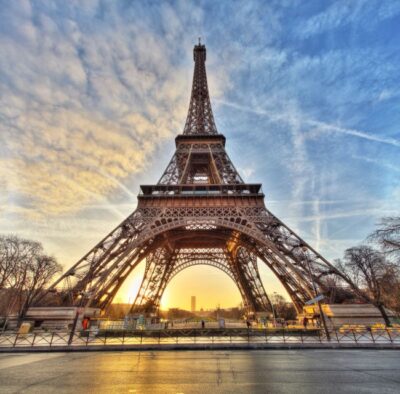
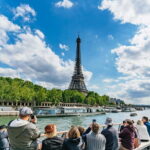
Then the tour delivers the big payoff: Eiffel Tower. This is the kind of stop you remember, even if it’s brief. The guide’s context makes the tower feel less like a single image and more like part of a larger city story.
One of the best things about having a guide here is choosing perspective. In a quick stop, you want to angle yourself for photos without blocking other visitors. With a good pace, you get views without turning your photo moment into a stress test.
Pont Alexandre III and Grand Palais: finishing with style
You end this monument sweep at Pont Alexandre III. The bridge is a visual reward—grand, detailed, and a perfect framing device for the river-and-city feel. Even if you’ve seen pictures, the scale hits differently when you’re there.
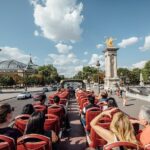
Finally, you’ll stop at Grand Palais. This is one of those Paris landmarks that communicates “this city hosted big events on purpose.” It’s a strong closing note because it wraps the day’s theme: Paris isn’t just architecture. It’s how the city presents itself.
By the time you reach this finish, you’ll likely feel two things: you’ve collected a lot of iconic images, and you’ve also learned enough to understand which places deserve a return visit.
Price and value: $432.28 per group for up to 3
At $432.28 per group (up to 3) for about 3 hours, the pricing works out differently depending on how many people you bring.
- For one person, it’s clearly a premium you’re paying for privacy and an efficient route.
- For two or three people, it starts to feel more reasonable because you’re splitting the cost and benefiting from the “car does the heavy lifting” factor.
What makes the price feel fair is the package: private transportation plus a driver, and English explanations during the stops. You’re not just paying for driving. You’re paying for a guided route that would be harder to replicate smoothly on your own—especially if you’re trying to hit famous landmarks without losing half your day to transit.
If your goal is maximum sightseeing per hour and you don’t want the coordination headaches, this is where you’ll feel the value. If you’d rather spend time inside museums or want long photo sessions, you’ll likely feel the cost more sharply because this is a quick-look format.
Who should book this private monument loop?
This tour fits best if you:
- Are first-time visitors who need orientation more than deep museum time.
- Have a busy schedule and want a high-impact highlights day.
- Prefer private pacing over crowd choreography.
- Want a guide to help you understand what you’re seeing quickly in English.
It may not be your best choice if you:
- Want to do major museum touring inside the galleries.
- Get frustrated by short stops or constant movement.
- Plan around a slow, “I want to be here longer” style of travel.
One more practical thought: the tour includes photo stops at places like the Louvre and Notre-Dame. That’s great for getting bearings, but it’s not a substitute for a ticketed museum day if those are top priorities.
The real pros and cons (based on how the tour runs)
The strongest praise points for this type of experience tend to be about people, not places. When the guide is lively and clear, it makes the quick stops feel purposeful. You’ll get explanations that help the landmarks click into place—especially at the biggest names like Eiffel Tower, Sacré-Cœur, and Notre-Dame.
The main downside is built into the format. If you want more time for photography, you may wish the stops paused a bit longer. The route is packed. The car solves the travel problem; it doesn’t solve the time problem.
Also keep an eye on the “Paris reality” factor. Road closures happen on event days. On those days, you might spend more time waiting than you planned. You can’t control that, but you can plan your expectations and keep your day flexible.
Should you book this tour?
If you want a fast, guided highlights day that’s easy to follow, I think this tour is a smart pick. It’s especially useful when you’re short on time, prefer privacy, or don’t want to spend your day figuring out how to connect far-flung monuments.
I’d skip it if you’re hoping for long museum visits or slow, wandering time at one site. For that, you’ll be happier doing a neighborhood-by-neighborhood plan.
My call: book it when your top priority is seeing the icons and understanding them enough to choose your next step. Then return on your own for the one or two places you’ll be craving after the quick tour ends.
FAQ
What’s the duration of the private monument tour?
It runs for about 3 hours.
How much does the tour cost?
The price is $432.28 per group for up to 3 people.
Is the tour offered in English?
Yes, the tour is offered in English.
Where do we meet, and where does it end?
The start is Place Vauban (Pl. Vauban, 75007 Paris), and the tour ends back at the meeting point.
Are admission tickets included?
The tour lists admission tickets as free, and the stops are generally photo stops with brief explanations.
What’s included in the price?
Private transportation and a driver are included.
Do I need to bring a paper ticket?
You’ll have a mobile ticket.
Is cancellation allowed if plans change?
Yes, you can cancel for a full refund up to 24 hours in advance, and free cancellation is offered.
Is this tour suitable for people with mobility concerns?
It notes that most travelers can participate, and it’s near public transportation.