REVIEW · PARIS
Paris: Centre Pompidou Skip-the-Line Guided Museum Tour
Book on GetYourGuide →Operated by Babylon Tours LLC · Bookable on GetYourGuide
Modern art gets easier with a guide. The skip-the-line entry and max-8 group size mean you spend your time in galleries, not in queues.
I also love how the tour turns the Pompidou into a story you can follow, from the building’s inside-out design to the museum’s major art movements. You’ll walk out with names, dates, and visual cues that make repeat visits less confusing.
One thing to consider: at $371 per person, you’re paying for guide time and reserved access, not just a museum ticket. Also, it’s focused on the permanent collection (temporary exhibits aren’t included), so plan your extra time if you want more.
In This Review
- Key things to know
- Finding your guide at Rue Beaubourg and Rue Rambuteau
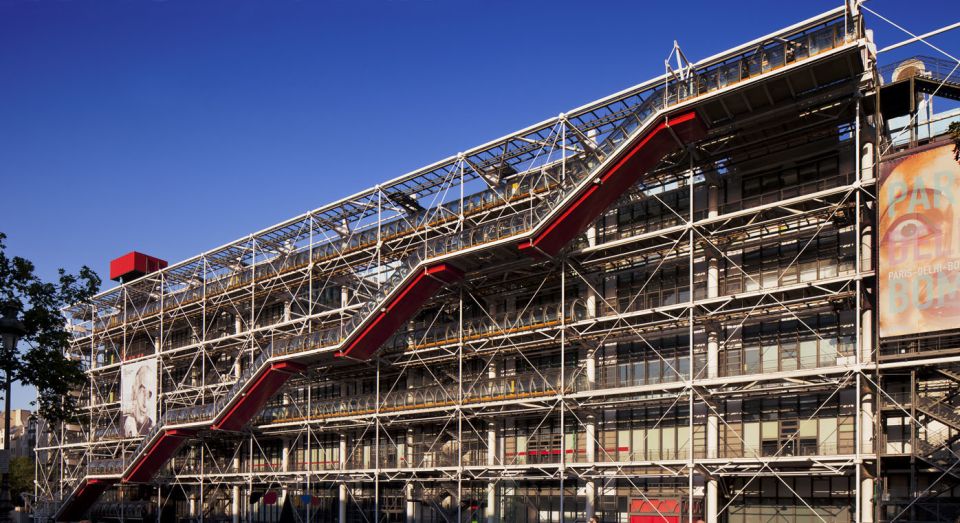
- Pompidou’s inside-out design: the architecture lesson first
- Musée National d’Art Moderne: a guided route through nearly 3,200 works
- The movement stops that actually teach you how to see
- Cubism, Fauvism, and the power of looking closely
- World Wars, Dada, and dark humor as a reaction
- Surrealism: where Salvador Dalí fits
- Pop Art, plus the big names you’ll recognize
- Bauhaus and Abstract Expressionism: design meets emotion
- French and international modern art, in the same conversation
- Contemporary galleries: Fluxus, Minimalism, and Dubuffet
- The top-floor/roof stop: Paris panorama with context
- Skip-the-line entry and silent-room etiquette
- Price and logistics: what $371 buys you
- Who this tour is perfect for
- Who should think twice
- Should you book this Pompidou skip-the-line tour?
- FAQ
- How long is the Paris Centre Pompidou skip-the-line guided tour?
- What group size should I expect?
- Where do I meet the guide?
- Is entrance included, or do I need a separate ticket?
- Are temporary exhibitions included?
- Is food or drinks included?
- What identification do I need to bring?
- Are large bags allowed inside?
- Is the tour suitable for wheelchair users?
- What’s the cancellation policy?
Key things to know
- Small group (max 8): more time for questions and pacing that doesn’t feel rushed.
- Renzo Piano architecture, explained: you’ll learn why the Centre Pompidou looks the way it does before you go in.
- A modern-art map in 2.5 hours: Cubism, Fauvism, Dada, Surrealism, Pop Art, Bauhaus, Abstract Expressionism, and more.
- Top-floor/roof Paris panorama: you get a view break, not just museum staring.
- Skip-the-line entrance: entrance fee and guided museum time are included, and you meet outside at a clear landmark.
Finding your guide at Rue Beaubourg and Rue Rambuteau
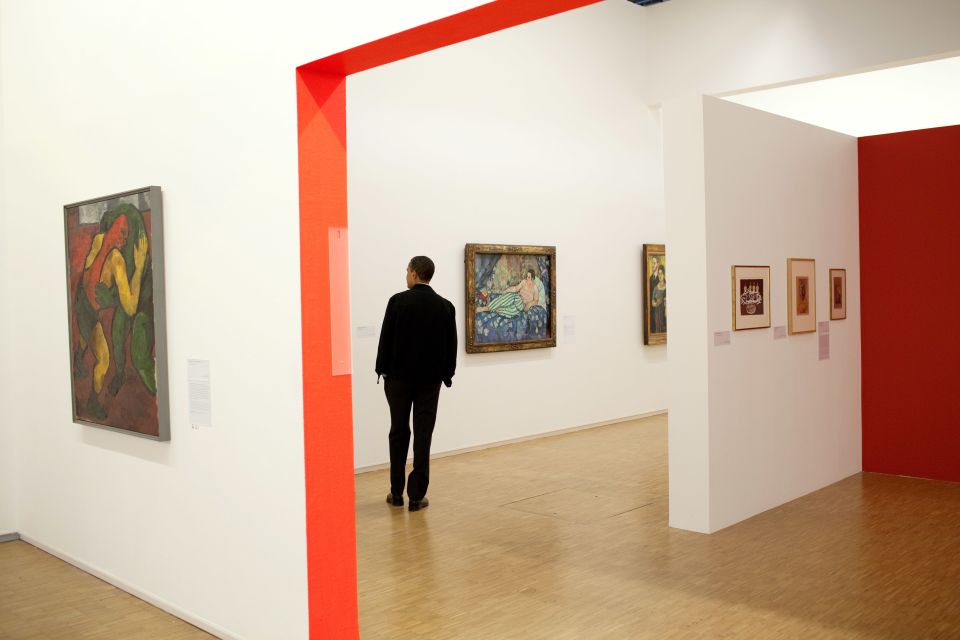
Plan to meet your guide outside the Centre Pompidou, by the blue parking sign on the corner of Rue Beaubourg and Rue Rambuteau. That matters because the museum area can feel busy and scattered, and you’ll want to start strong.
No hotel pickup or drop-off is included, so factor in your own transit time. Also keep your phone handy. If anything goes wrong, the provider shares emergency guide contact details by email, and you’re told to check spam just in case.
What to bring is simple: a passport or ID card. The tour also notes that luggage or large bags aren’t allowed, so travel light. If you tend to overpack, this is your nudge to use a small day bag and be done.
You can also read our reviews of more guided tours in Paris



Pompidou’s inside-out design: the architecture lesson first
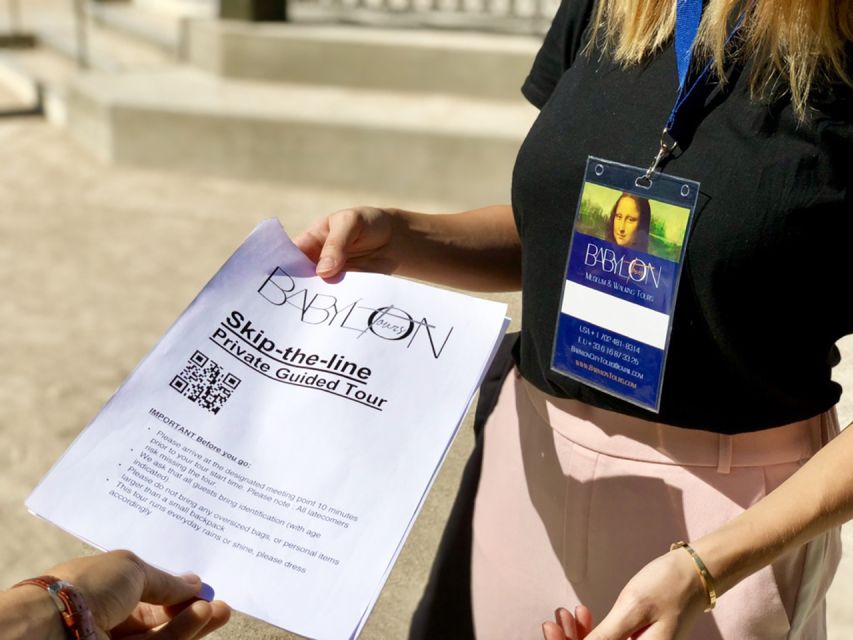
The Centre Pompidou isn’t just a place to look at art. It’s an art object with a point of view. Your tour starts with the striking exterior, designed by Renzo Piano, and focused on the concept of an inside-out structure.
This is a smart way to begin. When you understand the building’s logic, the museum experience feels less like a maze. You’ll also notice how the architecture sets expectations for modernity—bold colors, an industrial feel, and the sense that the museum is showing its work rather than hiding it.
A practical upside: doing the exterior talk early helps you orient yourself. By the time you’re inside, you’re not guessing where everything is or why it looks the way it does.
Musée National d’Art Moderne: a guided route through nearly 3,200 works
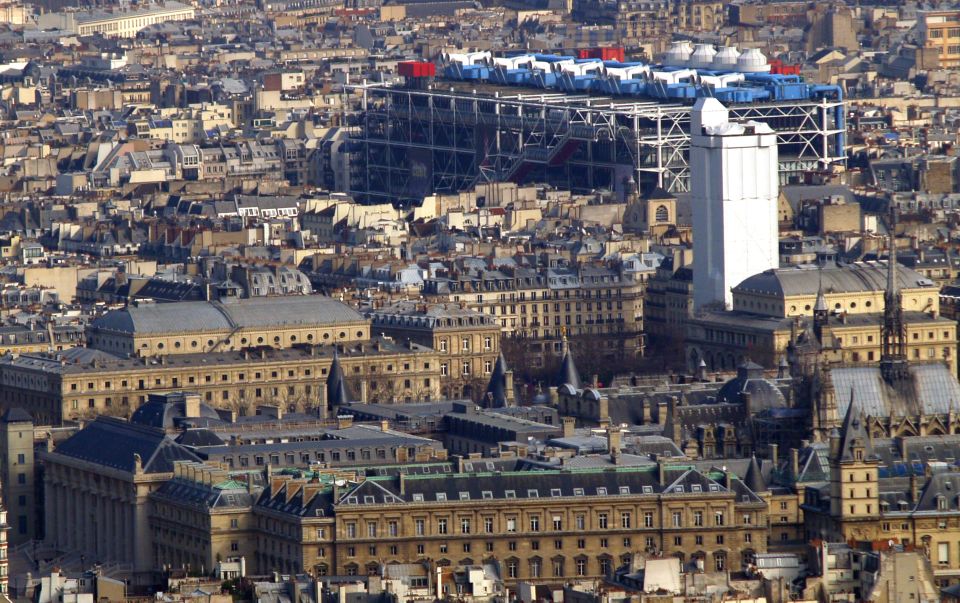
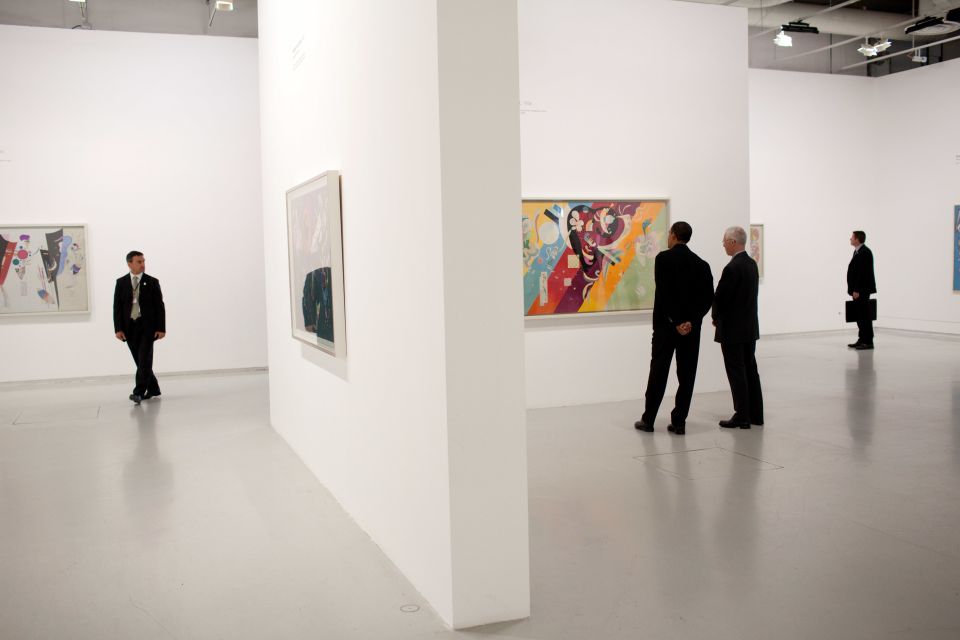
Once you step into the museum’s modern-art world, the guide helps you connect what you’re seeing to the big movements behind it. The collection includes nearly 3,200 works, so a 2.5-hour tour has to do something specific: pick the ideas you need to make sense of everything else you might see later.
That’s where the small group size pays off. With up to 8 guests, your guide can slow down where you need it and speed up where you don’t. If you’ve ever stood in front of a painting and thought, I have no clue what I’m supposed to be looking for, this format is built to fix that feeling.
Guides named Tanya, Dunya, and Belen show up in the tour history associated with this experience, and the common theme is clarity: modern and contemporary art explained with social and historical context, not just style labels. That approach is exactly what helps you get beyond first impressions.
The movement stops that actually teach you how to see

Here’s the heart of the tour: you’ll visit major modern and contemporary works and connect them to the evolution of art. The guide moves through movements and examples so you can build a mental map fast.
Cubism, Fauvism, and the power of looking closely
You’ll spend time with Cubism (including a Picasso painting) and learn what makes it different from earlier approaches to perspective. Then you’ll shift to Fauvism with a Matisse, where color and emotional impact lead the conversation.
This part is valuable because it trains your eye. You start seeing how artists change the rules on purpose—then you recognize that same rebellious energy in later movements.
You can also read our reviews of more museum experiences in Paris



World Wars, Dada, and dark humor as a reaction
The guide also explains how the World Wars impacted the art world. That context matters, because modern art isn’t created in a vacuum. When you understand the pressure and the reaction, movements like Dada make more sense.
Dada is described as chaos and dark humor—an artistic response to the gore of World War I. It’s a heavy topic, but the tour structure helps you link shock and satire to the historical moment, instead of treating it like random weirdness.
Surrealism: where Salvador Dalí fits
Next up is Surrealism, including works by Salvador Dali. The tour helps you see Surrealism as a logical next step: if the world is breaking down, artists will use dreams, odd imagery, and unsettling contrasts to express what reality can’t hold.
If you only know Dalí from pop culture images, the guided framing is the difference between seeing a face and understanding the ideas behind it.
Pop Art, plus the big names you’ll recognize
You’ll also check out Pop Art, with works by Andy Warhol. This is a good moment to reflect on what you learned earlier. Pop Art is like a mirror held up to mass culture—so the guide connects the movement’s visual style to what society was consuming and celebrating.
Bauhaus and Abstract Expressionism: design meets emotion
The route continues with Bauhaus and Abstract Expressionism. These stops are useful even if you don’t love abstract art yet. The guide’s job is to translate what the shapes are doing and why artists were pushing toward new forms of meaning.
You’ll also see international artists you might already know, including Georgia O’Keefe, Pollock, and Mondrian. Seeing them inside the movement timeline helps you understand them as choices, not just famous names.
French and international modern art, in the same conversation
One of the things I like about this tour structure is that it doesn’t keep modern art in a single country or a single vibe. You’ll see beloved French artists and international artists within the same guided story.
That’s practical because modern art history is interconnected. Picasso connects to the wider shifts in Europe. Dali and Surrealism connect across themes of psychology and crisis. Pop Art and later contemporary movements connect across mass media and changing social rules.
If you’re the type who wants to leave the museum with a stronger sense of the bigger picture, this tour’s selection does that in 2.5 hours.
Contemporary galleries: Fluxus, Minimalism, and Dubuffet
After the modern-art backbone, you’ll move into contemporary galleries and hear about recent artistic movements like Fluxus and Minimalism. These are great stops for anyone who worries modern and contemporary art are just too far apart.
You’ll also experience a work like Dubuffet’s winter garden installation. An installation is different from a painting or sculpture—you tend to notice materials, layout, and atmosphere more than a single subject. A guided visit helps you interpret what you’re seeing without turning it into a guessing game.
The top-floor/roof stop: Paris panorama with context
Don’t skip this part. The tour includes time on the roof and a view from the top floor, giving you a unique Paris panorama.
This is more than a reward. It resets your brain. Museum hours can blur together, and a viewpoint break helps you return to art with fresh eyes.
It also ties back to the building itself. After you learn why the Centre Pompidou looks the way it does, the view makes you appreciate it as a landmark, not just a box for art.
Skip-the-line entry and silent-room etiquette

Skip-the-line matters here because the Pompidou can be a popular stop. This tour includes skip-the-line entrance plus the guided museum time, so you’re not wasting your energy trying to figure out the slowest part of the day.
Inside, pay attention to museum rules. Some spaces are designated silent rooms, where noise and talking aren’t allowed. Your guide will steer you through what to expect, but it’s still smart to plan to keep your voice down in those areas.
Also remember: collections can vary throughout the year. That’s normal for museums, but it means your exact highlights may shift slightly based on what’s on view during your visit. The core movements and big-name references are still the focus.
Price and logistics: what $371 buys you
Let’s be honest: $371 per person is not a casual add-on. You should think of it as paying for three things:
- A skip-the-line entrance that protects your limited time
- A professional guide who organizes modern art into a coherent story
- A small group experience (max 8) that allows questions and pacing
You’re not just buying entry to the museum. You’re buying interpretation time—help understanding Cubism, Fauvism, Dada, Surrealism, Pop Art, and more in one run. If you’re visiting once and you want maximum understanding per hour, that’s where the value can feel real.
What doesn’t come with the price: food and drinks, and temporary exhibits. If you’re the type who plans a full-day museum crawl, you’ll likely want to build your own add-on time for temporary shows afterward.
Timing is also a factor. The tour lasts 2.5 hours and you need to check availability for starting times. If your day is tight, pick a slot that won’t force you into rushed transit.
One more practical note: occasional closures can happen. If the museum opening time is delayed more than 1 hour from your tour start time, you’ll be offered an appropriate alternative, but refunds or discounts aren’t provided in those cases.
Who this tour is perfect for
This is the kind of tour I’d recommend if you want modern and contemporary art to feel structured. It’s especially good if you:
- Like explanations that connect art to history and world events
- Want to see recognizable artists like Picasso, Matisse, Salvador Dalí, Warhol, and others
- Prefer small groups where you can ask follow-up questions
- Enjoy architecture as much as artworks (Renzo Piano is part of the deal)
It’s also a strong choice if you’re nervous about modern art. The tour doesn’t pretend it’s easy. It gives you a map so you can make sense of what you’re seeing.
Who should think twice
If you’re traveling with luggage or large bags, this tour likely won’t work. Those aren’t allowed. If you’re sensitive to rules about quiet in silent rooms, plan your expectations for museum etiquette.
Accessibility is another consideration. The info says wheelchair-accessible tours are available upon request only, but it also notes that this specific option isn’t suitable for people with mobility impairments or who use a wheelchair. If that matters to you, check your requirements with the operator before you book so you get the right arrangement.
And again: at 2.5 hours, you’re getting a curated overview. If you want to linger for long stretches in one section, you’ll need extra independent time afterward.
Should you book this Pompidou skip-the-line tour?
Book it if you want a focused modern-art education with zero wasted time getting in. The small-group size, the skip-the-line entrance, and the way the guide connects movements from Cubism through contemporary trends are the big reasons to choose it. The top-floor/roof view is a nice bonus that makes the whole experience feel complete.
Skip it (or pair it with extra time) if you’re on a strict budget, you plan to spend most of your day on temporary exhibitions, or you want a purely self-guided museum wander. This tour is built for understanding fast, not for slow wandering.
If you’re visiting Paris and want to walk out of the Pompidou with real clarity about modern and contemporary art, this is a smart, practical use of a half-day.
FAQ
How long is the Paris Centre Pompidou skip-the-line guided tour?
It runs for 2.5 hours.
What group size should I expect?
It’s a small-group format with a maximum of 8 guests.
Where do I meet the guide?
Meet at the blue parking sign on the corner of Rue Beaubourg and Rue Rambuteau.
Is entrance included, or do I need a separate ticket?
Entrance fee and skip-the-line entrance are included, along with the guided museum tour.
Are temporary exhibitions included?
No. Temporary exhibits aren’t included in this experience.
Is food or drinks included?
No. Food and drinks are not included.
What identification do I need to bring?
You should bring a passport or ID card.
Are large bags allowed inside?
No. Luggage or large bags are not allowed.
Is the tour suitable for wheelchair users?
Wheelchair-accessible tours are available upon request only, but this tour option is noted as not suitable for people with mobility impairments or who use a wheelchair. Check with the operator if accessibility is important.
What’s the cancellation policy?
You can cancel up to 24 hours in advance for a full refund.