REVIEW · PARIS
Private tour of the battlefields of Verdun from Paris in Van (2/7 travelers)
Book on Viator →Operated by ADRIAN ROADS · Bookable on Viator
Verdun hits hard, even on a day trip. This private outing from Paris puts you on the ground where the First World War ground on—by stone memorial, underground galleries, and ruined villages that still look bruised. You travel in a small group with Régis handling the story, so you’re not just watching monuments—you’re understanding them.
What I love most is how personal the history feels when you’re guided by Régis, who turns place-names into real people and real decisions. I also like the comfort factor: you’re in an air-conditioned van for the long drive, with pickup offered in the Paris area so you start stress-free.
One consideration: this is an early, long day (about 13–14 hours starting at 6:00 am) and lunch isn’t included, so plan for snacks and timing or you’ll feel it by the time you’re back on the road.
In This Review
- Key highlights worth your time
- From Paris to Verdun: a long day with a small-group rhythm
- Voie Sacrée Memorial: seeing the supply route in stone
- Douaumont Ossuary and the National Necropolis: scale you can feel
- Fort Douaumont: the armored gun dome and the underground walk
- Fleury-devant-Douaumont and the Bayonet Trench: remembering ground that changed hands
- Verdun town stops: cathedral, city gates, and Victory Monument symbolism
- Memorial de Verdun Museum: the best ending point
- Price and logistics: does $465.43 per person make sense?
- Should you book this private Verdun day trip?
- FAQ
- What time does the tour start?
- How long is the tour?
- Is this a private tour?
- How many people are in the van?
- Is pickup available in Paris?
- What admission tickets are included?
- Is lunch included?
- What language is the guide?
- Does the tour run in any weather?
- Can I cancel for a refund?
Key highlights worth your time
- Voie Sacrée memorial details: kilometer markers for the supply road, plus a carved frieze showing soldiers on the move
- Douaumont Ossuary scale: exterior windows hint at at least 130,000 unidentified remains, and you’ll see names inside
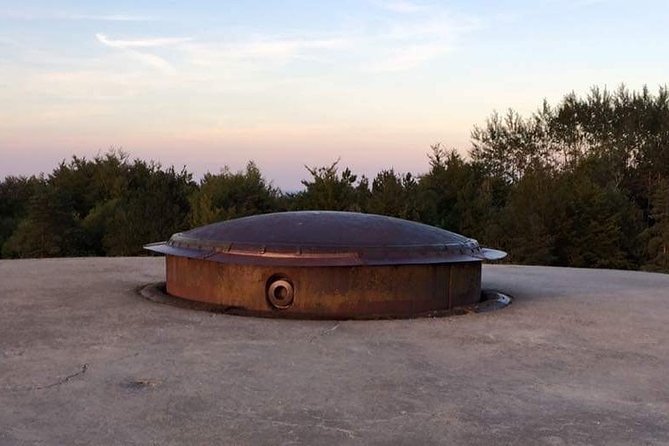
- Fort de Douaumont’s armored 155mm gun: the retractable cannon sits under an armored dome, with underground galleries to walk through
- Destroyed village memory in Fleury-devant-Douaumont: a place that changed hands repeatedly, until it disappeared under shelling
- Bayonet trench symbolism: rifles left protruding from the soil became a national memory marker
- Museum views from the terrace: light-filled spaces help you connect the artifacts to the battlefield terrain
From Paris to Verdun: a long day with a small-group rhythm
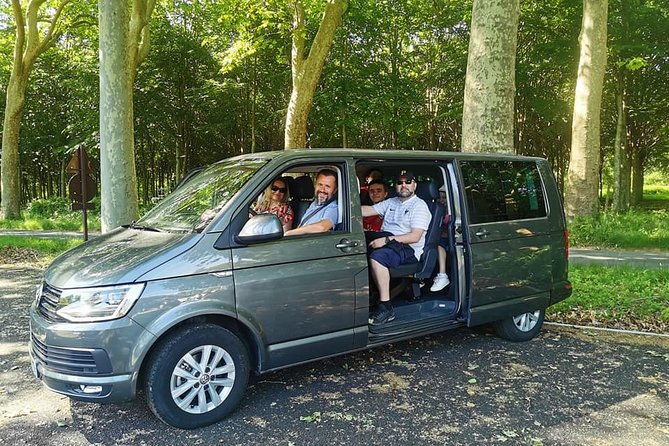
This is a private day trip that runs roughly 13–14 hours, starting at 6:00 am. You’ll be picked up in the Paris region and transported by a comfortable, air-conditioned minivan, capped for small groups so the day doesn’t turn into a herding exercise.
The big practical benefit is that you’re not piecing together trains, buses, and timed entries across the Meuse region. Instead, you get a straight shot from Paris into the hills and villages around Verdun, where the war’s scars are still visible—shell holes, destroyed village sites, trenches, and concrete defenses.
Because the schedule is full, your stamina matters. I suggest bringing a small day bag with water and a couple of snacks, especially since lunch isn’t provided. If you’re sensitive to early wakeups, you’ll want to treat this as a “go to bed early” situation, not a casual weekend plan.
You can also read our reviews of more private tours in Paris



Voie Sacrée Memorial: seeing the supply route in stone
One of the first stops is the Memorial de la Voie Sacrée, a tribute to the workers and soldiers who kept the Sacred Way functioning. This wasn’t just a road—it was the strategic supply axis linking Bar-le-Duc and Verdun, used for food and ammunition and also for evacuating wounded men.
The monument itself is built as two connected ideas: a stone arc-shaped wall with a bas-relief frieze, and the broader “wayfinding” concept. You’ll also notice how the Sacred Way is marked with helmeted kilometer markers, a long-remembered image tied to how Maurice Barrès named and framed the road after the war.
What I find useful here is that it changes how you read the battlefield later. When you’ve seen the supply route memorialized so directly, the rest of the day stops feeling random. You start understanding why particular forts, trenches, and roads mattered.
Time-wise, it’s short (about 15 minutes), but it’s the kind of stop that sets your mental map fast. You don’t need a lot of time here—you need the context.
Douaumont Ossuary and the National Necropolis: scale you can feel
The Ossuaire de Douaumont is the kind of place where you can’t speed through. You’ll spend about an hour, moving through a memorial built to hold the remains of soldiers from both sides.
Through small exterior windows, you can see skeletal remains of at least 130,000 unidentified fighters filling alcoves at the bottom of the building. Inside, you’ll find plaques with names of French soldiers who died during the Battle of Verdun. The ossuary was built on the initiative of Charles Ginisty, bishop of Verdun, and it’s designated as a national necropolis, or national cemetery.
This stop does something important emotionally, but it also helps practically. When you understand that this is not a single “event site,” but a final resting place for tens of thousands, you’ll interpret the rest of the day’s locations differently. A trench, a fort, a village ruin—suddenly those aren’t just dramatic backdrops. They’re points in a chain of human cost.
If you’re the type who likes to take your time, this is your pause. If you’re the type who hates crowds, go slower than you think you need; it’s not designed for a quick photo lap.
Fort Douaumont: the armored gun dome and the underground walk
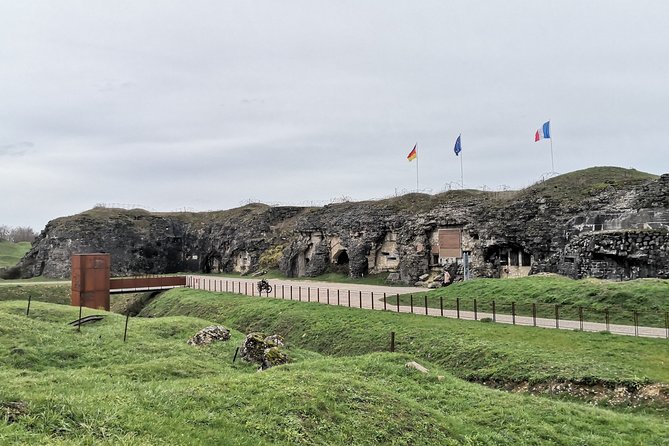
Next you’ll reach Fort Douaumont, the largest and tallest fort in a ring of 19 defensive works protecting Verdun since the 1890s. The reason this fort is so significant is brutally clear: in 1915, French planners concluded even the best-protected forts might not survive German super-heavy bombardment, including 420 mm guns.
On February 25, 1916, the fort was taken by the Germans without a fight, just four days after the start of the Battle of Verdun. It then served as shelter and an essential support point for the German offensive for eight months, with about sixty French soldiers initially occupying the fort.
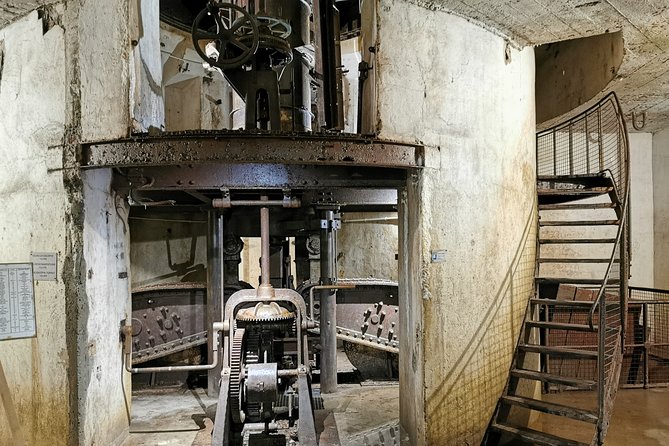
In your visit, you’ll connect the “machine” side and the human side. The fort still houses a 155mm retractable cannon under an armored dome, and you’ll walk through the fort’s underground galleries. That underground portion matters because it explains how these places worked as defensive and operational systems—not just as big concrete landmarks.
You’re given about an hour here, and that’s about right: enough time to see the key structures and still feel the fort as a place men lived and worked, not just a diagram.
Fleury-devant-Douaumont and the Bayonet Trench: remembering ground that changed hands
The day continues with a visit to Fleury-devant-Douaumont, a village destroyed in 1916 and not rebuilt. The site became an uninhabited reminder, and it’s hard not to feel the meaning in that fact: when the front line wipes out an entire settlement, memory takes over where homes used to be.
This area of the front saw repeated offensives. From June to August 1916, German command launched several attacks here, and the village was taken and retaken 16 times over two months. Intense fighting centered around the ruined village from July 13 to August 5, 1916, and then a colonial infantry regiment of Morocco launched an assault that finally secured the village on the night of August 17–18, 1916.
What I like about pairing this with a trench memorial is how it gives you two scales of experience: a destroyed village site shows repeated occupation and collapse, while a trench memorial shows a narrower snapshot of how fighting looked moment-to-moment.
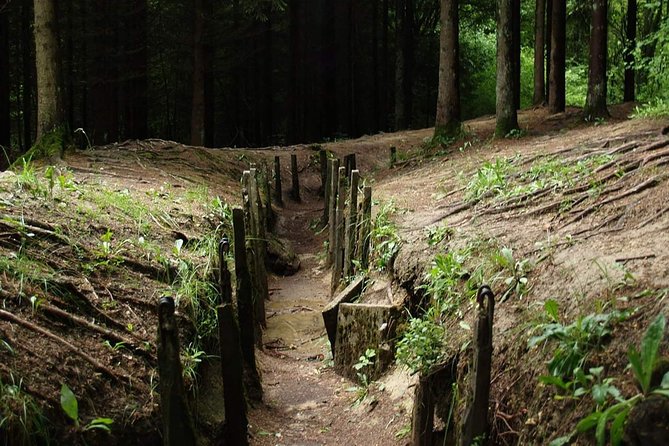
That’s where the Tranchée des Baionnettes comes in. You’ll spend about 15 minutes at this officially recognized monument of national memory. The common story is that in June 1916, soldiers preparing for an offensive were covered by waves of earth after shells struck their trench area. The bayonet rifles protruding from the ground became the symbol—rifles left in place with their owners buried with weapons in hand.
If you prefer your history presented through concrete objects, this stop lands. You see how a single physical detail became a national symbol of sacrifice.






Verdun town stops: cathedral, city gates, and Victory Monument symbolism
Not every moment is “on the front line.” The tour also includes several Verdun city sites that help you connect the wartime events to the living identity of the town.
You’ll drop by Verdun Cathedral at the foot of the building and have about 30 minutes. The cathedral is dedicated to the Virgin Mary and follows a Romanesque-Rhenish plan, with origins from 990. It’s the oldest in Lorraine and one of the oldest in Europe. It took damage and went through multiple design shifts: ravages in the 11th and 12th centuries, Gothic modifications from the 14th to 16th centuries, a 1755 fire that cost two bell towers, and later restoration after bombing during the First World War.
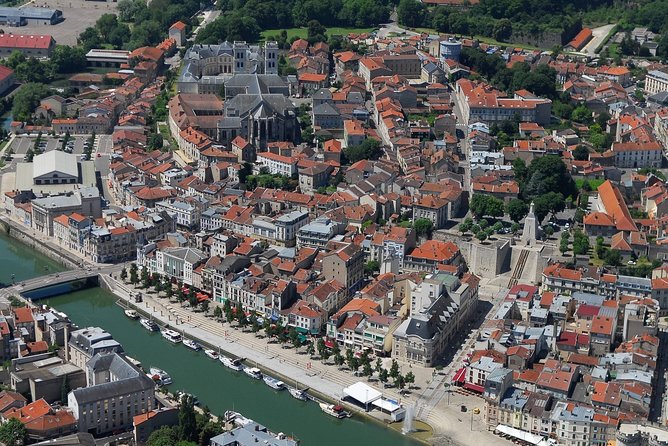
Then there’s Monument de la Victoire in downtown Verdun. This one is very direct in its storytelling: inaugurated in 1929, it features 73 steps leading down to a crypt holding repertoires of names of soldiers holding the Verdun medal. At the top, a 30-meter tower holds a warrior leaning on his sword and looking east. There’s also an annual ceremony on November 1 connected to the Sacred Flame that burns under the Arc de Triomphe in Paris.
You’ll also see Porte Chaussee, a monumental gate built along the Meuse in 1380. It was one of the three gates of the Grand Rempart de Verdun, redesigned in 1690, and used as a military prison from 1755 to 1860. The city bought it in 1889, and it’s classified as a historic monument since March 21, 1881.
These stops might feel calmer than the battlefield sites, but they serve a purpose. They show how Verdun commemorates war within an actual city framework, not only in museums.
Memorial de Verdun Museum: the best ending point
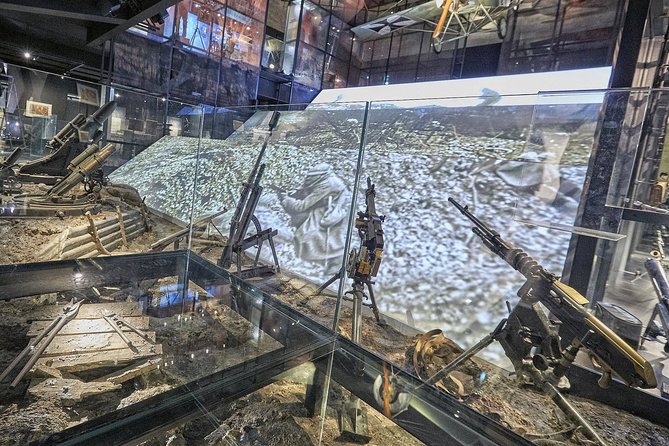
To close the day, you’ll visit the Memorial Museum of Verdun in Fleury-devant-Douaumont. This is the part that ties everything together, and it’s timed for about an hour.
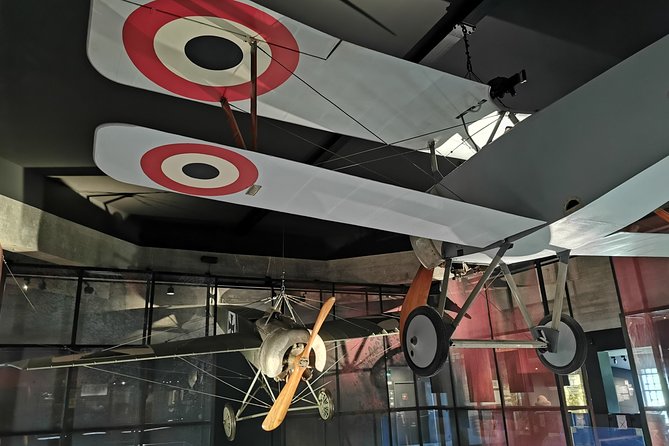
The museum’s modern approach places you at the heart of the battlefield environment. The ground floor focuses on the experience of combatants on the front line, while the first floor broadens the context by showing countries at war and the larger setting around the fighting. The memorial was reborn in February 2016 after work that strengthened the original building and opened it outward.
You’ll also hear about physical changes that shape how you move through the story, including an added floor of more than 600 m². That space includes an interactive area and temporary exhibition space (175 m² noted for temporary exhibitions).
One particularly practical detail: the terrace of the museum—bathed in light—opens out toward the environment of the memorial, giving you a panorama of the battlefield. Even if you’ve already seen plenty of open ground today, this view helps you see why the fighting was so relentless. Terrain matters.
By the time you leave, you’ll likely feel a mix of heaviness and clarity. That’s the point of ending here.
Price and logistics: does $465.43 per person make sense?
At $465.43 per person, this isn’t a cheap day. But you’re paying for a lot more than “a driver and a van.” You’re buying a full day of private transportation from Paris, a small-group format, and a guided narrative through multiple battlefield-grade sites spread across the Meuse region.
Two admissions are covered in the included price: the Verdun Memorial Museum battlefield ticket and Fort de Douamont. Many other stops you visit have free admission, so the included tickets aren’t just extras—they’re tied to the most structured, indoor, and route-central parts of the experience.
Also, because pickup is offered in the Paris area and you’re on a comfortable minivan for about 13–14 hours, you avoid the effort and coordination of getting yourself between sites. If you value your time and you’d rather not manage a day of transfers, the cost starts to feel more reasonable.
One “gotcha” to keep in mind: the tour requires a minimum of 2 participants. If you’re traveling solo, plan for that constraint before you book.
Should you book this private Verdun day trip?
If you’re serious about World War I and you want your day to feel structured but not sterile, I’d book it. A private group, early departure, and a guide like Régis are exactly the mix that turns distant events into readable places.
You should skip or rethink it if you hate long days, want a flexible schedule, or need lunch included. This tour packs a lot in, and it’s designed as a full commitment: the memorials are moving, and the driving time is real.
If your goal is one memorable Verdun day from Paris with minimal hassle, this is a strong match.
FAQ
What time does the tour start?
The start time is 6:00 am.
How long is the tour?
Plan on about 13 to 14 hours for the full day.
Is this a private tour?
Yes. It’s a private tour where only your group participates.
How many people are in the van?
The tour uses a comfortable minivan listed for a maximum of 6 travelers.
Is pickup available in Paris?
Yes. Pickup and support are offered at customers’ places of residence in Paris and the Paris region.
What admission tickets are included?
Admission tickets are included for the Verdun Memorial Museum Battlefield and for Fort de Douamont.
Is lunch included?
No. Lunch is not included.
What language is the guide?
The driver/guide is in French for this tour.
Does the tour run in any weather?
It requires good weather. If it’s canceled due to poor weather, you’ll be offered a different date or a full refund.
Can I cancel for a refund?
Yes. There is free cancellation up to 24 hours in advance for a full refund.