Auschwitz was not in Paris, but fear was. This private WWII walking tour strings together the city’s big sights with the grim details of occupied Paris from 1940 to 1944. I love the personal pace of a private guide, and how you get to connect street-level landmarks to named people and real events. You also walk on foot so the story lands in the exact spots you’re seeing.
My other favorite part is the focus on turning points and consequences, from Pierre Brossolette’s fate to how Carl Heinrich von Stulpnagel and Operation Walkyria played out. Still, it’s intense: you’ll be looking at Gestapo-linked locations and wartime violence, so it’s not the kind of walk for an easygoing afternoon.
In This Review
- Key highlights worth your attention
- Price and value: what $366.88 buys you on a private WWII walk
- Start at Porte Dauphine: how the walk sets up 1940–44 Paris
- Champs-Élysées under occupation: Gestapo, propaganda, and real consequences
- Following the propaganda axis: why an elegant avenue became a message board
- Cafés and cinemas frequented by Germans: Fouquet’s and Maxim’s
- Arc de Triomphe on the route: seeing the view with wartime eyes
- Place de la Concorde at liberation: bullet holes you can notice
- What makes a private guide matter on a sensitive topic
- Who this walk suits best (and who should think twice)
- Practical tips so you enjoy the full 3 hours
- Should you book this Private WWII Walking Tour of Paris?
- FAQ
- Where does the tour start and end?
- How long is the tour?
- What time does the tour begin?
- Is this tour private?
- What language is the tour offered in?
- What can you expect to see during the walk?
- Are there any admission fees?
- Who is the tour designed for in terms of walking ability?
- Is there mobile ticketing?
- What is the cancellation policy?
- Is there a specific guide name mentioned in feedback?
Key highlights worth your attention
- A private guide for just your group, so questions don’t get rushed.
- Champs-Élysées in wartime, including the Gestapo office area and propaganda uses of the avenue.
- Place de la Concorde bullet holes, visible reminders of the liberation.
- Resistance and Nazi-command names, like Pierre Brossolette, Carl Heinrich von Stulpnagel, and Von Choltitz.
- Stroll-friendly timing, about 3 hours, with a moderate fitness level requirement.
Price and value: what $366.88 buys you on a private WWII walk
At $366.88 per person for a ~3-hour private tour, you’re paying for more than sightseeing. You’re paying for a guide who can connect the dots between what you see in Paris today and what happened there during the occupation.
The listing also says the admission ticket is free, so your money is mainly going toward the guided experience and walking route, not entry fees. That matters because it makes this feel less like a museum day and more like learning to read the city like a document.
A private tour also means you don’t get stuck waiting for the slowest person in a big group. You can ask questions when something catches your eye—especially helpful on a topic like WWII where small details can change the whole meaning.
You can also read our reviews of more guided tours in Paris



Start at Porte Dauphine: how the walk sets up 1940–44 Paris
The tour starts at Porte Dauphine (75016) at 9:30 am, ending at Place de la Concorde (75008). That start point is a practical choice because it’s close to public transit, so you’re not spending your morning fighting the logistics game.
From the beginning, the route is designed to teach you how occupied Paris worked—socially, politically, and psychologically. You’re not just hearing dates; you’re watching the city’s layout and using it as a map for what the guide explains.
The walking pace is generally friendly, but the tour asks for moderate physical fitness. This is still a city walking day, so if you have limited stamina, plan to wear supportive shoes and expect to be on your feet for the full ~3 hours.
Champs-Élysées under occupation: Gestapo, propaganda, and real consequences
The main stop centers on the Champs-Élysées, and that’s a smart pick for a WWII tour. This avenue is famous in peacetime; during 1940–44 it carried a darker role, so standing there makes the story feel immediate.
Your guide explains how Parisians called the avenue avenue Foch and avenue des Boches during the occupation. You also learn that this is where the Gestapo offices were located, turning a postcard boulevard into a place tied to surveillance, arrests, and terror.
You’ll hear about Resistance fighters, including Pierre Brossolette, and learn how his arrest led to a tragic ending. Hearing names like this while you’re on the actual corridor where power operated helps you understand the stakes, not just the timeline.
The guide also connects the city to high-level events by pointing out where Carl Heinrich von Stulpnagel lived and discussing his involvement in Operation Walkyria and the consequences that followed. It’s one of those moments where you realize how the occupation wasn’t only street-level—it was also command-level decisions that shaped lives.
Following the propaganda axis: why an elegant avenue became a message board
One reason this tour works so well is that it explains why the Nazis liked certain places. The Champs-Élysées was used for Reich propaganda, so the guide shows you how public spaces became tools.
As you go down the avenue, you get a sense of how appearance and control can share the same street. The guide doesn’t just point out buildings; you’re learning how a regime tries to project order and legitimacy in the most visible parts of a city.
This is also where the tour’s private format helps. When you’re seeing a famous street, it’s easy to assume you already know it. The guide can slow down the story and make it specific to Paris during those years, instead of treating it like generic WWII background.
Cafés and cinemas frequented by Germans: Fouquet’s and Maxim’s
A memorable part of the route is the way you hear about where Germans spent time, including Fouquets and Maxims. That detail can feel odd at first—why bring up cafés on a serious WWII walk?—but it adds an important layer.
Occupied life wasn’t only raids and arrests. It also involved daily routine and comfort for some, while others faced risk and retaliation. When the guide links leisure venues to occupation reality, it helps you grasp the imbalance people lived with.
This section is most meaningful if you treat it like a clue trail. Ask yourself what it means when a city’s social spaces change hands, and how quickly something normal can become unsafe for the people on the wrong side of power.
You can also read our reviews of more private tours in Paris


Arc de Triomphe on the route: seeing the view with wartime eyes
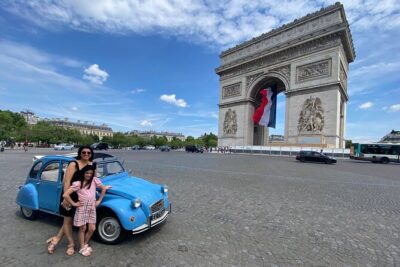
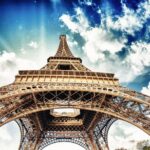
Even though the end points are Porte Dauphine to Place de la Concorde, the walking story connects to major landmarks along the way, including the Arc de Triomphe area. You’ll see how the Arc sits at the western end of the Champs-Élysées, which is useful because it frames your mental map as you move.
In peacetime, the Arc is a celebration of military history. On this walk, it becomes a reminder that monuments can outlast regimes—and that the meaning of a place depends on who controls the moment.
If rain shows up, don’t panic. The walk can still work in light weather because you’re moving between key points rather than spending long stretches stuck in one spot.
Place de la Concorde at liberation: bullet holes you can notice
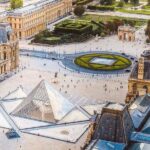
The tour ends at Place de la Concorde, and it’s one of the strongest moments of the walk. You’ll be able to notice bullet holes dating from the liberation, which turns an open square into evidence you can see.
This is the kind of detail that makes a WWII tour stick. You’re not relying on memory or a slideshow; you’re standing in a public space where the physical marks of conflict remain part of the city.
The guide then adds another layer nearby at Le Meurice, where the fate of Paris may have hinged on a refusal. You’ll hear about Von Choltitz and how he reportedly refused to destroy Paris and didn’t obey Hitler’s orders, often summarized with the question Is Paris burning?.
That moment helps you understand why liberation stories can be complicated. It’s not only about who advanced and who retreated. It’s also about decisions made in offices and hotels that changed what happened next.
What makes a private guide matter on a sensitive topic
This is a WWII tour, so tone matters. A private guide gives you more room for the emotional weight of the story, and it also gives you space to ask what you’re unsure about without slowing down a whole group.
In feedback, the guide Vincent Lauferon is singled out for making the walk so interesting and for connecting the dots in a way that surprises you. That kind of guiding style is what you want for a route like this, because Paris is full of big-name landmarks—but the wartime meaning is often invisible unless someone points it out.
The other value of private guiding is pacing. You can linger when something clicks, and you can move on quickly if you feel you already have the point. For a 3-hour walk, that control keeps the day from feeling like a rushed lecture.
Who this walk suits best (and who should think twice)
This tour is a great fit if you:
- Enjoy WWII topics and want your guide to use specific people and locations, not just broad events
- Prefer walking between sights rather than being stuck indoors
- Like learning how everyday places—avenues, cafés, and public squares—can carry heavy meaning
It may not be the best match if you want only light, upbeat sightseeing. The tour includes Gestapo-linked locations and wartime violence cues, so it’s serious by nature. Also, the tour requests moderate physical fitness, so if long city walking is tough for you, you’ll want to plan carefully.
Practical tips so you enjoy the full 3 hours
Wear comfortable shoes. The route is built around getting from one key site to the next, and that means steady walking even when you stop for stories.
Bring a light layer if the weather turns. Paris mornings can shift, and this is the kind of tour where you’re outside for long enough that temperature matters.
If you’re new to WWII, come with curiosity rather than pressure to memorize everything. The guide’s job is to give you a coherent thread from occupied Paris to liberation, and that thread becomes clearer as you connect each street corner to the next.
Should you book this Private WWII Walking Tour of Paris?
Yes, if you want a thoughtful, place-based WWII tour focused on occupied Paris and liberation sites. The price is steep, but you’re buying private guiding time, a tight 3-hour route, and the chance to see WWII details in public spaces like the Champs-Élysées and Place de la Concorde.
If you’re the type who likes facts, names, and cause-and-effect stories tied to what you can actually look at, this is a strong match. If you want a purely scenic walk, skip it and save your energy for a lighter day—this one is meant to be meaningful, not just pretty.
FAQ
Where does the tour start and end?
It starts at Porte Dauphine (75016 Paris) and ends at Place de la Concorde (75008 Paris).
How long is the tour?
The tour is listed as about 3 hours.
What time does the tour begin?
The start time shown is 9:30 am.
Is this tour private?
Yes. It’s described as a private tour/activity, so only your group participates.
What language is the tour offered in?
It’s offered in English.
What can you expect to see during the walk?
You’ll cover the Champs-Élysées, including wartime connections, and you’ll end at Place de la Concorde, with major landmarks along the route such as the Arc de Triomphe.
Are there any admission fees?
The admission ticket is listed as free.
Who is the tour designed for in terms of walking ability?
The tour notes a moderate physical fitness level.
Is there mobile ticketing?
Yes, it includes a mobile ticket.
What is the cancellation policy?
You can cancel up to 24 hours in advance of the experience for a full refund.
Is there a specific guide name mentioned in feedback?
One guide mentioned in the feedback is Vincent Lauferon.