REVIEW · PARIS
Paris World Fairs Walking Tour Top Sights Along the Seine River
Book on Viator →Operated by Paris TRIP · Bookable on Viator
Paris can feel busy. This tour turns that noise into clear stories along the Seine. I love the small group size (max 15) that makes it easy to ask questions, and I especially like how the guide explains the World’s Fairs connections between monuments. If you end up with Olivia, you’ll likely get the same upbeat, passionate style people mention a lot.
One thing to consider: it’s a steady walking tour with stops that are intentionally quick, so it’s not the format if you want long museum time or full independence at every site. Also, no food or drinks are included, so plan around that.
In This Review
- Key things you’ll notice on this Seine walk
- A 2-hour Seine walk that explains why Paris looks like Paris
- Where the tour starts and ends (and why that matters)
- Champs-Élysées Clemenceau metro station: a gateway to fair-era Paris
- Grand Palais: glass dome spectacle with a fair pedigree
- Petit Palais: the art museum you can see without committing to tickets
- Pont Alexandre III: ornate bridge views with Franco-Russian meaning
- Along the Seine: the fairs used the river as an exhibition corridor
- Bateaux Mouches: from 1867 Expo transport to a signature Paris ride
- Pont de l’Alma and the Liberty Flame: World-Fair symbols that outlast their original job
- Passerelle Debilly: a fair-era footbridge built for movement (and your feet will notice)
- Palais de Tokyo: modern art in a building created for a World’s Fair
- Palais de Chaillot: 1937 fair architecture built to last
- Trocadéro Fountain and Eiffel Tower views: where the fair era became daily scenery
- Eiffel Tower: why it was criticized, and why it never went away
- Pacing and practical tips for a smooth 2 hours
- Value check: $43.26 buys stories plus a lot of free sights
- Who this tour suits best
- Should you book this Paris World Fairs tour?
- FAQ
- How long is the Paris World Fairs walking tour?
- What’s the price per person?
- Is the tour offered in English?
- How big is the group?
- Where does the tour start and where does it end?
- Do I need to pay admission at the stops?
- What physical fitness level is needed?
- Is there a mobile ticket?
- Can I cancel for a full refund?
Key things you’ll notice on this Seine walk
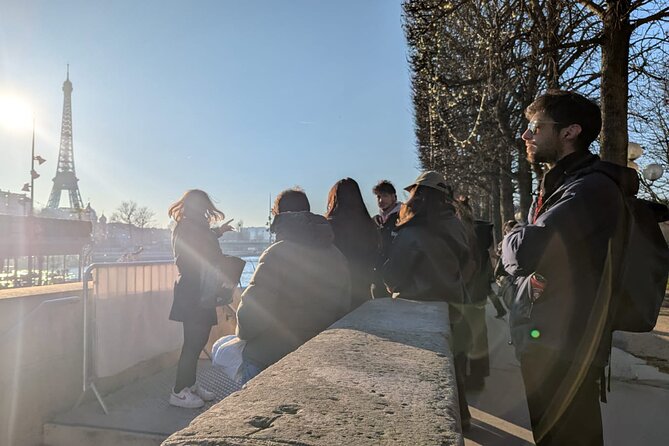
- A guide who connects 1900, 1889, 1878, and 1937 fairs to what you see today
- Max 15 people, so you actually hear the details and can ask questions
- Free-to-enter stops most of the way, so your money goes to storytelling, not admissions
- Ornate bridges and river viewpoints made for photos without racing crowds
- World-Fair leftovers you might miss on your own, like fair-era bridges and statuary
- English tour with a mobile ticket, which makes the start smoother
A 2-hour Seine walk that explains why Paris looks like Paris
This is a compact, smart way to understand Paris without building a full day around one museum. The theme is the World’s Fairs—those giant international exhibitions from the late 1800s and early 1900s—and the big idea is simple: the fairs didn’t just bring visitors. They reshaped the city’s architecture, technology, and public spaces.
You’ll walk a classic Paris line—Champs-Élysées to the river, then over landmark bridges, finishing near the Eiffel Tower. But the tour keeps pulling you back to one question: why is this here, and what did it signal to the world when it opened? That turns familiar sights into clues, and it helps you look past the postcard view.
You can also read our reviews of more walking tours in Paris

Where the tour starts and ends (and why that matters)
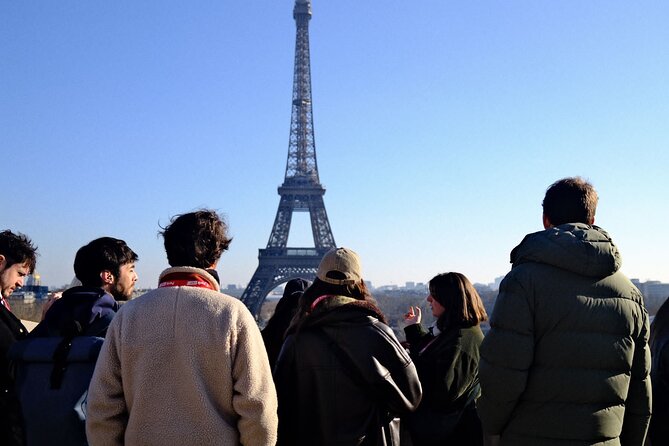
You begin at the Statue du Général Charles de Gaulle, Pl. Clemenceau in the 8th arrondissement, and you finish at the Eiffel Tower area on Avenue Anatole France.
That end point is a practical win. By the time you reach the Eiffel Tower, you’ll already have the context for why it was built for the 1889 Exposition Universelle—progress, engineering, and international spectacle. You’re not just arriving at a monument; you’re arriving at the final piece of a fair-era puzzle.
Also, the tour is designed for people who can move at a moderate pace. It’s not described as strenuous, but it is a walking route with multiple stops that add up to a real 2 hours on your feet.
Champs-Élysées Clemenceau metro station: a gateway to fair-era Paris
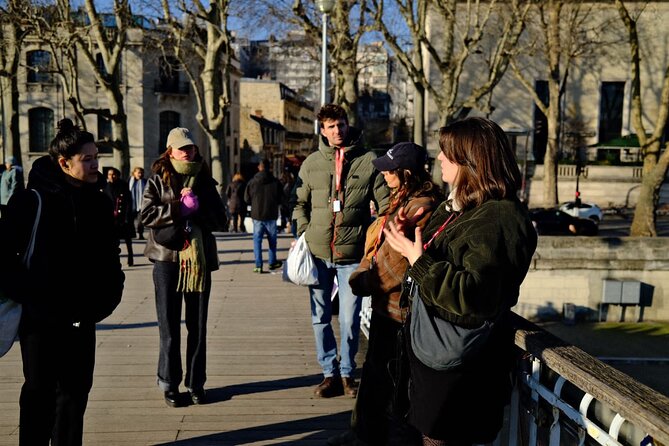
The first stop is at the Champs-Élysées – Clemenceau metro station (Line 1). The key detail is what it represents: it opened for the 1900 Paris Exposition Universelle. That’s a clever way to start, because it frames “transport” as part of the story of modern Paris—not just a commuter detail.
When you’re standing there, look at the bigger context: you’re right near the Grand Palais and Petit Palais, both built for the same 1900 fair. The tour uses this area to show how the fairs pushed Paris to organize space, movement, and culture in a new way.
A quick note: this stop is short and the main value is the explanation. If you’re expecting a photo opportunity that lasts, you may be slightly disappointed. The pay-off is in what comes next.
Grand Palais: glass dome spectacle with a fair pedigree
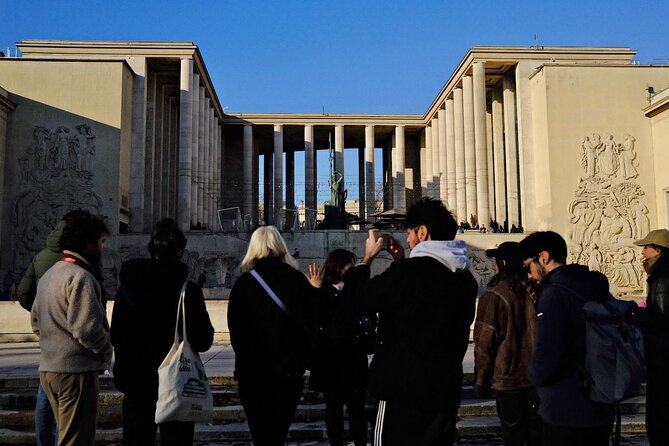
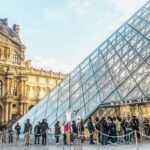
Next up is the Grand Palais, built for the 1900 Exposition Universelle. You’ll see why it’s so often photographed: the glass-domed roof is the headline, but the tour also points out how the building blends industrial and classical ideas.
The tour’s angle here is important for your understanding. The Grand Palais wasn’t built as a random show building. It was built to host major cultural events—fashion, art exhibitions, and big public moments. In fair language, it was a physical promise: Paris could stage global creativity at scale.
One practical upside: the surroundings are lively even when you’re not hunting for a ticketed attraction. This is a good “first big wow” on a short route.
Petit Palais: the art museum you can see without committing to tickets
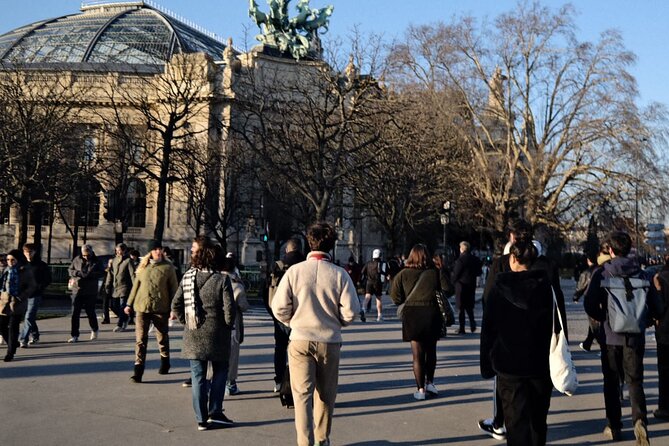
At the Petit Palais, the connection to the 1900 fair theme continues, but the tone shifts to art and calm. Today, it houses the Musée des Beaux-Arts de la Ville de Paris. The tour highlights the architecture, frescoes, and a serene courtyard.
Here’s what I like about this kind of stop: even if you only do a quick look around, the building itself is part of the show. You’re learning to read the city visually—how the fairs left behind spaces meant for culture, not just crowds.
Since admission is free for this stop, it’s also a low-risk moment if you want to linger for a few extra minutes. That’s not promised in every tour stop, so take advantage of any pause.
Pont Alexandre III: ornate bridge views with Franco-Russian meaning
The group crosses into postcard territory at Pont Alexandre III. This bridge was built for the 1900 Exposition Universelle, and it’s one of Paris’s most ornate spans. The tour connects the decoration to history, including Franco-Russian ties, plus gilded sculptures and intricate ironwork.
You’ll likely get some of the best “stand still and look up” moments here. Don’t just face forward at the river—glance up and scan the sculptural details. Bridges like this are basically outdoor art installations.
If you’re the type who loves photos but hates sprinting, this stop fits well. You can take your time, get a few angles, and still keep the walking rhythm.
Along the Seine: the fairs used the river as an exhibition corridor
A major thread of the tour is how the Seine wasn’t just scenic. It was central to the World’s Fairs, acting as a backdrop for grand exhibitions and linking exhibition areas.
The tour also touches the idea that river sightseeing brands and transport grew out of fair-era visitor logistics. Even if you don’t ride anything, it gives you a new lens: the river became a stage for modernity, and Paris learned to channel crowds into organized views.
If you like combining walking with a short plan for later, keep this in mind. A lot of the best Seine moments happen naturally once you understand the city’s original “route thinking.”
Bateaux Mouches: from 1867 Expo transport to a signature Paris ride
The tour brings up Bateaux Mouches and their origin as visitor transport for the 1867 Exposition Universelle. Over time, they became a sightseeing icon, still gliding past major landmarks, including routes seen during the 2024 Olympics.
This is one of those stops where the practical value is the context. It helps you connect Paris’s tourism “machinery” to earlier international events. If you’re thinking about doing a Seine cruise later, you’ll understand why the experience feels so time-tested.
Pont de l’Alma and the Liberty Flame: World-Fair symbols that outlast their original job
As you continue along the river corridor, you reach Pont de l’Alma, built for the 1855 Exposition Universelle. Even though the bridge was rebuilt, the Zouave statue remains. The tour frames it as a survivor from the past that once served a functional purpose as a flood gauge.
Then you’ll see the Flamme de la Liberté near Pont de l’Alma: a full-scale replica of the Statue of Liberty’s flame. The tour explains its origins in the 1878 Exposition Universelle, when the Statue of Liberty was first showcased before traveling to New York.
This part is fun because it teaches you how symbolism travels. The flame’s later association as an unofficial memorial to Princess Diana is mentioned, but the core focus is still fair-era cultural exchange and Franco-American friendship.
Practical takeaway: this is a strong photo stop, but expect it to feel like a quick roadside pause. The value is in the story, not a long hangout.
Passerelle Debilly: a fair-era footbridge built for movement (and your feet will notice)
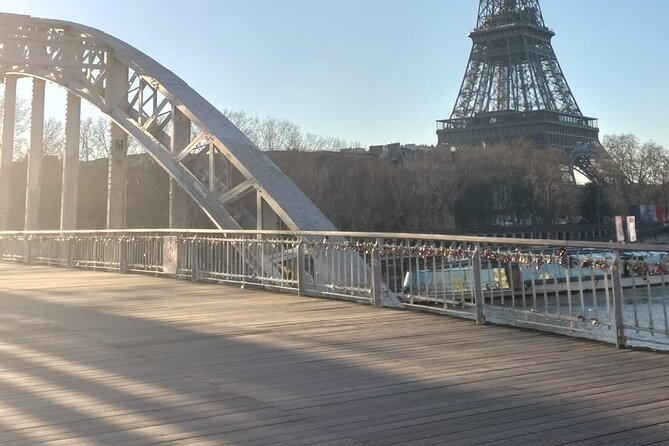
Next is Passerelle Debilly (the Debilly Footbridge), built for the 1900 Exposition Universelle. It spans 120 meters over the Seine and links Quai Branly to Avenue de New York.
It’s an interesting contrast to the ornate bridges. Here, you get a longer, more modern-feeling span made for pedestrians, and the fair-era connection is the point. Look for how it frames the river: it’s one of those spots where Paris suddenly feels engineered for walking, not only viewing.
Because it’s a footbridge, you’ll also get a small physical shift—enough to break up the earlier straight-line sightseeing.
Palais de Tokyo: modern art in a building created for a World’s Fair
Palais de Tokyo enters the story next. It was inaugurated in 1937 for the Exposition Universelle and has since become Europe’s largest center for contemporary art.
Even if you don’t go inside, the tour’s framing helps. It’s a reminder that Paris didn’t only build monuments for the 1800s. It kept returning to the “global showcase” model, and it kept using major buildings as cultural platforms.
If you’re an art person, you may feel tempted to do more here after the walk. Just know the tour stop time is short, so treat it as an orientation moment.
Palais de Chaillot: 1937 fair architecture built to last
Palais de Chaillot is another 1937 Exposition connection, designed by architects Léon Azéma, Jacques Carlu, and Louis-Hippolyte Boileau. The tour emphasizes that Palais de Tokyo, Palais de Chaillot, and Palais d’Iéna were intended to outlast the event.
That “intended to last” detail is worth remembering. Many fair structures were temporary. This is how Paris kept building quality and scale even when the original crowds were gone.
If you like architecture as a language, this stop gives you a clean lesson: look at how the city planned for repetition and return, not one-off spectacle.
Trocadéro Fountain and Eiffel Tower views: where the fair era became daily scenery
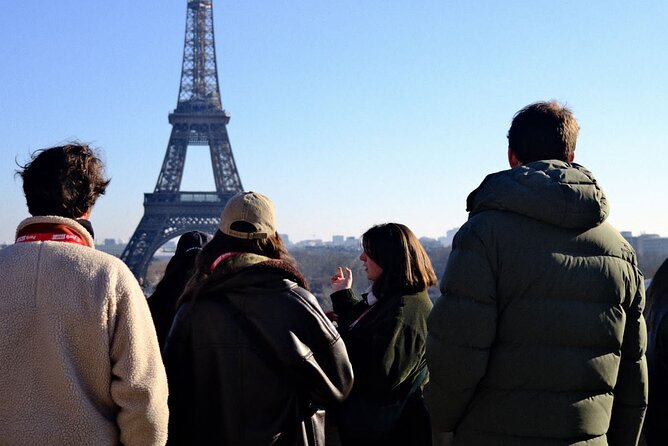
At Trocadéro Gardens, you’ll see the Trocadéro Fountain, built in 1937 to replace the original 1878 Exposition Universelle fountain. It’s a classic “big Eiffel view” setup, and the tour points out the water display and the sightline.
This stop works well because it blends two timelines: the 1878 fair-era fountain concept and the 1937 replacement that you can still see today. It’s also an easy spot to slow down for photos without feeling like you’re holding up a group for too long.
Then you’ll move to Pont d’Iéna. The tour explains it as an entryway bridge linking the Eiffel Tower to Trocadéro and notes the role it played for multiple Universelles (1867, 1878, 1889, 1900). Even though the bridge’s political and ceremonial role has changed, the route logic remains the same: bring visitors into a grand view of the city’s engineering pride.
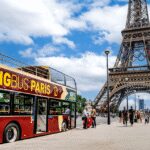
Eiffel Tower: why it was criticized, and why it never went away
Finally, you reach the Eiffel Tower area. The tour anchors it in the 1889 Exposition Universelle and the message of progress and engineering. It also notes the early criticism and how it quickly became an enduring Paris icon.
This ending lands best if you’ve been paying attention to the “why” all along. You’re not just watching the tower; you’re understanding it as the flagship exhibit of a modern-age promise.
And because the tour ends here, you can naturally extend your day. If you want to do more photos, walk the nearby streets, or just enjoy the views, you’re already in the right pocket of Paris.
Pacing and practical tips for a smooth 2 hours
This tour is built for short stops and steady movement. That’s why it works so well as a stand-alone activity or as your first “orientation” walk.
Here’s how to get the most out of it:
- Wear comfortable shoes. You’ll be moving across varied sidewalks and bridge approaches.
- Bring your phone battery. You’ll use a mobile ticket, so you don’t want to start the tour with a low charge.
- Plan on photos, especially at bridges like Pont Alexandre III and the river viewpoints around the Eiffel Tower. Some stops feel photo-first; treat them that way.
- Bring water if you get thirsty. Food and drinks aren’t included, so don’t count on a snack break to fix your energy.
If you’re the kind of traveler who likes to learn just enough to change how you see a place, this format fits.
Value check: $43.26 buys stories plus a lot of free sights
At $43.26 per person for about 2 hours, the price is basically paying for a local guide and focused context. The stops include several major landmarks where admission is free for what you’re doing outdoors or in the public-facing areas—so you’re not paying repeatedly just to stand in front of famous things.
What makes the value feel real is that the tour isn’t only listing monuments. It explains how the World’s Fairs used transport, architecture, and symbolism to project a future-facing image of France. That kind of context is hard to get from a phone map.
Also, the small group size helps you feel like more than a person passing by. With max 15, you can actually ask questions, and that often makes the learning stick.
Who this tour suits best
This is a great fit if:
- You like history, but not the kind that traps you in a classroom.
- You want a route that mixes major icons (Grand Palais, Eiffel Tower) with fair-era details you might miss alone.
- You want photo-friendly stops along the river without spending the whole day sitting in museums.
- You’d enjoy hearing clear, enthusiastic guide storytelling—especially if you end up with Olivia, whose style is noted for being fun and easy to follow.
If you want full museum deep-dives, this isn’t that. It’s more of a walking lecture with great sights and frequent “look up here” moments.
Should you book this Paris World Fairs tour?
I’d book it if you want to understand why Paris looks the way it does, not just what to see. The combination of fair-era connections, free-to-approach landmarks, and a small group makes it a strong use of a half-day.
Skip it if your top priority is long time inside major museums, or if you dislike walking between multiple stops. Also, remember you’ll end near the Eiffel Tower, so it works best when you’re ready to keep exploring after.
If your goal is to turn iconic photos into real understanding, this is a smart, good-value way to do it.
FAQ
How long is the Paris World Fairs walking tour?
It’s about 2 hours (approx.).
What’s the price per person?
The price is $43.26 per person.
Is the tour offered in English?
Yes, it’s offered in English.
How big is the group?
The group size is limited to a maximum of 15 travelers.
Where does the tour start and where does it end?
It starts at Statue du Général Charles de Gaulle, Pl. Clemenceau, 75008 Paris and ends at the Eiffel Tower, 5 Av. Anatole France, 75007 Paris.
Do I need to pay admission at the stops?
The stops listed are marked as having free admission for visiting.
What physical fitness level is needed?
The tour notes a moderate physical fitness level.
Is there a mobile ticket?
Yes, the tour includes a mobile ticket.
Can I cancel for a full refund?
You can cancel for a full refund if you cancel at least 24 hours before the experience’s start time.