REVIEW · PARIS
Paris with a Tuk Tuk – Private 2-Hour TukTuk Tour
Book on Viator →Operated by TukTuk Parisien · Bookable on Viator
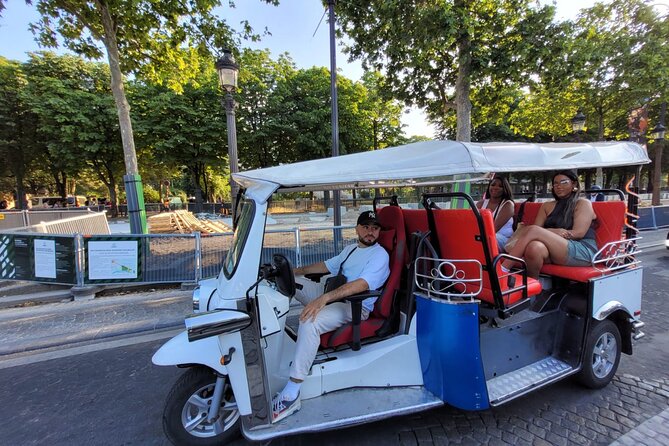
Paris, seen from an open-air tuk-tuk. This private tour uses an open-air electric vehicle for 360-degree views, plus a simple route that lets you hit major sights without the metro. You also get your own pace, with short stops for photos and a driver who keeps things moving.
What I really like is the private setup: it’s just your party, so you’re not rushing with strangers or stuck in someone else’s itinerary. Second, I love the fun extras that make it feel like Paris, not a checklist, especially the ability to play your playlist through the portable onboard music speaker (on request).
The main consideration: pickup and route timing depend on where you’re starting and how traffic is that day. If your hotel is outside the pickup area, you may need to meet at the rendezvous point instead, which can mean walking in the middle of sightseeing.
In This Review
- Quick reasons this tuk-tuk tour works
- How Private Tuk-Tuk Timing Fits Paris
- Pickup and Meeting Point: Where You Actually Start
- The Big Picture Itinerary: Fast Icons, Photo-Friendly Stops
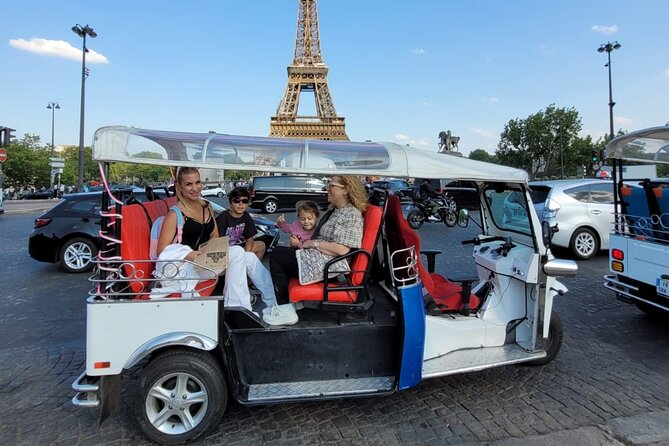
- Stop 1: Eiffel Tower in a Tight 5 Minutes
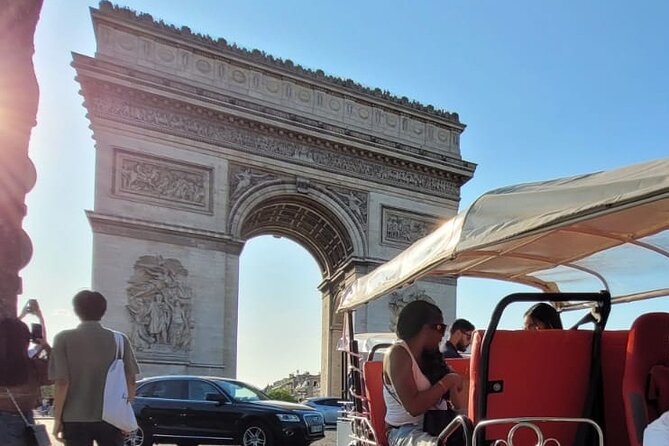
- Stop 2: Arc de Triomphe and the Champs-Élysées
- Grand Palais and Petit Palais: Architecture With Easy Access
- Pont Alexandre III: The Seine View Stop You’ll Remember
- Les Invalides and Place de la Concorde: Power, Pageantry, and Scope
- Louvre and Notre-Dame: Icon Exteriors Without Ticket Pressure
- Palais Garnier (Opera) and the Sacré-Cœur View Finish
- The Open-Air Electric Ride and the 360-View Advantage
- Music on Request: Turning the Ride Into Your Own Moment
- Group Size, Pace, and Why This Feels Different Than a Bus
- Value and Price: What You’re Really Paying For
- Weather, Traffic, and Why Your Stops Might Shift
- Who This Tour Fits Best
- A Note on Guide Variation
- Should You Book This Paris Tuk-Tuk Tour?
- FAQ
- How long is the Paris with a Tuk Tuk private tour?
- What does it cost, and how many people can join?
- Is this tour private?
- Do you offer pickup from my hotel?
- Where is the meeting point if I’m not picked up at my hotel?
- Is the tour in English?
- Are entrance tickets included for the main landmarks?
- Can I play my own music during the tour?
- What happens if the weather is bad?
- What’s the cancellation window?
Quick reasons this tuk-tuk tour works
- Open-air electric ride for real views of Paris as you move
- Private experience for up to 6 people, no strangers in the car
- Short photo stops at big icons, designed for speed and timing
- Flexible feel with a custom itinerary option (ask for what you want)
- On-request playlist audio via a portable music speaker
How Private Tuk-Tuk Timing Fits Paris
Paris looks best when you’re moving, but moving efficiently is the whole game. This tour is built for that: you get private transportation in an open-air electric tuk-tuk, then you stop briefly at the landmarks that most people want first day—without spending your energy figuring out station-to-station routes.
That matters because Paris transit can be great, but it’s not always fun when you’re tired, traveling with kids, or trying to keep everyone on the same schedule. Here, you stay in one vehicle and get the fast “overview pass,” then you can decide what deserves your time later.
You can also read our reviews of more private tours in Paris



Pickup and Meeting Point: Where You Actually Start
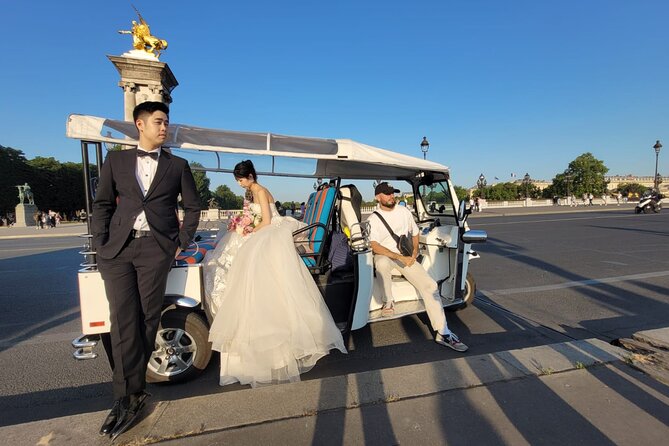
Pickup is offered at your hotel or at the meeting point. If you’re staying near the center, odds are good the handoff is easy. The official meeting point is 10 Pl. de la Concorde, 75008 Paris, in front of the Hôtel Crillon, about 200 meters from the Concorde metro station.
One practical tip: if you’re unsure your address is within the pickup area, plan for the meeting point. Paris streets can get tricky for access, and a half-hour walk is no fun when you’re wearing museum shoes.
Also note the tour ends back at the meeting point, so think of it as a loop: you start in the central area, get a sweep of highlights, and then you’re dropped back where you began.
The Big Picture Itinerary: Fast Icons, Photo-Friendly Stops
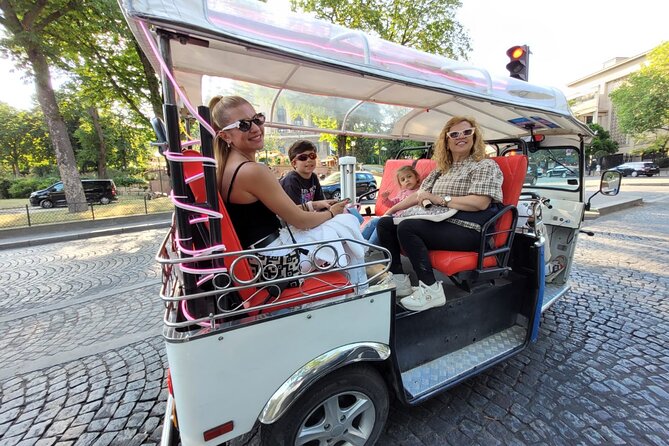
The overall route is designed for about 2 to 2.5 hours total, with short stops at each site (often around 5 minutes). That means you’re not buying a ticket to spend hours inside every attraction. Instead, you’re getting:
- a close visual hit
- a photo moment
- quick context from your guide
- enough time to step out, look around, and re-board
This style is ideal when you want the “I’ve seen it” effect early, or when you want to cover distance efficiently before dinner plans. If you’re the type who likes long museum time, you’ll treat this as the opener, not the main event.
Stop 1: Eiffel Tower in a Tight 5 Minutes
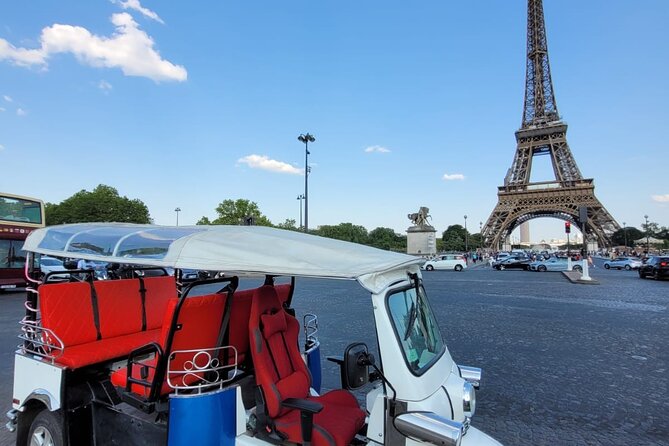
The Eiffel Tower stop is short and sweet, and that’s actually part of the value. You’re there for quick orientation, not a full climb or long queue. The tower is the obvious anchor for a Paris trip, but it’s also a great place to spot what you’re going to do later.
What works well here:
- you get immediate context for the city layout
- you can line up the best angle for photos
- you’ll likely notice nearby landmarks you’ll pass again in your own walking later
Admission is not included, so if your plan is to go up, you’ll want a separate ticket strategy. With only around 5 minutes, focus on photos and “where am I exactly” moments.
Stop 2: Arc de Triomphe and the Champs-Élysées
After the Eiffel Tower, the route heads to the Arc de Triomphe. Again, this is a quick look, not a long climb. The arc sits at the western end of the Champs-Élysées, which is nearly two kilometers long and one of the world’s most recognizable streets.
Here’s the trade-off you should expect with a short stop itinerary: you’ll see the monument and the vibe of the boulevard, but you won’t slow down enough to wander deeply into cafés or side streets. If you want a proper Champs-Élysées walk, plan a second outing after you’ve “mapped” it from the tuk-tuk.
The upside is that you’ll leave with clear bearings. When you later walk the avenue, it feels less random and more intentional.
You can also read our reviews of more tours and experiences in Paris




Grand Palais and Petit Palais: Architecture With Easy Access
Next come two major neighbors: the Grand Palais and Petit Palais. This is where the tour becomes more than sightseeing. You’re seeing two different ways Paris flexes its design muscles.
- Grand Palais: a big exhibition building known for its glass, steel, and stone mix, built for the Universal Exhibition of 1900. Admission is listed as free.
- Petit Palais: a Beaux-Arts style standout across the way, housing the Musée des Beaux-Arts de la Ville de Paris. Admission is not included for this stop.
In a short time window, the practical win is exterior viewing and street-level photos. If you’re hoping to do full museum visits, you’ll need to add extra time separately. But as a “first day architecture hit,” these stops are strong.
Pont Alexandre III: The Seine View Stop You’ll Remember
The Pont Alexandre III crossing is one of those moments where a quick stop still feels meaningful. The bridge is known for its elegant design and heavy decorative elements, including candelabra-shaped streetlights and sculptures, and it’s a classic place to take skyline photos across the Seine.
Why it’s worth stopping:
- it gives you instant perspective on the river corridor
- it’s a natural photo viewpoint while changing sides of the city
- you get to see multiple landmark silhouettes in one frame
Also, it’s a relief from constant walking. You’re in transit, and the driver turns that motion into a photo opportunity.
Les Invalides and Place de la Concorde: Power, Pageantry, and Scope
Then you land in the 7th arrondissement area for Les Invalides, dominated by its golden dome and connected to Napoleon Bonaparte. Admission is free for this stop, which is helpful if you want to step around the complex.
Right after, the tour reaches Place de la Concorde, one of Paris’s largest squares. You’ll see the Obelisk of Luxor and the famous monumental fountains, plus the square’s Revolutionary history. Admission is listed as free here too.
This is one of the most satisfying “scale jumps” of the route. Eiffel Tower gives you height, then you move to broad plazas. It helps your brain understand the city’s geography faster than just walking a single neighborhood.
Louvre and Notre-Dame: Icon Exteriors Without Ticket Pressure
Two of the biggest names come next: the Louvre and Notre-Dame de Paris.
- Louvre Museum: admission is listed as not included. You’re likely focused on the iconic exterior presence and nearby views rather than getting inside and spending hours.
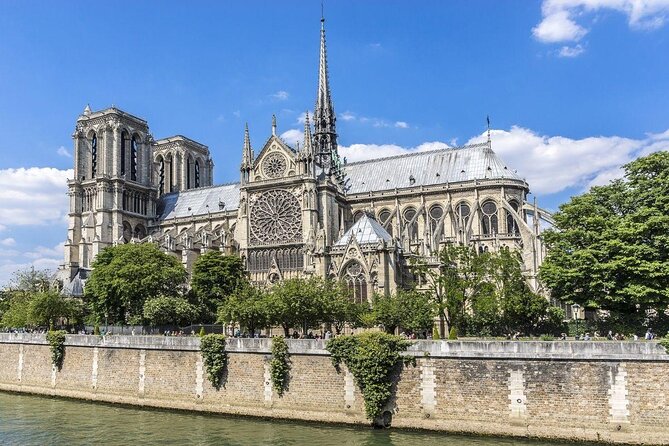
- Notre-Dame de Paris: admission is listed as free for the stop. With a short stop, you’ll mainly take in Gothic detailing and the immediate streetscape impact.
Why this matters for planning: the Louvre alone is a day-long commitment, and Notre-Dame is part history, part atmosphere. This tour gives you the shock-and-awe from the outside so you can decide later if you want to add tickets and time.
Palais Garnier (Opera) and the Sacré-Cœur View Finish
The route then continues to 9th Arr. – Opera, also known as Palais Garnier. Admission is listed as free in the tour info, and the big payoff here is architecture: the ornate neo-baroque façade and the grand interior reputation. Your stop is short, so treat it as an exterior-and-area moment unless you’re specifically going deeper on your own later.
Finally, you reach Basilique du Sacré-Cœur de Montmartre. Admission is listed as not included. The big idea for this stop is the view and the white-stone look over Paris. If you enjoy walking, you might feel the urge to linger around the area, but with a tight tour format, you’ll keep it to quick steps and photos.
The Open-Air Electric Ride and the 360-View Advantage
A lot of “tours” are just windowed transport. Here, the vehicle is open-air, and the tour advertises 360-degree views. That changes how you experience Paris while you’re moving. You’re not only looking forward at the next landmark—you’re also catching side streets, rooftops, and sudden visual connections between sights.
Two practical consequences:
- your photos look more dimensional because you can angle around
- you notice the city faster, so later walks feel easier
If you’re traveling with kids, this part often becomes the entertainment, not just the transportation.
Music on Request: Turning the Ride Into Your Own Moment
You can play your own playlist through a portable music speaker (on request). This is a small feature with a big effect: it turns the ride from “tour mode” into something more personal.
My advice: keep it light and match the moment. Early evening playlists can feel magical, but anything too loud can make guide explanations harder to hear. If you want the facts, ask your driver to keep the volume low during stops.
Group Size, Pace, and Why This Feels Different Than a Bus
The tour is priced per group for up to 6 people, which matters for value. When you split the cost, this can be a good deal compared to booking multiple taxi rides or paying for a private car. For example:
- For 2 people, you’re paying roughly $168 per person (before any outside ticket costs).
- For 6 people, it becomes roughly $56 per person, which is often less than expected for a private format.
The pace is also more flexible than big group bus tours. You still have time limits, but you’re not stuck with a crowd schedule. People who care about photos tend to love this format because you get time to step out and shoot from angles buses can’t always create.
Value and Price: What You’re Really Paying For
At $336.39 per group, you’re paying for:
- private guiding and transport
- quick, efficient landmark coverage
- the convenience of hotel or central pickup
- open-air viewing and photo stop flexibility
- optional playlist audio
What you’re not paying for is long museum time or attraction admissions. Tickets for major stops like the Eiffel Tower, Arc de Triomphe, Louvre, and Sacré-Cœur are listed as not included in the tour data. So the best value comes when you treat this as a first-pass overview and plan your ticketed visits separately.
If you already planned timed tickets for several sites, this tour can still be worth it because it helps you choose what to prioritize once you see the city for real.
Weather, Traffic, and Why Your Stops Might Shift
Paris traffic can be unpredictable. The tour is designed to cover a lot in a short time, so if streets are crowded, the driver may adjust stop order or make the most of the time you have outside.
The tour also notes it requires good weather. If it’s canceled due to poor conditions, you’re offered a different date or a full refund. That’s important because this experience depends on being outside and enjoying the open-air ride.
Who This Tour Fits Best
This is a strong match for:
- first-time visitors who want landmark basics fast
- families with kids who need short, engaging moments
- couples or small groups who prefer privacy over a bus crowd
- travelers who want a photo-friendly sweep, then return later for deeper exploring
It may not be your best fit if your main goal is museum depth or if you dislike short stops and quick transitions. Think of it as a guided “Paris orientation” plus skyline views.
A Note on Guide Variation
Most guides in the feedback pool are praised for being kind, patient, and focused on photos and timing. Names that show up include Pierre and Olivier, along with others like Oliver and Denny, and a driver named Amet.
Still, one caution from the overall experience record: knowledge and flexibility can vary by driver, and pickup communication matters. If your itinerary is important to you, say what you want clearly at the start and confirm how you’ll handle any must-sees within the time limits.
Should You Book This Paris Tuk-Tuk Tour?
If you want a simple, private way to see big Paris landmarks in a couple hours, this tour is an easy yes. The open-air 360-degree viewing, short photo stops, and ability to keep your group together make it a practical first-day move, especially for families or groups up to 6.
I’d skip it only if you already have a tight plan of timed museum entrances and you don’t want outside photo stops. In that case, you might put that money toward tickets and a more focused walking day.
Bottom line: book it when you want fast bearings, great views, and a fun ride that doesn’t require you to master transit before you’ve even started enjoying the city.
FAQ
How long is the Paris with a Tuk Tuk private tour?
It lasts about 2 hours to 2 hours 30 minutes total, and that duration includes the time for the circuit.
What does it cost, and how many people can join?
It costs $336.39 per group, and the group size limit is up to 6 people.
Is this tour private?
Yes. This is a private tour, so only your group participates.
Do you offer pickup from my hotel?
Pickup is offered from your hotel or from the meeting point.
Where is the meeting point if I’m not picked up at my hotel?
The meeting point is 10 Pl. de la Concorde, 75008 Paris, in front of the Hôtel Crillon, about 200 meters from the Concorde metro station.
Is the tour in English?
Yes, it’s offered in English.
Are entrance tickets included for the main landmarks?
No. Tickets are listed as not included for several major stops such as the Eiffel Tower, Arc de Triomphe, Louvre, and Sacré-Cœur. Some stops are listed as free, including Grand Palais, Les Invalides, Place de la Concorde, Notre-Dame de Paris, and the Opera area.
Can I play my own music during the tour?
Yes. You can use your own playlist with a portable music speaker (on request).
What happens if the weather is bad?
The experience requires good weather. If it’s canceled due to poor weather, you’ll be offered a different date or a full refund.
What’s the cancellation window?
You can cancel for a full refund up to 24 hours in advance. If you cancel less than 24 hours before the start time, the amount paid is not refunded.