REVIEW · PARIS
Paris: Private walking tour – Latin Quarter and Center!
Book on GetYourGuide →Operated by Paris Walks with Blaze · Bookable on GetYourGuide
Paris reads different when someone local guides you. On this private walking tour, you get an easy-to-follow arc through the Latin Quarter and central landmarks, and I especially like the way Blaze mixes architecture spotting with street-level stories about how power, freedom, and daily life shifted over centuries.
The only real consideration is the moderate walking. You’ll be on your feet for about 2.5 hours, so bring comfortable shoes and water, and dress for the weather since the tour runs in all conditions.
In This Review
- Key highlights you’ll feel right away
- A Paris walk built around real layers, not just postcard stops
- Start near Saint-Michel: quick orientation, then you’re off
- Arènes de Lutèce: Roman Paris under your feet
- Place de la Contrescarpe: where the neighborhood story becomes personal
- Notre-Dame de Paris, guided: Gothic lines you can actually identify
- St. Étienne du Mont: a calmer church break in the Latin Quarter
- La Sorbonne: why institutions shape how people live
- Thermes de Cluny: Roman baths with a modern-city contrast
- Saint-Germain-des-Prés and Île de la Cité: moving from street-level to power-center
- Place du Panthéon and the Seine: political meaning in grand spaces
- Notre-Dame again, then Pont Neuf and Saint-Séverin: better angles, less hurry
- How long is it, and is it worth $82 for a group up to 6?
- What to bring so you enjoy every stop
- Should you book this tour?
- FAQ
- How long is the Paris Latin Quarter and Center private walking tour?
- Where does the tour start?
- Where does the tour end?
- Is this tour private and how big is the group?
- What languages are offered?
- Is admission included for the sites on the walk?
- Is the tour suitable for people with mobility impairments?
- Does the tour run in bad weather?
- What should I bring and can I take photos?
- What is the cancellation policy and is pay-later available?
Key highlights you’ll feel right away
- Meet Blaze near Saint-Michel and set your walking rhythm from the first minute
- Roman Paris at Arènes de Lutèce, then layered history moving forward through medieval streets
- Notre-Dame with guided context, plus another look later for a different angle on the same complex
- Architecture lessons on the go: Gothic, Classical, and Haussmannian features you can actually point out
- Interactive small-group feel where you can ask as many questions as you want
- Admissions included for the sites you enter, so you’re not stopping to ticket-hop
A Paris walk built around real layers, not just postcard stops
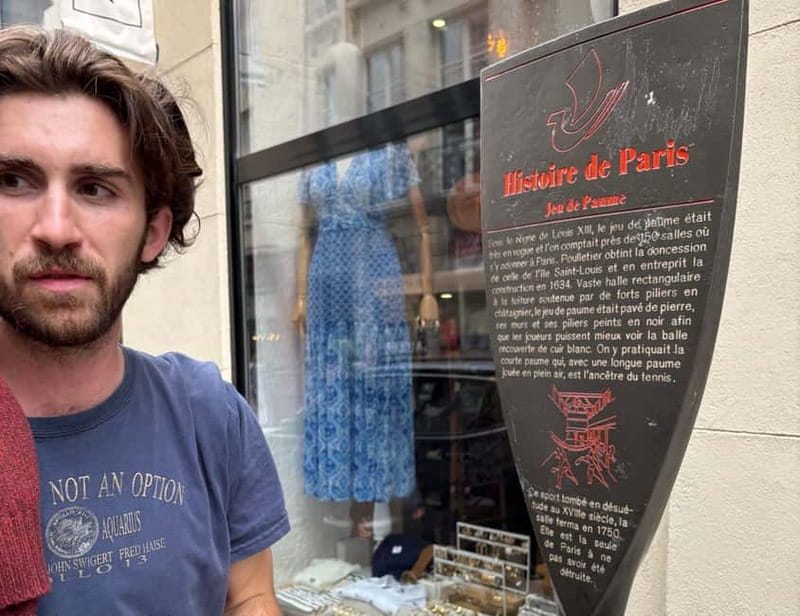
This tour works because it doesn’t treat Paris like a single timeline. You’ll move from one era to the next—Roman remnants to medieval streets to major monumental buildings—so the city stops feeling like a slideshow and starts feeling like a living construction project that kept changing.
I also like the guide style. Blaze is a La Sorbonne graduate who currently works as a dancer, and that background shows up as an animated, human way of explaining the past. The walk stays relaxed, but it’s never random. You’re always learning something practical: how to notice architectural differences, what to look for as you move through neighborhoods, and how politics and social pressure can show up in stone, streets, and institutions.
And because it’s a private group capped at 6, you can actually steer the conversation. If you want more about the French language, art evolution, or political science angles, you can ask. If you want to slow down for photos or a specific detail you spotted, you can.
You can also read our reviews of more walking tours in Paris



Start near Saint-Michel: quick orientation, then you’re off
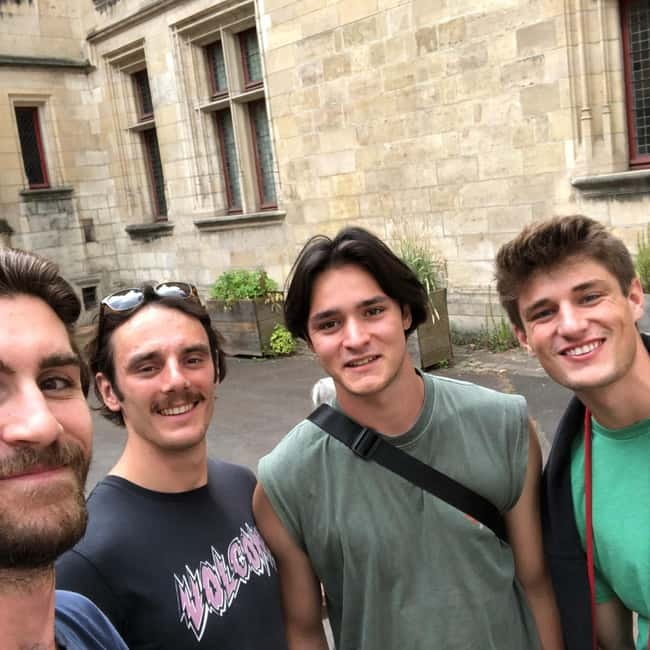
You’ll begin close to the bridge Saint-Michel area. That matters because it puts you right where you can transition from the river approach into the Latin Quarter world without feeling like you’re crossing the city blind.
From the start, Blaze frames the big idea: Paris is shaped by changing balances of power, freedom, and society. That theme keeps popping up through the stops, even when you’re just turning a corner. It makes the walk feel like you’re getting a mental map, not just accumulating facts.
If you’ve been to Paris once already, this still helps. You might know the big names, but you’ll likely learn new ways to read them—especially through architecture.
Arènes de Lutèce: Roman Paris under your feet
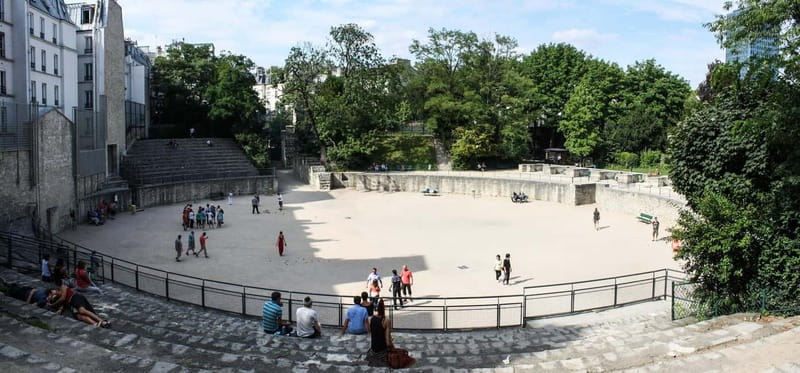
The first big scheduled stop after meeting is Arènes de Lutèce, where you’ll get a guided visit. This is one of the strongest “wow” moments of the route because you can sense that early Paris life was physical and loud and crowded—long before the grand medieval and later styles.
What I like here is the shift in time. One moment you’re in the modern city streets; the next, you’re looking at the evidence of a much older Paris that had its own rhythm. Blaze’s explanations connect that physical site to how daily life worked in the past, with amusing anecdotes that make the era feel less textbook.
Practical note: since you’ll be looking around and moving at a walking pace, keep an eye on where you’re standing for photos. Photography is allowed, just be respectful of site rules (including the flash photography guidance).
Place de la Contrescarpe: where the neighborhood story becomes personal
From the arenas, you move to Place de la Contrescarpe for another guided stop. This is where the tour becomes more about atmosphere and city fabric.
Squares like this work well in a history walk because they’re natural “pause points.” You can look around and start seeing how the area functions: paths that funnel pedestrians, corners that shape movement, and nearby buildings that hint at the periods that came before.
This stop is also a good moment to ask questions. Blaze’s tour is designed to be flexible, so if you want to understand how the Latin Quarter evolved socially—or why certain institutions matter in Paris—you can steer the conversation here.
Notre-Dame de Paris, guided: Gothic lines you can actually identify

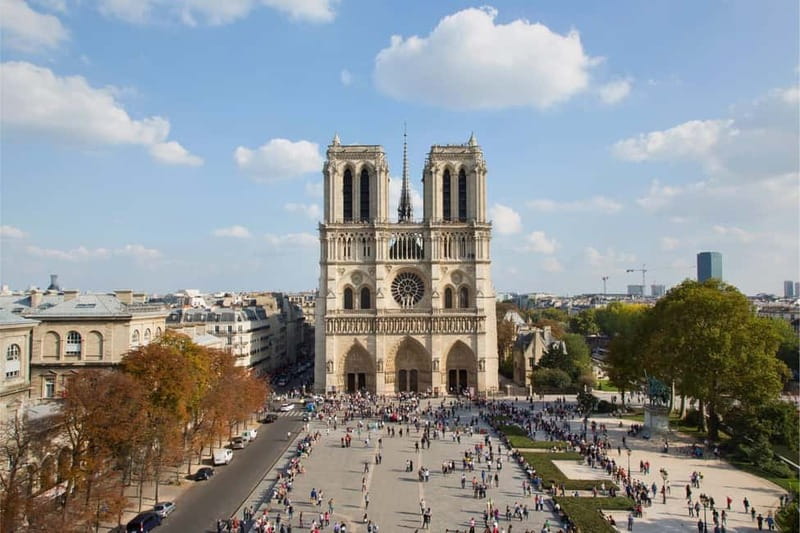
Next up is Cathédrale Notre-Dame de Paris, with guided time at the site. If you want the headline version of Gothic architecture, this is where you’ll get it. If you want something more useful—like learning what to look for—this is also where you’ll benefit.
Blaze helps you identify architecture types as you go. So instead of just seeing a famous cathedral, you’re learning how Gothic features differ from other styles you’ll encounter later in the walk. That makes your photos better too, because you know what you’re photographing.
A useful strategy on this part: move with the guide’s cues, not your instinct. At major monuments, your instinct often says, “stand and stare.” The guide will push you to look at structure and details, which is where the real payoff is.
You can also read our reviews of more private tours in Paris






St. Étienne du Mont: a calmer church break in the Latin Quarter
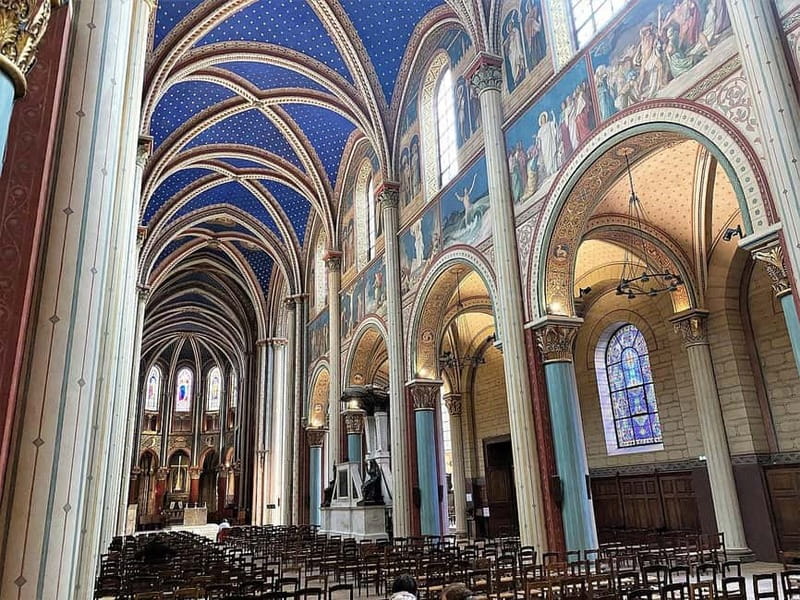
After Notre-Dame, you’ll visit St. Etienne du Mont. This stop gives you a change of pace. It’s still part of the historic fabric, but it feels like a quieter pause inside the larger cathedral-heavy story.
Why it’s valuable on this tour: it helps balance the “big show” energy. After a major landmark, you’ll appreciate a site that lets you slow down, notice smaller cues, and think about how religious spaces fit into neighborhood life.
La Sorbonne: why institutions shape how people live
Then comes La Sorbonne for a guided stop. This is one of the most “intellectual Paris” moments on the route, and it lands especially well because Blaze is a former scholar from La Sorbonne and the School of Advanced Studies in Social Sciences.
Here, you’ll get more than building trivia. You’ll connect the university presence to the social and political tensions that shaped different eras. It also ties into the tour’s broader thread about power and society: who gets educated, who gets influence, and how institutions affect everyday life.
If you’re interested in the French language side of things, this is also a good time to ask. The tour explicitly covers language nuances, and the academic setting is a natural backdrop for that kind of discussion.
Thermes de Cluny: Roman baths with a modern-city contrast
After Sorbonne, you’ll visit Thermes de Cluny with guided commentary. Roman baths are the kind of site that instantly helps you understand “layers” because you can see how one culture leaves behind structures that later eras reuse, repurpose, or build over.
What I like about this stop is the contrast with everything around it. Even if you know Paris is old, baths make it real. They show that early daily life included public routines, social spaces, and built environments designed for bodies and conversation.
It’s also a great pause for photos and detail viewing, as long as you follow the flash photography expectations at each location.
Saint-Germain-des-Prés and Île de la Cité: moving from street-level to power-center
Next you’ll visit Saint-Germain-des-Prés, then you’ll head to Île de la Cité for guided time. This combo helps you feel how Paris changes tone across zones.
Saint-Germain-des-Prés often carries a literary and intellectual vibe, and on this tour it serves as a bridge between university-era ideas and the monumental civic core that comes next. Île de la Cité is the stronger “center of gravity” stop, where you can sense why so many major buildings and ideas cluster in one place.
Blaze’s commentary helps connect these locations to societal dynamics—how rule and community meet in physical space.
Place du Panthéon and the Seine: political meaning in grand spaces
You’ll reach Place du Panthéon, guided, then walk along La Seine. This is one of the best sections for people who like “why this matters,” not just “what is it.”
Place du Panthéon gives you a big, formal square setting where architecture and public identity overlap. The tour frames it through politics and social balance, so you’re not just staring at a monument—you’re learning how Paris tells stories with scale.
Then the Seine adds the geographic logic. Rivers pull the city together, and the tour uses that space to explain how Paris developed around movement, crossings, and visible boundaries. Even if you’re not a history nerd, the physical setting helps the information stick.
Notre-Dame again, then Pont Neuf and Saint-Séverin: better angles, less hurry
You’ll return to Cathédrale Notre-Dame de Paris for more guided time. That second stop matters. Seeing the same landmark from a different walking rhythm helps you notice what you missed the first time—especially architectural details and viewpoints tied to how you approach the site.
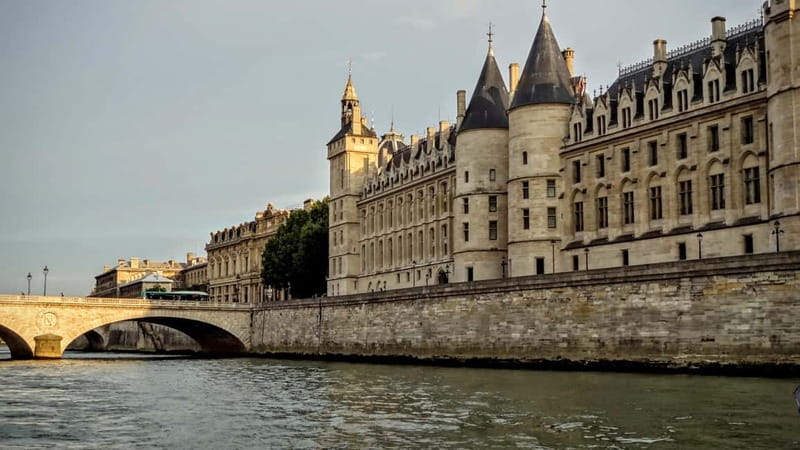
After that, you’ll visit Pont Neuf for guided time, then finish at Saint-Séverin (visit). This closing sequence is designed to keep momentum while still giving you moments to breathe.
If you like photos, this is where you’ll be glad you didn’t rush. Bridges and churches reward a slower look, and the tour’s pace is meant to let you enjoy sights without feeling dragged.
How long is it, and is it worth $82 for a group up to 6?
This is a 2.5-hour private walk. The price is listed as $82 per group up to 6, which is one of the best value setups if you’re traveling as a small party.
Here’s the practical way to think about it:
- If it’s just you or two people, the value comes from the guide adapting and from site admissions being included.
- If you have a group up to 6, the cost per person gets much easier to swallow fast.
- Since it’s private, you avoid the usual problem of a fixed pacing that doesn’t match your interests.
Also, because it’s designed for small-group personalization, you’re not stuck listening through a one-size-fits-all script. You can ask questions and get answers tied to what you’re actually seeing.
One note: the tour isn’t suitable for people with mobility impairments, and that’s worth taking seriously. The route includes multiple stops and a moderate amount of walking on city sidewalks.
What to bring so you enjoy every stop
You’ll want to show up ready for a comfortable 2.5 hours outside. Bring:
- Comfortable shoes (you’ll thank yourself later)
- Water
- A camera
- Weather-appropriate clothing (the tour operates in all weather conditions)
Photography is allowed, but keep an eye on each site’s flash photography rules.
Should you book this tour?
Book it if you want Paris that makes sense. This tour is built for people who like learning to see—especially architecture and how different eras shaped the city. Blaze’s approach, plus the interactive small-group format, makes it a strong “first orientation” walk even if you’ve already been to some of the headline sights.
Skip it or consider other options if you want a mostly low-walking experience or if mobility is an issue. The walk is designed as a proper walking tour, not a sit-and-look-at-a-bus route.
If you’re the type who asks why a building looks the way it does, or how politics shows up in daily life, you’ll probably leave with a sharper mental map of Paris and a lot more confidence navigating the neighborhoods on your own.
FAQ
How long is the Paris Latin Quarter and Center private walking tour?
It’s listed as 2.5 hours. Starting times vary by availability, so you’ll want to check the schedule before you book.
Where does the tour start?
The meeting point is close to the bridge Saint-Michel.
Where does the tour end?
The activity ends back in the meeting point area, with drop-off locations noted near Arènes de Lutèce and Maubert–Mutualité.
Is this tour private and how big is the group?
Yes. It’s a private group experience, sized up to 6 people.
What languages are offered?
The live tour guide offers English and French.
Is admission included for the sites on the walk?
Yes. Admission to all visited sites is included.
Is the tour suitable for people with mobility impairments?
No, it’s not suitable for people with mobility impairments.
Does the tour run in bad weather?
Yes, it operates in all weather conditions, so you should dress appropriately.
What should I bring and can I take photos?
Wear comfortable shoes, bring water and a camera. Photography is allowed, but be respectful of the sites’ rules regarding flash photography.
What is the cancellation policy and is pay-later available?
Free cancellation is available up to 24 hours in advance for a full refund. You can also reserve now and pay later, booking without paying today.