REVIEW · PARIS
WW1 Australian Battlefield Day Tour from PARIS: Somme, Villers-Bretonneux…
Book on Viator →Operated by Terres de Mémoire · Bookable on Viator
Australia’s WW1 trail hits hard.
This private Somme battlefield day from Paris pairs WW1 expert guiding with a tight route of Australian front-line sites, from Pozieres-era fighting to Villers-Bretonneux in 1918. Two parts I really like: the chance to stand at Lochnagar Crater and the Australian memorials where names (and absence) are central. The main drawback to plan for is the length of the day (about 9–11 hours) and that lunch isn’t included, so you’ll want to plan for food and timing.
I also like how the format stays personal. With a maximum of 7 passengers and private transport, the guide can adjust to what matters most to your group—whether that’s a specific grave, a particular action, or just getting the story straight across the whole day. Plus, pickup is offered and you’ll travel in an air-conditioned vehicle with mobile ticket access.
One last consideration: this isn’t a light sightseeing loop. You’re visiting places tied to mass loss, missing soldiers, and preserved trench lines—so come with a calm pace mindset and good walking shoes, not a checklist attitude.
In This Review
- Key highlights at a glance
- A private Australians-on-the-Somme day trip that actually feels focused
- Stop 1: Lochnagar Crater and the shock of industrial warfare
- Stop 2: The 1st Australian Division memorial area, including Gibraltar bunker
- Stop 3: Thiepval Memorial and the weight of missing soldiers
- Stop 4: Beaumont-Hamel’s preserved trenches at Terre-Neuvien de Beaumont-hamel
- Stop 5: Albert lunch break with a basilica you’ll likely notice right away
- Stop 6: Villers-Bretonneux Australian National Memorial and the meaning of 11,000 missing
- Stop 7: The Sir John Monash Centre and modern storytelling for the Western Front
- Pricing and what you’re really paying for
- Guide quality makes a bigger difference than you’d expect
- Timing, pacing, and packing for a long emotional day
- Who should book this tour?
- Should you book this WW1 Australian Battlefield Day Tour from Paris?
- FAQ
- How long is the WW1 Australian Battlefield Day Tour from Paris?
- Is pickup from Paris included?
- What sites are included in the itinerary?
- Are admission fees included?
- Is lunch included?
- What if the weather is bad?
Key highlights at a glance
- Lochnagar Crater: a preserved mine crater blown on July 1, 1916
- Gibraltar bunker area: the Windmill and Mouquet Farm sites tied to heavy Australian losses
- Thiepval memorial: focused time at the Somme memorial for those with no known grave
- Beaumont-Hamel’s preserved trenches: original trench lines from the 1916 Somme battle
- Villers-Bretonneux Australian National Memorial: the large-scale memorial for the 11,000 missing in France
- Sir John Monash Centre: modern presentation space for the Western Front and Australian contribution
A private Australians-on-the-Somme day trip that actually feels focused
This is built as a single, coherent battlefield route, not a grab-bag “we’ll see a few stops” day. You start from Paris and spend most of the day in the Somme area, with a driver/guide who knows the WW1 story well enough to connect what you see to what happened—why a bunker mattered, why a trench line was held, and what the memorials are trying to make you understand.
The value piece here is simple: the stops include the major Australian-linked points you’d otherwise struggle to stitch together on your own in one day. The tour also lists museum/site access fees as included, which removes a common hidden cost of battlefield days. At $296 for a day that runs roughly 9–11 hours, the price makes more sense when you think about private transport, a dedicated guide, and admission coverage.
Where it can be less convenient is the rhythm. Your day is structured around set stops and times (many are about 30 minutes). That’s good if you like efficiency, but if you want long lingering at every site, you’ll need to keep your expectations realistic. Also, lunch and snacks aren’t included—so don’t assume you’ll stumble into a perfect meal every time you stop.
And yes, weather matters. The experience notes it requires good weather, so plan to dress for rain as a possibility and have a flexible mindset.
You can also read our reviews of more tours and experiences in Paris.



Stop 1: Lochnagar Crater and the shock of industrial warfare
Lochnagar Crater is the kind of place that makes WW1 feel physical and immediate. This is a huge mine crater—an underground mine blown up on July 1, 1916. Even without extra commentary, it’s the scale that hits first: you’re looking at a battlefield wound created by engineering, not just gunfire.
Your time here is about 30 minutes, and admission is listed as free. That short window can actually work well, because the crater is self-explanatory: you walk, you look across the site, and then your guide can help you understand where it fits into the bigger battle picture. If you’re the sort of person who likes to ask questions, this is a great stop to do it—there’s lots to interpret from one location.
One practical note: crater sites can be uneven and exposed. Wear shoes that won’t punish you for standing and walking on mixed ground. If it’s wet, go slow—this is not the time for slippery soles.
Stop 2: The 1st Australian Division memorial area, including Gibraltar bunker
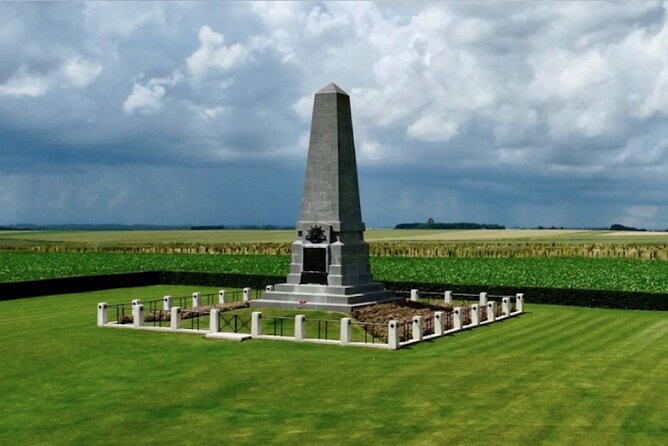
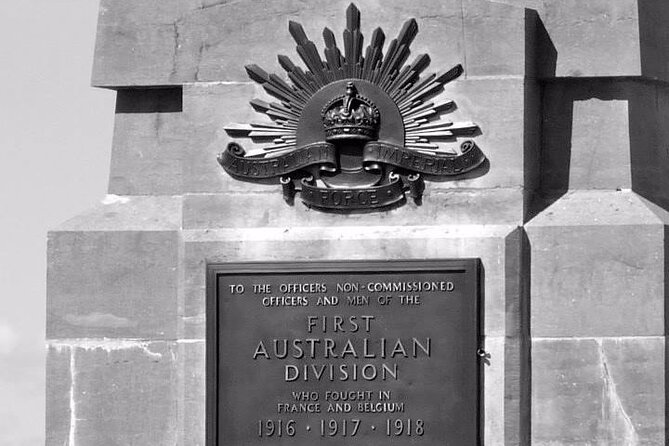
Next you’ll head to the site tied to the 1st Australian Division and the broader “Australian losses here” story—specifically the Gibraltar bunker area, plus the Windmill and Mouquet Farm. This stop is about 30 minutes and admission is free.
This is the part of the day where the guiding really matters. The map of the Somme can look deceptively simple, but the fighting was complex, and the difference between one sector and another could mean enormous losses. Your guide’s job is to connect the names you hear—Gibraltar bunker, Windmill, Mouquet Farm—to the way the battle unfolded and what the Australians were trying to achieve.
What I like about this stop is that it doesn’t just mention a battle. It points you toward the kind of places soldiers lived and fought: bunkers, farms, and positions that were hard to see as “war zones” unless someone explains how they functioned. If you’re visiting with family members, it’s often one of the most meaningful points because it turns abstract history into specific ground.
Potential drawback: because the stop is time-limited, you might want to slow down mentally. Don’t rush here to “get it done.” Even with 30 minutes, focus on one or two key locations your guide highlights.
Stop 3: Thiepval Memorial and the weight of missing soldiers
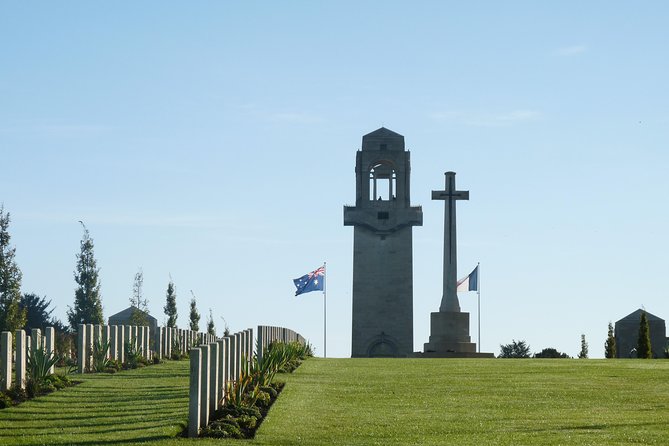
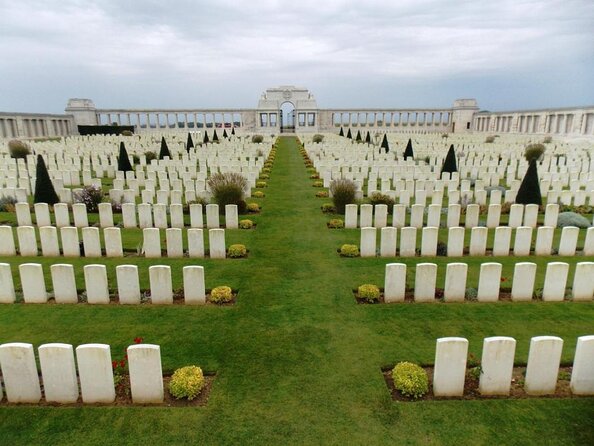
The Thiepval Memorial is for the missing of the Somme. Your stop is listed at about 30 minutes, with free admission.
Memorials can sometimes feel like they exist at a distance—plaques and names you glance past. Here, the layout and purpose push you to do the opposite. A memorial to the missing is a different emotional category than a gravesite. It’s about absence made visible, and it forces you to think about what families didn’t have: certainty, a known grave, a place to return to.
In practice, this is a good stop to prepare for a moment of stillness. If your group tends to move fast, it helps to set expectations beforehand. Also, if you know a name or two that you want to search for, bring that info with you before you arrive. Even short visits go better when you already have the target names in mind.
Stop 4: Beaumont-Hamel’s preserved trenches at Terre-Neuvien de Beaumont-hamel
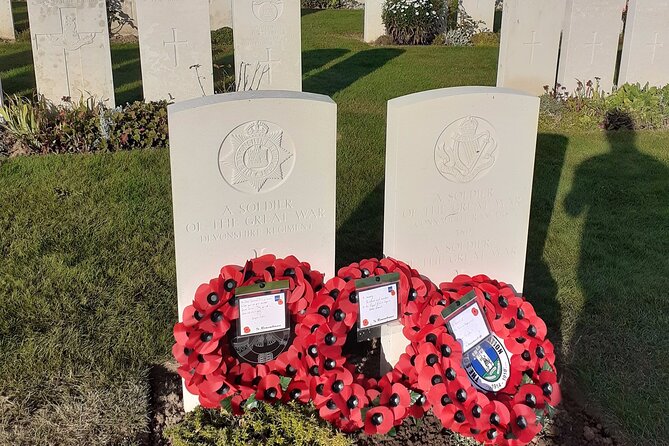
This is one of the key stops on the route. Terre-Neuvien de Beaumont-hamel is a preserved battlefield with original trenches from the 1916 Somme battle. You’ll get about an hour here, and admission is free.
This extra time compared to the other stops makes sense. Trench lines aren’t just “scenery.” They’re an entire system—where sightlines, movement, and cover were shaped by the terrain and the construction. When you’re standing near original trench features, the scale of the system becomes clearer than it does from a map.
I also like the pacing here. An hour gives you time not only to look, but to let the guide talk you through what the trenches mean—how they were used, what it felt like for soldiers, and why holding (or losing) a position was so consequential.
Bring a realistic attitude: you’re outside in a historical setting. You’ll want to dress for the weather, and you may deal with cold air, wind, or mud depending on season. Plan to stand and walk, then stand and read—repeat.





Stop 5: Albert lunch break with a basilica you’ll likely notice right away
At mid-day you stop in Albert for lunch, with about 50 minutes allocated. The basilica of Albert is listed as famous, and while the tour doesn’t include lunch, this timing gives you a chance to eat without losing the whole day.
This is a practical part of the route. Battlefield touring takes energy, and you don’t want everyone starving by the time you reach the Australian memorials. Because lunch and snacks aren’t included, treat this as your scheduled meal window.
What to do with the basilica: if you have time and you enjoy quick architecture stops, it’s a good place to stretch and reset. If you’re not in the mood, just use this time for food and a restroom break—then get back to the serious part of the day.
Stop 6: Villers-Bretonneux Australian National Memorial and the meaning of 11,000 missing
Villers-Bretonneux is where the day becomes unmistakably Australian. The Australian National Memorial commemorates the 11,000 Australians missing in France in World War One and is described as the largest Australian memorial in Europe. Your stop is about 40 minutes, with free admission.
This is a heavy stop, but it’s also one of the most focused. Instead of spreading the emotions across dozens of sites, this memorial gathers them—missing names, the idea of sacrifice without a known grave, and the sense that the war followed Australians far from home.
If you’re visiting because you want to find a family connection, this is the place to do it. The memorial setting gives you a clear structure for searching and reading, and it can turn the day from “history lesson” into something more personal.
One consideration: 40 minutes can feel short if you’re looking closely for specific names. Go in with the best chance of success—know the spelling, have dates if you have them, and be ready to take your time without getting separated.
Stop 7: The Sir John Monash Centre and modern storytelling for the Western Front
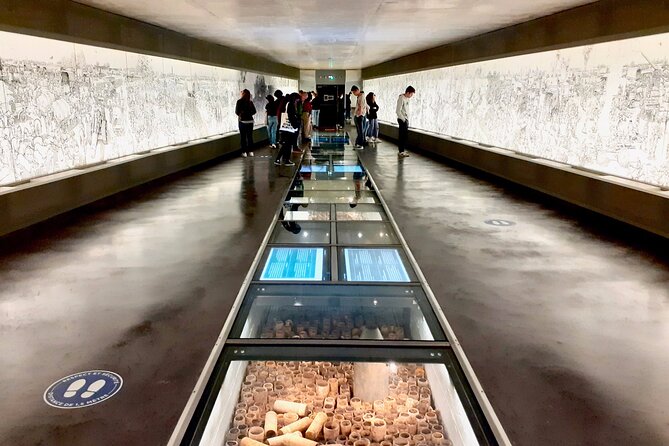
Your final stop is the Sir John Monash Centre. You’ll have about 45 minutes here, and admission is free as part of the tour. The centre is described as new, with an immersive room experience focused on the Australians on the Western Front.
This is a great way to close the loop. By the time you reach the centre, you’ve stood in trenches and looked at battle infrastructure. Now you get a different tool: structured storytelling that ties places to people and tactics to consequences. That contrast helps a lot for understanding the full sweep of the war’s Western Front.
From what’s been enjoyed during the day, people also tend to spend time with sections related to Victoria School inside the centre. If that’s something you care about, use your time here for it first, before you wander.
Practical tip: in an indoor presentation space, it’s easy to lose track of time. If you’re traveling with someone who gets restless, agree on a rough plan—see the main room first, then explore what you still want to see.
Pricing and what you’re really paying for
Let’s talk value in plain terms. At $296 for a 9–11 hour private day, you’re paying for four things:
1) Private transportation from Paris to the Somme region
2) A dedicated WW1 guide who connects the sites into one story
3) Site access where listed (museum/site fees included)
4) A small group size (up to 7), which makes it easier to ask questions and move at your pace
You’re not paying for food—lunch and snacks are not included. That’s an easy adjustment: grab supplies before you leave, or plan to eat during the Albert stop.
Is it worth it compared with cobbling together buses and taxis? For most people, yes—especially if you want a tight route and correct context without spending half the day figuring out transportation between remote battlefield points. If you’re comfortable DIY-ing and you already have names of graves/sites you want, you might find cheaper ways. But you’d need to do the hard work of planning and the fine work of interpretation.
Guide quality makes a bigger difference than you’d expect
This tour’s biggest recurring praise centers on the guide. In particular, names like Sylvestre show up in multiple accounts as a standout: the way he explains what happened, and the way he handles the conversations, clearly matters.
That matters because battlefield sites can be confusing without context. You might see a bunker area and think it’s just a location marker. With a good guide, it becomes a specific place in a sequence: why troops moved, what they faced, and how the battle’s outcome changed later actions.
Even if your group is quiet, guide quality still affects you. It changes how you read the ground. It’s the difference between “I looked at history” and “I understood what that history cost.”
Timing, pacing, and packing for a long emotional day
This is a full day. The stops are generally short—often 30 minutes—except Beaumont-Hamel (~1 hour), Albert (~50 minutes for lunch), and Villers-Bretonneux/Monash Centre (40 and 45 minutes). That means you’ll move more than you might on a typical walking tour.
Plan for:
- Comfortable shoes for uneven outdoor ground
- A warm layer, since trench and memorial sites are outdoor and can feel colder than you expect
- Rain protection, since the experience depends on good weather
- Food strategy: lunch and snacks aren’t included, so bring what you can or rely on the Albert meal window
- A calm mindset: this route is emotionally intense by design
Also, take advantage of the “private and/or personalized” format. The overview says each tour is unique, and you can let them know if you’re interested in visiting specific sites or a grave in the area. If you care about a particular name or location, you’ll get better value by focusing your questions and requests early.
Who should book this tour?
This fits best if you:
- Want a focused Australian WW1 route without transportation headaches
- Prefer guided context over self-planning
- Are visiting because of personal connections (names, missing relatives, family history)
- Like structured days where you cover the big points and still get explanations that make the sites make sense
It’s also a good choice for small groups who want privacy. With up to 7 passengers, it’s easier to keep the experience respectful and unrushed.
If you’re looking for a casual, low-effort sightseeing day with lots of free time, this probably won’t feel that way. The route is tight, and the subject matter carries weight.
Should you book this WW1 Australian Battlefield Day Tour from Paris?
Yes—if you want the Somme in a way that’s organized, Australian-focused, and guided strongly. The strongest reasons to book are the combination of major sites (Lochnagar Crater, the Australian memorials, Beaumont-Hamel) and the fact that the day is built to be understandable, not just “visited.”
Hold off or adjust expectations if you’re hoping for long free time at each stop, or if you rely on lunch being included. Plan your meals and wear comfortable shoes, and you’ll be set for a day that gives you more clarity than most independent battlefield days.
If you’re the kind of person who likes answers—what happened, where it happened, and what it meant—this route is designed for you.
FAQ
How long is the WW1 Australian Battlefield Day Tour from Paris?
The tour runs about 9 to 11 hours, depending on conditions and the day’s timing.
Is pickup from Paris included?
Pickup is offered, and the tour includes private transportation in an air-conditioned vehicle.
What sites are included in the itinerary?
The day includes Lochnagar Crater, the 1st Australian Division memorial area (Gibraltar bunker, Windmill, and Mouquet farm), Memorial de Thiepval, Memorial Terre-neuvien de Beaumont-hamel, Albert (for lunch), the Australian National Memorial at Villers-Bretonneux, and the Sir John Monash Centre.
Are admission fees included?
Yes. Access to all the sites and museum fees is listed as included.
Is lunch included?
No. Lunch and snacks are not included.
What if the weather is bad?
The experience requires good weather. If it’s canceled due to poor weather, you’ll be offered a different date or a full refund. Free cancellation is available up to 24 hours in advance for a full refund.