REVIEW · PARIS
Paris Private Sightseeing Guided Tour by Electric Rickshaw
Book on Viator →Operated by Paris CityVision · Bookable on Viator
Paris has a way of overwhelming you fast. This private electric rickshaw route helps you get your bearings fast while still seeing big-ticket landmarks. I like the hotel pickup and drop-off, and I also love how the driver-managed photo breaks make the ride feel smooth instead of rushed. One thing to keep in mind: it’s a sightseeing pass, so if you’re hoping for long time inside places like the Louvre, you’ll need extra plans on your own.
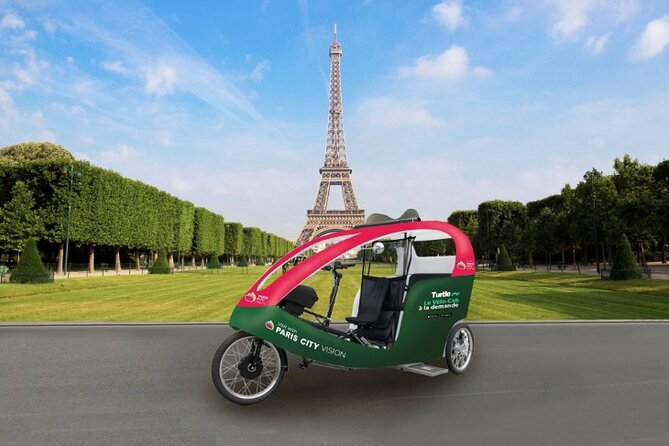
You’re not stuck negotiating Paris traffic or searching for a taxi at every turn. With a private setup for up to 2 people per rickshaw, you can pace the day and grab the best photo angles when you actually see them. The ride uses bike lanes and smaller routes, which can make you feel closer to the city than a standard car tour. Still, it’s not a silent, cushy limo experience—some parts can feel a bit bumpy, even with a fully covered rickshaw.
In This Review
- Key takeaways before you book
- Why an electric rickshaw makes sense for Paris sightseeing
- Price and value: what you’re really paying for
- Timing that matters: 2 hours of touring plus pickup time
- Your driver and the small-group vibe
- Stops on the route: what you’ll see and why it’s worth it
- Notre-Dame de Paris and the Île de la Cité
- The Louvre and the art that pulls people in
- Paris Opera: where the grand stage has history
- Tuileries Garden: a calm corridor near the major sights
- Place de la Concorde: the big square at the end of the Champs-Élysées
- Grand Palais: a historic exhibition hall presence
- Champs-Élysées: the famous stretch and what you should do with it
- Arc de Triomphe: the star of the junction
- Trocadéro across the Seine: the viewpoint that sets up the Eiffel Tower moment
- The Statue of Liberty replica and the Flamme de la Liberté
- Eiffel Tower: the centerpiece moment
- Les Invalides: France’s military history in stone and space
- National Assembly: the seat of government
- Luxembourg Garden: a classic pause in the 6th arrondissement
- Panthéon: the monument over the Latin Quarter
- Comfort and what a covered rickshaw actually means
- Who this tour is best for
- Should you book the Paris private electric rickshaw tour?
- FAQ
- FAQ
- How long is the tour, including pickup and drop-off?
- How many people can ride in one rickshaw?
- Is the price different for 1 person versus 2 people?
- Does the tour include audio commentary?
- What’s included and what’s not included?
- Is it a kid-friendly or pet-friendly activity?
Key takeaways before you book
- Private electric rickshaw for 1–2 people: your group has the vehicle to yourselves, so you’re not stuck waiting on other schedules.
- Pickup from anywhere in Paris: hotel pickup and drop-off are part of the value, not an extra hassle to coordinate.
- QR code audio for 23 monuments: you get on-demand context as you pass key stops.
- Photo breaks on demand: the route is flexible enough to slow down for pictures when the moment is right.
- Wi‑Fi onboard: handy for map checks, messaging, or grabbing info while you’re moving between sights.
- A day-spanning approach in one 3-hour window: you can choose time slots throughout the day to match your energy level.
Why an electric rickshaw makes sense for Paris sightseeing
Paris is gorgeous, but it can be stressful when you’re moving quickly. Streets get busy. Taxis can be unpredictable. Lines and detours eat time you could have spent seeing more. This tour avoids a lot of that friction by giving you a driver and a vehicle designed for short hops and flexible stops.
The big win is that you get a clean route through the classic sights without constantly thinking, Where are we now? You’re not trying to herd yourself between the Seine crossings, the Opera area, the Champs-Élysées, and the Eiffel Tower zone. Instead, you focus on looking out the sides and front—when you see a good angle, you can ask for a stop.
I also appreciate that the tour includes free Wi‑Fi onboard and QR code audio. That means the ride isn’t just pretty scenery; you get practical context for what you’re looking at while you’re moving.
You can also read our reviews of more guided tours in Paris



Price and value: what you’re really paying for
At $230.80 per group (up to 2 people), you’re paying for two things: private guiding and private transport time. For some travelers, that feels steep at first glance. But it can become good value if you compare it to the cost of two separate taxis or ride-hails, plus the inefficiency of waiting, rerouting, and repeating trips.
Here’s the honest way to think about it: you’re buying convenience, speed, and guidance. You don’t have to search for parking, haggle for directions, or lose time to unpredictable traffic patterns between major landmarks.
One detail that makes this pricing easier to stomach: it’s the same price whether you have 1 person or 2 people in the same vehicle. If you’re traveling as a couple, that’s where the value usually clicks—especially for a short, high-impact day.
Timing that matters: 2 hours of touring plus pickup time
The core tour time is about 3 hours total, with a note that pickup/drop-off time is in addition to the 2-hour tour portion. Translation: plan for a half-day feel, even if you only spend part of it in motion.
This matters because Paris pickups can vary depending on where your hotel is and how the streets are running that day. If you’re trying to fit this between a timed dinner reservation and a museum booking, give yourself buffer time. You’ll enjoy the ride more when you’re not watching the clock.
Your driver and the small-group vibe
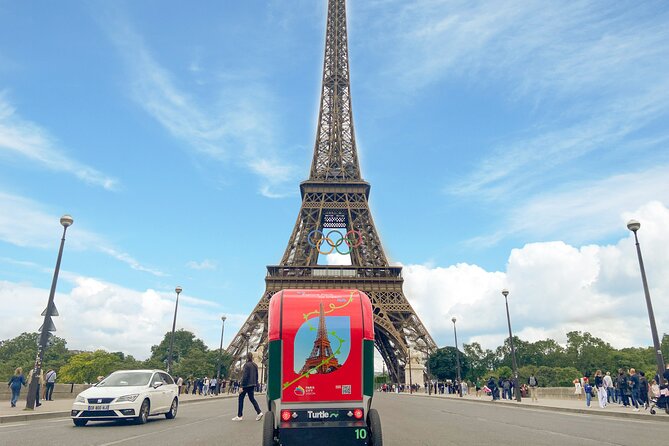
This is a private tour, so only your group participates. That changes the whole feel. Instead of a loud commentary over a crowd, you get a calmer experience where you can ask for a picture, ask questions, or shift the pace slightly when something catches your eye.
The quality of guiding clearly shows up in the reviews—drivers like Joao, Max, and Alexis are specifically called out for being attentive, knowledgeable, and flexible. One reviewer even highlighted how their guide knew the best spots for photos while sharing history as they moved between stops.
I also like that the vehicle can use bike lanes. Even when roads are chaotic, smaller access can help you reach viewpoints faster than big vehicles can.
Stops on the route: what you’ll see and why it’s worth it
You can also read our reviews of more private tours in Paris






Notre-Dame de Paris and the Île de la Cité
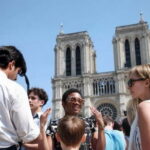
You start near one of the most recognizable silhouettes in Paris: Notre-Dame on the Île de la Cité. It’s known for French Gothic architecture, and even from the outside, you get that sense of scale and stonework that doesn’t fully land until you’re right there.
Photo-wise, the rickshaw’s smaller footprint can help you grab angles that are hard to get from a crowded sidewalk. If you want a moment to take it in without juggling a map app, this first stop is a strong anchor.
Practical note: if you’re a person who likes to stand and study, you might want a longer stop later in your trip. This tour is about covering the highlights.
The Louvre and the art that pulls people in
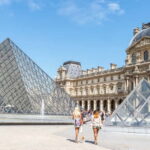
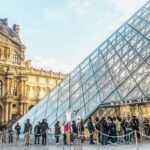
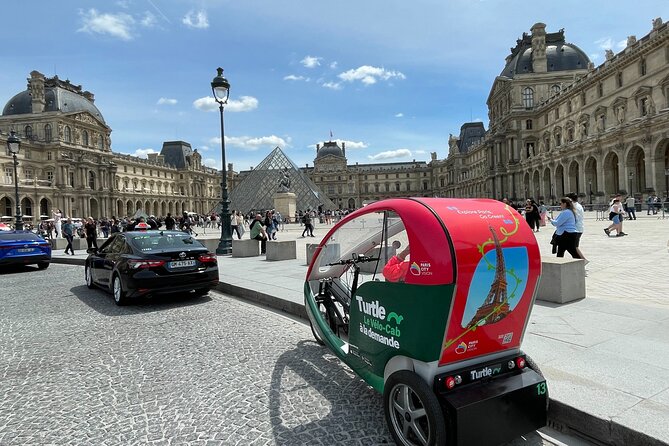
Next up is the Louvre, one of the most famous museums on Earth. Even if you never go inside on this trip, it’s still a power move to see it up close—especially because it’s associated with canonical works like the Mona Lisa and the Venus de Milo.
The drawback of any short sightseeing pass is that you won’t get deep museum time here. But as an orientation stop, it helps you understand where the museum sits in the city and how it lines up with nearby gardens and major squares.
Paris Opera: where the grand stage has history
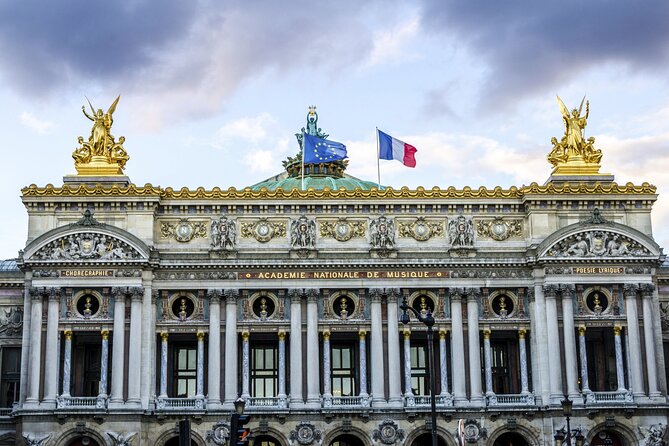
The Paris Opera area is a big clue about how old Paris planned culture and spectacle. The opera company was founded in 1669 by Louis XIV, with leadership involving Jean-Baptiste Lully under the Académie d’Opéra name, before becoming the Opéra you hear about today.
From the rickshaw, you can take in the building presence without buying tickets on the spot. It’s a good stop for photo framing and for feeling how the city shifts from medieval layers into grander state-era architecture.
Tuileries Garden: a calm corridor near the major sights
Between the Louvre and Place de la Concorde sits the Tuileries Garden. Gardens like this act as Paris’s pause button. Even when you don’t walk far, you get a visual break from heavy traffic and landmark crowds.
This stop also helps you understand the city’s layout—how parks and pedestrian space connect major monuments rather than isolating them. If you like strolling, you’ll probably want to return later on your own for a slower walk.
Place de la Concorde: the big square at the end of the Champs-Élysées
At Place de la Concorde, you’re in one of Paris’s major squares. It’s the largest square in the capital at about 7.6 hectares, sitting at the eastern end of the Champs-Élysées.
From the rickshaw, the value is perspective. You see how the avenue opens up into a wide public space, and you get a sense of direction—where the city pulls you next.
One consideration: wide squares can get windy, and waiting a long time for the light isn’t always practical in a short tour. Still, ask for a quick stop if you want a clean skyline or statue-type shot.
Grand Palais: a historic exhibition hall presence
Along the Champs-Élysées area, you pass the Grand Palais—a historic exhibition hall and museum complex. Even without stepping inside, the sheer scale is the point. It reads as an important civic space, not just another building on a busy avenue.
This is a solid photo moment. The wide boulevard and the grand façade work well with a moving vehicle because you can position yourself quickly for different angles.
Champs-Élysées: the famous stretch and what you should do with it
The Avenue des Champs-Élysées runs about 1.9 km and is notably wide. In plain terms, it’s built for spectacle and flow—perfect for seeing the city’s most iconic avenue from different viewpoints.
Here’s a practical way to use this stop: don’t plan it like a long walk if you’re short on time. Instead, treat it as a visual guide. You can note where shops, cafés, and side streets are, then decide later if you want to explore on foot.
Arc de Triomphe: the star of the junction
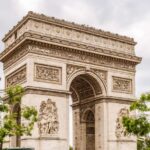
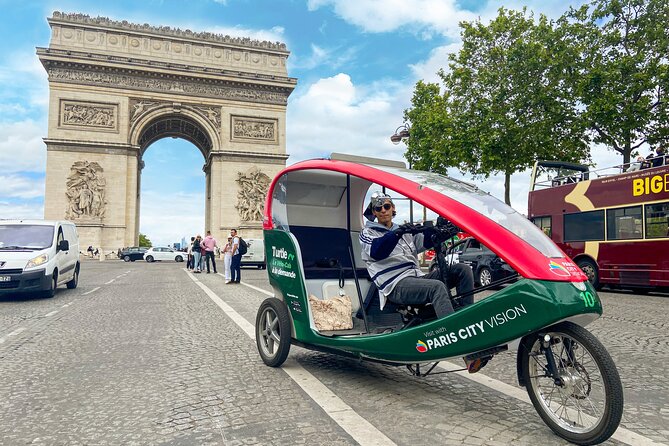
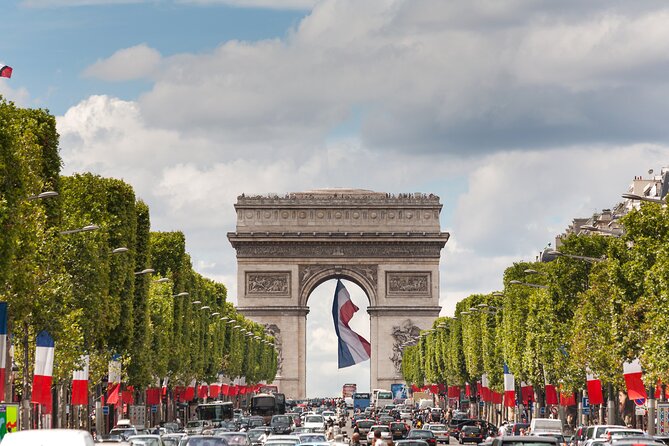
At Arc de Triomphe de l’Étoile, you’re at the western end of the Champs-Élysées in the center of Place Charles de Gaulle. The name points to the star-like junction formed by twelve radiating avenues.
The rickshaw experience is good here because you can see how the avenues spread outward. That helps the monument feel less like an isolated object and more like a hub in the city’s design.
If you’re a photo person, this is one of the moments where you’ll want to ask for a stop or a slow pass so you can frame the arc properly.
Trocadéro across the Seine: the viewpoint that sets up the Eiffel Tower moment
Then you head toward Trocadéro (Palais de Chaillot) in the 16th arrondissement, across the Seine from the Eiffel Tower. This is where the Eiffel Tower starts to feel real—not just a distant landmark.
From a planning perspective, this stop matters because it gives you a classic Paris viewpoint early enough to stay excited rather than rushing. If weather is changing, you’ll also appreciate having an earlier “big view” before you’re committed to a single angle near the tower.
The Statue of Liberty replica and the Flamme de la Liberté
You pass by the Statue of Liberty replica on the artificial island between the 15th and 16th arrondissements. Nearby is the Flamme de la Liberté, a gold-leaf-covered replica of the flame from the original torch from Liberty Enlightening the World.
These stops add variety. They’re not the standard checklist items people focus on, but they fit Paris’s habit of mixing grand references with local landmarks. They also give you a break from the Eiffel Tower-and-Opera cycle.
Photo tip: these are great for close-up style shots, since they’re distinct forms against the Seine-area backdrop.
Eiffel Tower: the centerpiece moment
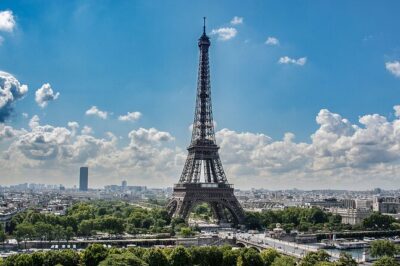
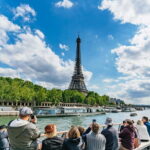
Finally, you reach the Eiffel Tower, the wrought-iron lattice structure on the Champ de Mars. It was built from 1887 to 1889 by Gustave Eiffel’s company for the 1889 World’s Fair, and it’s famously nicknamed La dame de fer.
Even if you’ve seen it in photos, the tower hits differently in person. The size is the story. And because you can request photo breaks on demand, you have control over how long you want to linger in front of it.
If it’s crowded, your advantage is that the driver can help you find workable angles while staying within the tour’s short timeframe.
Les Invalides: France’s military history in stone and space
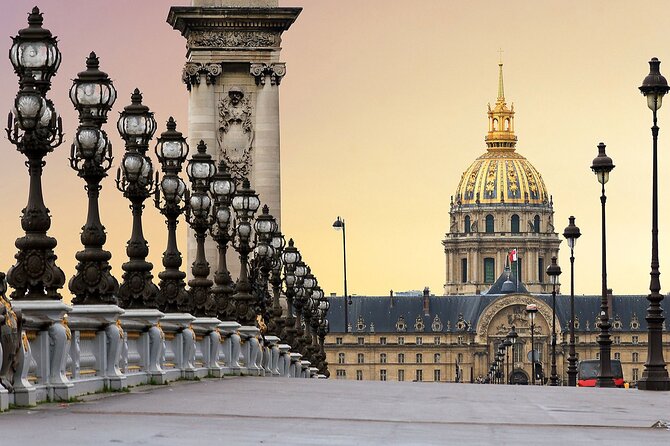
After the Eiffel Tower zone, you move toward Les Invalides in the 7th arrondissement. It’s a complex of buildings connected to French military history, plus a hospital and the original retirement home for old soldiers.
This stop is a good reminder that Paris isn’t only about romance and art. Even in a quick sightseeing loop, you get a sense of the national story—how past conflicts and institutions shaped what you see today.
If you’re interested in France’s history, this part will probably feel more meaningful than you expected.
National Assembly: the seat of government
You also pass the National Assembly. You’ll get an exterior view and a quick orientation to where political power sits in the city.
This is one of those stops that may not be exciting if you only care about iconic architecture. But it helps round out your picture of Paris as a living capital, not a museum set.
Luxembourg Garden: a classic pause in the 6th arrondissement
Then comes the Jardin du Luxembourg in the 6th arrondissement. It’s often called the Jardin du Sénat, and it’s one of the most well-known garden stops in Paris for a reason: it’s a built-in break from the constant motion.
Even if you don’t do a long walk, the garden’s calm feel is part of the tour’s balance. You’re not only ticking off monuments; you’re also getting a breath of green space.
Panthéon: the monument over the Latin Quarter
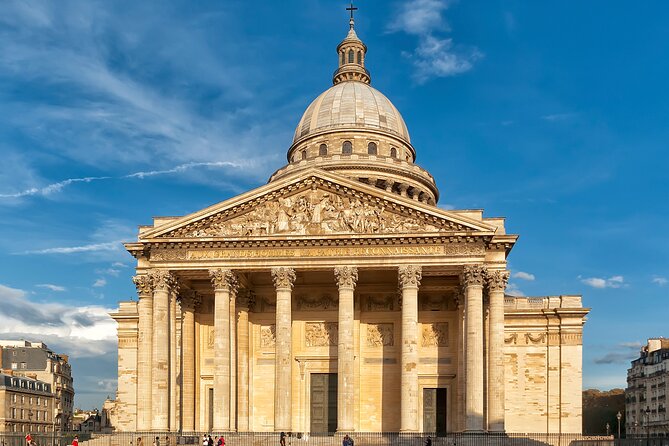
To finish, you reach the Panthéon in the 5th arrondissement, in the Latin Quarter area. It sits atop Montagne Sainte-Geneviève near Place du Panthéon.
This stop is about scale and symbolism. A quick viewpoint from the rickshaw gives you that “Paris is layered” feeling—religious roots, civic power, and national memorials all showing up within the same day.
If you like to connect spots you’ll see again on your own later, Panthéon is a good final orientation.
Comfort and what a covered rickshaw actually means
A rickshaw isn’t the same as a car. One reviewer noted a little bumpy ride at times, but another travel highlight was how the driver eased over bumps and protected riders with the fully covered design—especially important on rainy or cold days.
So here’s how I’d plan for comfort:
- Dress for weather like you would for a short outdoor outing; the covering helps, but you’re still outside.
- If you’re sensitive to uneven surfaces, tell your driver early that you want extra care.
The practical upside is that you’re exposed to less chaos than walking between landmarks in crowded weather.
Who this tour is best for
This is a strong match if you want:
- A fast, high-impact overview of the big-name Paris landmarks
- A private experience with flexible photo stops
- A way to reduce stress from taxis and navigation
- A couple-focused plan that doesn’t require museum stamina
It can be less ideal if your dream Paris day is mostly about long interior visits. Since the emphasis is on seeing a lot of monuments in a short timeframe, you’ll likely treat this as your “first pass” that points you to what you should do more deeply later.
Should you book the Paris private electric rickshaw tour?
I’d book it if you want a practical Paris orientation that feels personal. The combination of private rickshaw transport, hotel-style pickup and drop-off, and QR audio for 23 monuments makes it an efficient way to see more without wearing yourself out on logistics.
Skip it (or add time elsewhere) if you already know you want hours inside specific museums or buildings. In that case, use this tour to map your priorities, then come back when you can slow down.
If you’re flexible about photos and viewpoints and you like having a driver who can adjust the moment, this tour is a smart value—especially for couples sharing the same vehicle.
FAQ
FAQ
How long is the tour, including pickup and drop-off?
The electric rickshaw tour is about 3 hours total. Pickup and drop-off time are in addition to the 2 hours of the tour portion.
How many people can ride in one rickshaw?
It’s a private tour with 1 to 2 people per rickshaw.
Is the price different for 1 person versus 2 people?
No. The price is the same for 1 or 2 people in the same vehicle.
Does the tour include audio commentary?
Yes. You can access audio commentary for 23 monuments using a QR code to scan.
What’s included and what’s not included?
Included: private electric rickshaw with driver, pickup and drop-off everywhere in Paris, special history and anecdotes for over 20 monuments, photo breaks on demand, and free Wi‑Fi onboard. Not included: food and drinks.
Is it a kid-friendly or pet-friendly activity?
The tour is listed as pet friendly. The provided info also says most travelers can participate, but no age-specific limits are given.