REVIEW · PARIS
Paris Passageways Walking Tour: Secrets Uncovered w/ Local Guide
Book on Viator →Operated by Dayin · Bookable on Viator
Paris has hidden shortcuts. This tour threads covered passageways and narrow lanes that most people never even notice.
I like two things most: you get an easy, stress-free route led by a local guide, and the walk stays pleasant in bad weather because it’s mostly under shelter. One thing to consider: it’s a walking-focused experience, so if you prefer minimal steps, you’ll feel it.
In This Review
- Key Highlights You’ll Actually Care About
- Why Paris Covered Passageways Are the Best Weather Plan
- Meeting Point and How the 2-Hour Pace Feels
- Passage Verdeau: Starting in the Smallest Passage for Maximum Contrast
- Passage des Panoramas: One of the City’s Few Left, Plus Food and Shops
- BnF Richelieu at Site François Mitterrand: The Oval Room Moment
- Galerie Vivienne: Built in 1823 and Still Part of Daily Paris
- Palais-Royal: Gardens, Columns, and Stories Dating Back to the 1600s
- Galerie Vero-Dodat: A Rich-People Passage That Feels Like a Little World
- Passage du Grand Cerf: 12 Meters of Passage and a Shopping-Friendly Finale
- Price and Value: What You’re Really Paying For
- Should You Book This Passageways Tour?
- FAQ
- How long is the Paris Passageways walking tour?
- How much does it cost?
- Is the tour good for rainy weather?
- Where do I meet, and where do I end?
- Is admission required for the stops?
- What group size should I expect, and is there a private option?
- What’s included in the price?
Key Highlights You’ll Actually Care About
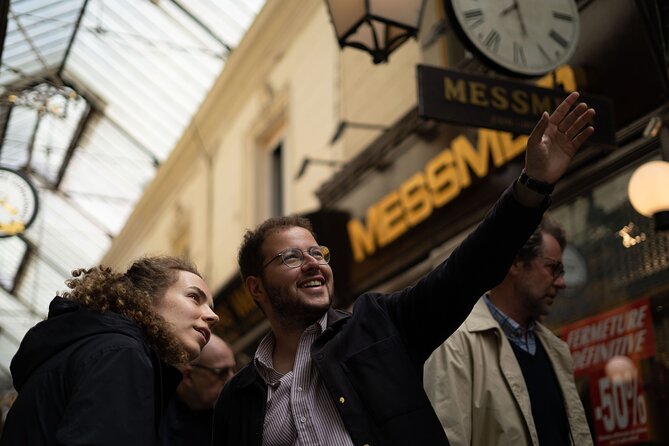
- Mostly covered streets that work well for rainy Paris days
- A local guide leading the way so you don’t waste time figuring it out
- Small-group feel (max 8) with time for questions and stories
- Iconic passage stops like Galerie Vivienne (built 1823) and Palais-Royal
- Handy shop focus near the end, especially around Passage du Grand Cerf
Why Paris Covered Passageways Are the Best Weather Plan
Paris can be loud, open, and exposed—then suddenly, it isn’t. In these passageways, the city turns into corridors: narrow, pedestrian-friendly, and designed for foot traffic instead of cars. That alone makes the walk feel different from the usual big-boulevard sightseeing.
This tour leans into that advantage. Since a lot of the route is under cover, you can keep moving when the sky turns. Rain doesn’t have to hijack your whole day.
And because you’re guided, you don’t spend your limited time doing map math. You follow the story, you learn what to look for, and you get practical pointers for how to organize your next hours in Paris afterward.
You can also read our reviews of more walking tours in Paris



Meeting Point and How the 2-Hour Pace Feels
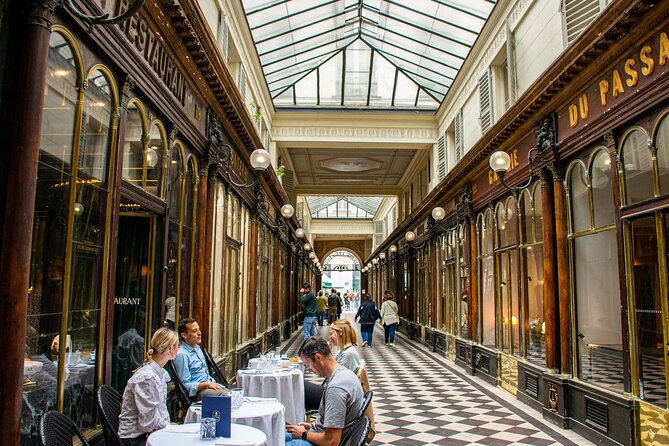
You start at 26 Rue Cadet in the 9th arrondissement and finish in the Passage du Grand Cerf area (the exact ending spot can shift, but it stays nearby). The whole experience runs about 2 hours, which is long enough to feel like you saw a mini “other Paris,” but short enough that you can still eat well and keep exploring afterward.
The group stays intimate: it’s an 8-person max format, and you can also book a private option. If you want a tour where you can actually hear the guide (and ask a question without shouting), this is built for that.
You’ll also want comfortable shoes. The main “drawback” isn’t the walking distance on paper—it’s that the day is designed around walking between multiple passageways, with the route constantly changing streets and entrances.
Passage Verdeau: Starting in the Smallest Passage for Maximum Contrast
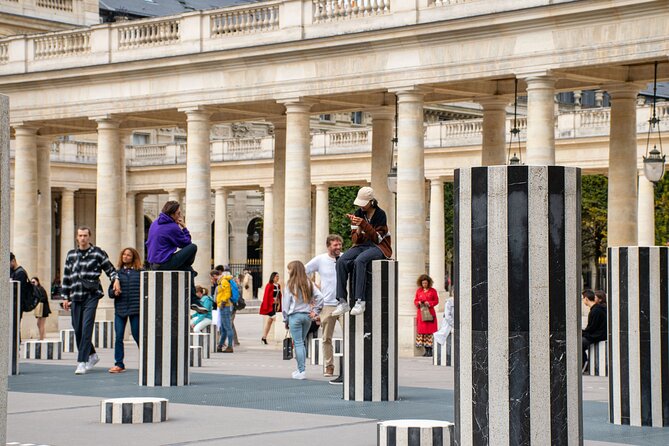
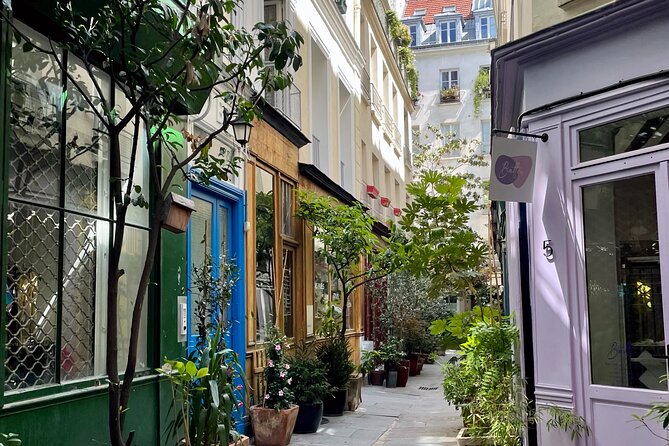
Your first stop is Passage Verdeau, chosen because it’s the smallest passageway in the set. That starting point matters. Instead of beginning with the biggest, most obvious arcade, you ease into the idea of what makes these places special: quiet connectors running parallel to the main streets.
In practical terms, this first segment helps you “read” Paris differently. You start noticing how the city’s grid has alternative routes—thin threads you can use when you want charm without the crowds of the main streets.
If you’re the type who gets turned around easily, this is a smart way to begin. Your guide sets the pattern early: where to look, how the passage system works, and how the route fits together.
Passage des Panoramas: One of the City’s Few Left, Plus Food and Shops
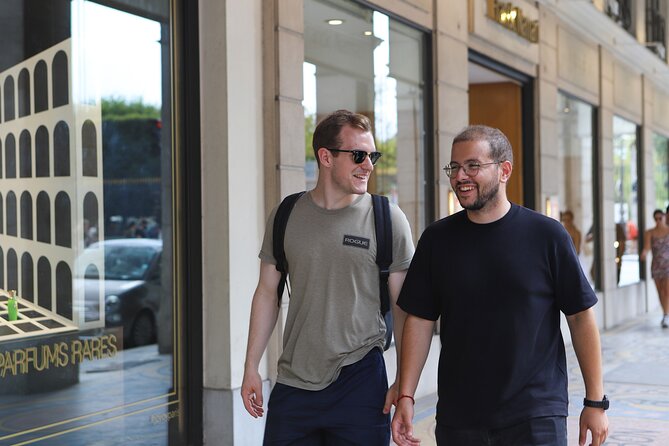
Next comes Passage des Panoramas, one of only 20 passageways still remaining in Paris. That fact sets expectations: this isn’t just a pretty corridor. It’s part of what survived from an earlier era of covered pedestrian life.
Here’s what you’ll watch for. Your guide points out the traditional restaurants and small boutiques tucked along the way, plus the historical background that explains why people cared about these spaces in the first place.
This stop is also a great “photo + wander” moment. The covered structure gives you natural frames for pictures, and the shops give you something to focus on besides architecture. If you like browsing, you’ll enjoy how this passage feels like a working little lane, not a staged monument.
BnF Richelieu at Site François Mitterrand: The Oval Room Moment
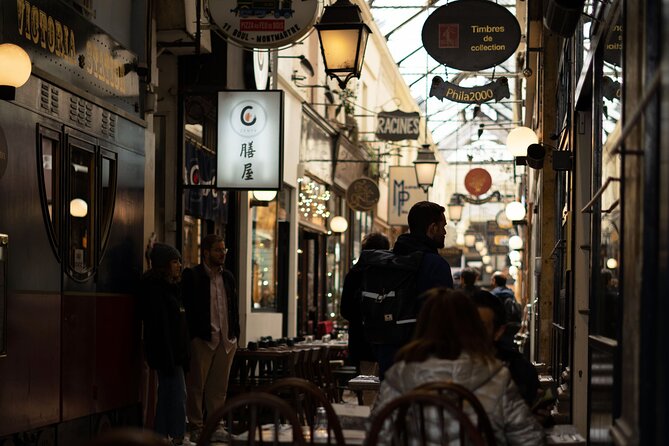
After the passages, you’ll shift into something more institutional: Bibliothèque nationale de France at site François Mitterrand. The highlight here is the Oval room of the BnF Richelieu.
This part changes the tone of the tour. Instead of moving through street-level charm, you get a glimpse of a major cultural setting. It’s a good balance point—like switching from a cozy neighborhood walk to a calm, structured interior environment.
One practical upside: it gives your legs a breather. Even if you’re still within the “tour time,” this stop tends to feel less like constant strolling and more like a focused look at a specific space.
You can also read our reviews of more guided tours in Paris






Galerie Vivienne: Built in 1823 and Still Part of Daily Paris
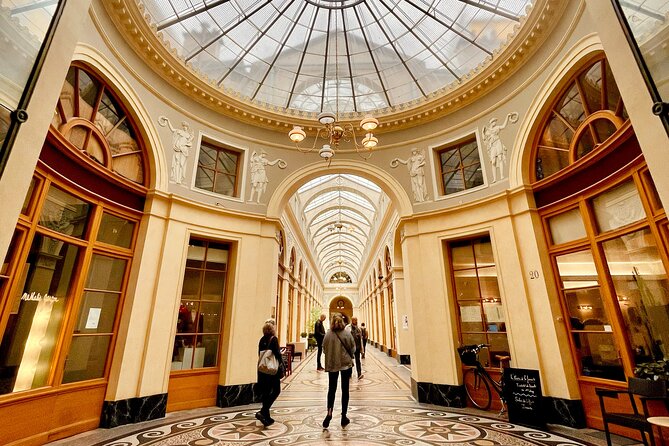
Then you step into Galerie Vivienne, often described as the city’s most striking and prestigious gallery in this category. It was built in 1823, and it’s still used and enjoyed by Parisians today.
What makes this stop worthwhile is the mix of beauty and use. You’re not just looking at an old shell—you see how the space continues to function as a place people pass through and spend time in.
It’s also a strong “bring your camera” moment. The gallery layout and covered design create angles that look different than normal streets. If you want photos that feel distinctly Paris without the usual tourist landmarks, this is where you’ll likely get them.
The only real consideration here is your expectations: if you want ultra-graphic, step-by-step architecture explanations, keep a few questions ready. The tour gives context, but it’s still a walking tour, not a museum-style lecture.
Palais-Royal: Gardens, Columns, and Stories Dating Back to the 1600s
At Palais-Royal, the vibe shifts again. This royal palace hides a storyline of scandals and secrets, but today you get gardens, columns, and a calmer, quieter atmosphere.
The best part isn’t just that it’s pretty. It’s that your guide connects the space to what happened around it over time—stories that date back to the 1600s. That time link helps the place feel grounded, not random.
You’ll want to slow down here. It’s easy to rush a palace courtyard when you’re in “walking tour mode.” But the whole point of Palais-Royal is that contrast: the building’s past gets darker in your head, while the present feels peaceful as you move through the gardens and along the columned spaces.
This stop is also a great reset before the final passage segments. You’ll finish the tour with a stronger sense of how Paris hides layers in plain sight.
Galerie Vero-Dodat: A Rich-People Passage That Feels Like a Little World
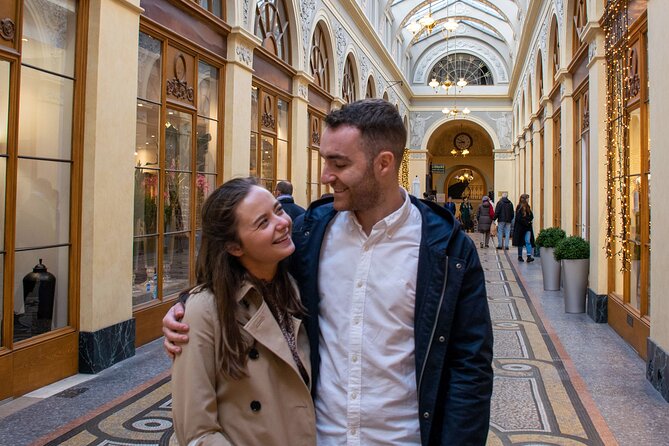
Next, you’ll head to Galerie Vero-Dodat, described as a passageway made for the rich and still loved by Parisian bourgeois life. That’s a clue for how it feels. Instead of an open, public street energy, you get a tighter, more inward atmosphere—like a small village inside the city.
This stop works well if you enjoy “micro-Paris.” You’re not chasing one huge sight. You’re collecting texture: different passage designs, different street rhythms, different ways the city packages daily movement.
If the day’s weather is poor, this part is especially pleasant because passageways keep you in motion without fully exposing you to the elements.
Passage du Grand Cerf: 12 Meters of Passage and a Shopping-Friendly Finale
To end, you walk a little through the narrow streets of Châtelet, then reach Passage du Grand Cerf. This passage is tall—about 12 meters—and that height makes a real visual difference compared with the tighter corridors you saw earlier.
It’s also a shopping-focused finale. If you’re curious about jewelry and artisans shops, this is where your route naturally points you. Your guide brings you here as the tour’s “last hit,” so you’re not just walking out into the city—you’re walking into places you can browse right away.
The practical angle: finishing near retail corridors makes it easier to extend your day. After the tour, you can grab a drink or keep looking around without needing to navigate first.
Price and Value: What You’re Really Paying For
At $66.16 per person for about 2 hours, you’re paying for three things that matter in Paris: time, navigation, and access to a route designed for foot traffic.
You’re not paying extra for entry stops here. The tour’s main sites are listed as admission ticket free, which means you spend money where it counts (food, shopping, your own choices) instead of adding built-in admission fees.
You’re also paying for the local guide’s ability to connect the dots—why Passage des Panoramas matters, what to notice in Galerie Vivienne, and how Palais-Royal’s story changes how you interpret the space. That’s the difference between walking through random alleys and walking through a planned “Paris layer cake.”
The group size helps too. With a max of 8, you’re less likely to get steamrolled by the pace, and the guide can keep the flow without dragging. If you like tours that feel personal instead of factory-produced, the format supports that.
Finally, the covered nature makes it a strong rainy-day pick. You’re not gambling on weather turning your plan into a wet scramble.
Should You Book This Passageways Tour?
I’d book it if you want a smart rainy-day plan, like walking tours that teach you what you’re seeing, and you enjoy Paris when it’s slightly off the main track. This is a great choice if you’re already planning a classic sights day elsewhere and want a second “texture day” that doesn’t require museum logistics.
I’d think twice if you dislike walking or prefer fewer stops. This experience is designed for movement and for stacking multiple passageways and landmarks into one smooth route.
If you do book, come with one simple mindset: treat these passages like a mini city-within-a-city. Let the guide point things out, then keep your eyes open after you finish—because these corridors tend to change how you explore the rest of Paris.
FAQ
How long is the Paris Passageways walking tour?
The tour lasts about 2 hours.
How much does it cost?
It costs $66.16 per person.
Is the tour good for rainy weather?
Yes. The walk is described as mostly covered, which makes it ideal for a rainy day.
Where do I meet, and where do I end?
You start at 26 Rue Cadet, 75009 Paris, France. You end in the Passage du Grand Cerf area in 75002 Paris, France, and the exact end stop might change but stays nearby.
Is admission required for the stops?
The stops listed on the tour are marked as admission ticket free.
What group size should I expect, and is there a private option?
The tour is an intimate group with a maximum of 8 travelers, or you can book a private option.
What’s included in the price?
A local tour guide, an intimate group format (up to 8 or private), a fun walking tour, and tips to help you navigate Paris afterward are included. Hotel pickup and drop-off are not included.