REVIEW · PARIS
Paris: Montmartre Walking Tour with Sacré-Cœur Basilica
Book on GetYourGuide →Operated by THE PERFECT VACATION · Bookable on GetYourGuide
Montmartre does not do subtle. I love how this walk mixes famous landmarks with specific neighborhood stories, especially the Wall of Love and the art stops around Sacré-Cœur views. One trade-off: you’ll be doing some uphill, so comfortable shoes are not optional.
The route starts at the Blanche Metro area by Moulin Rouge and ends at Sacré-Cœur, with the guide dropping you off so you can explore inside on your own. In English, the guide approach is hands-on and practical, and names like Perkin and Pierre show up in past departures for this walk.
In This Review
- Key Highlights You Actually Feel On This Walk
- From Blanche Metro to Moulin Rouge: Start Where the Cabaret Story Starts
- Rue Lepic, Van Gogh’s House, and the Parts Tourists Often Skip
- The Wall of Love and La Bateau-Lavoir: Art as Public Memory
- Dalida’s House and Place Dalida: A Square That Feels Like a Personal Tribute
- Moulin de la Galette and La Maison Rose: Old-School Montmartre Vibes in Plain Sight
- Clos Montmartre Vineyard and Lapin Agile: Wine and Traditional Cabaret Energy
- Place du Tertre to Sacré-Cœur: Artists at Ground Level, Then Views Above
- Price and Value: Is $46 Worth Two Hours of Montmartre?
- Who Should Book This Walk (and Who Might Want Another Option)
- Should You Book This Montmartre Tour?
- FAQ
- Where does the tour meet?
- How long is the Montmartre walking tour?
- Is the tour guided in English?
- Which landmarks are included during the walk?
- Does the guide go inside Sacré-Cœur with you?
- Are meals or drinks included?
- Is there any uphill walking?
- Are there any restrictions on recording or alcohol?
- What is the cancellation policy?
Key Highlights You Actually Feel On This Walk
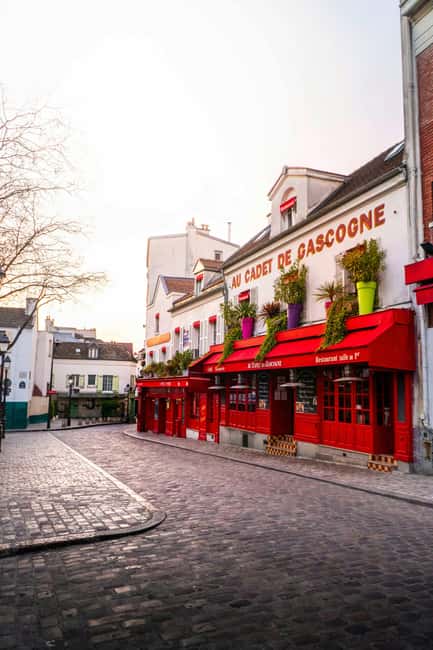
- Blanche to Moulin Rouge: a quick arrival to the cabaret world, right where the vibe begins
- Wall of Love (Le Mur des Je t’aime): a romantic photo stop with real context, not just a picture
- Van Gogh’s house + Rue Lepic: the kind of detail that helps Montmartre make sense
- La Bateau-Lavoir: a working-studio landmark tied to the artist scene
- Clos Montmartre vineyard: wine-growing in the middle of Paris streets
- Place du Tertre to Sacré-Cœur: artists in the square, then sky-high views to finish
From Blanche Metro to Moulin Rouge: Start Where the Cabaret Story Starts
You meet at the Blanche Metro station on Line 2, with the guide holding a flag, near the Moulin Rouge area. If you’ve seen Moulin Rouge only as a postcard, you’ll like how fast this tour grounds it in real streets and real neighborhoods. You don’t just point at a landmark; you get the why behind it.
I like how the early portion sets expectations. This is a short, efficient walk, so you’ll move at a pace that keeps you from getting stuck in tourist bottlenecks. You’ll also get a feel for how Montmartre shifts character block by block—from lively entertainment streets toward quieter lanes that once fed the artist scene.
The first stop is the Moulin Rouge area, followed by an immediate turn toward the more story-driven sights. It’s a smart lead-in because it tells you what Montmartre is famous for, before you head into the places that explain how that fame got made.
Practical tip: plan to take photos quickly at the busy spots. Then use the slower lanes later for better angles and less crowd pressure.
You can also read our reviews of more walking tours in Paris



Rue Lepic, Van Gogh’s House, and the Parts Tourists Often Skip
After the Moulin Rouge area, the walk moves into the streets where you can actually imagine artists wandering, sketching, and arguing over ideas. Rue Lepic is one of those sections that feels made for slow walking. Even on a timed tour, it’s the kind of street where you’ll want a few extra minutes just to read the mood.
Then comes one of the key reasons to book this specific tour: Van Gogh’s house. The value here isn’t that you’re ticking off a museum-style stop. It’s that the house ties Van Gogh to Montmartre as a lived place, not just a name in a textbook. You start connecting the dots between the neighborhood, the artists who came through, and the streets that still shape how the area feels today.
You’ll also pass by the Café des Deux Moulins area, made famous by Amélie. Even if you’re not a movie superfan, it’s a useful contrast: entertainment and pop culture are part of Montmartre now, but they didn’t replace the art story—they sit on top of it.
What to watch for: small street details. Montmartre rewards your attention to doorways, stair angles, and how the street curves. That’s where the “hidden story” feeling happens.
The Wall of Love and La Bateau-Lavoir: Art as Public Memory
The Wall of Love (Le Mur des Je t’aime) is the kind of stop you either rush past or you slow down. This tour helps you do it the right way. You’ll stop there, take photos, and get the sense that the mural is a public message meant to be read, not just admired from afar. It’s a perfect reset: after cabaret energy, you get romance and language and the idea that Montmartre talks to visitors from every angle.
From there, you continue to La Bateau-Lavoir, a historic artists’ studio tied to the creative gatherings of Picasso and others. This is where the tour earns its stripes. A stop like this changes how you look at Montmartre, because it gives you a place where art wasn’t only on the walls of galleries—it was made inside shared spaces, among working creatives.
The tour doesn’t try to make you an art expert in two hours. Instead, it gives you enough context to make the neighborhood feel intentional. When you later see another wall, café, or street corner, you’ll recognize the pattern: Montmartre has always been a magnet for people who want to create.
Photo tip: at the Love Wall, avoid blocking foot traffic. Step to the side, shoot fast, and move.
Dalida’s House and Place Dalida: A Square That Feels Like a Personal Tribute
A standout part of this walk is the stop for Dalida. You’ll visit the house of this French icon and then have a photo stop at Place Dalida, a picturesque square named in her honor.
Why this matters for your experience: Dalida represents a different kind of Montmartre fame than the painters. You’re seeing how the neighborhood shapes performers too—music, stage presence, and public charisma. It’s Montmartre as showbiz, not just sketchbooks.
The photo stop also gives you something practical: a place to pause with your camera without feeling like you’re sprinting between landmarks. Squares like Place Dalida are made for looking around—people, buildings, and how streets funnel visitors toward views.
If you want Montmartre to feel like a story with characters, this Dalida segment does that job.
Moulin de la Galette and La Maison Rose: Old-School Montmartre Vibes in Plain Sight
Next you’ll pass by Moulin de la Galette, a windmill historically used as a popular dance hall. Even if you don’t know the backstory, the structure signals “this place has been for entertainment for a long time.” It’s the kind of stop where you can connect the cabaret world at Moulin Rouge to the earlier dancehall era on Montmartre slopes.
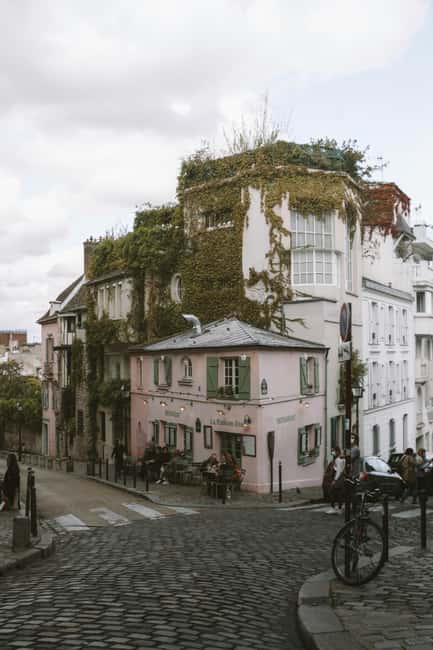
Then you get La Maison Rose, the pastel-pink café that’s often painted by local artists. This is one of those stops where the value is in the timing and pacing. You’re not stuck waiting for a table or trying to decide what to order. Instead, you stroll past and take in why this specific color, setting, and street-facing position made it a recurring subject for artists.
If you’re building your Montmartre “mental map,” this part helps. You start seeing that the area has layers: entertainment, art, daily life, and the way visitors keep rewriting the neighborhood’s identity.
A small consideration: cafés and windmill areas can be crowded. Go in with the expectation that you’re there for street-level atmosphere and a few quick photos, not for a long sit-down experience.






Clos Montmartre Vineyard and Lapin Agile: Wine and Traditional Cabaret Energy
Now you hit two Montmartre stops that feel different from the usual postcard loop.
First, there’s the secret vineyard of Clos Montmartre, which still produces wine in the heart of Paris. This is a great “wait, seriously?” moment. You’re standing in the city, surrounded by streets and buildings, and yet the neighborhood still has a living patch of vines. It gives Montmartre a sense of continuity—you’re not only looking at history, you’re seeing something that still functions.
Then comes Lapin Agile Cabaret, one of the last bastions of traditional Montmartre nightlife. It’s not just a name; it adds a human, after-dark layer to the walk. You can almost hear the old music in your head as you pass by. The point isn’t to turn this into a nightlife plan—it’s to show you how Montmartre’s creative culture has stayed alive through changing eras.
Good to know: this part of the walk pairs well with your earlier stops. The vineyard tells you “Montmartre can sustain,” and Lapin Agile tells you “Montmartre can entertain.” Together, they keep the tour from feeling like a list of attractions.
Place du Tertre to Sacré-Cœur: Artists at Ground Level, Then Views Above
You finish at Place du Tertre, where artists still gather to sell their work. This is a real-world capstone. Instead of ending at a famous building and calling it done, the tour gives you a snapshot of how Montmartre still earns its identity: people working at street level, interacting with visitors, drawing attention to art as a daily practice.
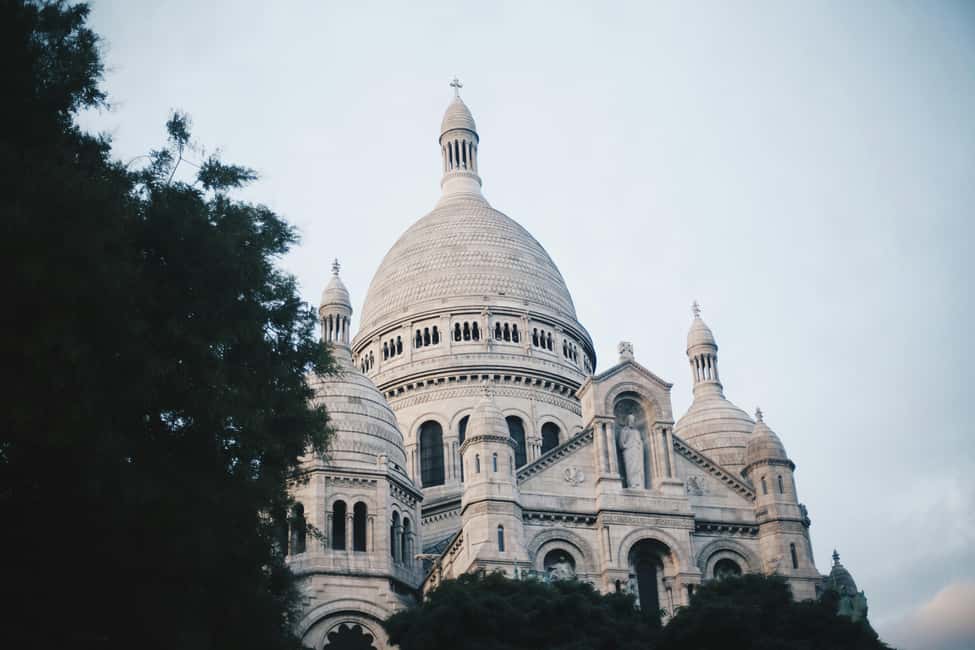
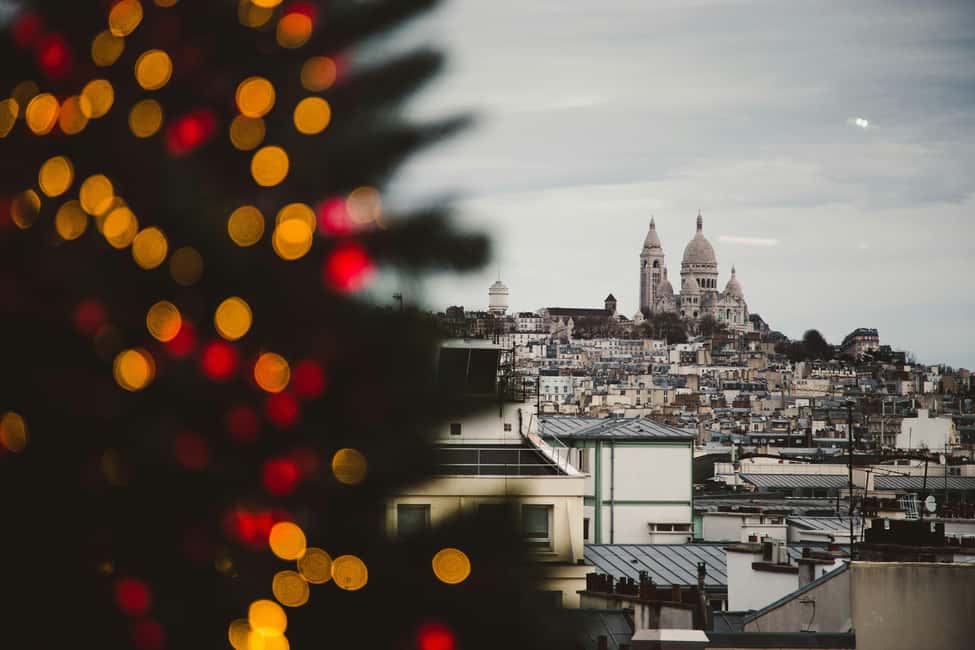
After Place du Tertre, you reach Sacré-Cœur Basilica. Here’s an important detail: the guide will drop you at Sacré-Cœur and will not accompany you inside the church, giving you time to explore on your own. For me, that’s a plus because Sacré-Cœur is one of those places where you might want to go at your own rhythm—linger, look around, and then step back out for the views.
Plan for the walk up. This area can feel steep, and two hours still includes slope. Your legs will notice. But the payoff is clear: panoramic views of Paris from the Sacré-Cœur area are the kind of finish that makes the effort feel worth it.
Practical approach: after you arrive, take a few minutes to look for the best view spots before you settle into photos. Crowds move fast here.
Price and Value: Is $46 Worth Two Hours of Montmartre?
At $46 per person for about two hours, the value comes from the density of stops plus the story connection between them. You’re not only seeing the big names—you’re also getting the smaller-but-meaningful landmarks like Van Gogh’s house, La Bateau-Lavoir, Clos Montmartre, and Lapin Agile.
That mix is what makes this feel worth it. A cheaper option might only hit a few highlights. A longer private tour might slow down for every interior space. This one hits the sweet spot for people who want a strong Montmartre overview with enough context to enjoy the neighborhood even after the tour ends.
Also, the guide is live and English, which matters in a place where street names and local references can otherwise blur together. In past departures tied to this walk, guides such as Perkin and Pierre were praised for putting real effort into explanation and keeping the pace manageable.
Two things to factor in: meals and time. Meals and drinks aren’t included, and the tour is tightly timed, so you’ll want to grab something before or after. If you need long breaks at cafés, you might feel the schedule.
Bottom line: if you want a compact Montmartre story tour that still leaves you with a satisfying finish at Sacré-Cœur, $46 is reasonable.
Who Should Book This Walk (and Who Might Want Another Option)
This is a great fit if:
- You like walking tours with clear stops and street-level atmosphere
- You want Montmartre beyond just Moulin Rouge and selfies
- You enjoy art-related locations, from Van Gogh to working studio spaces
- You want panoramic views without spending a full day routing around the hill
It’s less ideal if:
- You hate uphill walking, even short segments
- You need a very slow pace with long indoor time blocks
- You’re looking for included meals or long museum hours
There’s also a note that it’s not suitable for people over 95 years, which matters for planning. And the tour has basic conduct rules: alcohol and drugs are not allowed, and audio recording is not allowed. If you rely on recording devices, plan for notes instead.
Should You Book This Montmartre Tour?
I’d book this if you want a smart, two-hour Montmartre overview that includes both iconic and offbeat stops: Wall of Love, Van Gogh’s house, La Bateau-Lavoir, Dalida’s areas, the windmill, the pink café, Clos Montmartre, Lapin Agile, Place du Tertre, and then Sacré-Cœur views.
If your ideal day is slow and deeply interior, you might choose something longer. But for most people, this walk hits the practical sweet spot: it gives you context fast, keeps the route efficient, and ends with a payoff you can feel—Paris spread out under you from Sacré-Cœur.
FAQ
Where does the tour meet?
You meet in front of the Blanche Metro Station, Line 2. The guide will have a flag with The Perfect Vacation logo.
How long is the Montmartre walking tour?
The tour lasts 2 hours.
Is the tour guided in English?
Yes, it’s a live tour guide in English.
Which landmarks are included during the walk?
You’ll visit or stop at Van Gogh’s house, the I Love You Wall, La Bateau-Lavoir, Place Dalida (photo stop), the Moulin de la Galette, La Maison Rose, Clos Montmartre (secret vineyard discovery), Lapin Agile Cabaret, Place du Tertre, and you’ll reach Sacré-Cœur Basilica.
Does the guide go inside Sacré-Cœur with you?
No. The guide will drop you at Sacré-Cœur and will not accompany you inside the church.
Are meals or drinks included?
No, meals and drinks are not included.
Is there any uphill walking?
You should be prepared for some uphill walking.
Are there any restrictions on recording or alcohol?
Alcohol and drugs are not allowed, and audio recording is not allowed.
What is the cancellation policy?
You can cancel up to 24 hours in advance for a full refund.