REVIEW · PARIS
Paris Louvre Guided Tour To Mona Lisa
Book on Viator →Operated by Adventour · Bookable on Viator
Skip the Louvre chaos with this guided highlights loop. You’ll hit the Mona Lisa and a stack of crowd magnets in about 1–2 hours, with your Louvre admission and guide handled. The route also stitches in a surprising mix, from ancient Egypt to French monarchy scenes.
Two things I really like: you get a tight, efficient sweep of major works (not just the one-photo-stop routine), and the tour is small-group sized with up to 25 people, so the guide can actually move with you and answer questions. One drawback to keep in mind: the level of detail can swing depending on the guide and the day’s logistics, and if your group is small, you may not receive audio headsets.
In This Review
- Key points before you go
- Entering The Louvre: where this tour starts and why it matters
- Price and value: what your $95-ish Louvre ticket covers
- The highlight route: Mona Lisa, Venus de Milo, and Nike
- Stop 1: La Joconde (the Mona Lisa)
- Venus de Milo
- Winged Victory of Samothrace (Nike of Samothrace)
- From Napoleon to the July Revolution: major French paintings you’ll actually remember
- The Coronation of Napoleon (Le Sacre de Napoléon)
- Liberty Leading the People (La Liberté guidant le peuple)
- The Raft of the Medusa (Le Radeau de la Méduse)
- Ancient Egypt stops you with the Large Sphinx of Tanis
- The guide factor: small-group access, headset reality, and how it can affect your experience
- Timing reality check: skip-the-line doesn’t mean zero lines
- Who this Louvre Mona Lisa tour suits best
- Should you book this Louvre Mona Lisa tour?
- FAQ
- How long is the Paris Louvre guided tour to the Mona Lisa?
- Is the tour in English?
- Does the price include entry to the Louvre?
- Where does the tour meet, and where does it end?
- What’s the group size?
- Are headsets or audio devices included?
- Is admission free for everyone?
- What if the weather is bad?
- Can I cancel and get a full refund?
Key points before you go
- Highlights that cover more than the Mona Lisa, including Venus de Milo and Winged Victory of Samothrace
- Ticket included (Louvre adult admission is part of what you pay)
- English guided tour with a small-group feel (max 25 travelers)
- Covers big eras, from Egyptian sculpture to major French paintings
- Skip-the-line access exists, but security and opening-time delays can still change wait times
Entering The Louvre: where this tour starts and why it matters
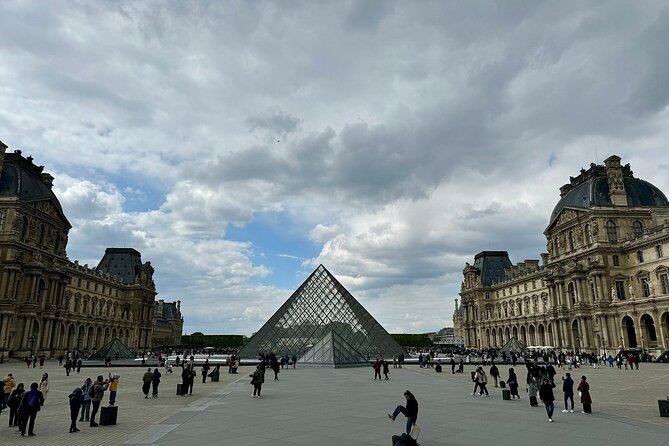
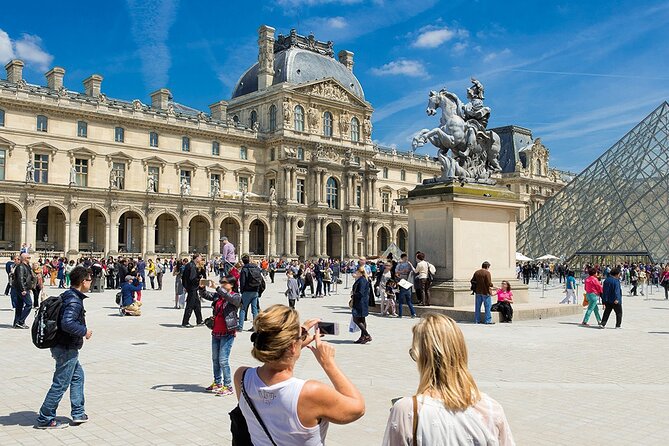
The tour starts at Arc de Triomphe du Carrousel, Pl. du Carrousel (75001). That’s a good choice because you’re already in the Louvre zone where the main entrances and transit options are nearby. The fact that the tour ends back at the same meeting point is underrated too. When you’re done, you’re not stuck figuring out your way out while your feet are busy filing a complaint.
Practical tip: plan to arrive a bit early. Even with skip-the-line style access, the Louvre has its own rhythm—security checks and controlled entry can stretch or shrink based on the day.
You can also read our reviews of more guided tours in Paris



Price and value: what your $95-ish Louvre ticket covers
This tour costs $95.03 per person, and it’s not just a “guide for the highlights.” Your price includes all fees and taxes plus your ticket to the Louvre, with €22 entrance ticket for adults called out as part of what you’re paying. So you’re essentially buying two things together: organized access and a guide to interpret what you’re seeing.
Is it a bargain? For many visitors, yes—because the Louvre can swallow hours fast, and buying a guided route helps you avoid time-wasting wandering. But it’s also important to manage expectations. This isn’t a slow museum seminar. The tour time is about 1–2 hours (and the itinerary overview lists about 1 hour at the Louvre area), so the value is in efficiency and clarity, not in deep study of every room.
Who gets the best deal? People who want the strongest “greatest hits” quickly, and who prefer a guided narrative over self-planning with a map.
The highlight route: Mona Lisa, Venus de Milo, and Nike
Your tour is built around the biggest visual targets, but it’s not only about eye-candy. It’s a guided walkthrough of key moments and styles—Renaissance genius, ancient Greek ideals, and Hellenistic drama.
Stop 1: La Joconde (the Mona Lisa)
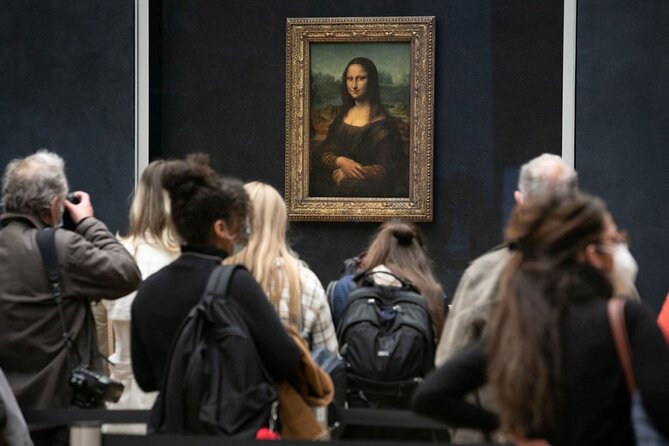
You’ll focus on Leonardo da Vinci’s portrait, La Joconde, also known as the Mona Lisa. This painting is famous for a reason: it’s small compared to what your brain expects from all the postcards, and the details reward looking up close. The guide’s job here is to help you notice what people normally miss—like how the expression shifts depending on your angle and where you stand.
A key practical point: the Mona Lisa area is one of the tightest, busiest zones in the museum. So the value of a guide is not just explanation—it’s helping you navigate the crowd flow without losing your whole time window.
Venus de Milo
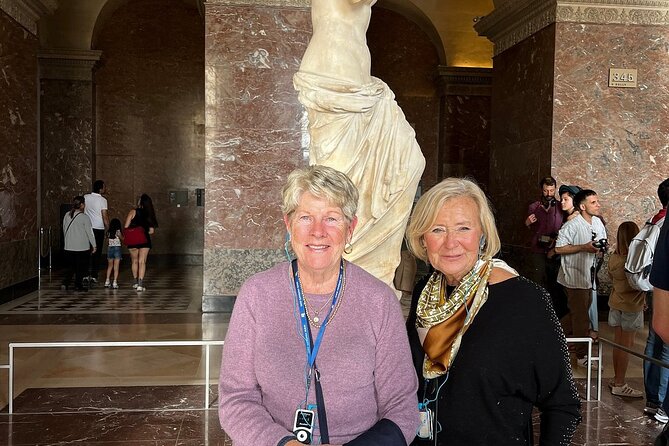
Next up is the Venus de Milo, the ancient Greek statue associated with Aphrodite. It’s instantly recognizable, and it’s also a lesson in how art history often arrives with partial clues. The statue is missing arms, which changes how you read the pose and the expression. Your guide should help you look at the work as it exists today, not as an incomplete “what if.”






Winged Victory of Samothrace (Nike of Samothrace)
Then you’ll see Winged Victory of Samothrace, the goddess Nike standing on the prow of a ship. This is one of the most energetic sculptures in the Louvre—motion carved into stone. If the guide does their job well, you’ll understand why Hellenistic art feels more dramatic than earlier styles: the clothing folds, the stance, and the sense of movement all work together.
The big takeaway: the route is moving you from Renaissance portrait psychology to classical beauty to Hellenistic action. That’s a lot of contrast for one short tour, and it’s exactly what keeps it from feeling repetitive.
From Napoleon to the July Revolution: major French paintings you’ll actually remember
After the sculpture stops, the tour shifts to famous painting powerhouses. Even if you’re not a museum-person, these titles hit hard because they’re tied to major moments in France’s political story.
The Coronation of Napoleon (Le Sacre de Napoléon)
You’ll see Jacques-Louis David’s grand painting of Napoleon’s coronation. This isn’t just art—it’s propaganda in paint. The staging, the figures, the ceremonial structure of the scene: it all funnels your eyes toward authority and legitimacy. A guide’s commentary matters here, because the painting is crowded with details that you’d likely miss if you were just trying to snap a photo.
Liberty Leading the People (La Liberté guidant le peuple)
Eugène Delacroix’s Liberty Leading the People is the next emotional lift. It’s connected to the July Revolution of 1830, and that historical context helps the scene click. You’ll recognize the mood even if you don’t know the exact story—this is a painting about momentum, not quiet.
The Raft of the Medusa (Le Radeau de la Méduse)
Then comes Théodore Géricault’s The Raft of the Medusa, one of those works that feels like a nightmare you can’t look away from. The subject—survival and aftermath after disaster—gives the painting a strong emotional core. Again, a guide helps here by pointing out how the composition turns chaos into a readable structure.
If you’re the kind of visitor who wants a museum to feel like a story, this part of the itinerary is where it usually lands best.
Ancient Egypt stops you with the Large Sphinx of Tanis
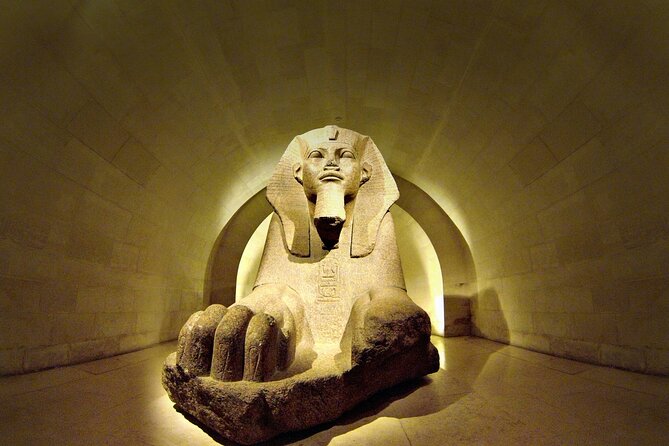
One of the coolest surprises in this tour is that you also get a look at Egyptian art, not just French highlights. The Large Sphinx of Tanis is the featured piece, an ancient Egyptian sculpture that shows the museum’s deep collection beyond Europe’s later centuries.
Why this matters: many first-time Louvre visitors default to a “Renaissance + a few classics” mindset. Adding an Egyptian monument-like presence changes the way you understand the Louvre. It’s not only famous names—it’s also scale, time, and cultural reach.
The guide factor: small-group access, headset reality, and how it can affect your experience

This is where your experience can swing.
On the positive side, a strong guide can make even a fast loop feel personal and instructive. I’ve seen guidance here from people like Violet—named as an outstanding guide—where the vibe is that you could keep learning long after the tour ends. Another guide name that comes up is Aaron, showing that the tour staffing can include some serious talent.
On the practical side, audio equipment depends on group size. The tour operator notes that audio devices are provided for groups more than 5 people. If you’re in a smaller group (for example, a group of 4), you might not have headsets. That can matter a lot in a museum where you’re constantly stopping, moving, and competing with ambient noise.
My advice: if you’re hard of hearing or you know you’ll need audio clarity, ask ahead whether your tour size will qualify for audio devices. If you don’t have headsets, position yourself so you’re near the front and don’t stand at the edges where you lose both sound and sightlines.
Timing reality check: skip-the-line doesn’t mean zero lines

Your ticket includes admission and your tour is designed to help you avoid the most brutal entry crush. But the Louvre is still the Louvre. Security queues and entrance routing can change based on opening timing, crowd levels, and what the staff need to do that day.
In one scenario described to the company, a late opening made lines much bigger than expected, and skip-the-line still meant you could hit a wait. In another case, time was lost when entrances didn’t line up smoothly with the group.
What you can control: plan for flexibility. If you treat this like a flexible window rather than a guaranteed exact timeline, you’ll have a better day. And if you’re traveling on a tight schedule, consider building in buffer time afterward.
Who this Louvre Mona Lisa tour suits best
This tour is a strong match if you:
- Want the Mona Lisa and top masterpieces without spending half your day figuring out where to go
- Prefer guided explanation over reading plaques while your feet ache
- Like a short, structured route that covers sculpture and painting in one session
- Appreciate a small-group format (up to 25 people)
You might want to think twice if:
- You’re hoping for a deep, slow analysis of a few works only (this is more highlights sprint than full scholarship)
- You know you’ll struggle in crowded museum environments unless you have headsets and clear audio
- You’re extremely sensitive to timing shifts around security
Should you book this Louvre Mona Lisa tour?
If you want the Louvre’s headline masterpieces in a short amount of time, this is a sensible way to spend an hour or two. The best part is the balance of famous works across different eras, plus the fact that your Louvre admission is included in the price.
I’d book it if you can handle a crowd and you’re okay with a highlights-style narrative. I’d be cautious if you need guaranteed audio support or you’re expecting museum-level depth for the price. If that’s your style, you might prefer a different approach with fewer stops and more time per artwork.
FAQ
How long is the Paris Louvre guided tour to the Mona Lisa?
The duration is listed as about 1 to 2 hours.
Is the tour in English?
Yes, the tour is offered in English.
Does the price include entry to the Louvre?
Yes. Your ticket to the Louvre is included, and the adult entrance ticket amount is listed as €22.
Where does the tour meet, and where does it end?
It starts at Arc de Triomphe du Carrousel, Pl. du Carrousel, 75001 Paris, France, and it ends back at the meeting point.
What’s the group size?
The experience has a maximum of 25 travelers.
Are headsets or audio devices included?
The operator indicates audio devices are provided for groups more than 5 people. If your group is 5 or smaller, you might not have audio devices.
Is admission free for everyone?
Free admission applies to visitors under 18 and EEA residents under 26, with valid ID and proof of residency.
What if the weather is bad?
The experience requires good weather. If it’s canceled due to poor weather, you’ll be offered a different date or a full refund.
Can I cancel and get a full refund?
Yes. You can cancel up to 24 hours in advance for a full refund.