REVIEW · PARIS
Paris: La Défense Modern District Walking Tour
Book on GetYourGuide →Operated by Cognosimo Tours · Bookable on GetYourGuide
Modern Paris hides in plain sight. A quick walk through La Défense shows you how Paris sprouted a full-on modern financial city around the Grande Arche, then lines it up with some of the most famous monuments in France. I love the contrast you get on the ground: sleek buildings and outdoor public art beside the broader Paris feeling of order and scale, plus the clear story behind the district’s design. One possible drawback: the start point at the Grande Arche de la Défense can be a little confusing, so build in extra time to get oriented.
This is a 75-minute tour, long enough to make sense of the layout and still short enough to fit into a busy day. You’ll go with a live guide in French or English, keeping the focus on urban planning and modern architecture rather than just pointing at a skyline.
One more practical note: this walking tour isn’t suitable for people with mobility impairments or wheelchair users. If that applies to you, it’s worth looking for a different Paris plan that matches your needs.
In This Review
- Key takeaways before you go
- Entering La Défense: a financial district you can read like a map
- The Grande Arche alignment: why it feels so intentional
- The 1960s urban plan: how Georges Pompidou shaped the district
- Avant-garde architecture and what to look for on the sidewalk
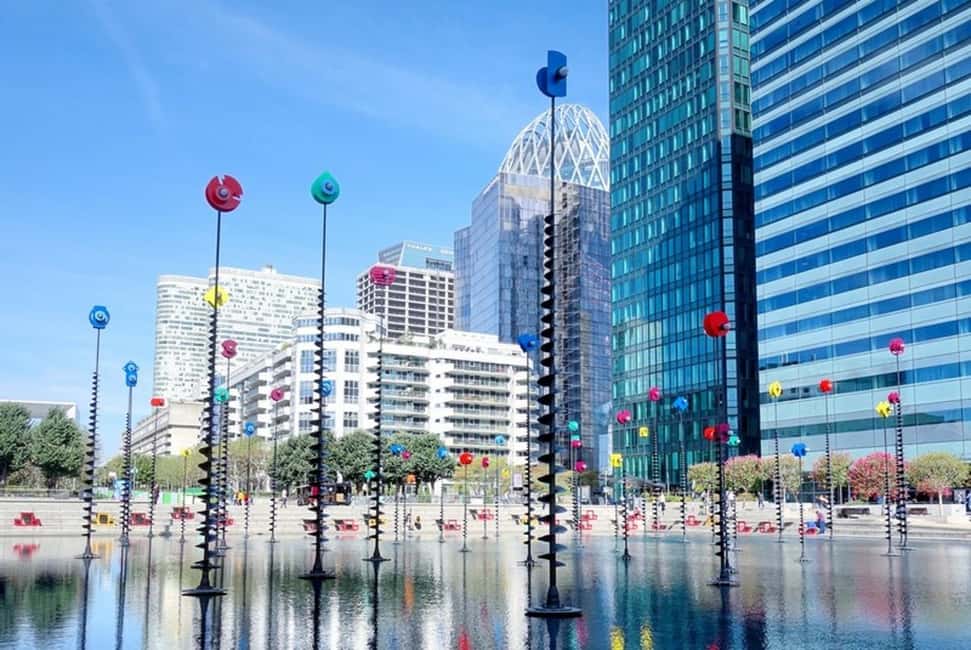
- Modern sculptures and squares: the district’s outdoor gallery effect
- Classic Paris versus contemporary development: the contrast you came for
- Price and value: is $100 for 75 minutes worth it?
- Practical details that affect your day
- Who should book this tour?
- Should you book La Défense: Modern District Walking Tour?
- FAQ
- Where do I meet for the La Défense walking tour?
- How long is the walking tour?
- What are the main stops and sights included?
- What languages are available for the live guide?
- Is the tour private or group-based?
- Is it suitable for wheelchair users or people with mobility impairments?
- Can I cancel and get a full refund?
- Does it offer reserve now and pay later?
Key takeaways before you go
- Grande Arche meets Paris’s big monument axis, including the Arc de Triomphe and the Place de la Concorde
- A 1960s urban plan explains why La Défense looks the way it does today
- Modern sculptures and plazas give La Défense a public-art feel, not just office towers
- Clear contrast mode: classic Paris perspective shifts when you’re standing in the financial district
- Live guide in French or English makes the architecture easier to read
- Meet at the Grande Arche and arrive early in case finding the guide takes an extra minute
Entering La Défense: a financial district you can read like a map
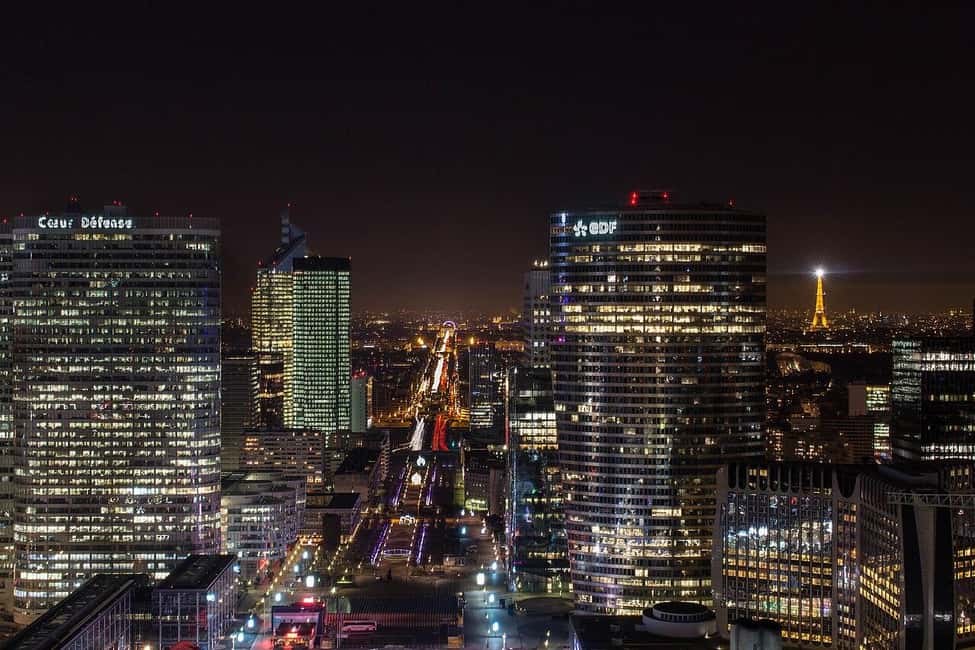
La Défense is Paris’s modern workplace city, and the best way to understand it is on foot. In just 75 minutes, you don’t just see buildings—you start to understand the logic of the space: where people move, where the public squares sit, and how the district was shaped for big-scale development.
What I like about this kind of walking tour is that it turns a place that can feel intimidating (all that glass, all those angles) into something you can interpret. You’ll connect what you see—architecture, sculpture, plazas—to why it was built and what problem it was meant to solve.
And because this is a private group experience, the pace tends to feel more manageable. It’s not a race through a photo checklist. You can ask the guide to slow down when something looks confusing, especially around the modern design language of the district.
You can also read our reviews of more walking tours in Paris



The Grande Arche alignment: why it feels so intentional
The tour centers on the Grande Arche de la Défense, and it’s not there by accident. The structure is a monumental symbol of modernity, and it’s aligned with major points in Paris—the Arc de Triomphe and the Obelisk and the Place de la Concorde. Even if you’re not a “monument person,” you’ll feel the idea: this district isn’t trying to hide from Paris’s historic geometry. It’s trying to join it.
When you’re standing there, the Grande Arche works like a visual anchor. It gives you a reference point so the rest of La Défense makes more sense: the district reads like a planned environment built around an axis and a sense of civic importance.
One practical tip: spend a moment at the start just looking around before you start walking. When you take in the alignment idea first, the rest of the tour feels less like random modern architecture and more like a coordinated design vision.
The 1960s urban plan: how Georges Pompidou shaped the district
Here’s the big idea you’ll hear from your guide: La Défense didn’t just happen. The urbanization project began in the 1960s under the direction of Georges Pompidou, with architects such as Jean Prouvé and Oscar Niemeyer involved. That’s a crucial piece of context, because it changes how you view everything you’re about to walk past.
Instead of seeing isolated towers, you start seeing a single long-term plan: a new kind of district for work and business, designed with a modern outlook and built at a scale that was hard to match anywhere else in central Paris.
This matters for value. A lot of architecture tours fail because they show you what’s there but don’t explain why it exists. Here, the “why” is part of the core experience. Once you know the district was conceived in that period and by that leadership circle, the mix of design choices feels less arbitrary and more like a set of decisions made for a specific future.
Avant-garde architecture and what to look for on the sidewalk
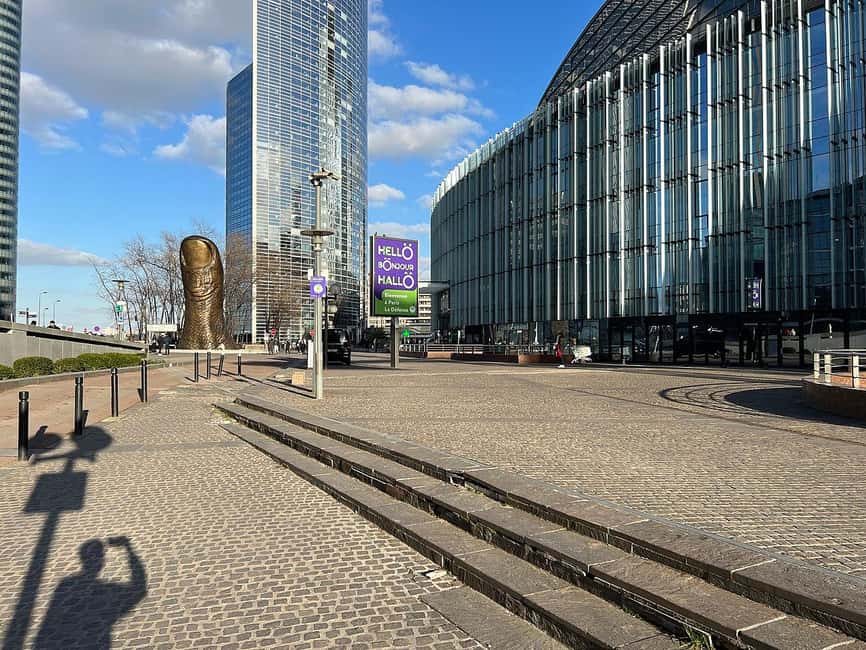
La Défense is often described as a cluster of skyscrapers, but the walking tour approach helps you notice the details that are easy to miss from a distance. You’ll move through areas that show off avant-garde architecture, and you’ll get help reading the district’s modern language.
As you walk, I’d focus your attention on three things:
- Public space planning: how plazas and squares are arranged for pedestrians versus cars and offices
- Material and form: how modern buildings use clean lines and large surfaces to feel different from older stone streets
- Scale and repetition: how office districts rely on repeating patterns to create order at a massive size
That’s how you get real contrast. Classic Paris often feels intimate because street proportions and older building stock keep you close to the city’s “human” layer. La Défense feels different because it was designed to handle crowds and business functions at a distance from the traditional street fabric.
If you’re visiting with someone who thinks modern architecture is just shapes and glass, this kind of tour can flip that. The design choices start to look like answers to practical questions about movement, business growth, and the idea of a modern Paris.
Modern sculptures and squares: the district’s outdoor gallery effect
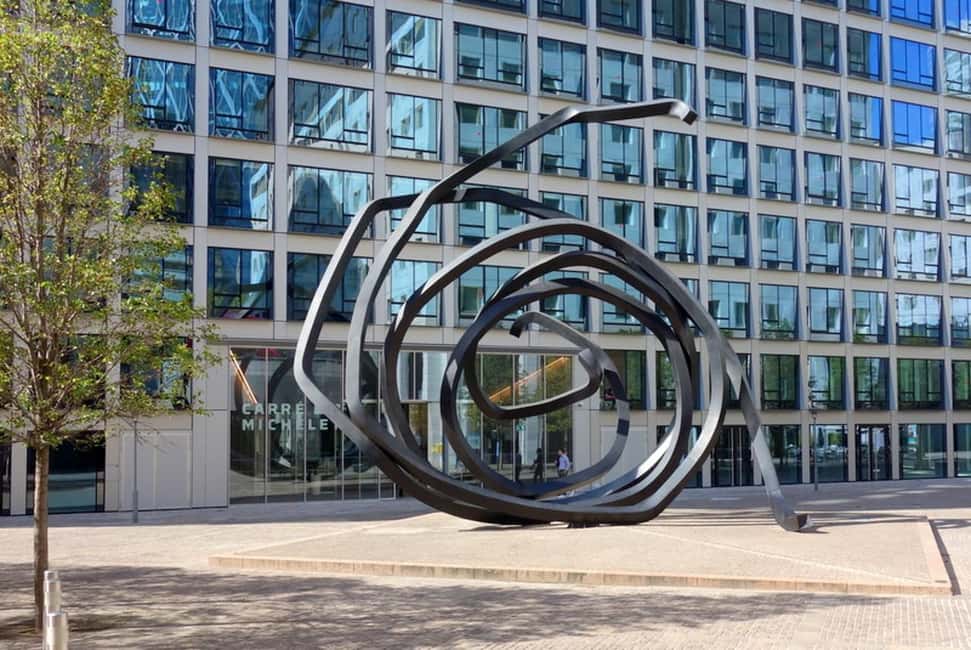
One of the most enjoyable parts of the experience is the chance to explore the modern sculptures and squares that belong to La Défense, not just the buildings. Outdoor art changes how you feel in a place like this. It softens the “office campus” vibe and gives you spots where the district shows off culture, not just commerce.
From what’s emphasized during the tour, you can expect to spend time in spaces that feel like outdoor rooms—places where you can pause, look up, and then glance sideways at the urban art and sculpture. That pause is part of the value. Without it, people rush through La Défense like it’s only for commuters.
Also, this is a good tour for people who like photography but don’t want to spend their whole time chasing angles. The guide points you toward specific zones and helps you see the district in layers: monument-scale architecture first, then the smaller human-scale details like sculpture and plazas.






Classic Paris versus contemporary development: the contrast you came for
The heart of the appeal is the comparison. You’re in Paris, but the district feels like a separate era and a separate design philosophy. That’s not a flaw. It’s the point.
This tour makes that contrast tangible by keeping the narrative tied to urban development. You learn about the project that began in the 60s and then you walk through the results. The result is a real sense of how Paris can grow into new identities without abandoning its grand symbolism.
If you’ve already done time in older neighborhoods, La Défense is a smart counterweight. It helps you see Paris not only as historic postcard beauty but also as a city that planned, invested, and built for the future.
And if you’re worried it will just be “towers, towers, towers,” don’t. The tour includes the monumental Grande Arche focus plus the district’s public sculpture and squares. That mix makes the 75 minutes feel like more than a quick stop.
Price and value: is $100 for 75 minutes worth it?
At $100 per person, this isn’t an impulse buy like a free self-guided walk. The key question is what you get for that price, and here the value is mostly in interpretation.
You’re paying for:
- a guided walk through La Défense’s planned environment
- a visit centered on the Grande Arche
- explanations about the urbanization project starting in the 1960s
- context linking modern architecture to Paris’s historic monument axis
If your goal is to understand how and why the district developed, a guide makes the time feel efficient. Without that framework, La Défense can blur together—easy to see, harder to decode.
On the other hand, if you mainly want panoramic skyline views and you’re happy reading a map yourself, you might find it less cost-effective. This is a “learn the place” tour, not just a “see the view” tour.
For me, the strongest argument is simple: $100 is easier to justify when the explanation is clearly built into the experience. The tour’s short duration suggests it’s designed to be focused rather than stretched.
Practical details that affect your day
This tour is a private group experience with a live guide. Expect the focus to stay on the walk and the key sights: La Défense and the Grande Arche, plus time spent in modern sculptural and square areas.
It’s also a walking tour, so wear shoes you’d happily use for real city walking. The experience is not suitable for wheelchair users, so don’t plan on “maybe it’ll work out” if mobility is an issue.
Meeting point matters here. The tour asks you to meet at Grande Arche de la Défense, and one real-world consideration is that some people find it slightly tricky to locate the guide at the start. My advice is to arrive early enough that you’re not rushed—stand near the Grande Arche and confirm you’re at the correct entrance area before you start wondering.
Who should book this tour?
I’d especially recommend this for you if you:
- like modern architecture and want context, not just visuals
- enjoy urban planning stories and city-making decisions
- want a contrast day between historic Paris and contemporary development
- travel with someone who loves structure and design details
It’s also a solid choice if you’re short on time but still want more than a quick photo stop. Seventy-five minutes hits a nice sweet spot: enough time to understand the “why,” not so long that your feet—and patience—start negotiating.
If you’re primarily into traditional landmarks and museums, you might not love the modern-forward theme. In that case, treat La Défense as a contrast workshop, not your main act.
Should you book La Défense: Modern District Walking Tour?
If you want Paris that goes beyond postcards, I think you’ll enjoy it. This tour gives you the modern story in a short window: Grande Arche’s monument axis, the 1960s planning behind La Défense, and the district’s public squares and sculptures that make it feel like a place to walk, not just offices to pass.
I’d skip it if you can’t manage a walking-focused experience, since it’s not suitable for wheelchair users and mobility impairments. And if you’re mainly after skyline views with zero interest in context, you may decide the guide time isn’t necessary.
FAQ
Where do I meet for the La Défense walking tour?
You meet at Grande Arche de la Défense.
How long is the walking tour?
The duration is 75 minutes.
What are the main stops and sights included?
The tour includes a guided walk through La Défense, a visit focused on the Grande Arche, and time exploring modern sculptures and squares.
What languages are available for the live guide?
The live tour guide offers French and English.
Is the tour private or group-based?
It’s a private group experience.
Is it suitable for wheelchair users or people with mobility impairments?
No. The tour is not suitable for people with mobility impairments or wheelchair users.
Can I cancel and get a full refund?
Yes. You can cancel up to 24 hours in advance for a full refund.
Does it offer reserve now and pay later?
Yes. You can reserve your spot and pay nothing today.