REVIEW · PARIS
Marais semi private walking tour
Book on Viator →Operated by Paris in person · Bookable on Viator
Paris’s Marais hits hard fast. In just two hours, you’ll get an organized walk through the neighborhood’s big landmarks and quieter corners, with an art-historian guide to translate what you’re seeing. I like that the group stays small at 10 people max, so the walk doesn’t feel like a cattle chute.
What really makes this one work is the mix of famous stops and high-impact background you won’t find on a phone map. You’ll learn why places like Les Halles and the Fontaine des Innocents matter, and how the Marais evolved into what you recognize today.
One consideration: this is a street-and-square tour, so you don’t go inside the museum at Centre Pompidou or enter City Hall. If you were hoping for indoor time, you’ll want to plan those separately.
In This Review
- Key takeaways
- Why the Marais works best with a guided walk
- Meet the art historian guide and the “small group” advantage
- Walk the route: from Les Halles to Bastille step by step
- Stop 1: Les Halles, the belly of Paris
- Stop 2: Fontaine des Innocents, the oldest fountain in Paris
- Stop 3: Centre Pompidou from the outside
- Stop 4: Hotel de Ville, City Hall’s historic importance
- Stop 5: La Rue des Rosiers, Jewish Paris in a single street
- Stop 6: The Historical Library and the oldest paved street
- Stop 7: Jardin de l’Hotel de Sully, 17th-century gardens and calm
- Stop 8: Place des Vosges, the square everyone talks about
- Stop 9: Place de la Bastille, ending at a historic pivot point
- Outside-only stops: how the Pompidou and City Hall approach saves your time
- What to expect: timing, pace, and getting your best experience
- Price and value: is $171.96 worth it?
- Who this Marais semi-private walk is for
- Should you book this Marais walk?
- FAQ
- How long is the Marais semi private walking tour?
- Where does the tour start and end?
- What is the group size limit?
- Is there a museum visit included at Centre Pompidou?
- Do you enter City Hall during the Hotel de Ville stop?
- Are snacks included?
- Is the ticket mobile?
- Are service animals allowed?
- Is the tour suitable for people with moderate physical fitness?
Key takeaways

- Small group (10 max) for real conversation instead of constant head-down marching
- Professional art historian guide who explains the why, not just the what
- Centre Pompidou and Hotel de Ville from the outside with context (no museum entry)
- Stops that map the Marais story from Les Halles to Place des Bastille
- A mix of Paris icons and specific community sites, including La Rue des Rosiers
Why the Marais works best with a guided walk
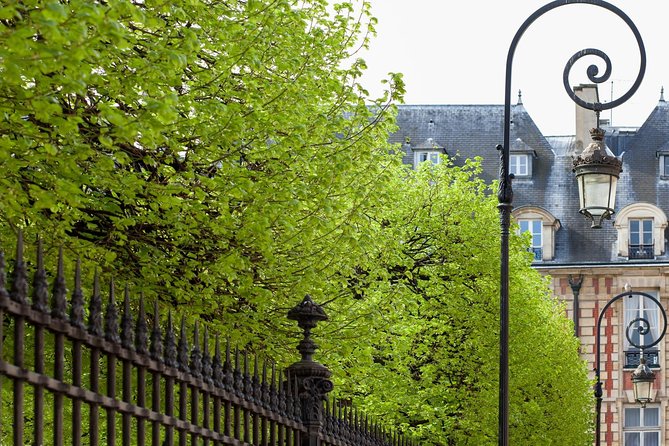
The Marais can feel like a photo album: pretty streets, dramatic facades, and lots of name recognition. But the spell breaks if you’re just standing there guessing what you’re looking at. With a guide, you get the connections—what changed, what replaced what, and why certain streets and squares became social centers instead of random backdrops.
This tour is designed for quick orientation. You start in the Les Halles area—historically known as the belly of Paris—and you end in the Bastille zone. That’s a smart shape for a first-time Marais visit: you see the neighborhood’s main visual beats while still getting enough smaller details to make the big sights feel earned.
And because it’s semi-private, you’re not stuck waiting for the slowest person to catch up. The pace stays human.
You can also read our reviews of more walking tours in Paris



Meet the art historian guide and the “small group” advantage

This walk is led by a live professional art historian guide. That matters more than people think. You’ll get explanations tied to architecture, urban change, and the cultural meaning of what’s in front of you—rather than a generic “tourist facts” script.
It also helps that the group is capped at 10 travelers. In a crowd, you hear only fragments. In a small group, you catch the details and you can ask questions without feeling like you’re interrupting.
In the guide styles, you can see the difference. Names that come up in people’s experiences include Tina, Isadora, and Boris. The common thread: clear English, quick answers, and a way of tying past choices to how the Marais looks today.
Walk the route: from Les Halles to Bastille step by step
This is a mostly outdoor stroll through neighborhoods and landmarks that sit close enough together to feel like a single story. The full route takes about two hours, with shorter stops to keep things moving.
Here’s what you’ll get at each key moment and why it’s worth your time.
Stop 1: Les Halles, the belly of Paris
You begin at Café Étienne on Rue de Turbigo, near the start of the Marais story. From there, you head into Les Halles, an area long associated with Paris’s daily life and constant activity. The phrase belly of Paris isn’t just poetry. It’s a reminder that markets, movement, and commerce helped shape how this part of the city grew.
Even if you’ve walked past the modern structures, the guide helps you connect the dots: this wasn’t always a “pretty neighborhood detour.” It was about feeding a city and moving goods through it.
Stop 2: Fontaine des Innocents, the oldest fountain in Paris
Next comes the Fontaine des Innocents, described as the oldest fountain in Paris. On the surface, it’s a beautiful stop. With a guide, it becomes more interesting: old infrastructure like this signals how priorities shift over time—what the city wanted to highlight, and what it wanted people to gather around.
It’s also the kind of landmark that works as a reset. After Les Halles energy, you get a calmer, more focused moment to absorb one specific piece of history.
You can also read our reviews of more private tours in Paris






Stop 3: Centre Pompidou from the outside
Centre Pompidou is the “modern turn” of this area. You’ll talk about the museum of contemporary art and how it changed this part of the city. Important detail: you do not enter the museum on this tour. You’ll see it from the outside and focus on what the building brought to the neighborhood.
This is a smart choice for a two-hour walk. It gives you the impact without eating up time in queues or inside galleries.
Stop 4: Hotel de Ville, City Hall’s historic importance
Then you head to Hotel de Ville. It’s described as the second most important institution and the second most important historic site of Paris in the context of this tour’s focus. You also won’t enter City Hall. The guide explains the significance, noting that entry is possible only one day a year, which is why this tour stays outside.
So instead of thinking of this as a missed opportunity, think of it as a way to keep your schedule intact. You still learn the meaning, and you still move on before the walk becomes a marathon.
Stop 5: La Rue des Rosiers, Jewish Paris in a single street
La Rue des Rosiers is the center of the Jewish community of Paris, and it’s one of the most “lived-in” stops on the route. You’re not just seeing buildings. You’re seeing a neighborhood identity expressed through street life.
If you want Paris that feels human—community, commerce, and culture sharing the same sidewalk—this is where you’ll feel it. The guide helps you understand why this street became a focal point.
Stop 6: The Historical Library and the oldest paved street
Next is a very satisfying contrast: the Historical Library of the City of Paris and the oldest paved street in the city. You also get a peek inside a uniquely beautiful 16th-century aristocratic city villa.
This stop is short, but it’s loaded. Old paving is one of those details that visitors often ignore because it doesn’t look like a “main attraction.” With guidance, it becomes proof of how long certain paths and spaces have mattered.
Stop 7: Jardin de l’Hotel de Sully, 17th-century gardens and calm
After all that movement, the Jardin de l’Hotel de Sully gives you space to slow down. This stop is described as a 17th-century aristocratic city villa and its garden. Even if you’re not a garden person, the value here is context: the Marais wasn’t only about streets and crowds. There were also grand residences and designed green space for those with power and money.
You’ll leave with a better sense of why the Marais can look both theatrical and peaceful, sometimes just a few blocks apart.
Stop 8: Place des Vosges, the square everyone talks about
Then you reach Place des Vosges—called by the French and many others as the most beautiful square in the world. That’s a big claim, but it’s also easy to understand. Squares like this are built for long viewing: symmetry, facades, and a sense of “place” that feels intentional.
If you’ve only seen Place des Vosges in photos, this is where the scale lands in real life. The guide’s job is to help you read the architecture instead of just admiring it.
Stop 9: Place de la Bastille, ending at a historic pivot point
Finally, you end at Place de la Bastille. It’s described as one of the most important historic sites in Paris and indeed in the world. Bastille is a natural closing point because it connects the Marais story to larger forces that shaped France.
It’s a strong ending for a walk: you finish with a place that feels like a turning point, not just a landmark.
Outside-only stops: how the Pompidou and City Hall approach saves your time
Some walking tours promise museum-like experiences and then quietly burn your whole day. This one keeps its promise: you learn about Centre Pompidou and Hotel de Ville without entering them. That’s not a downgrade. It’s a time strategy.
For Centre Pompidou, the outside talk still helps you understand why it was such a decisive addition. You’ll see the building and get the urban explanation. For Hotel de Ville, you hear why City Hall matters historically, plus the practical note that entry happens only one day a year.
If you want museums on top of this, you’ll do better by scheduling them separately when you’re not rushing to fit everything into a two-hour window.
What to expect: timing, pace, and getting your best experience
The tour runs about two hours, with stops ranging around 10 to 15 minutes each. That structure is ideal if you want depth without fatigue. It also means your guide can cover multiple themes: markets, fountains, political institutions, art and modern change, and community identity.
The physical level is described as moderate. In real terms, that usually means comfortable walking plus some standing time at monuments and squares. If you have mobility concerns, it’s still smart to wear supportive shoes and plan for uneven sidewalks in older Paris streets.
One practical note: people mention weather effects. If it’s raining, it can be harder to hear the guide and to fully enjoy the neighborhood ambiance. Bring a light umbrella or rain layer if the forecast is questionable, and consider how you’ll keep your phone or camera dry while you listen.
You’ll also use a mobile ticket. That’s usually easy, but make sure your phone is charged enough to show it when you need it.
Price and value: is $171.96 worth it?
At $171.96 per person, this is not a budget walk. But it is priced for two specific things: a guided experience by a professional art historian, and a cap of 10 travelers.
That small-group limit is a big part of the value. In a large group, you pay for the activity but you don’t always get the interaction. Here, you’re more likely to understand the stories in real time and feel like you’re moving with a teacher, not a crowd.
Also, your route mixes major well-known points—Pompidou’s exterior, Place des Vosges, Bastille—with less-obvious historical anchors like Fontaine des Innocents and the oldest paved street. That variety can help you decide what you want to return to later.
What’s not included: snacks. So if you’re doing this as part of a longer day of sightseeing, plan a meal or pick up something nearby before or after.
Who this Marais semi-private walk is for
This tour fits best if you want to:
- Get a first-pass understanding of the Marais beyond postcard views
- Appreciate architecture and urban change, explained in plain terms
- Prefer a small group (10 max) where you can actually hear and ask questions
- See major landmarks plus community and historical stops in one loop
It also works well as a “setup tour.” After this, you’ll have enough context to wander on your own with better instincts: where to linger, what to photograph, and what to look up later.
If you’re mainly chasing indoor museums and tickets, you might feel more satisfied combining this walk with separate museum visits—since this one stays outside.
Should you book this Marais walk?
Book it if you want an efficient, well-paced Marais walking tour with a professional art historian and a small group size that keeps the experience personal. The route hits both the famous icons and the specific details that make the Marais feel like a real neighborhood, not a theme park.
Skip or rethink it if you’re hoping for a museum entry or indoor time inside big attractions. You won’t enter Centre Pompidou or Hotel de Ville here, and snacks aren’t included.
If you’re aiming to understand the Marais quickly and then explore further on your own, this tour is a strong starting point.
FAQ
How long is the Marais semi private walking tour?
The tour lasts about 2 hours.
Where does the tour start and end?
It starts at Café Étienne, 14 R. de Turbigo, 75001 Paris, and ends at Bastille, 75012 Paris.
What is the group size limit?
The tour has a maximum of 10 travelers.
Is there a museum visit included at Centre Pompidou?
No. Centre Pompidou is discussed from the outside, and the tour does not include entering the museum.
Do you enter City Hall during the Hotel de Ville stop?
No. You do not enter City Hall, as entry is possible only one day a year.
Are snacks included?
No, snacks are not included.
Is the ticket mobile?
Yes, the tour uses a mobile ticket.
Are service animals allowed?
Yes, service animals are allowed.
Is the tour suitable for people with moderate physical fitness?
Yes. The tour is described as suitable for travelers with moderate physical fitness.