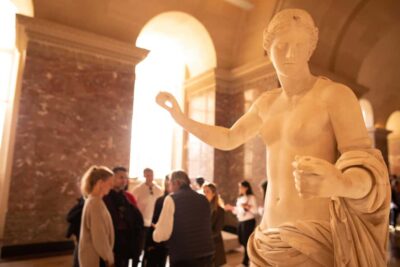
REVIEW · PARIS
Paris: Invalides Dome – Skip-the-Line Guided Museum Tour
Book on GetYourGuide →Operated by Babylon Tours LLC · Bookable on GetYourGuide
The gold dome tells a brutal story. Step into Musée de l’Armée and you get a fast path inside with skip-the-line entry, then a guided walk straight to the heart of France’s military myths and losses.
I especially like how the tour makes the building itself feel like a character, not just a backdrop, and how Napoleon is explained with specifics you can actually picture.
My favorite part is the human touch: I found the narration sharper when the guide is an art historian, and the group stays small—max 8 guests means questions don’t get swallowed. You’ll hear strong guide performances from names like Florent, Mathieu, Anatole, and Daniel. One catch to plan for: there’s a moderate amount of walking, and the semi-private option isn’t suited for those with walking disabilities or wheelchair users.
In This Review
- Key things to know before you go
- Why the Invalides Dome hits harder with a guide
- Entering the Hôtel des Invalides courtyard: history you can walk into
- Louis XIV and the veterans hospital: the site’s real origin
- The cathedral and the walk past artistic tomb stones and graves
- Napoleon’s tomb under the gold dome: what you’ll actually see
- Museum time at Musée de l’Armée: artifacts, recreations, and maps
- How the guides make 2 hours feel focused (not rushed)
- Group size, pace, and luggage limits (the stuff that can make or break it)
- Price check: $128 for skip-the-line and expert interpretation
- When things don’t go as planned: closures and delayed openings
- Who this tour suits best (and who should rethink it)
- A smart add-on tip: plan a classic hot chocolate stop afterward
- Should you book the Paris Invalides Dome guided tour?
- FAQ
- How long is the Paris Invalides Dome skip-the-line guided museum tour?
- What does skip-the-line access mean for this experience?
- Where does the tour start and end?
- How large is the group?
- What languages are available?
- What ID do I need to bring?
- Are large bags or luggage allowed?
- Is the tour wheelchair accessible?
- Can I cancel, and what if the semi-private minimum isn’t met?
- What if the museum is closed or opens later than expected?
Key things to know before you go

- Skip-the-line access gets you into Musée de l’Armée without wasting prime Paris time.
- Napoleon’s tomb sits under the gold dome, and you’ll see it up close with context.
- Louis XIV’s 17th-century “Invalides” origin story ties the site to real military care for veterans.
- Museum focus on Napoleon beyond legend: artifacts, recreations, and military maps.
- Small groups (up to 8) keep the tour interactive instead of lecture-style.
- Moderate walking plus a luggage restriction means light packing helps a lot.
Why the Invalides Dome hits harder with a guide
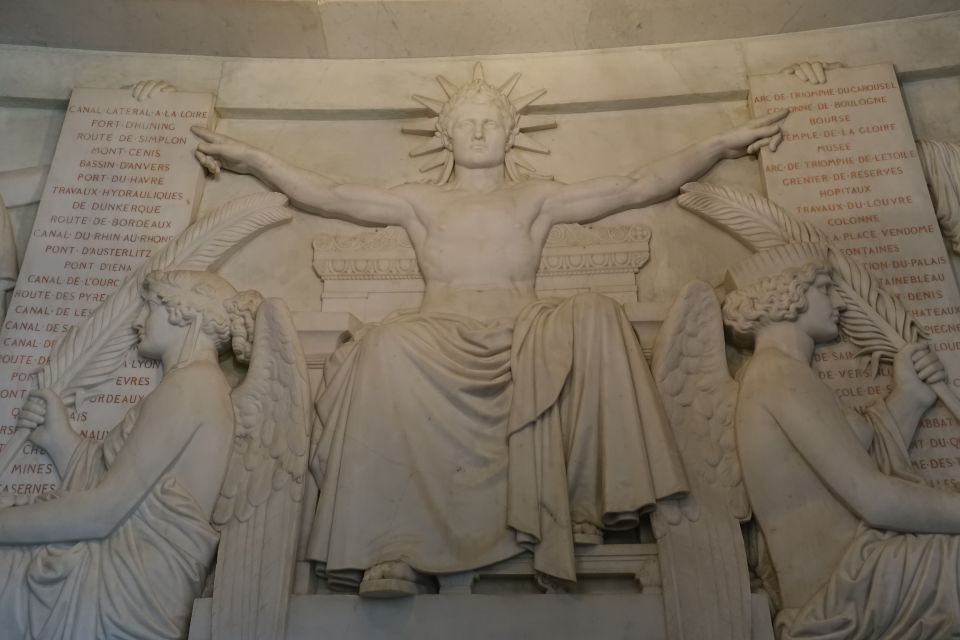
The Musée de l’Armée lives inside the Hôtel des Invalides, a complex built for soldiers and steeped in status, sacrifice, and power. Without a guide, you can still visit, but it’s easy to wander between rooms and miss how the site’s story connects piece by piece.
With a guided format, you get a clear thread: Louis XIV builds the place for troops and veterans, and Napoleon later becomes the figure everyone thinks of when they picture the dome above. Guides are also free to use personal pacing—if you’re the type who likes to ask why an event mattered, this tour style fits that.
You can also read our reviews of more guided tours in Paris



Entering the Hôtel des Invalides courtyard: history you can walk into
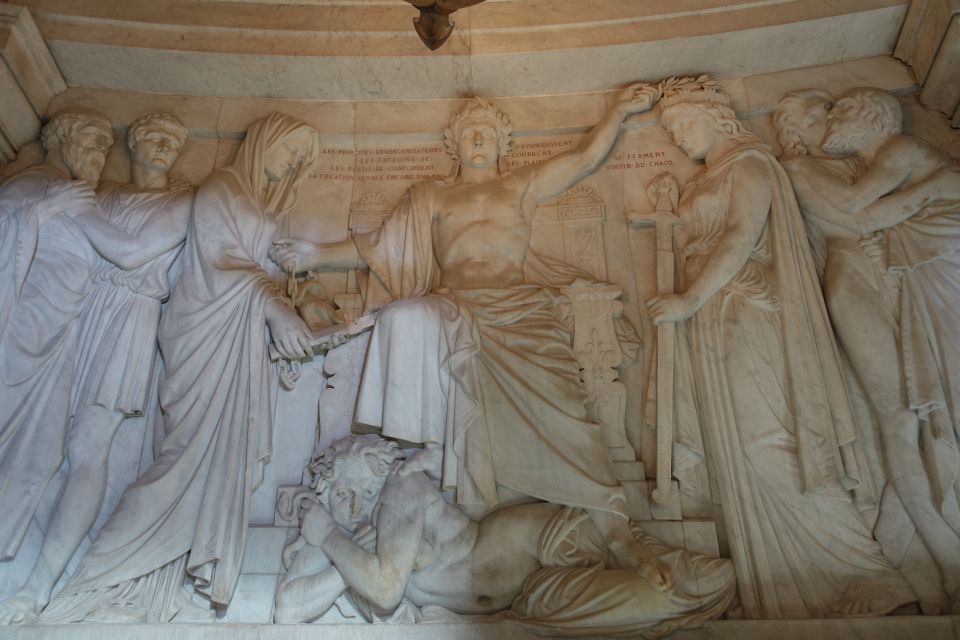
You start in the courtyard of the Invalides complex, where the 17th-century roots set the tone. The guides frame it as more than an old yard: it’s the gateway to how France organized military life under Louis XIV, including the idea of a place where soldiers could recover after battle.
That matters because it changes how you read the later scenes. When you understand the Invalides began as a veterans hospital under royal leadership, Napoleon’s story stops feeling like a movie montage. It becomes the next chapter in a long system—political, military, and deeply physical.
Louis XIV and the veterans hospital: the site’s real origin
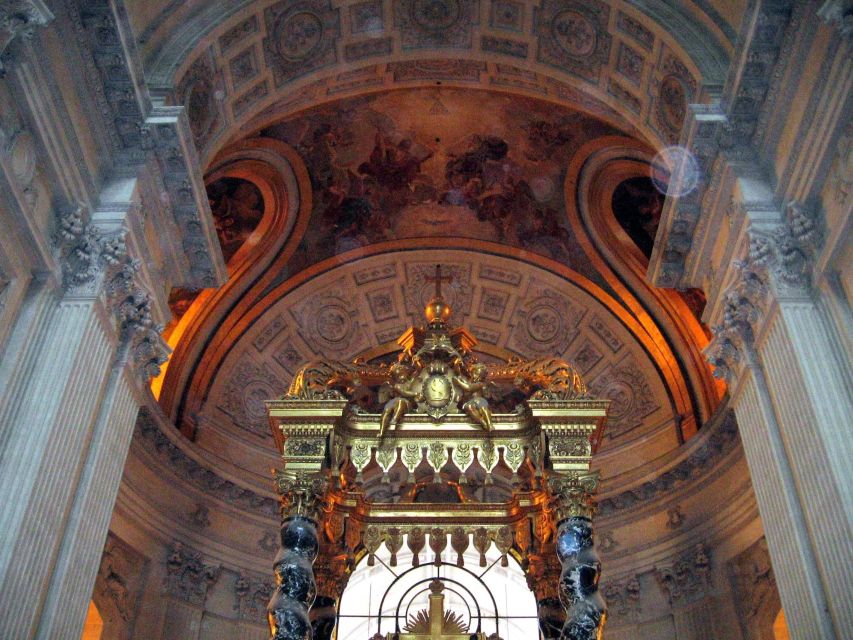
The tour’s Louis XIV segment isn’t just dates and names. You’ll hear how the Sun King supported France’s military machine and helped create the cathedral designed for his troops—men who needed refuge once the fighting ended.
This is where the tour gives you a practical payoff: you learn to look at architecture as evidence. The cathedral and adjoining spaces aren’t random decoration. They reflect the way authority wanted soldiers to be treated, remembered, and controlled.
If you enjoy history explained through place (not just through a timeline), you’ll likely find this part especially satisfying.
The cathedral and the walk past artistic tomb stones and graves

After the Louis XIV context, you move into the cathedral area. This stop is ideal because it teaches you how “honor” can be designed into a space—through scale, symmetry, and the deliberate positioning of memory.
As you proceed, you’ll also stroll past artistic tomb stones and graves. Even if you’re not a specialist in funerary art, the guide’s framing helps you notice details that you’d otherwise skip. It’s the difference between seeing tombs and understanding what they were meant to communicate.
Napoleon’s tomb under the gold dome: what you’ll actually see
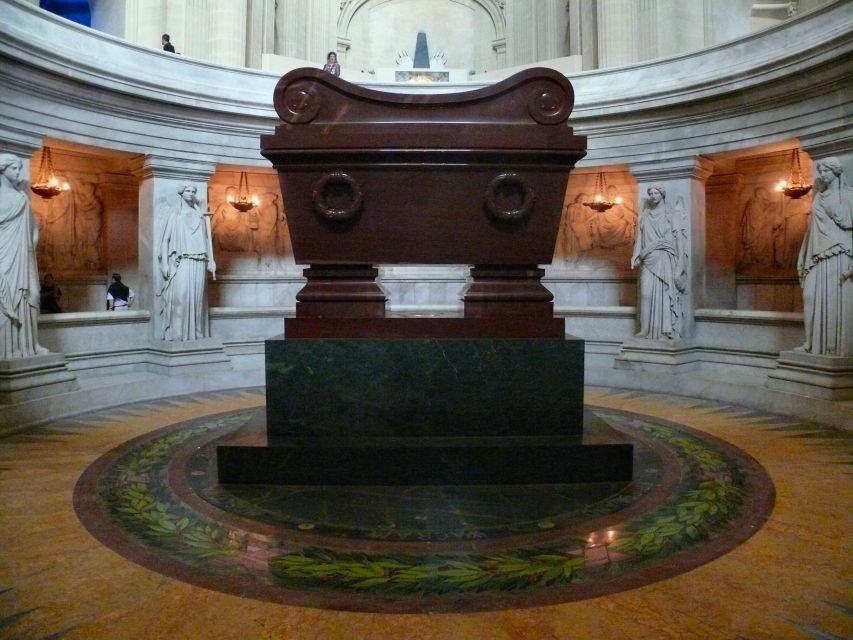
Then comes the main event. Napoleon’s remains are interred underneath the magnificent gold dome, and your guide leads you to see his tomb up close. You’re not just told that he’s important; you’re shown where the story lands physically.
You’ll also learn about the arc of Napoleon’s career the way it was experienced at the time: brilliant general and audacious emperor, then the consequences of pushing too far, leading to death in exile. The guides connect those turns to what you see in front of you, including how his burial is staged as an enduring statement.
You also get to see the tombs of those closest to him. That’s a key nuance. It reminds you that Napoleon’s saga wasn’t solo. The people around him shaped the empire, and the site preserves that proximity.
You can also read our reviews of more museum experiences in Paris




Museum time at Musée de l’Armée: artifacts, recreations, and maps
After the cathedral stops, you spend time in the museum galleries to learn about Napoleon beyond his famous stature. The format focuses on artifacts, recreations, and military maps—so the story has texture, not just personality.
This part is especially valuable if you’re the kind of visitor who likes to leave with a few concrete “I remember that” images. Military maps give you geography you can picture later, and recreations help translate what an account says into what it might have looked like.
The guides are also able to hit the areas you’ll care about most, which is helpful because the museum collections are broad. In reviews, the guides are praised for getting visitors to the strongest highlights rather than letting the experience turn into a wandering sprint.
How the guides make 2 hours feel focused (not rushed)
This is a tight tour—about 2 hours—so guidance style matters. The strongest guides in this format use a narrative rhythm: set the scene, point to what to notice, then explain why it matters.
Names that came up in past experiences include:
- Florent, praised for being both amazing and highly informative.
- Mathieu, noted for answering questions well and bringing history to life for a 13-year-old.
- Anatole, praised for expertise plus engaging anecdotes.
- Daniel, praised for tying military history to how France’s story evolves.
- Taylor, praised for turning a first visit into a grounded understanding of why the site matters.
So if you want more than facts—if you want interpretation—you’re likely in good hands. And because the tour can run in private or small groups, you tend to get more personal pacing than big group sightseeing.
Group size, pace, and luggage limits (the stuff that can make or break it)
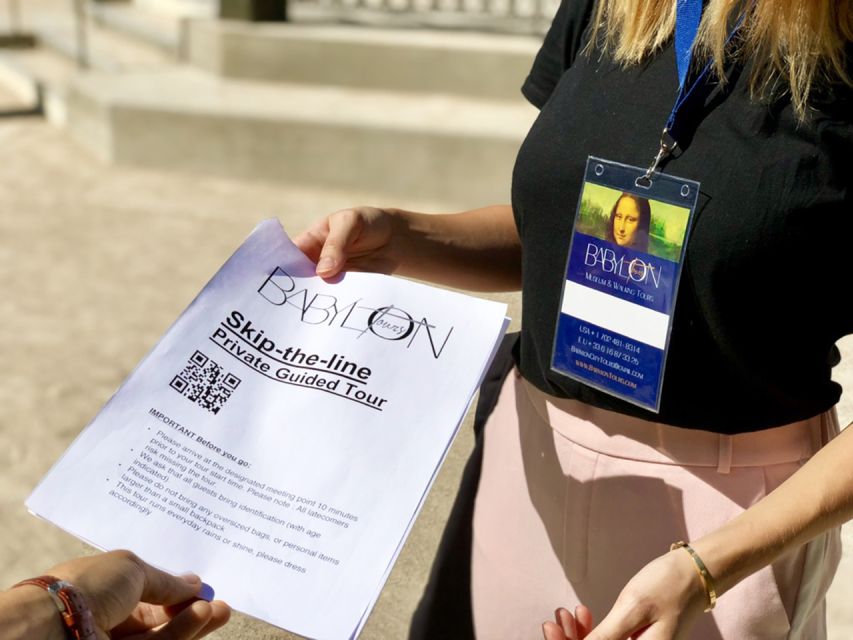
A big reason to book this style is the small max size: up to 8 guests per guide. That creates elbow room for questions and for the guide to adjust explanations to your interests.
But plan for the practical constraints:
- There’s moderate walking.
- Luggage or large bags aren’t allowed.
- The tour isn’t positioned for people with walking disabilities or wheelchair users on the semi-private option.
One more note: some museum rooms have rules about quiet or limited speaking. You don’t have to be silent the whole time, but you should expect occasional “inside voice” moments.
If you like to travel light, you’ll probably feel comfortable. If you usually carry a big daypack or rolling luggage, rethink what you bring.
Price check: $128 for skip-the-line and expert interpretation
At $128 per person for a 2-hour tour, you’re not paying for a long day of entertainment. You’re paying for two things that are hard to replicate on your own: time saved and interpretation.
Skip-the-line entry (plus entrance fees included) helps you avoid the most frustrating part of popular Paris sites—standing around while your day gets clipped. Then you add the professional guide element, which turns a monument visit into a narrative you’ll remember.
If you’re visiting Invalides for Napoleon and you want real context fast, this price can be reasonable. If you’re the type who loves self-guided museum wandering without structure, you might decide to do it on your own instead. But for many visitors—especially families—guided time at Invalides tends to be the “most bang for your limited hours” move in Paris.
When things don’t go as planned: closures and delayed openings
Museums sometimes have occasional closures with no prior warning from museum management. When that happens, you’ll get an alternative if the museum opening time is delayed by more than 1 hour from the tour’s start time.
The practical takeaway: don’t stack a critical reservation right after your tour. Give yourself some breathing room.
Also remember that some collections can vary by year, and certain rooms have speaking restrictions. That’s normal for major museums and not something you should try to micromanage.
Who this tour suits best (and who should rethink it)
This is a strong fit if:
- You want Napoleon-focused history with a physical, close-up experience at his tomb.
- You like a clear storyline from Louis XIV to Napoleon instead of random museum hopping.
- You’re traveling with teens or anyone who learns best with a guide answering questions.
It may be less ideal if:
- You need extensive mobility support. The semi-private tour isn’t offered for those with walking disabilities or wheelchair users.
- You want to bring large bags and treat the visit like a casual museum browse with lots of gear.
If you’re a first-time visitor to the Invalides complex, having a guide helps you avoid the common “we saw a lot, but I can’t explain what we saw” problem.
A smart add-on tip: plan a classic hot chocolate stop afterward
One of the more fun bits that came up: a guide tip for Angelina hot chocolate, described as the best hot chocolate ever. If you’re in that mood after a museum session, it’s an easy way to turn the visit into a full memory—cold drink later, gold dome now.
You don’t need it, but it’s a nice rhythm: history first, comfort food second.
Should you book the Paris Invalides Dome guided tour?
I’d book it if your priorities are skip-the-line access, seeing Napoleon’s tomb properly, and getting the Louis XIV backstory that gives the dome meaning. The small group size and art-historian style guidance make a huge difference when you only have a couple hours.
I’d think twice if you’re uncomfortable with walking, need special accessibility support beyond what the tour states for the semi-private option, or you plan to travel with big luggage. The site rules are real, and they’re not worth fighting.
If you want a focused, high-impact introduction to Musée de l’Armée—especially for Napoleon—it’s an efficient use of your Paris time.
FAQ
How long is the Paris Invalides Dome skip-the-line guided museum tour?
The tour runs for about 2 hours.
What does skip-the-line access mean for this experience?
It includes skip-the-line access and entrance fees to the museums at Musée de l’Armée.
Where does the tour start and end?
The meeting point can vary by the option you book, and the tour ends back at the meeting point.
How large is the group?
This tour has a maximum of 8 guests per guide for a more intimate experience.
What languages are available?
The live guide language options listed are German, English, Russian, Spanish, Italian, and French.
What ID do I need to bring?
Bring a passport or an ID card.
Are large bags or luggage allowed?
No. Luggage or large bags aren’t allowed.
Is the tour wheelchair accessible?
Wheelchair tours are available only on request, but the semi-private tour is not available for those with walking disabilities or for wheelchair users.
Can I cancel, and what if the semi-private minimum isn’t met?
You can cancel up to 24 hours in advance for a full refund. The semi-private option requires a minimum of 2 participants; if it doesn’t meet the minimum, you’ll be offered an alternative date or a full refund.
What if the museum is closed or opens later than expected?
The museum can occasionally close without prior warning. If the museum opening time is delayed by more than 1 hour from the tour starting time, guests are provided with an appropriate alternative, but GetYourGuide is unable to provide refunds or discounts in these cases.