REVIEW · PARIS
Paris : Highlights of Parisians’ Paris guided tour
Book on GetYourGuide →Operated by CONNECTING FRANCE · Bookable on GetYourGuide
Paris glamour, on foot, in two hours. This guided walk strings together the why behind Paris’s wealth and polish, from the Hôtel de Ville origins to the gleam of Place Vendôme and the view inside Galeries Lafayette. I especially liked how the route mixes classic landmarks with atmospheric streets and covered passages, so you feel the city’s style instead of just ticking sights.
What I also liked: the small group size (up to 11) keeps it personal, and the guides bring details you don’t get from a map—like the story of Paris’s early market and how the right bank became the home of glitz. The one downside to consider is that the meeting point can be a little tricky at first—you’ll want to watch for the guide holding the Connecting France sign in front of Bistrot Marguerite.
In This Review
- Key highlights to know before you go
- A Paris walking tour that targets style and stories, not long lines
- Meeting at Bistrot Marguerite: how to start without stress
- Hôtel de Ville to Les Halles: where Paris’s market energy started
- Palais-Royal and the covered passage from 1826
- Rue Vendôme glamour: luxury storefronts with context
- Opéra Garnier, then Galeries Lafayette: the grand finale view
- Price and value: what $66 buys you in real terms
- Who this tour suits best (and who should think twice)
- Guide quality matters here: what the reviews point to
- Should you book this Parisians’ Paris highlights tour?
Key highlights to know before you go
- Small group pace: semi-private or private tour with a max of 11 people
- Hôtel de Ville to Les Halles: start where Paris commerce took off, then walk lively right-bank streets
- Palais-Royal atmosphere: you’ll spend time in a space with real “Paris energy,” not just photos
- Passage from 1826: a preserved covered passage stops the group and turns a walk into a mini time machine
- Luxury landmarks in context: Cartier, Chanel, Louis Vuitton, and the Ritz palace area are explained, not just seen
- Galeries Lafayette dome views: a final payoff with big interior atmosphere and scenic sightlines
A Paris walking tour that targets style and stories, not long lines
This tour is built for people who like Paris best when it feels specific. Not just big-name monuments, but the little shifts in neighborhood mood—where power shows up, where fashion lives, and where everyday commerce becomes theater. In two hours, you get a strong slice of the right bank’s image, without needing museum tickets or a long day.
I like that the tour stays flat-walking and time-efficient. You’re moving, but you’re not sprinting, and the stops are short enough that you’ll still feel fresh at the end. It’s a good fit when you want to understand Paris’s “wealth and glamour” angle while you’re already in the city center.
You can also read our reviews of more guided tours in Paris



Meeting at Bistrot Marguerite: how to start without stress
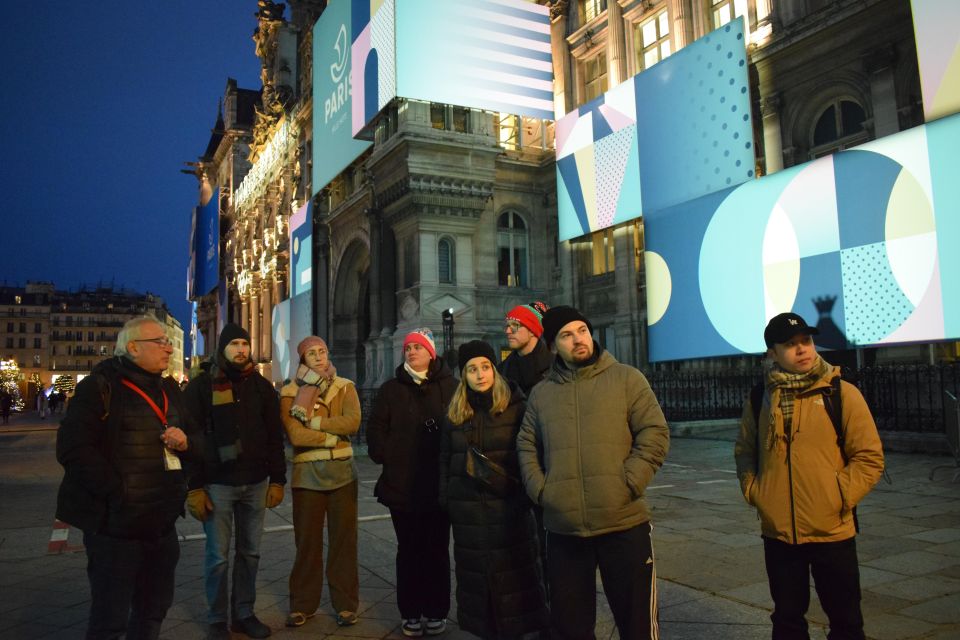
Your walk starts at Bistrot Marguerite, near Place de l’Hotel de Ville, in front of the restaurant. The closest metro station is Hotel de Ville (Lines 1 and 11), which is handy because you’re starting where the city’s historic core crowds everyone together.
One practical tip: get there a few minutes early and scan the street level for the guide holding a sign that says Connecting France. There’s at least one real-world warning here—some people have had trouble finding the guide at the beginning—so don’t assume it’ll be obvious from a distance.
From there, you’ll head into the historic heart of Paris and build your sense of the route like a story. That matters, because the tour’s charm is not random sightseeing; it’s a sequence.
Hôtel de Ville to Les Halles: where Paris’s market energy started
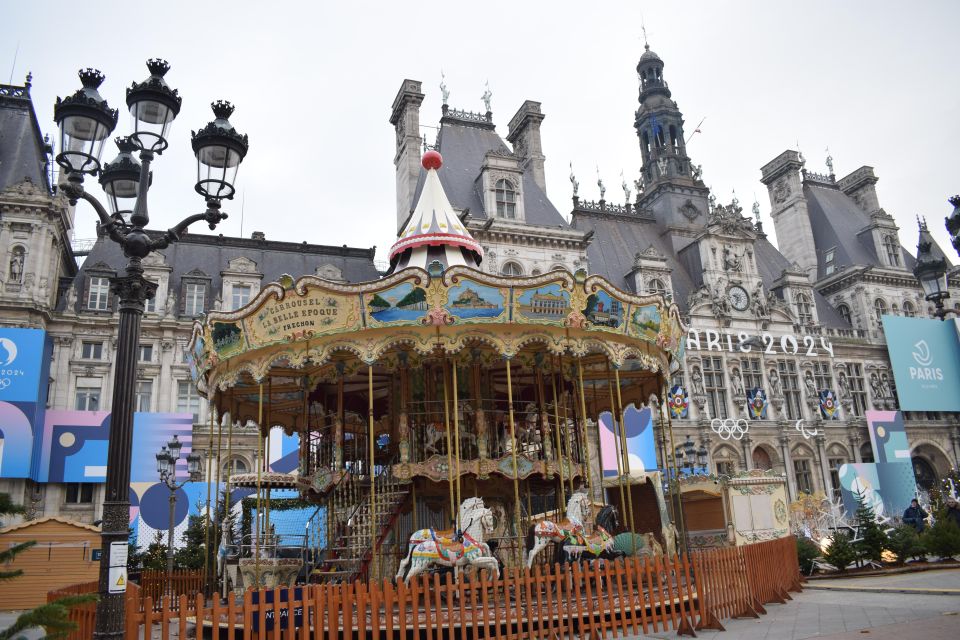
You begin at Hôtel de Ville, and the guide frames it as a starting point that stretches back to the 6th century. That’s not just trivia. It sets you up to understand why this part of Paris developed in the way it did—commerce first, then prestige layered on top.
From the meeting area, the tour moves on foot toward the Halles district, keeping things “small street, big meaning.” This is where the city feels busy in a more human way than a major boulevard: side streets, storefronts, and the kind of movement that makes Paris feel alive even when you’re walking slowly.
You’ll also hear how the market brought in merchants, and how that early economic pull helped shape the right bank into the place associated with wealth. If you like seeing how neighborhoods evolve, this portion is the backbone of the whole experience.
Palais-Royal and the covered passage from 1826
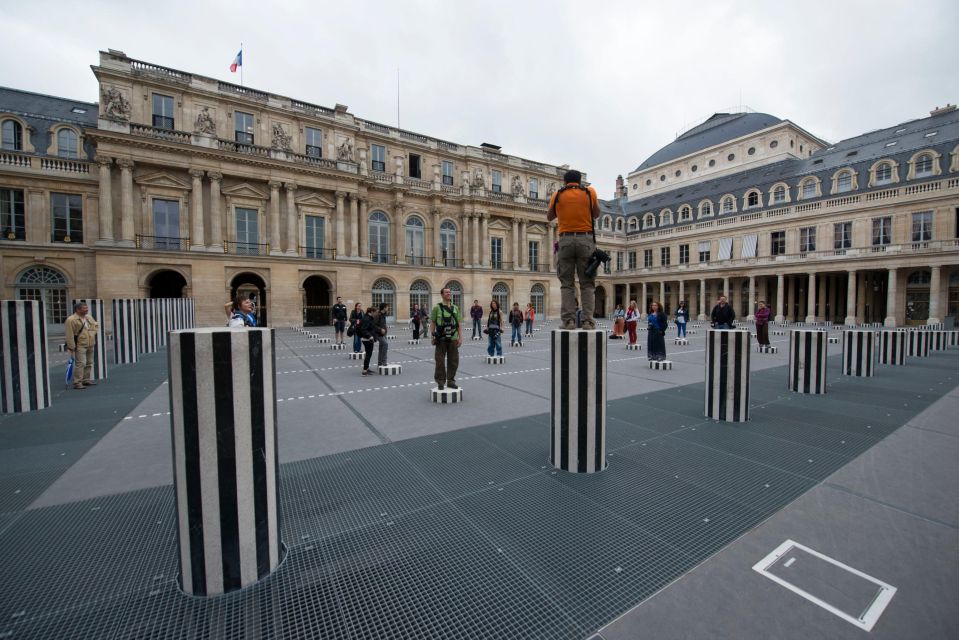
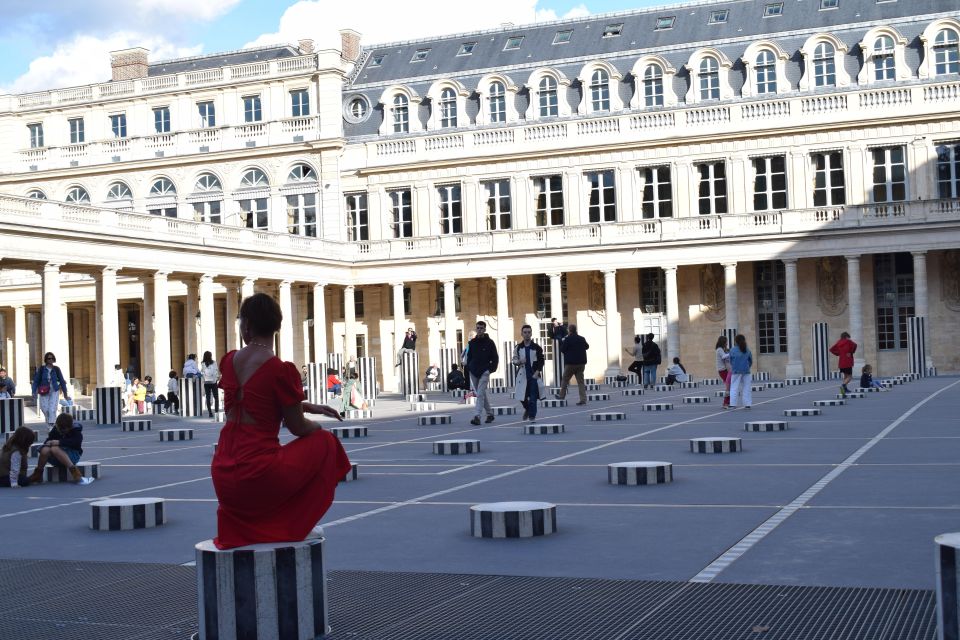
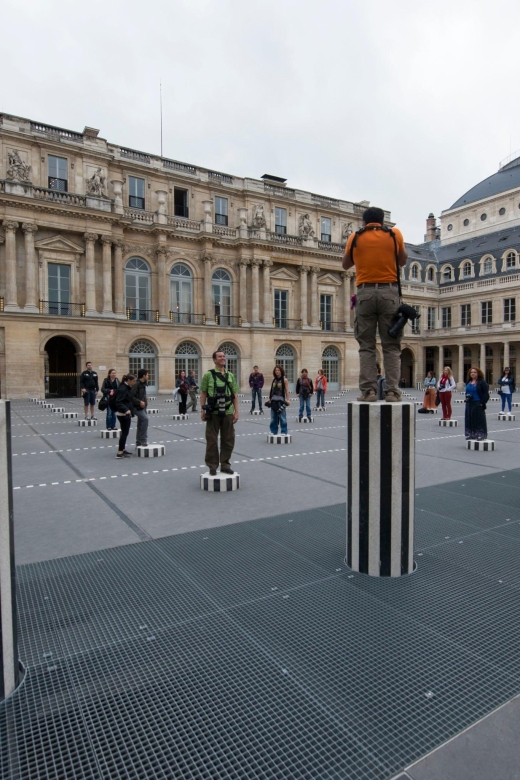
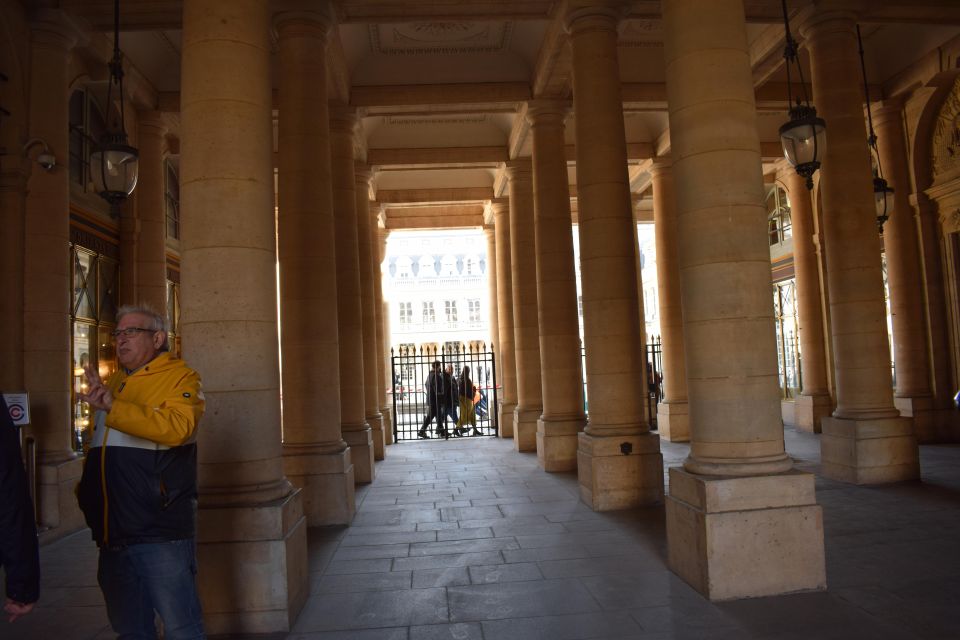
The tour’s middle stretch is where atmosphere gets serious. Palais-Royal is part sightseeing and part vibe check. You don’t just look at buildings; you experience a space with its own mood—quietly elegant, but still very “Paris.”
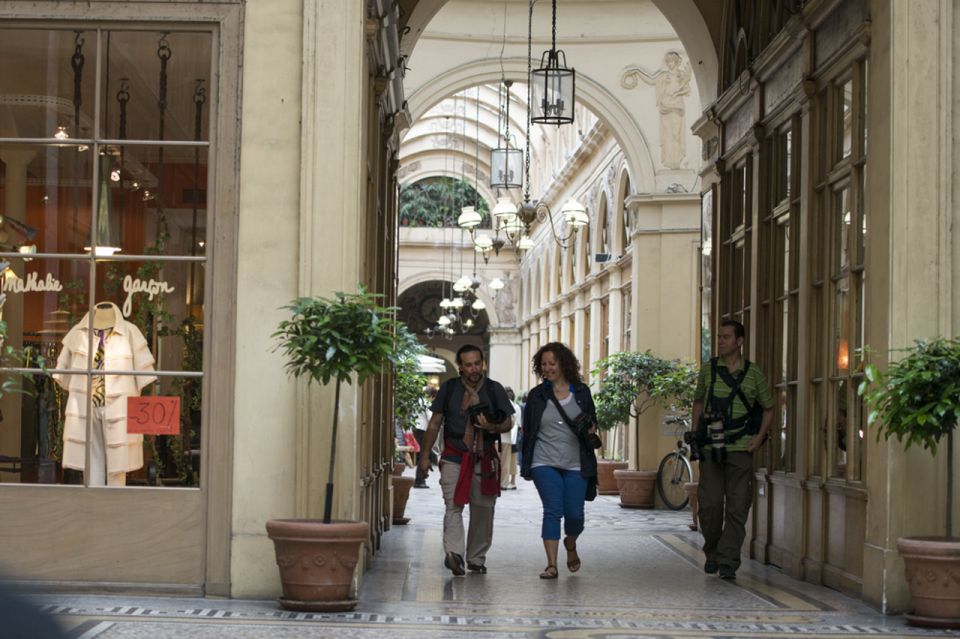
Then comes one of the most distinctive moments: a covered passage from 1826, described as being in excellent shape. This is the kind of stop that changes a walking tour from general to memorable. A passage like this is practical (it protects you from rain, kind of like a hallway built for Paris) and symbolic (it shows you how the city solved shopping and strolling long before modern malls).
If you want to feel how Paris treats everyday movement—window-shopping, wandering, meeting friends—this is the best part of the route. You’re learning while you’re still surrounded by spaces that make the lessons feel real.
Rue Vendôme glamour: luxury storefronts with context
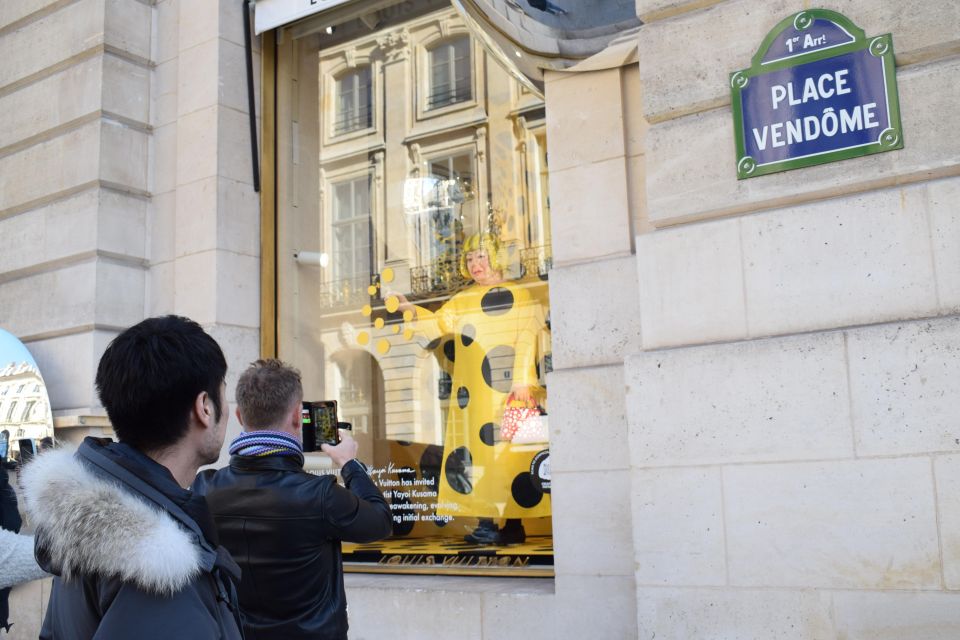
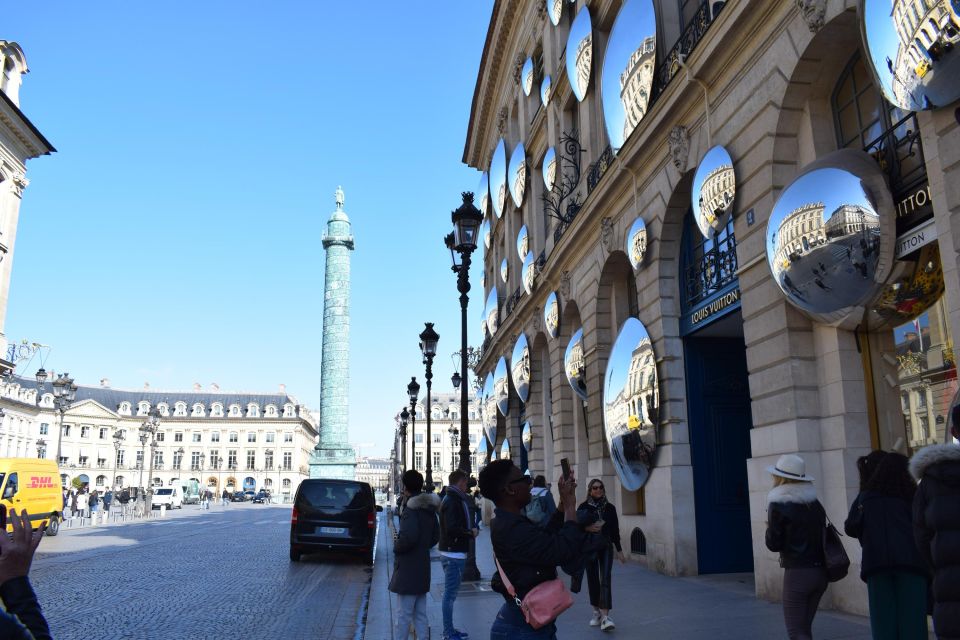
Next, the tour slides into Place Vendôme, built by Louis XIV, with a statue of Napoleon as a focal point. It’s the kind of square that looks composed and powerful, and the guide helps you understand why. It’s not only about the architecture; it’s about what the setting says about status and ambition.
From there, you’ll walk through elegant streets where top luxury names appear in the wild—Cartier, Chanel, Louis Vuitton, and the area connected with the Ritz palace. The key is that you’re not simply seeing logos; the guide connects these spots to the story of where glamour got anchored in Paris.
A small group helps here. In a crowd, this kind of route becomes just window-shopping in a rush. With a max of 11 people, you can actually pause, listen, and then keep going without feeling like you’re getting shoved along.






Opéra Garnier, then Galeries Lafayette: the grand finale view
After Vendôme, you’ll head toward the area of Opéra Garnier. Here you’ll be seeing it mainly by passing through the surrounding streets (not doing a deep museum stop). Still, the guide shares the story of the opera, which turns the facade from a postcard into something with meaning.
Then it’s time for the big finish: Galeries Lafayette. This is where the tour shifts from “look at Paris” to “feel inside Paris.” The visit includes time to discover one of the most beautiful domes in the world, and the building’s interior atmosphere is the reward for getting there on foot.
If you’re a fan of panoramic or high-ceiling spaces, you’ll appreciate what this stop adds. It gives you a moment where the tour stops being only about history and becomes about scale and spectacle—without needing extra entry tickets.
You end up with a satisfying arc: origins (market + power), then style (Palais-Royal and luxury streets), then drama (Opéra Garnier) and light (the Galeries Lafayette dome).
Price and value: what $66 buys you in real terms
At $66 per person for a 2-hour guided walk, you’re paying for three things: expert interpretation, an efficient route, and less time spent figuring things out on your own. With professional expert guides and a group capped at 11, the cost makes sense if you want context rather than wandering.
This isn’t a bargain if you only care about photos. For example, the tour doesn’t include monument or museum entrances in the area. But if you’d otherwise pay for a ticket just to justify time, this walk can feel like better value because it gives you the story-thread and still delivers a standout interior moment at Galeries Lafayette.
Also, you’re not paying for long transit. The itinerary is compact, flat-walking, and designed to keep you moving through the center.
If you’re on a tight schedule—first or second day in Paris, or a day when you don’t want lines—this price feels like a reasonable trade for a focused tour with real names, real architecture, and real explanation.
Who this tour suits best (and who should think twice)
This experience is a strong match if you:
- want a small-group Paris walking tour with a guide who explains the “why”
- enjoy walking between central neighborhoods without big detours
- like luxury-era Paris, but with historical context (not just shop windows)
- appreciate atmospheric spaces like covered passages and indoor viewpoints
The tour is not suitable for mobility impairments or wheelchair users, even though it’s described as flat-walking. So if mobility access is a concern, you’ll want to pick something else designed for those needs.
And if you hate meeting points and short waits, add a buffer. You’ll be happier if you arrive a bit early and keep an eye out for the Connecting France sign.
Guide quality matters here: what the reviews point to
The biggest praise is about the guides. I noticed the same theme across guide names: people mention Benjamin (including Benjamin de France Connecting) as well documented and enthusiastic, plus praise for Antoine and Sara as friendly and insightful.
That lines up with the tour’s style: it’s not just, “Here’s a building.” It’s, “Here’s what made this place important.” When a guide does that well, even a short stop feels worth it.
One more practical point from feedback: if you have trouble finding the guide at the start, don’t panic. It’s usually solved fast by asking staff nearby or checking exactly where the sign is. Just come early and you’ll reduce that stress.
Should you book this Parisians’ Paris highlights tour?
I’d book it if you want a focused introduction to Paris’s glamour corridor—Hôtel de Ville, Palais-Royal, Place Vendôme, Opéra Garnier, and Galeries Lafayette—in a route that stays human-scale with a small group. It’s especially good value if you like understanding how Paris turned commerce into prestige, and you want a guide to connect the dots.
Skip it if you’re mostly chasing private time, long museum interiors, or you need accessibility accommodations that this walking format can’t provide. And if you’re the type who gets annoyed by meeting points, show up early and make finding the guide part of your plan.
If you want Paris with style and a clear story line, this is one of the more efficient ways to get it.