REVIEW · PARIS
Paris City Sightseeing Half Day Guided Segway Tour with a Local Guide
Book on Viator →Operated by Go Go Tours - Privat Segway Tours In Paris · Bookable on Viator
Paris on a Segway beats the usual commute. You get easy training, a local guide, and a route that hits major Paris sights in a few hours without turning your legs into noodles. You can also choose among 45-minute, 90-minute, or the full 3-hour option, so you can fit it around your real plans.
I especially like the way the tour keeps it beginner-friendly with clear instruction plus helmet use. I also love the focus on landmark context, like Louis XIV’s role in Les Invalides and the World Fair origins behind Pont Alexandre III and the Palais buildings. One consideration: the stops are intentionally brief, so if Arc de Triomphe or the Eiffel Tower is your must-see, you should ask for a little extra time when you get there.
In This Review
- Private tour, classic Paris highlights, and beginner training in one smooth ride
- Key Points at a Glance
- Why a Segway Tour Is a Smart First-Day Plan in Paris
- Meet at Av. de la Bourdonnais and Start Rolling
- Beginner Training: How You Get Comfortable Without Stress
- What the 3-Hour Route Really Covers (and Why It Flies)
- Stop 1: Les Invalides (Musée de l’Armee) and Napoleon’s Area
- Stop 2: Pont Alexandre III and the Seine’s Best Photo Angles
- Stop 3 and 4: Grand Palais and Petit Palais at Exhibition-Era Scale
- Stop 5: Place de la Concorde and the Big-Square Energy
- Stop 6: The Louvre Area From the Street (No Ticket Needed)
- Stop 7: Musée d’Orsay and the Train-Station Origin
- Stop 8 and 9: Champs-Élysées and the Arc de Triomphe
- Stop 10: Eiffel Tower and the Surprising Temporary Plan
- Price and Value: Is $60.49 Worth It?
- Weather, Timing, and How to Get the Most From Your Ride
- Photos, Tips, and Small Comfort Tricks
- Who This Segway Tour Suits Best
- Should You Book This Paris City Sightseeing Segway Tour?
Private tour, classic Paris highlights, and beginner training in one smooth ride
The vibe is simple: meet up, gear up, learn the basics, and then glide. Guides you might meet include George, Eli, Arthur, Kensa, Fatwa, and others named by past guests, and they’re known for making the ride feel calm and safe while adding on-the-street stories.
What you love here is the balance: you cover a lot of ground without a hard workout. And you get a quick orientation to where everything sits in relation to the Seine, the Grand Palais area, and the Champs-Élysées up to the Eiffel Tower. Just don’t expect a long museum-style visit at each stop; the tour is built around quick photo pauses and short history moments.
Key Points at a Glance
Beginner instruction included so you can ride without prior experience
Private Segway tour options in 45, 90, or about 3 hours
Big-name sights on one route from Les Invalides to the Eiffel Tower
Weather gear provided with raincoats and hats, plus warm clothes guidance
Short stop timing is intentional for covering many landmarks smoothly
Safety rules apply with a 40–120 kg weight limit and no participation for pregnant travelers
You can also read our reviews of more guided tours in Paris



Why a Segway Tour Is a Smart First-Day Plan in Paris
Paris can feel like three cities stitched together: the grand avenues, the museum zone, and the river-and-bridges view. A Segway tour is one of the best ways to get your bearings fast because you move through the city at sightseeing speed without getting stuck in the I-was-walking-all-morning trap.
This tour also works well when you’re not sure what matters most yet. After you glide past places like the Louvre and Musée d’Orsay from the street level, you’ll know what you want to return to later on foot or with a ticket. That’s real value on a first visit.
Meet at Av. de la Bourdonnais and Start Rolling
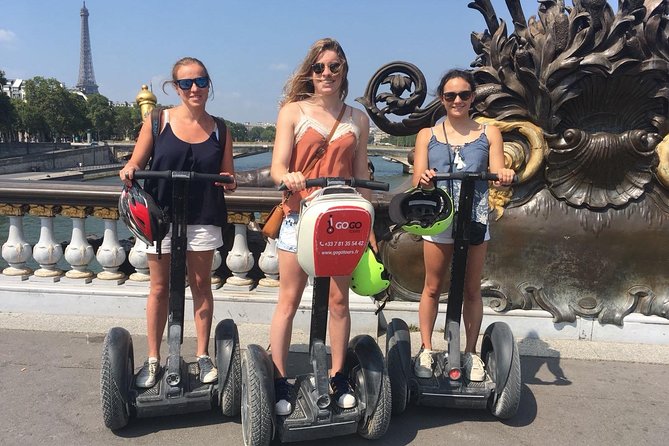
You start at 101 Av. de la Bourdonnais, 75007 Paris, and the tour ends right back at the meeting point. It’s set up as a private tour, meaning it’s only your group, not a mixed crowd.
It’s also designed to be easy to show up for: confirmation is received at booking, it’s near public transportation, and you use a mobile ticket. If you’re coming in from a hotel, plan to arrive a little early so the training part doesn’t feel rushed.
Beginner Training: How You Get Comfortable Without Stress
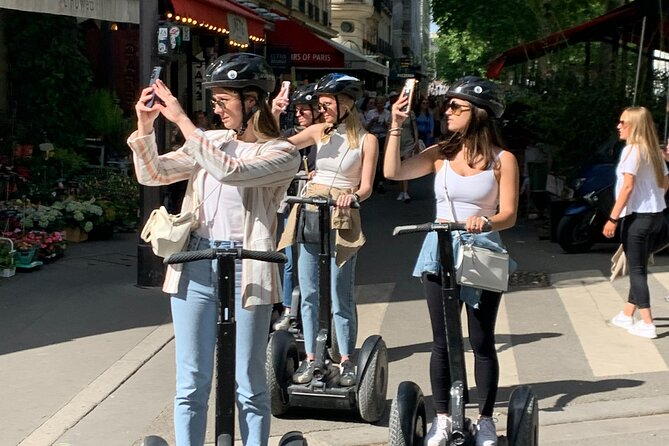
Full instruction is included, and helmets come with the tour. That matters because the biggest fear most first-timers have is balancing and slowing down in traffic-like conditions.
Your “learning to ride” phase is usually quick, and then you’re off. In past tours, guides like Kensa, George, and Eli were specifically praised for being patient with new riders and keeping the experience safe. That combination is what makes a Segway feel like fun instead of a stressful test.
There are also clear safety limits: the tour has a minimum age of 12, minors must be with an adult, and participation is restricted by weight (at least 40 kg and not more than 120 kg). Pregnant travelers are not allowed, and the team also operates in all weather conditions with warm clothes and added gear like raincoats and hats.
What the 3-Hour Route Really Covers (and Why It Flies)
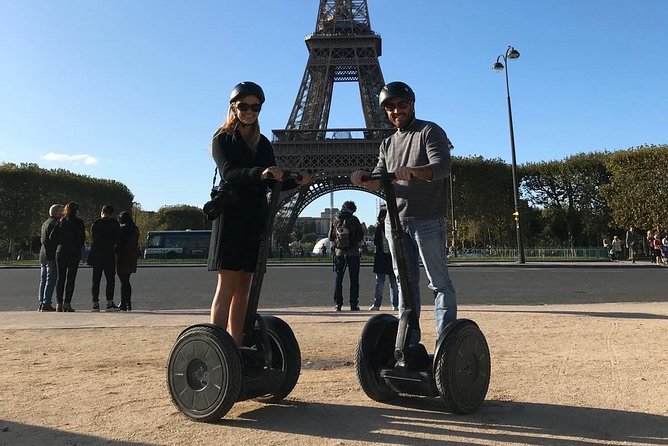
This isn’t a tour that tries to replace museum tickets. It’s a city “greatest hits” run with enough time to stop, take photos, and absorb a few clean facts per site.
In the full-length option, you’ll get quick stops at major monuments that form a straight line of sightseeing: starting with Les Invalides, then crossing to the Seine views and the grand exhibition-era buildings, and ending with the big trio of Champs-Élysées, Arc de Triomphe, and the Eiffel Tower.
Because the itinerary is built for motion, each location is timed. You’ll typically have around 5 minutes at most major stops and a bit longer at the opening point. If you want more than a quick photo break at a single landmark, you’ll have the best results by letting your guide know early so they can adjust pacing where possible.
You can also read our reviews of more city tours in Paris




Stop 1: Les Invalides (Musée de l’Armee) and Napoleon’s Area
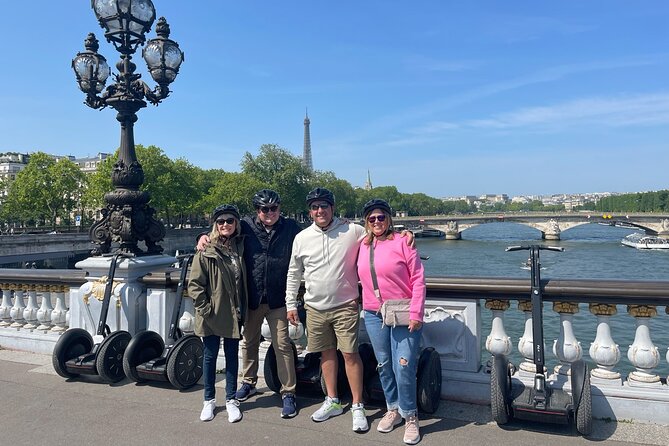
You begin at Musee de l’Armee des Invalides, in the Hôtel des Invalides complex. This stop matters because it sets the tone for Paris beyond romance and shopping. You’re in a place tied to power, war, and national memory.
You’ll get time for pictures plus a short history moment, including the fact that Louis XIV commissioned the complex in 1670 to house wounded soldiers and provide hospital care. Napoleon’s tomb is here too, so even a quick stop gives you the right emotional context for why this part of Paris is taken so seriously.
Time check: about 10 minutes here, and note that admission tickets are not included if you want to go inside.
Stop 2: Pont Alexandre III and the Seine’s Best Photo Angles
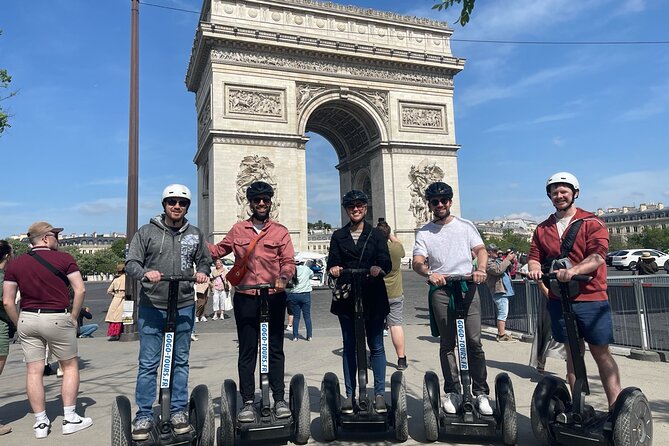
Next up is Pont Alexandre III, one of the most photogenic bridges over the Seine. It’s a great Segway stop because you can pause, look, and get the skyline angle without committing to a long walk.
You’ll learn that this bridge was built for the World Fair held in Paris, which helps you connect the city’s monuments to the big “turning points” in French modern history. The bridge is also an easy moment to enjoy the water views, especially if the light is good.
Time check: about 5 minutes. No admission ticket is involved because it’s a street-level bridge stop.
Stop 3 and 4: Grand Palais and Petit Palais at Exhibition-Era Scale
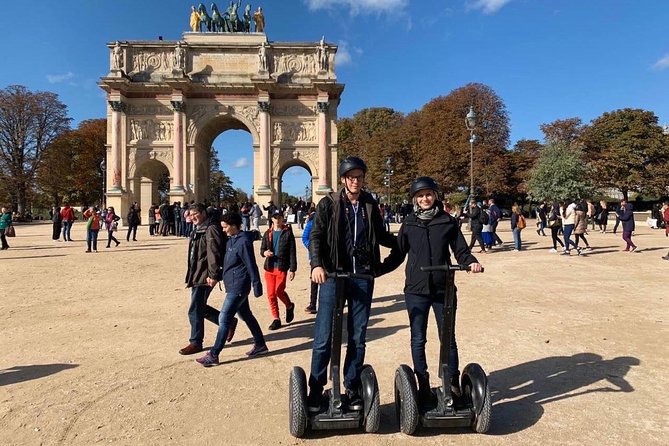
From there you slide into the world of exhibition-era grandeur with the Grand Palais and Petit Palais. These buildings can look like pure aesthetics at first glance, but the quick stories you hear help you understand what they were built to do.
- Grand Palais: built for the 1900 Universal Exhibition, dedicated by the French Republic to the glory of French art.
- Petit Palais: also built for the 1900 Universal Exhibition, then became a museum in 1902.
These are ideal Segway stops because you can take in the façades and proportions from the street. Just remember: you’re seeing the outside and soaking up context. If you want a deep museum visit, you’ll need separate tickets later.
Time check: about 5 minutes each, with admission tickets not included for entry.
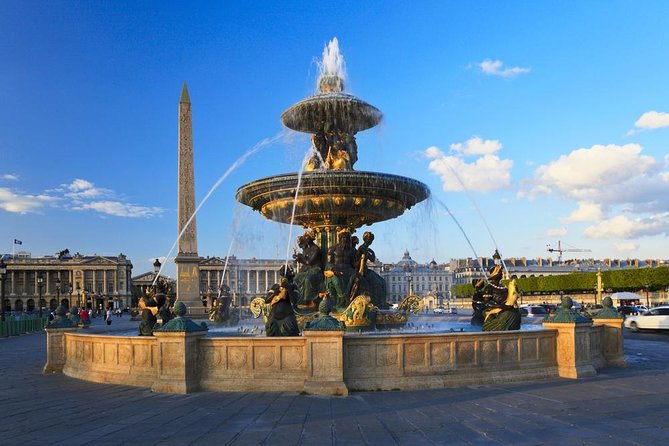
Stop 5: Place de la Concorde and the Big-Square Energy
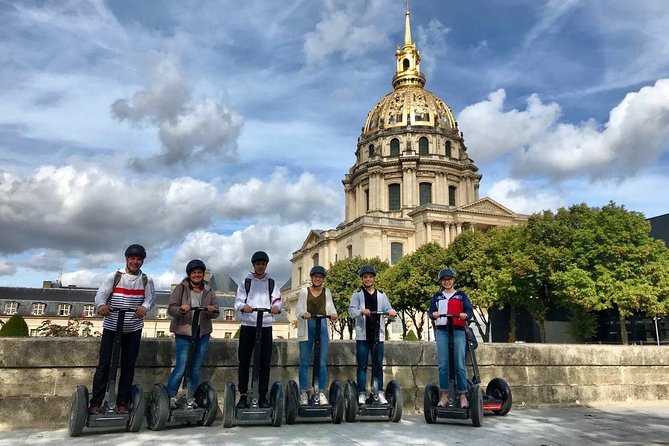
Place de la Concorde is between the Champs-Élysées and the Tuileries Gardens, and it’s one of Paris’ most evocative public spaces. This is a useful stop because it’s a crossroads moment: you’re looking outward toward multiple directions in the city plan.
It’s also the kind of place where quick photos turn into good future meeting points with your friends. You’ll also hear that it’s the largest square in Paris, and France’s second-largest after Place de Quinconces in Bordeaux.
Time check: about 5 minutes, mostly for photos and story.
Stop 6: The Louvre Area From the Street (No Ticket Needed)
You’ll roll past the Louvre Museum and get a short history snapshot that helps you see it as more than a single art brand. It began as a fortress in 1190, then was reconstructed in the 16th century to serve as a royal palace. Like much of Paris, it’s layers on layers.
Even without entering, this quick stop gives you a better mental map. Once you know the fortress-to-palace idea, the building’s massing and presence feel less mysterious.
Time check: about 5 minutes, and admission is not included.
Stop 7: Musée d’Orsay and the Train-Station Origin
Next is Musée d’Orsay, and the key detail you’ll hear is that it wasn’t originally a museum. It began as a train station built to bring visitors to the 1900 World’s Fair, with architect Victor Laloux creating a station design with modern features for its time.
This stop is a nice contrast to the Louvre: one is heavy on royal-era solidity, and the other comes from rail-era modernity. If you like architectural reuse, this is one of the more satisfying quick explanations on the route.
Time check: about 5 minutes, with no ticket included.
Stop 8 and 9: Champs-Élysées and the Arc de Triomphe
The tour then shifts toward the famous avenue and its grand monuments. You’ll pass Champs-Élysées and hear how it was commissioned by Louis XIV, while Napoleon ordered construction of the Arc de Triomphe when his armies conquered Europe.
Then you pause at the Arc de Triomphe. The big story here is how the arch was designed to preserve memory of French military victories. You’ll also get timeline detail: the first stone was laid August 15, 1806, and the monument was finished 30 years later.
Time check: about 5 minutes for Arc de Triomphe, and again, that’s for a photo stop and quick context—not a climb or long lingering.
Stop 10: Eiffel Tower and the Surprising Temporary Plan
Every Paris trip includes a moment where the Eiffel Tower stops you and makes the whole city feel real. On this tour, you get that payoff at the end, with a short history reminder that surprises people.
You’ll learn that when Gustave Eiffel achieved its construction in 1889, the tower was meant to be temporary and wasn’t instantly beloved by Parisians. Over time, of course, it became the enduring symbol of France and Paris.
Time check: about 5 minutes. If you care most about the Eiffel Tower photos, you’ll want to be ready to move quickly when your guide signals the “go” moment.
Price and Value: Is $60.49 Worth It?
At $60.49 per person, this tour can be strong value if you’re using it for what it does best: fast city orientation plus guided context. You’re paying for a trained guide, the Segway equipment, helmets, and the time it takes to safely teach you.
Because it’s a private tour, there’s also a “small group efficiency” factor. The tour requires a minimum of 2 people per booking, so if you’re traveling with a partner or a teen, the math usually makes sense compared with paying for separate taxis or losing half a day to walking.
The best way to judge the price is to ask yourself: do I need a guided overview more than I need another hour staring at one monument? If yes, this style of route fits.
Weather, Timing, and How to Get the Most From Your Ride
This operator plans for weather. You’ll be working in all weather conditions, with warm clothes suggested and raincoats and hats provided. On a cold or rainy day, that gear can make the difference between enjoying the ride and counting down the minutes.
Timing in Paris can also shift. One practical thing I take seriously here is that road closures and police control can cause delays. The experience is set up so your team can adjust—so if traffic hits hard, you’ll want to keep your phone charged and stay flexible.
Photos, Tips, and Small Comfort Tricks
Bring the basics for a good photo run: your phone charged, a lens cloth if it’s misty, and a plan for cold hands. A lot of the best angles come from quick pauses, especially at bridges and squares.
Some guides were praised for helping take pictures and videos, so if that matters to you, ask early. Also, if you want a specific angle at Arc de Triomphe or the Eiffel Tower, tell your guide at the start. You’ll get better results than waiting until you’re standing there.
Who This Segway Tour Suits Best
This is a great match if you:
- Are seeing Paris for the first time and want a guided overview
- Want to save energy and still cover major sights
- Are traveling with teens who can handle the age limit and training
- Prefer short story stops over long museum lines
It may be a weaker fit if you:
- Want long, slow time at only one or two monuments
- Are sensitive to quick stops and frequent moving
- Are outside the safety rules like weight range or the pregnancy restriction
Should You Book This Paris City Sightseeing Segway Tour?
If your goal is a smart first pass through central Paris, this tour makes a lot of sense. You’ll get guided context at the major landmarks, you’ll move efficiently without over-walking, and the beginner setup lowers the usual Segway barrier.
Book it if you want to learn the layout and pick future return visits. Skip it if your itinerary demands long stays at a couple of specific sites, because the tour is designed around quick stops and a smooth flow.
In short: for first-timers and time-crunched days, this is an excellent way to start seeing Paris with momentum.