REVIEW · PARIS
Paris City Center Self-Guided Walking Tour
Book on GetYourGuide →Operated by Rosotravel · Bookable on GetYourGuide
Paris clicks into place when you walk it yourself. This self-guided Paris City Center route strings together major landmarks and classic neighborhoods with a marked map and a booklet to keep you moving.
I really like the self-paced freedom: you set your own pace and decide how long to linger at each place. I also like that the booklet is practical, with brief site descriptions, addresses, and planning notes like opening times and admission info so you’re not hunting online mid-walk.
One thing to keep in mind: this walk is 12 km and you cover a lot of ground, so if you want deep, stop-by-stop context, the written background can feel a bit light for some major sights. And like most self-guided tours, you’re not getting entry included—tickets are on you if you want inside access.
In This Review
- Key points to know
- The big idea: a self-guided loop that teaches Paris by foot
- Price and value: $11 per group, but budget for what’s not included
- What you get in the booklet: your planning tool, not a lecture
- Pacing on a 12 km walk: when 3 hours is a suggestion
- Route overview: from Bastille to Le Marais, then Île de la Cité
- Hôtel de Ville and the Circular Pavilion: city-power vibes
- Île de la Cité: Notre-Dame and Pont Neuf on your terms
- Louvre Palace and Pyramid plus Tuileries Garden: big sites, flexible breaks
- Place de la Concorde to Champs-Élysées: the long-boulevard sweep
- Arc de Triomphe, then Jardins du Trocadéro for the Eiffel finale
- Inside access: no tickets included, so plan what you want to buy
- The booklet depth question: great for logistics, lighter on deeper storytelling
- Who this tour fits best
- Extra perk: a discount for a future guided adventure
- Should you book this Paris city center self-guided walking tour?
Key points to know
- Marked route + simple map so you can navigate without constant phone-checking.
- 12 attractions from Place de la Bastille to the Eiffel Tower, giving you a clear city-center loop.
- Booklet sent by email 24 hours before, in your native language, to plan ahead.
- Practical planning details like addresses, opening times, and admission/ticket guidance.
- No entry tickets included, so you’ll need to decide what’s worth buying.
- Wheelchair accessible, with the route designed for a straightforward walking experience.
The big idea: a self-guided loop that teaches Paris by foot

This is a city-center walking tour designed for people who like control. Instead of joining a group with fixed timing, you follow the route at your own speed using a marked map and a booklet prepared by a Paris expert-guide. It’s structured enough to feel like a plan, but flexible enough that you can slow down when a street looks good or speed up when you’re on a mission.
The route also makes sense geographically: you start at Place de la Bastille and finish at the Eiffel Tower. Along the way you hit the heart of classic Paris (Le Marais, Île de la Cité area, major museum/park zones) and then move into the big boulevard and monument sequence (Champs-Élysées, Arc de Triomphe, Trocadéro) before landing where you’ll want photos.
You can also read our reviews of more walking tours in Paris



Price and value: $11 per group, but budget for what’s not included
At $11 per group (up to 25 people), the tour’s cost is low for what you’re getting: a prepared route, a map, and a booklet that includes practical details for 12 attractions. The value really depends on one factor—how you travel.
If you’re splitting the booking with others, the per-person value can be excellent for a self-guided format. If you’re going solo, it’s still a smart buy if you appreciate planning help and you hate researching addresses and hours during your day.
The main value trade-off is also clear: entry inside attractions isn’t included. If you plan to go inside big-name sites, you should expect extra costs and some extra time spent around ticketing and security.
What you get in the booklet: your planning tool, not a lecture
The centerpiece here is the booklet. After you purchase, you’ll receive it by email 24 hours before your tour time window. It’s in your native language, and it pairs with a simple map where the route is clearly marked.
Inside, you’ll get:
- a short history of Paris (high level, written to set context)
- a description for each stop, including why you should visit
- addresses and opening times
- admission and ticket info so you can plan your day
- a guide to what you can do outside, since you’re visiting sights on your own schedule
This is the kind of resource that saves time. You’re not just getting directions; you’re getting a mini planning desk in paper form. That matters on a day when you want your feet doing the work and your brain doing the enjoying.
Pacing on a 12 km walk: when 3 hours is a suggestion

The tour is listed around 2–3 hours and covers about 12 km. That’s doable for fast walkers, but Paris rewards slower wandering, especially once you hit older neighborhoods and river-island streets. One practical approach is to treat it like a framework: move through the route, but choose a few stops to linger properly.
If you’re the type who stops for coffee, photos, and quick people-watching (you know who you are), plan to stretch your day. The route is designed so you can keep going, even if you take longer than the default time.
Route overview: from Bastille to Le Marais, then Île de la Cité

Starting at Place de la Bastille puts you in the right zone to transition into central Paris. The area gives you a sense of momentum: you begin with a landmark square, then the route flows into neighborhoods that feel more intimate and street-level.
From there you’ll move through the Le Marais area—known on this route for its historical architecture, cafés, and shopping. This is a big part of why the walking tour works: you’re not only seeing monuments, you’re also getting the texture of Paris neighborhoods. If you enjoy architectural variety and small streets more than huge plazas, this is where you’ll feel it.
You can also read our reviews of more guided tours in Paris






Hôtel de Ville and the Circular Pavilion: city-power vibes
One of the listed stops is Hôtel de Ville and the Circular Pavilion. Even if you’re not planning to go inside, the location is useful as a “city-center anchor.” It’s a point where the walking route gives you a clear shift in scenery—less postcard-lane, more civic landmark energy—so you can orient yourself before you continue toward Île de la Cité.
Île de la Cité: Notre-Dame and Pont Neuf on your terms
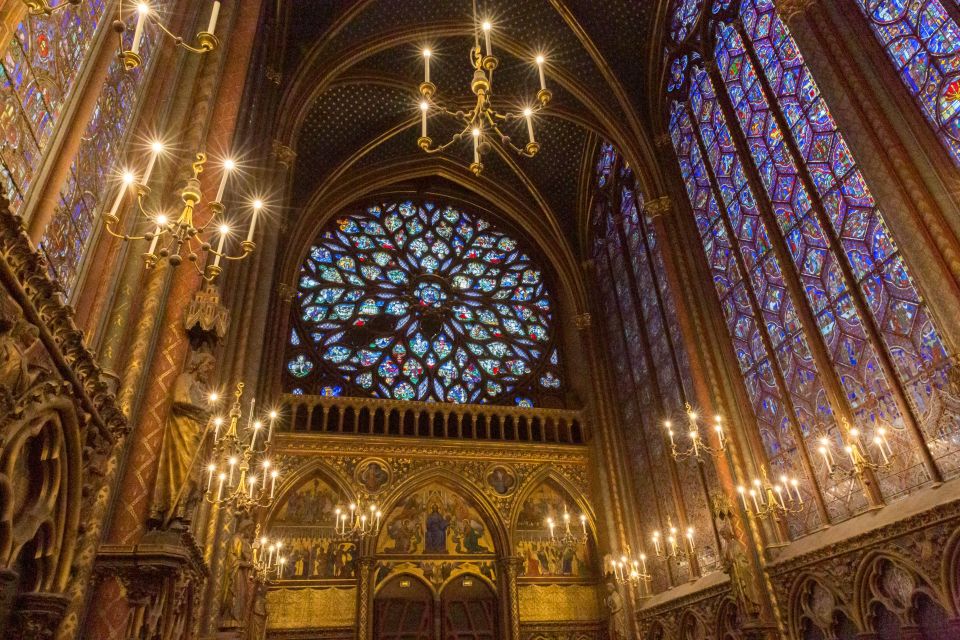
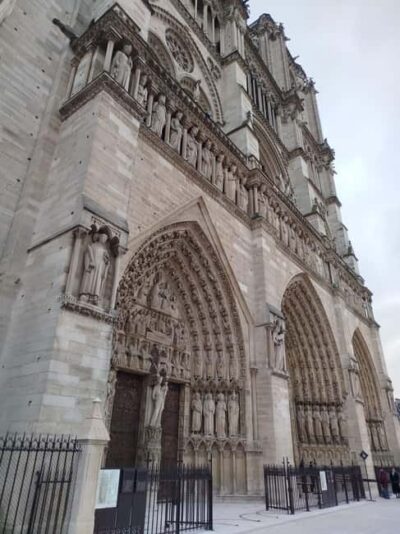
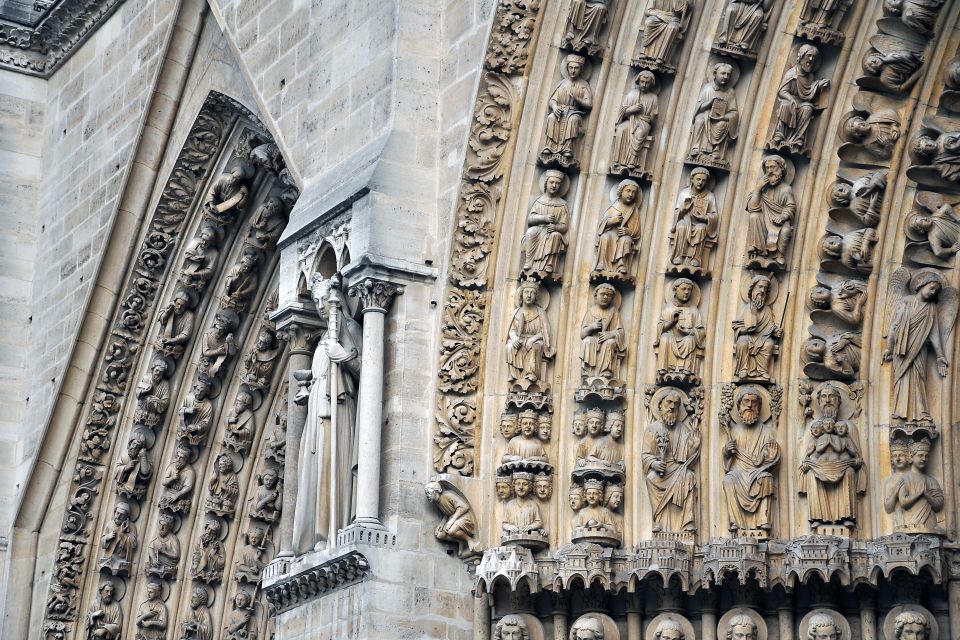
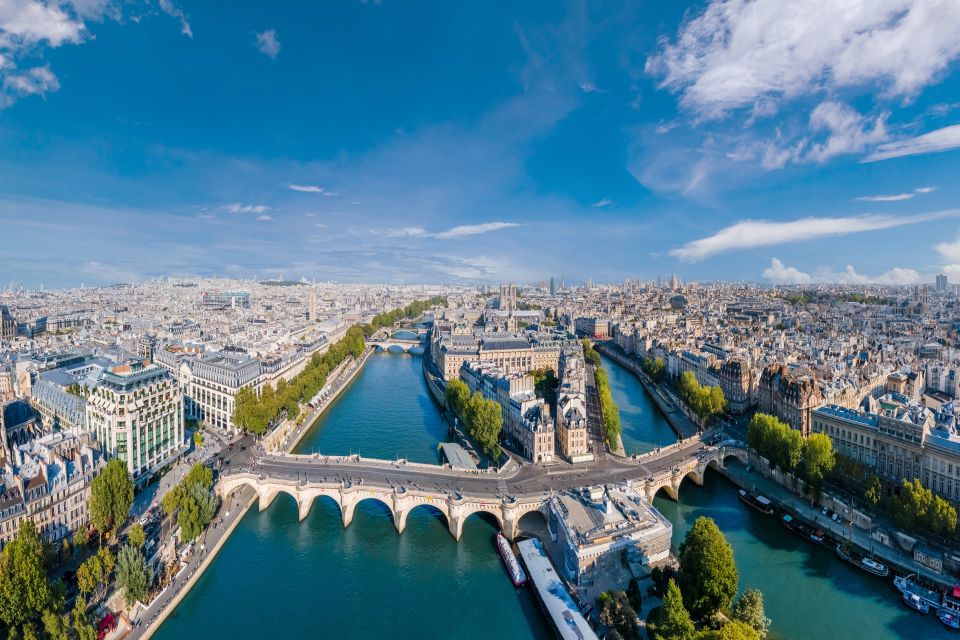
The walk then pushes into the Île de la Cité area, with Notre-Dame and Pont Neuf on the route. This is where you’ll likely want to slow down, because river-island layout and bridge viewpoints naturally create photo chances and “just stand here for a minute” moments.
The useful part of a self-guided format is that you control the viewpoint timing. If you want a quick look, you can do it. If you want to linger on the bridge area for the angle you like, you can. The booklet helps because it keeps the route logical without forcing you to stay with anyone else.
Practical tip: since inside entry isn’t included, you’ll want to decide early which sights are “worth buying tickets for” versus “worth appreciating from outside.” This tour is at its best when you match your effort to your interests.
Louvre Palace and Pyramid plus Tuileries Garden: big sites, flexible breaks
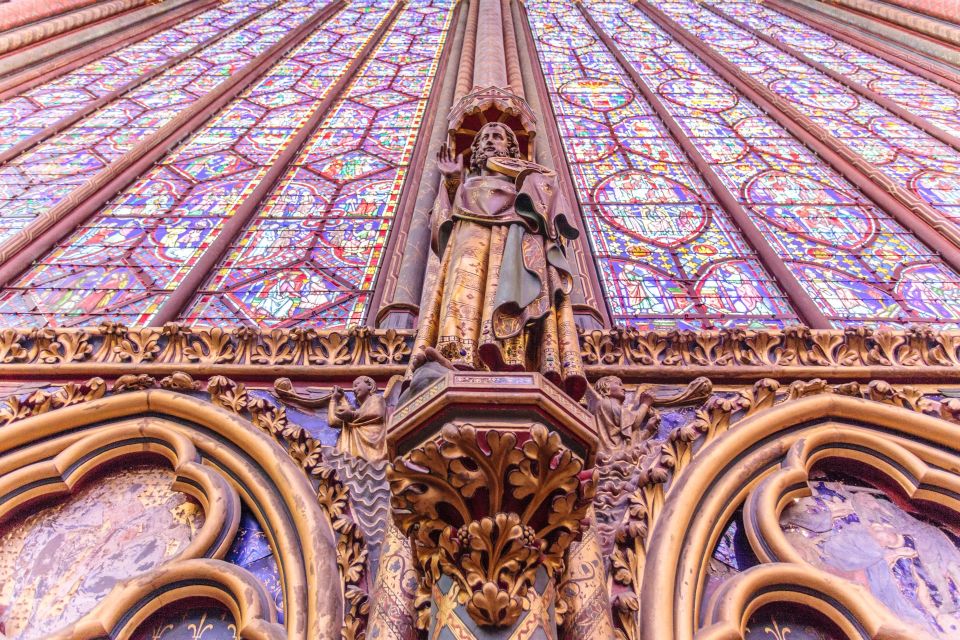
Next comes Louvre Palace & Pyramid and the Tuileries Garden. These stops can feel intense because they’re famous and they’re everywhere in photos. The good news is that a walking route like this keeps you from getting stuck doing one thing for hours.
You can treat Louvre-area and Tuileries as a two-part experience:
- Louvre Palace & Pyramid: a landmark moment on the city grid
- Tuileries Garden: a green reset where you can pause, regroup, and plan the next stretch
One caution: because you’ll be making choices on your own about tickets, don’t let this become a last-minute scramble. Use the booklet’s admission guidance and opening times so you know what’s realistic for your day.
Place de la Concorde to Champs-Élysées: the long-boulevard sweep

From the Louvre/Tuileries zone you move toward Place de la Concorde and then on to the Champs-Élysées. This is the part of Paris that feels like a stage set: wide views, big architecture lines, and the classic boulevard rhythm where walking speed starts to matter.
For this stretch, I like the self-guided approach because it lets you choose your “Paris mode.” If you want motion, you keep moving. If you want to stop for a break, you’ve got natural waypoints along the route.
Also, this is where it helps to have clear stop locations in your booklet. When you’re tired, you don’t want vague directions. You want: this is the next named place on the route, keep going.
Arc de Triomphe, then Jardins du Trocadéro for the Eiffel finale
The tour continues to Arc de Triomphe and then to the Jardins du Trocadéro. These are the lead-ins to the finish line: Eiffel Tower.
Arc de Triomphe is a key monument stop because it signals the transition from boulevard to skyline priorities. From there, Jardins du Trocadéro is your dramatic ramp toward the Eiffel Tower. Even if you don’t plan to go inside, this is where you’ll likely want your best photos and your best view time.
Finish at the Eiffel Tower, and you get the payoff of a route that deliberately ends with the city’s most iconic structure. Since the booklet guides you from stop to stop, you’re not guessing your way into the grand ending.
Inside access: no tickets included, so plan what you want to buy
This is the clearest limitation of the experience. The tour does not include entry inside any attraction. That means:
- you’ll be viewing many sights from outside or from publicly accessible areas
- if you want to enter a major site, you’ll need to purchase tickets separately
- your day timing may change based on ticketing and opening hours
The good part is that the booklet includes admission and ticket information for planning. So you can use the booklet to decide what to prioritize before you’re standing in line without a plan.
If you’re trying to keep your day smooth, pick one or two “inside” priorities max. For a route like this, trying to do everything inside can turn your walk into a series of detours.
The booklet depth question: great for logistics, lighter on deeper storytelling
I like when a self-guided tour gives you enough to move and enough to understand. Here, the practical info is a real strength: marked route, addresses, opening times, and ticket guidance all help you get your bearings fast.
Where it can fall short is depth. Some stops may feel like they get less background than you might expect if you’re craving origin stories or detailed context for major monuments. For big-name sites like the Louvre-area and Notre-Dame, you might find yourself wanting more explanation than the booklet provides.
So here’s how to use it well: treat the booklet as your day organizer and route companion. If you want extra layers, bring your own interests. You can always read more on your phone before the walk starts, then use the booklet to navigate and time your day.
Who this tour fits best
This works best if you:
- prefer a self-guided format and want to choose your time at each stop
- value a simple route with a map and practical planning details
- enjoy walking a city-center loop that hits the “must-see” cluster
- like combining famous landmarks with neighborhood streets like Le Marais and the Île de la Cité area
It may be less satisfying if you need a lot of narrative depth for every major monument. If you want a guide explaining art history, architecture, and political context stop-by-stop, you’ll probably want a guided tour instead.
Extra perk: a discount for a future guided adventure
After you book, you also receive a 10% discount code for booking any guided tour with Rosotravel to use on a future adventure. It’s a small bonus, but it nudges you in a good direction: use this self-guided walk to set your bearings, then add a guided deep-dive where you want more context.
Should you book this Paris city center self-guided walking tour?
Book it if you want an affordable way to cover a smart Paris loop from Place de la Bastille to the Eiffel Tower, with a map and a booklet that makes planning easier. It’s especially good if you like taking your time, mixing major sights with classic neighborhoods, and you’re comfortable handling any ticketing yourself.
Skip it or pair it thoughtfully if you’re looking for lots of written storytelling for each top attraction. In that case, you may still like the route, but you’ll want to supplement the context on your own so the day matches your curiosity.