REVIEW · PARIS
Pairs: The Opera to Hotel des Invalides Guided Walking Tour
Book on GetYourGuide →Operated by europaguia.com · Bookable on GetYourGuide
Paris’s most dramatic corners deserve slower walking. This 2-hour route strings together Napoleon III’s era with landmarks that still feel like set pieces: Palais Garnier, the Place Vendôme luxury block, Place de la Concorde, and a scenic finish on Pont Alexandre III.
What I like most is how the stops are chosen for payoff. You get Palais Garnier’s Phantom-of-the-Opera connection plus a front-row view of the Seine and the Eiffel Tower from the Pont Alexandre III finish.
One thing to consider: entrance tickets are not included, so if you want full interior access at places like the opera house, you’ll need to plan ahead.
In This Review
- Key points to know before you go
- Napoleon III’s Paris, from Palais Garnier to Pont Alexandre III
- Finding your guide at Place de l’Opéra (and not wandering around)
- Palais Garnier: the opera house with the Phantom-style legend
- Rue de la Paix to Place Vendôme: luxury, brands, and the Ritz orbit
- Place de la Concorde: the Luxor Obelisk and the Revolution where it happened
- Champs-Élysées stop: Grand Palais, Petit Palais, and the 1889 World Fair
- Pont Alexandre III finish: Seine views and an Eiffel Tower moment
- Value check: what $37 buys in 2 hours
- Who should book this tour, and who should skip it
- Should you book the Opera to Hotel des Invalides walking tour?
- FAQ
- Where does the tour start?
- Where exactly should I meet the guide?
- What language is the tour in?
- How long is the walking tour?
- How much does it cost?
- Is a local guide included?
- Are transport and tickets included?
- What are the main sights on the route?
- Where does the tour end?
- Is the tour wheelchair accessible?
- Is there free cancellation?
- Is reserve and pay later available?
Key points to know before you go
- Small-group style guidance (local guide): you’re not just wandering; you’re pointed at what matters.
- Spanish live guide + Spanish audio: even if your Spanish is rusty, you’ll have support both live and via audio.
- Napoleon III era focus: each street and plaza is tied to a story, not a random grab bag of sights.
- Guillotine history at Place de la Concorde: you’ll hear the Revolution context where it happened.
- Luxor Obelisk + major boulevards: you’ll see the obelisk, then move onto the Champs-Élysées with major palaces.
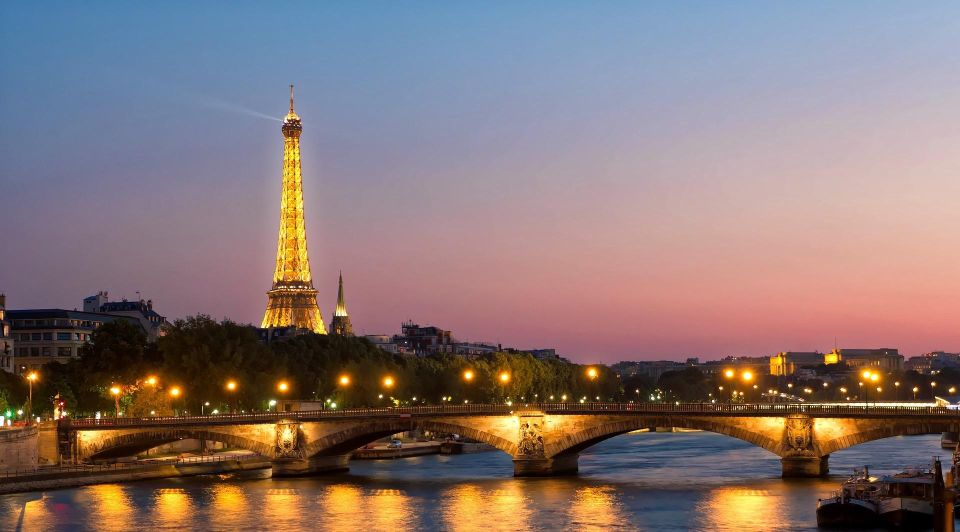
- Finish for views: the walk ends at Pont Alexandre III, where the Seine and Eiffel Tower show up in the same frame.
Napoleon III’s Paris, from Palais Garnier to Pont Alexandre III
This tour is designed like a timeline you can walk. You start at Place de l’Opéra and move through several of the most recognizable “big Paris” spots, but the emphasis stays on the 19th-century world around Napoleon III and the courtly Paris that came with him.
The idea of the tour is simple: you’re not just seeing pretty buildings. You’re learning why these places look the way they do, including what events shaped the architecture and how politics and culture made certain streets and squares the center of life.
The title references Hotel des Invalides, but the actual route you’ll walk ends on Pont Alexandre III. So if your goal is a compact hit of Napoleon III’s Paris core sights with a great finish, that’s exactly what this route is built for.
It’s also timed well for first-time visitors who don’t want to spend a whole day on trains and tickets. Two hours is tight enough that you’ll feel satisfied, not drained, even with lots of landmark photos.
You can also read our reviews of more walking tours in Paris



Finding your guide at Place de l’Opéra (and not wandering around)
Meeting is outside the Opéra subway station. The guide will be carrying a small white flag with a red flame symbol, waiting at the exit in front of La Paix coffee, near the Garnier opera palace.
This detail matters more than you’d think. Opéra area streets can feel like a maze if you arrive late or distracted. If you’re early, hang out near the coffee storefront, watch for the flag, and you’ll get oriented fast.
The tour is Spanish (live guide), and there’s also Spanish audio included. That means you’re less dependent on understanding every word in real time. If your Spanish is basic, you can still follow along because the narration support is built in.
Transportation isn’t included, and the walk is the whole point. Plan to arrive on your own metro or foot route, then let the guide take it from there.
Also, if you’re the type who likes a smooth start, arrive a few minutes early. Waiting is normal in any meet-up zone, and you’ll avoid that awkward moment of scanning crowds.
Palais Garnier: the opera house with the Phantom-style legend
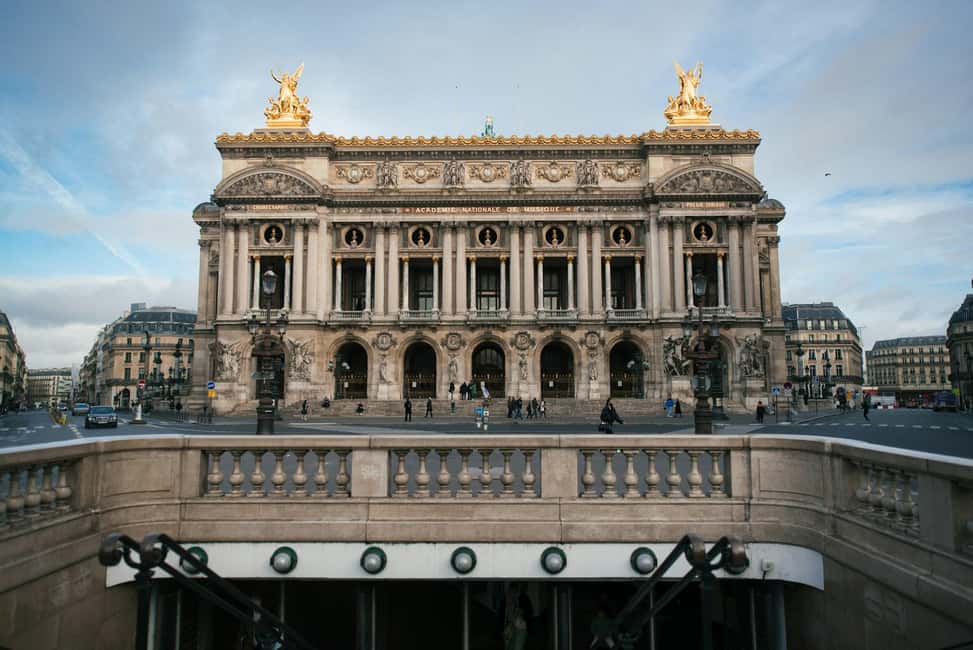
Your first major stop is Palais Garnier. This is the moment the tour earns its dramatic reputation. Palais Garnier isn’t just a famous building; it’s one of the places people associate with the big Paris imagination—spotlights, velvet, and theatrical design.
You’ll get a guided visit with time to wander. The tour format gives you both: the guide sets the scene, and you get enough free time to absorb the building at your own pace and take photos without feeling rushed.
A standout part of this stop is the Phantom of the Opera connection. You’ll hear how Palais Garnier helped inspire that cultural story, which makes looking at the building feel like more than architecture trivia. It turns your photo stop into a “why this place matters” moment.
One practical note: entrance tickets are not included. The itinerary says you’ll visit, but paid access rules can vary. If you want full interior access, treat this as something to confirm right at the meeting or just before the stop so you don’t get stuck at the wrong door with the wrong expectations.
Rue de la Paix to Place Vendôme: luxury, brands, and the Ritz orbit
After Palais Garnier, the route moves along Rue de la Paix, then opens up to Place Vendôme. This is where the tour shifts from spectacle to status.
Rue de la Paix is known for being elegant and expensive—so it can feel a little like a fashion runway without explanation. Here, the guide’s job is to give you the “why” behind the vibe, so the street stops feeling generic.
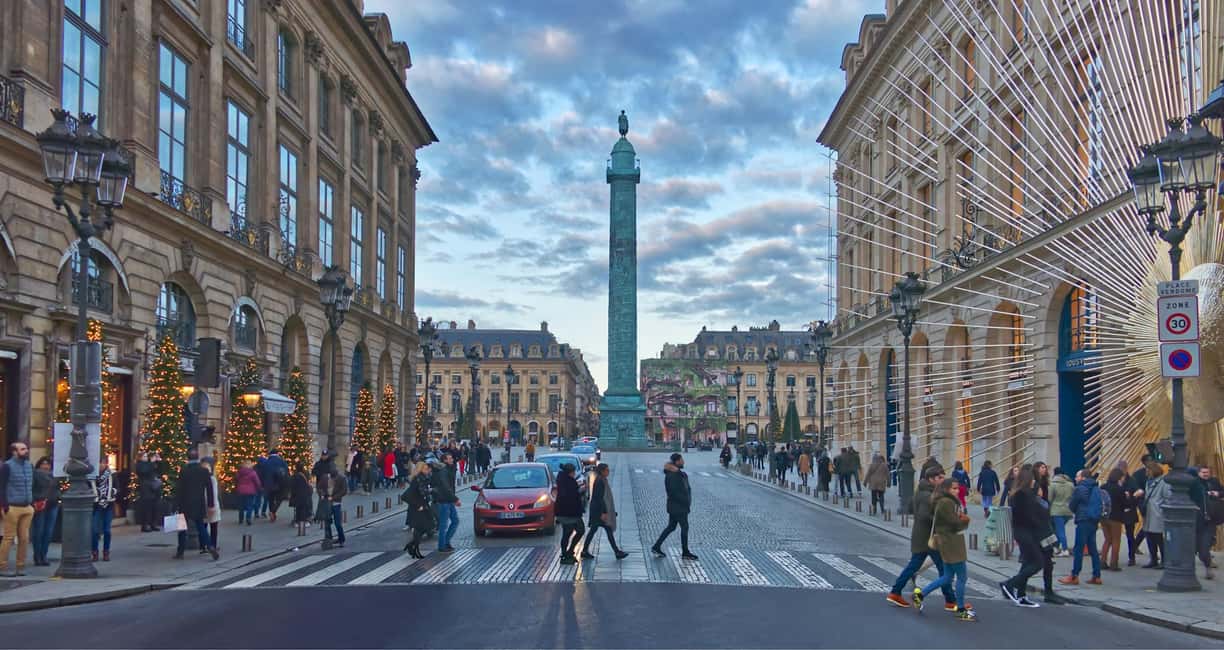
At Place Vendôme, the theme is luxury concentration. The square is described as home to prestigious watch, jewelry, and fashion brands, with the Ritz Hotel as a major focal point in the view.
Even if you’re not shopping, I like this stop because it helps you read Paris differently. You start to notice how power and wealth shape urban design: where grand hotels sit, what kind of street energy surrounds a square, and why certain corners become the city’s high-gloss stage.
This is also a nice pacing reset. After Palais Garnier’s big-visual impact, Place Vendôme gives you a calmer, more architectural look—less intense, more gaze-and-observe.
Place de la Concorde: the Luxor Obelisk and the Revolution where it happened
Then you reach Place de la Concorde, edged by the Tuileries Gardens. This is one of those squares where the scale feels almost unreal—wide-open, grand sightlines, and built for ceremonial moments.
But the tour’s story here doesn’t stay polished. You’ll get context about the French Revolution and how the square’s role turned dark, including the fact that the famous guillotine was installed there.
It’s a heavy detail, and it changes how you experience the space. The obelisk at the center—an Egyptian-style monument known here as the Luxor Obelisk—suddenly feels less like decoration and more like a symbol of how Paris collects objects, narratives, and meanings over time.
One practical consideration: Place de la Concorde can be windy and exposed, and it’s easy to lose track of where you are if you stop walking for photos too long. Keep one eye on your guide and one eye on the central monument. That way you get the picture without falling behind.
If you want a tour that treats history as something you can actually see in the street plan, this stop is a key reason to pick this one.
You can also read our reviews of more guided tours in Paris





Champs-Élysées stop: Grand Palais, Petit Palais, and the 1889 World Fair
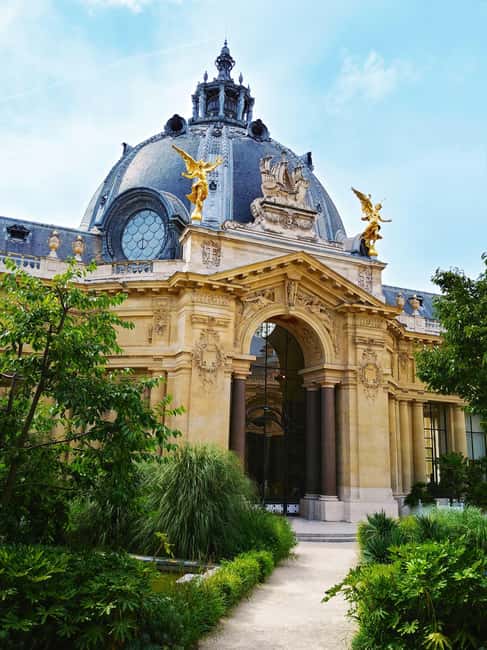
Next comes the Champs-Élysées, described as one of the most beautiful boulevards in the world. You’ll feel why immediately: it’s built for long views, with landmark buildings framing the boulevard like stage sets.
What makes this stop more than a photo line is the context around the palaces. You’ll stop between the Grand Palais and Petit Palais, and you’ll hear about the Petit Palais as the venue for the 1889 World Fair, a unique exhibition of its kind.
That World Fair connection gives you a way to interpret what you see. Instead of thinking of these palaces as just “famous,” you start seeing them as built-out stages for national pride, invention, and spectacle.
The guide’s narrative is especially helpful here because the boulevard can feel like it’s mainly about motion—traffic, crowds, brand windows, and fast walking. With a guided stop, you slow down just enough to connect the spaces to the bigger cultural push of the era.
Also, the tour keeps the pacing manageable. Two hours total means you won’t get stuck in one place forever. You get enough time to understand, then you move on to the best payoffs.
Pont Alexandre III finish: Seine views and an Eiffel Tower moment
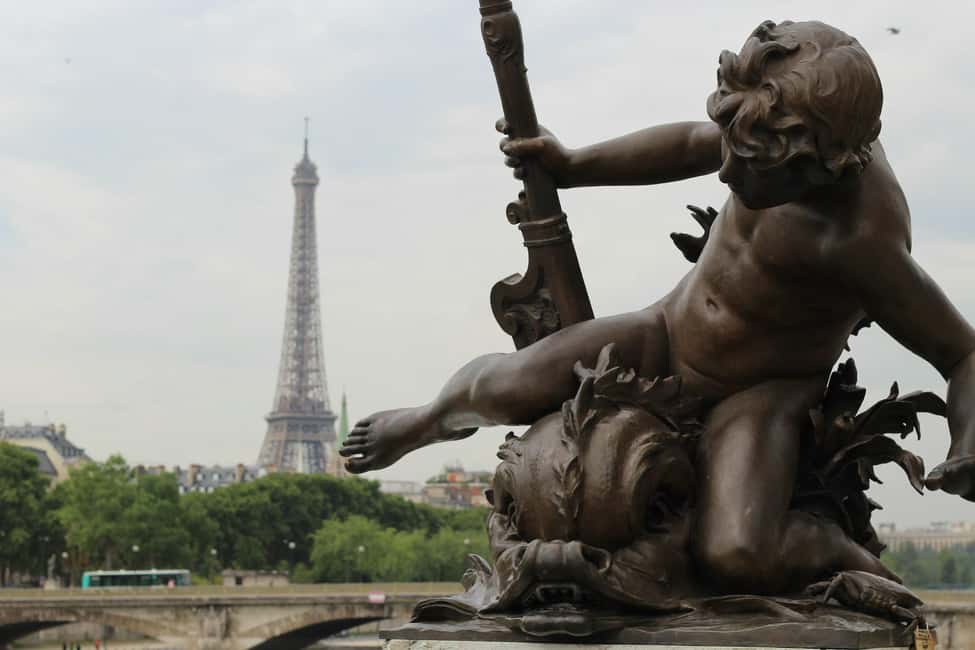
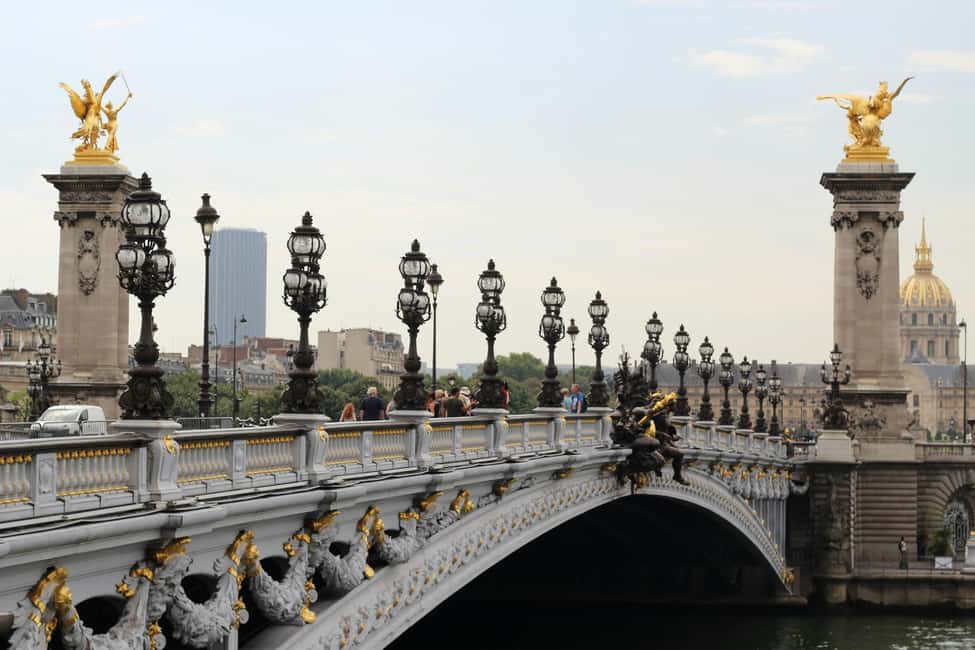
The last stop is Pont Alexandre III, a monumental bridge described as an architectural tribute to a Russian Tsar. That explanation matters because bridges in Paris often act like art galleries in motion. You’re looking at a structure made to impress, not just to cross the river.
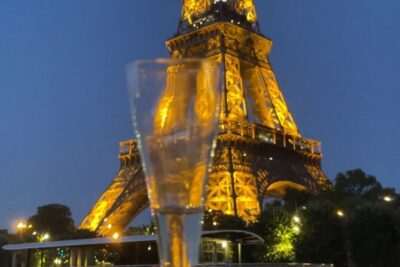
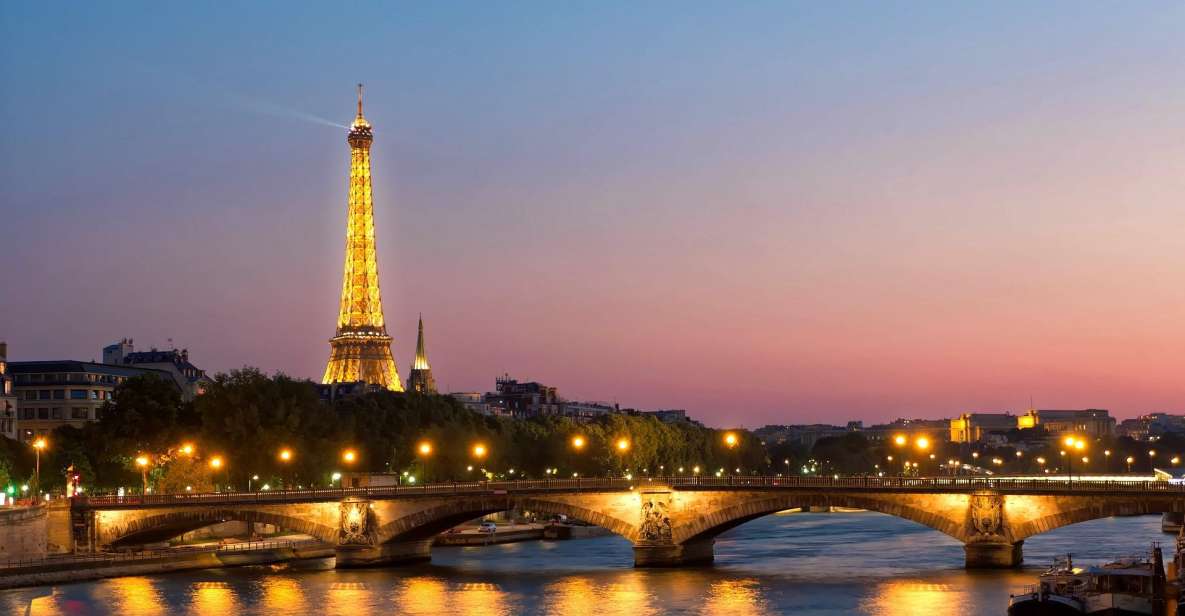
From here, the tour pays off with views. You can see the Seine and the Eiffel Tower from the bridge area, giving you a final-photo moment that feels bigger than the usual “quick glance from a nearby street.”
This finish is smart for your day planning. Once you’ve got these views, you can decide what to do next based on your energy level: call it a day, or head out for food and nightlife.
The tour info even notes that there are recommendations for dancing, eating, and enjoying Paris after the walk. Even without specific details provided here, the point is that the tour is designed as a start to your evening plans, not an end that leaves you stranded.
If you’re doing this early in your trip, the bridge finish helps you build a mental map of where major sights cluster along the Seine.
Value check: what $37 buys in 2 hours
At about $37 per person for a 2-hour guided walking tour, you’re paying for a specific kind of value: expert direction plus a guided narrative through multiple top-tier sights.
You don’t get transport included, and entrance tickets aren’t included. So you’re not buying a “skip-the-line, tickets included” product. Instead, you’re buying context and route efficiency—someone showing you what to look at and how to connect the dots between buildings, political events, and cultural myths.
That can be excellent value in Paris, where top attractions can eat time and energy if you go in cold. A guided route reduces the mental load. You’ll spend less time wondering what’s worth your attention and more time actually seeing and understanding.
The tour also includes Spanish audio support alongside a Spanish live guide. For many visitors, that’s a quiet value booster. It reduces the frustration of missing key details if you can’t track everything in real time.
Rating is a bit mixed overall (3.7 from 3 reviews), but the strongest review highlights the guide’s kindness and knowledge. That’s what you’re paying for here: a guide who knows how to explain without making it feel like a lecture.
Who should book this tour, and who should skip it
This tour is a good fit if you want a guided hit of Napoleon III era Paris in a compact time window. If you like history that’s tied to specific places—opera houses, squares, boulevards, and bridges—this format will feel satisfying.
It’s also a solid choice for Spanish speakers or anyone who prefers having Spanish audio support. The combination of live narration and audio playback makes it easier to follow even if your language skills aren’t perfect.
You might want to skip or adjust expectations if you’re only interested in one attraction and don’t care about the route between them. This isn’t a single-site deep dive. It’s a connected walk where each stop supports the next story.
Also, if your priority is guaranteed interior entry at every building, check access expectations before you go. Since entrance tickets are not included, the amount of inside time may depend on how you choose to experience each site during the free time segments.
If you’re traveling with older kids who like quick stories, this could work well too. Just keep in mind it’s a lot of walking and a fair amount of historical context.
Should you book the Opera to Hotel des Invalides walking tour?
If your goal is to see the highlights of Napoleon III’s Paris—Palais Garnier, Place Vendôme, Place de la Concorde, the Champs-Élysées area, and finish with a great Seine/Eiffel view—then yes, this is worth booking.
Book it if you:
- want a guided story through multiple landmark zones in about 2 hours
- appreciate the Phantom-of-the-Opera connection at Palais Garnier
- like history tied to visible places, including the Revolution context at Concorde
- prefer Spanish narration with an audio backup
Consider alternatives if you:
- need entrance tickets included for major indoor sites
- only want one or two attractions and hate moving around
- prefer long, slow museum-style pacing
One last tip: plan your timing so you can enjoy the ending views at Pont Alexandre III without rushing to catch another commitment immediately. That finish is the kind of moment you’ll want to pause for a few extra minutes.
FAQ
Where does the tour start?
It starts at Place de l’Opéra, with the meeting point outside the Opéra subway station.
Where exactly should I meet the guide?
Stand outside the Opéra subway station exit in front of La Paix coffee and the Garnier opera palace. The guide will be holding a small white flag with a red flame symbol.
What language is the tour in?
The live tour guide speaks Spanish, and the audio guide included is also in Spanish.
How long is the walking tour?
The duration is 2 hours.
How much does it cost?
The price is $37 per person.
Is a local guide included?
Yes. A local guide is included.
Are transport and tickets included?
No. Transport is not included, and entrance tickets are not included.
What are the main sights on the route?
You’ll see Palais Garnier, Rue de la Paix, Place Vendôme, Place de la Concorde with the Luxor Obelisk, the Champs-Élysées area near Grand Palais and Petit Palais, and you’ll end at Pont Alexandre III.
Where does the tour end?
The tour finishes at Pont Alexandre III.
Is the tour wheelchair accessible?
Yes, it is wheelchair accessible.
Is there free cancellation?
Yes. You can cancel up to 24 hours in advance for a full refund.
Is reserve and pay later available?
Yes. You can reserve now & pay later.