REVIEW · PARIS
Montmartre Walking Tour Cultural Charm and Tasty Treats
Book on Viator →Operated by TOUR TRIP · Bookable on Viator
Montmartre feels like another century. In about two hours, you follow an expert guide through legendary art corners, classic streets, and big Paris viewpoints. You’ll start at the cabaret legacy of Moulin Rouge and end at Sacré-Cœur with that unmistakable hilltop panorama.
I really love how the tour connects famous names to real places you can actually point at, like the windmill that drew artists and the historic Bateau-Lavoir where Picasso and Modigliani worked. I also love the Sacré-Cœur finish, because you get to see the city’s spread without needing museum planning.
One thing to consider: this is a walking tour, and Montmartre’s streets add up. If you want lots of long stops inside churches or extended time in museums, you may wish you had more hours.
In This Review
- Key points to know before you go
- Why Montmartre still feels like Paris’s creative workshop
- Meeting at Cœur Sacré and pacing for the hill climb
- Moulin Rouge: can-can roots and bohemian nightlife context
- Rue Lepic and the Café des 2 Moulins stop you’ll recognize
- Le Moulin de la Galette: Montmartre’s last-standing windmill
- Abbesses and the Art Nouveau feel at Place des Abbesses
- Le Mur des Je t’aime: quick, colorful, and surprisingly meaningful
- Rue des Abbesses: where the artist streets start to feel personal
- Place Émile Goudeau and the Bateau-Lavoir link to Picasso
- Eglise Saint-Pierre de Montmartre: a 12th-century pause
- Place du Tertre: street artists and portrait painters in action
- Basilique du Sacré-Cœur: the panoramic payoff
- Price and value: is $40.48 for 2 hours a smart deal?
- Who should book this Montmartre walk
- Quick practical tips for an easier Montmartre day
- Should you book this Montmartre walking tour?
- FAQ
- How long is the Montmartre walking tour?
- What is the price per person?
- Where does the tour start and where does it end?
- Is a mobile ticket included?
- What size is the group?
- Is free cancellation available?
Key points to know before you go
- Two-hour, small-group format (max 20) makes it easier to ask questions and keep a relaxed pace
- Moulin Rouge to Sacré-Cœur follows a logical climb through the neighborhood’s most recognizable scenes
- Rue Lepic and Café des 2 Moulins give you a fun pop-culture stop tied to Amélie
- Le Moulin de la Galette is a must-see, with artist stories linked to Renoir and Van Gogh
- Wall of Love (I love you in 300+ languages) is quick, colorful, and great for photos
- Place du Tertre portraits and street artists capture Montmartre’s on-street creative energy
Why Montmartre still feels like Paris’s creative workshop
Montmartre has a way of making you slow down. Even if you’ve been to Paris before, this hill neighborhood feels different: cobbled lanes, painter chatter, and storefronts that look like they’ve been there forever. The tour is a smart way to experience that feel without wasting time guessing where to go.
What makes this walk work is that it mixes famous landmarks with the quieter streets in between. You don’t just see the postcard spots. You learn why they mattered to artists who were here long ago. And because the pacing is built around short stops, you’ll actually get to absorb the neighborhood instead of racing from one attraction to another.
You can also read our reviews of more walking tours in Paris



Meeting at Cœur Sacré and pacing for the hill climb
The tour starts at Cœur Sacré, 5 Rue Saint-Éleuthère (and it ends back at the same meeting point). Plan for an easy-to-moderate walk for about 2 hours, with several brief stops along the way.
This matters for two reasons. First, your shoes count in Montmartre. The sidewalks and lanes can be uneven, and the hill adds effort. Second, the short stop format means you’ll get a taste of each site, but you won’t have time for long detours. If you like to linger, save that for Place du Tertre and the Sacré-Cœur area where you can pause and watch.
Moulin Rouge: can-can roots and bohemian nightlife context
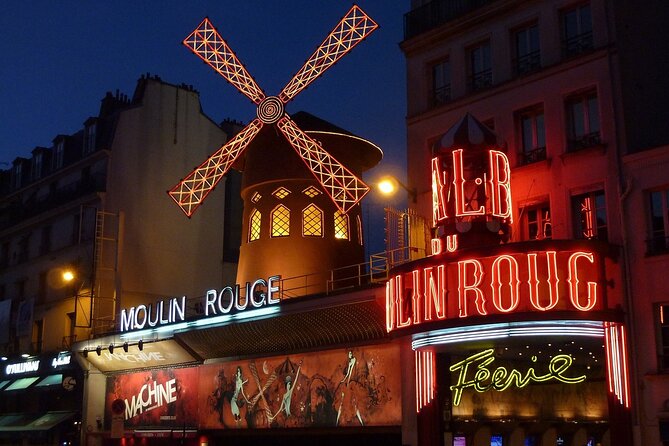
Stop one is Moulin Rouge, the world-famous cabaret tied to the birthplace of the can-can dance. It’s easy to walk past this place as a movie set, but with a guide you’ll hear what it represented for Montmartre’s nightlife and bohemian scene.
You get a short look at the landmark, plus a bit of context that makes the building feel less like a poster and more like a slice of social history. Is it touristy? Sure. But when you understand the role it played in local culture, it lands differently.
Practical tip: take a quick photo, then shift your attention to the street energy around it. That’s where Montmartre starts to feel real.
Rue Lepic and the Café des 2 Moulins stop you’ll recognize
From Moulin Rouge, you move onto Rue Lepic, one of those gentle Paris streets where cafés and shops line the way. This is where the tour shifts from big-name history into neighborhood atmosphere.
You’ll pass Café des 2 Moulins, which is featured in Amélie. Even if you’re not a superfan, it’s a useful landmark for orientation. You can also decide on the spot whether you want to pause for a coffee later—this tour gives you time to notice what’s around you instead of treating Montmartre like a checklist.
Potential drawback: if you’re hoping for a long café sitting with food included, this isn’t built that way. The stops are brief, and you’ll be buying anything tasty on your own.
Le Moulin de la Galette: Montmartre’s last-standing windmill
Next up is Le Moulin de la Galette, described as Paris’ last-standing windmill. This is one of the stops where the guided stories do real work, because the windmill becomes more than scenery.
You’ll hear how it influenced and intersected with artists like Renoir and Van Gogh. That’s the tour’s core strength: it ties art life to place. When you stand where painters once looked and worked, those names stop being distant labels.
Take a moment here to look around, not just up at the structure. Montmartre’s layout is part of the charm, and the guide helps you understand why artists found the neighborhood so inviting.






Abbesses and the Art Nouveau feel at Place des Abbesses
At Place des Abbesses, you’ll see the Abbesses Metro Station and its Art Nouveau entrance. This stop is short, but it’s a good example of how the tour sneaks in design details that many people miss.
Art Nouveau isn’t always what first-time visitors think to search for in Paris. Here, it fits naturally into the neighborhood walk because Montmartre is full of decorative flourishes. You’ll get a quick moment to appreciate it up close, then keep moving.
If you care about architecture (or just enjoy noticing interesting doorways and station entrances), this is a satisfying stop for how little time it takes.
Le Mur des Je t’aime: quick, colorful, and surprisingly meaningful
Then comes Le Mur des Je t’aime, the Wall of Love with “I love you” written in over 300 languages. It’s a short stop, but it’s one of those places that feels better in person than it does in photos.
This is a good chance to slow your pace for a minute, especially if your phone camera is already doing overtime. You’ll likely spend more time framing shots than you do reading everything, but either way it gives you a burst of color on the walk.
Photo advice: shoot a few close-ups and then step back for a wider view. The mural reads differently from each distance.
Rue des Abbesses: where the artist streets start to feel personal
After the wall, the tour continues along Rue des Abbesses, where you’ll walk through historic streets and pass charming boutiques and cafés. This section matters because it’s less about a single monument and more about how Montmartre feels on a normal day.
You’ll also hear that artists once lived and worked in these streets. That matters because it shifts your mindset: you’re not just seeing what’s famous. You’re seeing what supported everyday art life—workshops, small storefronts, places to meet, and routes that made sense on foot.
If you like wandering with a purpose, this is one of the best stretches.
Place Émile Goudeau and the Bateau-Lavoir link to Picasso
At Place Émile Goudeau, you visit the historic site of the Bateau-Lavoir. This is where the tour leans hard into art history in a practical way, tying the neighborhood’s creative energy to specific figures.
You’ll learn how artists such as Picasso and Modigliani created masterpieces here. That makes the stop more than a trivia moment. You can look at the area and think about how working artists gathered in spaces like this, then carried ideas outward.
Why this stop is valuable: it gives you a “how creativity actually happened” feeling, not just famous portraits and gallery facts.
Eglise Saint-Pierre de Montmartre: a 12th-century pause
Next is Eglise Saint-Pierre de Montmartre, one of the oldest churches in Paris, dating back to the 12th century. This stop works as a reset after the art-history intensity of Bateau-Lavoir.
It also gives the walk a believable sense of time passing. Montmartre’s creative reputation is modern and often associated with painters of the late 1800s, but the neighborhood’s roots go much further back. That blend—old stone plus artist legend—is a big part of why the hill feels romantic and layered.
Even if you only take a quick look, you’ll feel a shift in mood. It’s quieter here than the plazas, and that balance is nice.
Place du Tertre: street artists and portrait painters in action
At Place du Tertre, you enter the lively heart of Montmartre’s street art scene. The square is known for street artists and portrait painters displaying their work, and it’s the kind of place where you naturally slow down just to watch.
This stop is fun because it brings the tour’s theme back to the present. Yes, you’re learning about legendary artists, but here you’re also seeing art happening around you—right on the street.
If you want a quick souvenir, this is often where people shop for sketches or small pieces. If you’d rather just observe, you can do that too and use the time to practice your best “Paris portrait in the background” photo style.
Basilique du Sacré-Cœur: the panoramic payoff
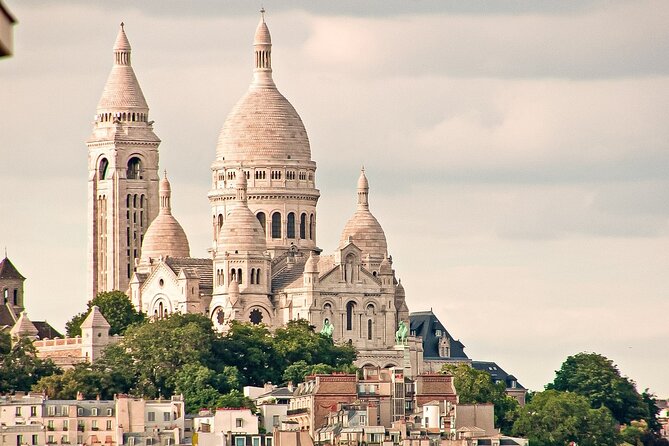
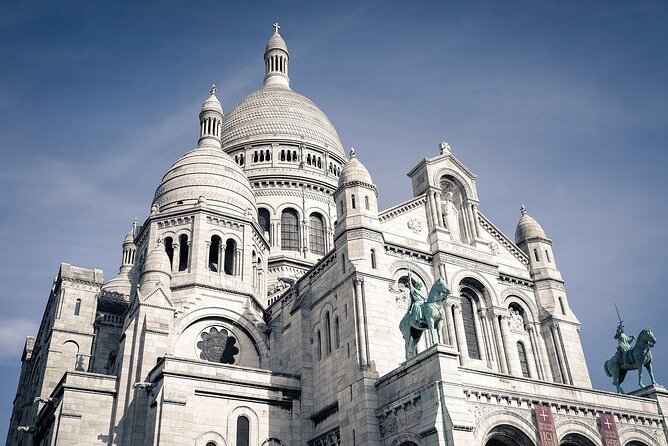
The final stop is Basilique du Sacré-Cœur de Montmartre. The tour ends near the basilica area so you can take in the panoramic views of Paris from this high point in the city.
This is the payoff moment you came for. The view helps you understand why Montmartre drew artists in the first place: it’s open, dramatic, and full of angles. The guide also gives you the option to explore the basilica interior or relax on the steps.
Either way, it’s a satisfying finish. You get the neighborhood’s story, plus the sightline that makes Paris feel like Paris.
Practical note: if you want the best photos, look for where the steps open up and where people aren’t blocking your angle. A quick move of a few feet can change everything.
Price and value: is $40.48 for 2 hours a smart deal?
At $40.48 per person for about 2 hours, this is not a budget-only tour, but it can be good value if you want guidance instead of wandering blind. You’re paying for a local professional guide and a structured walk through major Montmartre sites.
A couple value signals help here:
- The tour includes the guided visit, not just a self-walk route.
- The listed site stops are marked with free admission, so you’re not likely to hit extra ticket costs for the specific points you visit.
- The group size is kept to a maximum of 20, which usually makes it easier to hear the guide and keep your bearings.
Also, the tour has mobile ticket delivery, which saves time and fuss once you’re in Paris.
Where the value depends on you: if you already know Montmartre well and only want the Sacré-Cœur view, you could go on your own. But if you want the stories—Picasso and Modigliani at Bateau-Lavoir, Renoir and Van Gogh near the windmill, and the cultural meaning behind the Wall of Love—this format is the kind that pays you back in understanding.
Who should book this Montmartre walk
This tour fits best if you want:
- A first-time Paris day with art and culture, without cramming museums
- A romantic-feeling stroll through old streets, cafés, and viewpoints
- A guided way to understand why Montmartre mattered to major artists
- A small-group experience that stays around the neighborhood core
It may feel less ideal if you want long museum time, deep indoor exploration at multiple sites, or a dedicated food tour. This walk is about the neighborhood story—then you can choose how to extend it with your own café stops.
Quick practical tips for an easier Montmartre day
- Wear comfortable, grippy shoes. Cobblestones and hills can turn a pleasant walk into a tough one.
- Bring a light layer. Even when Paris feels warm, mornings and hilltop areas can be breezy.
- If you’re sensitive to crowds, aim to visit thoughtfully and take your time at the less busy moments like church viewing and short breaks.
- Set expectations for the “tasty” part: the tour’s flavor is cafés and atmosphere, but you’ll likely buy your own snacks.
Should you book this Montmartre walking tour?
If you want Montmartre in a tight, organized package, I think this is a strong pick. The length is manageable, the group is small, and the itinerary is built around the places that make Montmartre feel like a living story. The best moments tend to be the artistic connections—where legends meet streets you can stand on—and the final Sacré-Cœur viewpoint.
Book it if you like walking tours with real context, enjoy cafés and street scenes, and want an easy way to see the neighborhood’s most memorable spots without juggling transit and directions.
Skip it if you already have a detailed Montmartre plan, or if you don’t like hills and short stop pacing. In that case, you might prefer a longer, more flexible self-guided day.
FAQ
How long is the Montmartre walking tour?
The tour lasts about 2 hours.
What is the price per person?
It costs $40.48 per person.
Where does the tour start and where does it end?
It starts at Cœur Sacré, 5 Rue Saint-Éleuthère, 75018 Paris, France, and it ends back at the meeting point.
Is a mobile ticket included?
Yes, the tour uses a mobile ticket.
What size is the group?
The tour has a maximum of 20 travelers.
Is free cancellation available?
Yes. You can cancel for a full refund up to 24 hours in advance of the experience start time. Tips are not included.