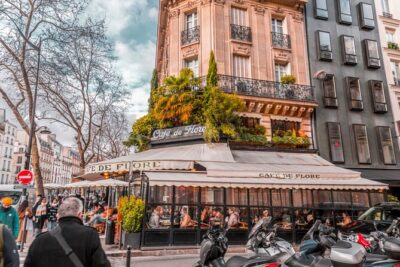
REVIEW · PARIS
Montmartre Self-Guided Audio Tour: More Than Meets the Eye
Book on Viator →Operated by VoiceMap Audio Tours · Bookable on Viator
Montmartre rewards slow footsteps and good stories. This self-guided audio walk strings together love in hundreds of languages, old church records, and real artist hangouts, all timed to an easy-to-follow route. You also get offline audio and maps, so you are not stuck hunting for signal in the hills.
What I like most is the freedom: you can move at your own pace, pause when you want, and even adjust the speed of the recording. The narration also feels like a friend walking beside you, with directions that track your location and help you get back on track fast. I also appreciate the lifetime access angle, since you can replay sections later when you want to connect the dots.
One thing to plan for: this is Montmartre. Expect uphill walking, stairs, and phone-in-hand navigation in a very hilly neighborhood. A few people reported app or GPS hiccups too, so bring a charged phone and a portable power bank if you can.
In This Review
- Key Points You’ll Actually Care About
- Montmartre Is Perfect for a Self-Guided Audio Route
- Start at 22 Rue des Abbesses and Get Oriented Fast
- The Church With Records From 885 and Why That Matters
- Picasso’s Years, Modigliani’s Workshop Life, and the Studio Circuit
- The Way Past the Windmill: Moulin de la Galette and Van Gogh’s Views
- Maison Rose, the Tiny Vineyard, and Lapin Agile’s Long Cabaret Trail
- Place du Tertre and the Restaurant That Connected Artists
- Down Toward Sacré-Cœur: Rue de l’Abreuvoir and a Final Peek Inside
- Price, Timing, and Why This Costs Less Than You Think
- Smooth Navigation Tips With VoiceMap Offline GPS
- Should You Book This Montmartre Self-Guided Audio Tour?
- FAQ
- How much does the Montmartre self-guided audio tour cost?
- How long does the tour take?
- What language is the audio tour in?
- Does the tour work offline?
- What do I need to bring?
- Where do I start and where does it end?
- Are museum tickets or entrance fees included?
- Is this a guided group tour?
- What’s the cancellation policy?
- FAQ
- Is the tour available at any time?
- What if I get off track?
- How early should I book it?
Key Points You’ll Actually Care About
- Offline by default: audio, maps, and geodata work even when your phone struggles with signal.
- Walk when you want: self-guided pacing means no chasing a group through tight streets.
- Art stops with context: Picasso, Renoir, Van Gogh, Modigliani, and more show up as part of place-based stories.
- Good directions for solo time: GPS location awareness and off-track help show up in the experience.
- Worth it for repeat listening: lifetime access lets you revisit the route after you’ve studied what you saw.
- Plan for hills: expect stairs and inclines, especially near the top and around Sacré-Cœur.
Montmartre Is Perfect for a Self-Guided Audio Route
Montmartre can be tricky on foot if you only rely on instinct. Streets twist, viewpoints appear and disappear, and you can easily miss why a place matters. This tour works because it focuses on what you’re standing in front of—then adds the human story right as you reach it.
You are not paying for museum time or a reserved entrance. Instead, the value is in narration that turns recognizable landmarks into a walkable timeline: language and love at the Wall of Love, church history with written records going back to 885, and the artist footprint around Picasso and the cafés that fed the art scene.
The self-guided format is also a big plus if you hate group logistics. You can stop for street music, sit with a coffee, or linger at a façade without feeling rude. Just remember: this is still a walking tour through a steep neighborhood. If you have mobility limits, plan your pacing carefully.
You can also read our reviews of more guided tours in Paris



Start at 22 Rue des Abbesses and Get Oriented Fast
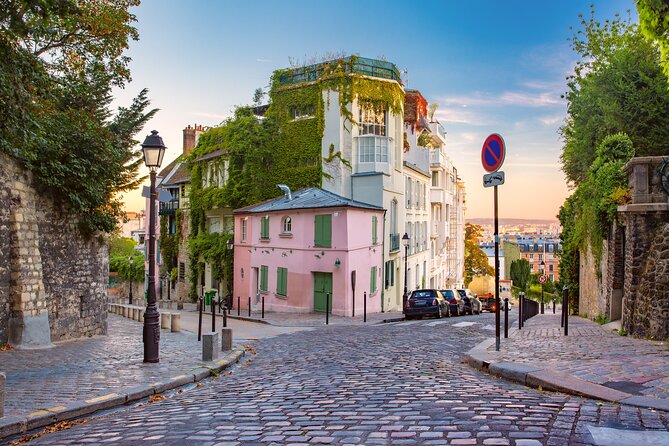
Most routes start with a museum-like entrance. This one starts in the real neighborhood, at 22 Rue des Abbesses (75018). It is an easy way to begin without feeling like you are arriving late to a set program. Once you start, the audio is designed to trigger as you move, using your phone’s location to keep you on the right stretch.
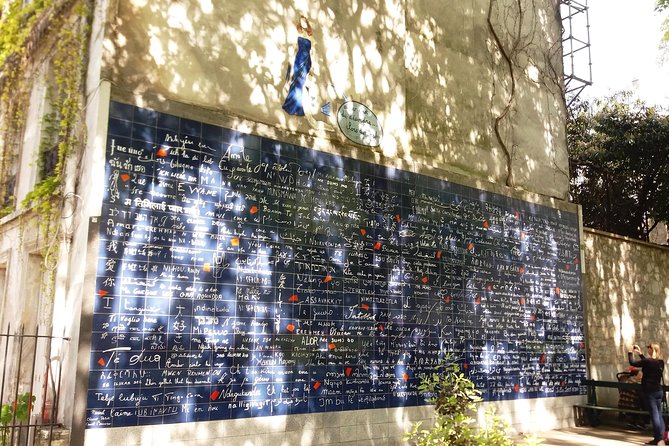
Early on, you immediately get the kind of stop that makes Montmartre feel different: the Mur des je t’aime, generally called the Wall of Love in English. It was created in 2000 by Frederic Baron and Claire Kito, and it is covered with tiles that represent 311 ways to say I love you in 250 languages. It’s the kind of moment that would be beautiful on its own, but here you get the added meaning—so you actually look at the details instead of walking past.
This opening matters. When you understand why places exist—language, devotion, artists, cafés—you start noticing things you would normally ignore: the small choices in design, the names linked to streets, the way buildings frame views.
The Church With Records From 885 and Why That Matters
After the Wall of Love, you reach a church with written records dating back to 885—which makes it one of the oldest Christian sites in Paris. That single detail changes how you read the area. Montmartre is famous for art, but it is also layered with long religious history.
On an audio walk, you do not just hear facts. You learn what to look for: how this site fits into a timeline that stretches far beyond postcards. And because you are hearing the information while you are standing there, the story sticks better than if you read it later back at your hotel.
Practical note: churches can be quiet and sometimes darker inside. Keep your brightness up enough to read your phone, and be ready for the audio to behave differently when you step in. Some people reported that GPS can misread your exact position while you are inside, so treat the app as a guide—not a perfect measuring device.
Picasso’s Years, Modigliani’s Workshop Life, and the Studio Circuit
One of the most rewarding parts of this walk is the way it connects art history to actual buildings. You visit a workshop where Picasso lived between 1904 and 1909. It also ties in Modigliani, who lived and worked there. And the narration widens the lens beyond those superstars, mentioning other artists who were part of the same creative orbit: Renoir, Juan Gris, Max Jacob, le Douanier Rousseau, and others who are less famous today.
This is why the route works: it doesn’t only name-check big names. It places them in a geographic web, so you start to understand how Montmartre functioned as a working neighborhood, not just a stage.
As you continue, you pass place Émile-Goudeau, then Picasso First Studio, and later La maison de Dalida. These stops keep the pace moving while still feeling connected. You’re not bouncing randomly from one museum-level attraction to another. You’re walking through the neighborhood that produced the art life you hear about.
Tip: if you like art history but hate long lectures, this format hits the sweet spot. Each area gets a focused story, then you move on before the information overload kicks in.
The Way Past the Windmill: Moulin de la Galette and Van Gogh’s Views
Next comes one of the most iconic Montmartre images: the windmill known as the Moulin de la Galette. The tour notes it as one of only two windmills left in Montmartre, and it originally specialized in grinding wheat. Over time, it became a restaurant, and famous artists spent time there and painted it—turning the windmill into an icon of the hill.
There’s a neat art detail you’ll hear: Renoir’s Bal au Moulin de la Galette does not show the windmill itself. Instead, it shows the party happening behind that famous facade. That kind of clarification is gold, because it stops you from misreading a painting when you later see it elsewhere.
The narration also ties in Van Gogh, who painted several versions of this windmill because his brother Theo lived nearby and Van Gogh knew the area well. In other words, you learn the connection to place, not just the fact that he painted something.
Nearby, you also pass Le Passe-Muraille and the Statue of Saint-Denis. These stops add personality. They’re not the type of things most people would seek out on their own, but they help Montmartre feel like a lived-in city with stories on every corner.
You can also read our reviews of more tours and experiences in Paris





Maison Rose, the Tiny Vineyard, and Lapin Agile’s Long Cabaret Trail
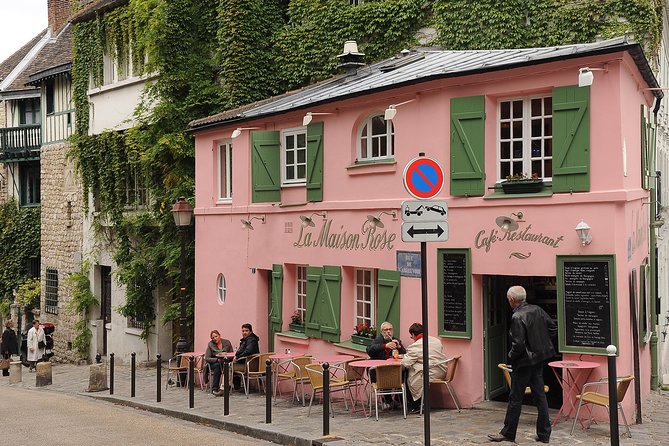
Now you get the Montmartre mood in full color. The route brings you to the second pink house where it says Maison Rose. A local painter named Utrillo made it famous, and the tour also explains how it later became a social magnet: it was bought by someone with connections to famous singers, so performers often patronized it. Names included are Edith Piaf, Aznavour, and Jacques Brel—and even before them, author Albert Camus was a fan.
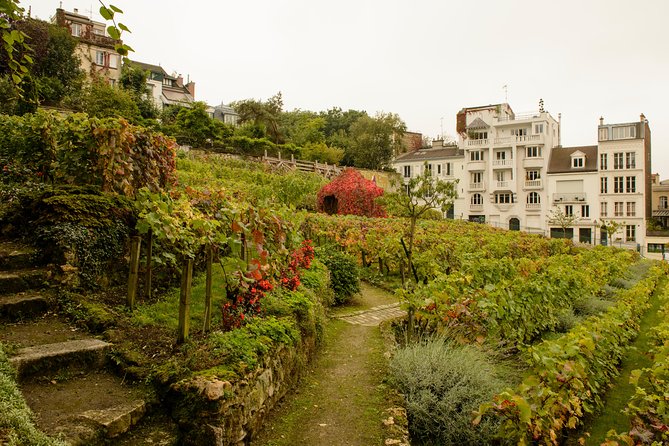
Then comes a detail I really enjoy because it feels so human: Montmartre used to have many vineyards, and this one is among the few left. The vineyard is so small one person can care for it, keeping it pretty for visitors, tour guides, the mayor, and TV crews. That line tells you something about the neighborhood: even today, it’s not just history behind glass.
After that, you reach Lapin Agile, a cabaret that first opened in 1795. It started as the Rendez-vous of Thieves, then became the Cabaret of the Assassins. In 1880 caricaturist André Gill was commissioned to redesign the place, and he came up with the rabbit drawing. This stop gives you a quick but satisfying arc: from shady nickname to enduring visual identity.
As you walk, you’ll feel the tour doing something smart. It mixes iconic art visuals (windmill, pink house) with smaller local histories (vineyard caretaking, cabaret branding) so your attention stays engaged.
Place du Tertre and the Restaurant That Connected Artists
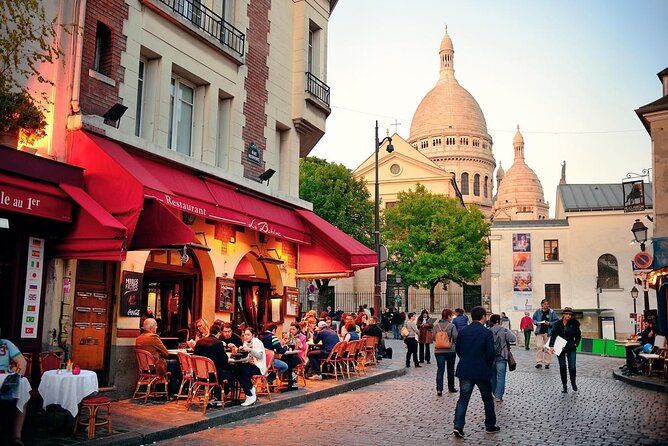
The route passes Place du Tertre, Montmartre’s artist-facing square. From there, the tour moves toward a classic Montmartre restaurant whose name means simple and without ceremony. You’ll hear that a restaurant has existed here since the 1500s, though it has been rebuilt and renamed many times.
The fun part is how the narration connects the dining space to the art crowd. You get a list of famous patrons mentioned in the tour story, including Degas, Renoir, Monet, Cézanne, Sisley, Toulouse-Lautrec, and others. The tour also notes that in 1886 Van Gogh painted La Guinguette à Montmartre here.
This is the value of an audio walk when you love art. It makes a place feel like it had a daily routine: people ate, talked, argued, sketched, and absorbed ideas. Even if you only grab a quick drink, you can better imagine what the walls witnessed.
Note: you’re still in a working tourist neighborhood, and hours can vary for businesses and interior access. If something looks closed when you arrive, you haven’t lost the point—you still got the context while seeing the exterior and walking the route.
Down Toward Sacré-Cœur: Rue de l’Abreuvoir and a Final Peek Inside
As the tour continues, you move along Rue de l’Abreuvoir, then pass the second Statue du Chevalier de la Barre. These are the kind of stops that many “greatest hits” walks skip. Here, they help stitch together a continuous route up the hill.
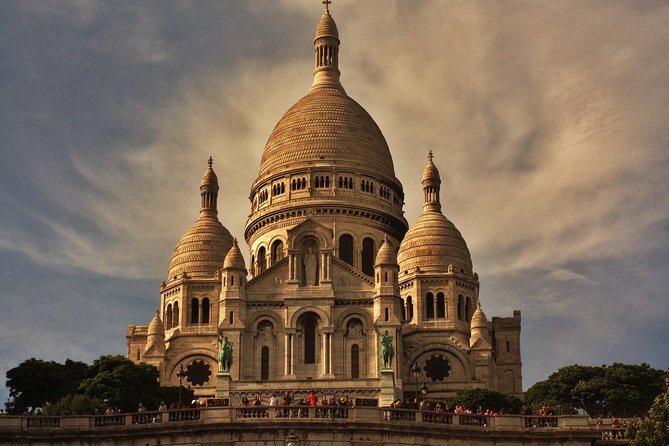
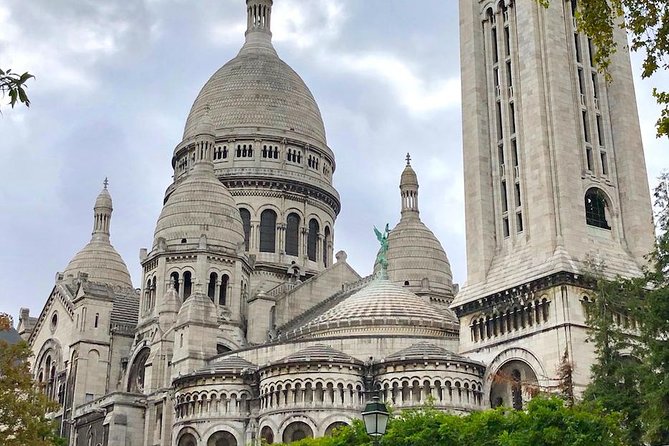
Finally, the tour ends at Basilique du Sacré-Cœur de Montmartre, at the address 35 Rue du Chevalier de la Barre. The experience is described as a peep inside the Basilica Sacré-Cœur, so don’t assume this is a long, guided interior visit. Think of it as a closing moment: you finish the story with the hill’s most famous silhouette.
If you want the best views, plan to arrive without rushing. Sacré-Cœur sits at the top, and Montmartre is built for lingering—just not for marathon hiking. Keep your energy for the final climb and don’t schedule another long walk right after.
Price, Timing, and Why This Costs Less Than You Think
At $14.99 per person, the big question is what you’re paying for. You are not paying for entry fees. You are paying for a self-guided route built around narration, with lifetime access and offline audio, maps, and geodata.
That last bit matters. Paris can be a dead zone for some phones, and Montmartre’s steep streets make it risky to depend on live data. Offline access helps you keep moving without constantly checking bars and settings. If you already know you’ll do a lot of walking, this price becomes easier to justify because it covers hours of storytelling.
Timing-wise, the tour is listed as about 1 to 2 hours. In real life, your pace controls your length. If you walk slowly, stop frequently, and take breaks for street performers or cafés, plan on more like 3 to 4 hours. That difference is not a flaw. It’s the trade you make for doing Montmartre your way.
Also, it’s booked around 20 days in advance on average, so if you’re going in a busy season or on a tight schedule, book early to avoid last-minute stress.
Smooth Navigation Tips With VoiceMap Offline GPS
This tour relies on your phone doing its job. That’s great when it works well, and a hassle if your battery dies.
Here’s how to make it smoother:
- Bring smartphone + headphones. The tour includes the app, but not your hardware.
- Start with a fully charged phone. Some people even reported low-battery warnings as part of the app behavior.
- If you need to speed up, you can adjust the playback speed. That helps if you’re behind schedule.
- Trust the GPS prompts, but don’t treat them like a laser. A few people reported GPS points being off, and also that indoor locations (like churches) can confuse tracking.
- If the app crashes or stops speaking, that’s a tech problem, not a route problem. Have patience, keep your phone secure, and if needed, use the app support channels described by the provider.
Bottom line: the route is easy to follow when your phone is happy. A portable charger turns “good tour” into “no drama tour.”
Should You Book This Montmartre Self-Guided Audio Tour?
I’d book it if you want a Montmartre walk that feels guided without being trapped in a group. The price is low for what you get: offline audio, a clear route, and art-and-neighborhood stories that connect Picasso, Van Gogh, Renoir, Lapin Agile, and Sacré-Cœur into one continuous climb.
You should think twice if:
- You struggle with stairs and steep inclines.
- You rely on your phone for navigation but your battery tends to drain quickly.
- You hate any risk of app glitches, since a few users reported trouble pausing, resuming, or audio not triggering at certain stops.
If you’re comfortable walking uphill and you can keep your phone charged, this is a smart way to experience Montmartre at your own pace.
FAQ
How much does the Montmartre self-guided audio tour cost?
It costs $14.99 per person.
How long does the tour take?
The duration is listed as about 1 to 2 hours.
What language is the audio tour in?
The tour is offered in English.
Does the tour work offline?
Yes. It includes offline access to audio, maps, and geodata.
What do I need to bring?
You’ll need your smartphone and headphones. The VoiceMap app is included, but your listening gear is not.
Where do I start and where does it end?
The tour starts at 22 Rue des Abbesses, 75018 Paris and ends in front of Basilique du Sacré-Cœur de Montmartre at 35 Rue du Chevalier de la Barre, 75018 Paris.
Are museum tickets or entrance fees included?
No. Tickets or entrance fees to museums or other attractions along the way are not included.
Is this a guided group tour?
It’s self-guided, and it’s listed as private so only your group participates.
What’s the cancellation policy?
You can cancel for free up to 24 hours in advance for a full refund.
FAQ
Is the tour available at any time?
It’s listed as running Monday to Sunday from 12:00 AM to 11:59 PM within the listed validity dates.
What if I get off track?
The app is described as using location tracking and providing guidance to help you get back on route, so you can correct course as you go.
How early should I book it?
It’s noted as booked about 20 days in advance on average, so booking ahead is a good idea if you’re traveling during busy periods.