REVIEW · PARIS
Live, Laugh, Love Along the Seine: Self-Guided Romantic Tour
Book on Viator →Operated by Questo · Bookable on Viator
Follow the Seine by riddle, not map. This self-guided quest turns classic sights into a pause-anytime game you can play offline, and it makes the walk feel like a date-night mission rather than a checklist. I love how it keeps you moving with simple look-for answers, and I love that you’re not stuck with a fixed group pace. One possible drawback: if you skim the first instructions too fast, you can accidentally go to the wrong spot before you realize it.
You start at Arc de Triomphe du Carrousel and end near Square du Vert Galant in the 1st arrondissement. The whole thing is designed for flexibility, with play hours listed as 5:00 AM to 9:00 PM, and it runs in English with a mobile ticket. It’s also private, so it’s just your group with no physical guide and no “follow me” pressure.
In This Review
- Key points before you go
- How a self-guided Seine romance game actually plays
- Price and value: why $7.21 can work in Paris
- The route from Arc de Triomphe du Carrousel to Square du Vert Galant
- Stop 1: Arc de Triomphe du Carrousel (start point challenge)
- Stop: The New Louvre pavilions along the Seine (Quai François Mitterrand)
- Stop 2: Pont des Arts (Napoleon-era bridge)
- Stop 3: Ladurée le Bar (tea-room tradition)
- Stop 4: Café de Flore (Third Republic meeting place)
- Stop 5: Les Deux Magots (two figurines story)
- Stop 6: Saint-Germain-des-Prés (old church, deep time)
- Stop 7: Procope (Palermo roots, 1686)
- Stop 8: Fontaine Saint-Michel (Second Empire monument)
- Stop 9: Shakespeare and Company (bookshop opposite Notre-Dame)
- Stop 10: Notre-Dame de Paris (Gothic landmark on Île de la Cité)
- Stop 11: Conciergerie (former prison turned courts)
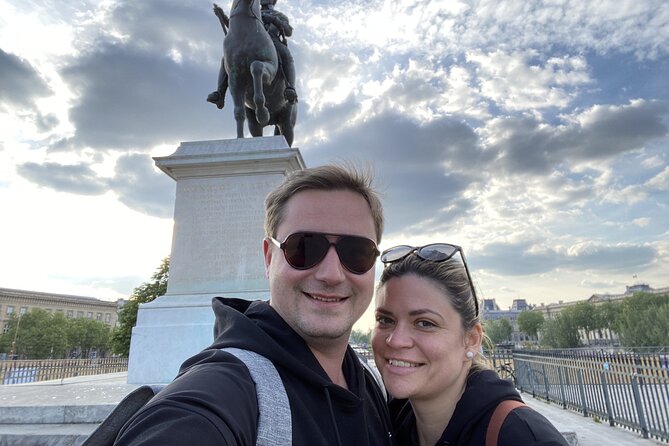
- Stop 12: Statue équestre d’Henri IV (Pont Neuf)
- Stop 13: Saule Pleureur de la Pointe (Île de la Cité origins)
- Where the romance actually comes from
- Practical tips so the game feels smooth
- Who should book this Seine quest
- Should you book Live, Laugh, Love Along the Seine?
- FAQ
- How long does the self-guided tour take?
- Do I need an internet connection to play?
- Do I need a map or GPS?
- Is the tour available in English?
- Where does the tour start and end?
- What are the play hours?
- Do I get a physical tour guide?
- Is this a private experience?
- What is the cancellation policy?
- Is this suitable for people with service animals?
Key points before you go
- Offline city-game play with no internet required
- Romantic Seine route that strings together bridges, cafés, and bookish corners
- Short challenges at each stop (about 5 minutes each) but you can pause anytime
- No map or GPS needed to complete the game
- Private by design, with no human contact
How a self-guided Seine romance game actually plays
This isn’t a guided lecture. It’s more like a walking story where each stop gives you a prompt, a little research task, and a reason to look closely at what’s right in front of you.
You’ll follow a set route along the Seine, stopping at famous places like Pont des Arts and Shakespeare and Company, then dipping into the café and Left Bank area around Saint-Germain-des-Prés. The structure is simple: walk in, find the answer, move on when you’re ready. Most stops are brief (listed at about 5 minutes), which helps if you only have a couple hours in your schedule.
Because it’s designed to be played without internet, you can spend your attention where it belongs: on street-level details and the views. And because it’s private, you don’t have to negotiate with a group, keep up with stragglers, or feel stuck in someone else’s rhythm. If you want a slow stroll, you can take it slow.
There’s also a practical downside to this style: the “game” is only as smooth as your ability to read directions carefully. One lesson worth internalizing is to take your time at the first challenge and make sure you understand the clue and the exact target location before you start walking again.
You can also read our reviews of more guided tours in Paris



Price and value: why $7.21 can work in Paris
At $7.21 per person, you’re paying for the self-guided format: offline gameplay, a mobile ticket, and a route built around classic Paris anchors. That’s a low cost for a two-hour experience in a city where paid tours can jump fast.
You also get value through what’s not included:
- No fixed human guide time you’re forced to “perform through”
- No need to buy separate tickets for the stops listed
- No requirement for GPS or mobile data for the quest itself
The trade-off is also obvious: you’re doing the exploring. If you want someone to point at things and explain everything out loud, you won’t get that here. But if you like the idea of learning while walking—at your own pace—this format makes sense.
The route from Arc de Triomphe du Carrousel to Square du Vert Galant
Below is what to expect as you work through the places. Think of each stop as a little “look, read, answer, move” moment—fast enough to keep momentum, flexible enough to savor.
Stop 1: Arc de Triomphe du Carrousel (start point challenge)
You begin at Arc de Triomphe du Carrousel in Place du Carrousel. This arch was built around 1806–1808 by Percier and Fontaine, tied to Napoleonic victories from 1805. It originally aimed to be a grand entrance to the Tuileries Palace. When the palace was destroyed by fire in 1871, the arch kept its standalone importance—and the view toward the Champs-Élysées opened up in a new way.
At this stage, you’re basically being trained for the whole game: look around to find the clue’s answer. The challenge is short, but it matters. Take an extra minute here instead of rushing, because a common mistake is misreading the target location and walking toward the wrong monument when you’re excited and in motion.
Stop: The New Louvre pavilions along the Seine (Quai François Mitterrand)
Next you’re directed toward the southern limb of the New Louvre, with five great pavilions listed along the Seine side of the Quai François Mitterrand: the Pavillon de la Lesdiguieres, Pavillon des Sessions, Pavillon de la Tremoille, Pavillon des États, and Pavillon de Flore.
What I like about inserting this kind of stop is that it makes the Louvre area feel less like a single building and more like a riverfront composition. You’re not just admiring a wall—you’re searching for the story embedded in the architecture and naming.
You can also read our reviews of more tours and experiences in Paris




Stop 2: Pont des Arts (Napoleon-era bridge)
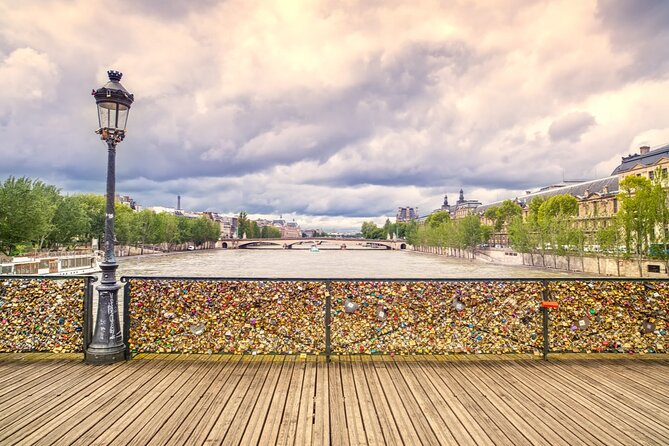
Pont des Arts is one of Paris’s most recognizable bridges, built between 1802 and 1804 during Napoleon’s empire. It connects the Institut de France and what used to be called the Palais des Arts near the Louvre.
This is a great place for a quick pause even if you’re playing strictly by the timer. Stand at the bridge and look left and right. The Seine gives you layers: the bridge structure, the river movement, and the grand riverbank lines. For the game, you’ll again look around for the answer needed to advance.
Stop 3: Ladurée le Bar (tea-room tradition)
The next stop shifts tone from monumental stone to Parisian food culture. Ladurée is tied to the Ladurée family, with a starting point in 1862, when Louis Ernest Ladurée created a bakery in Paris at 16 rue Royale.
This is a smart move for a romantic quest. A café or tea room stop feels like an intermission, and the game keeps you from treating it as just a photo stop. You’ll still be on a mission, but you can also enjoy the moment as part of the walking date vibe.
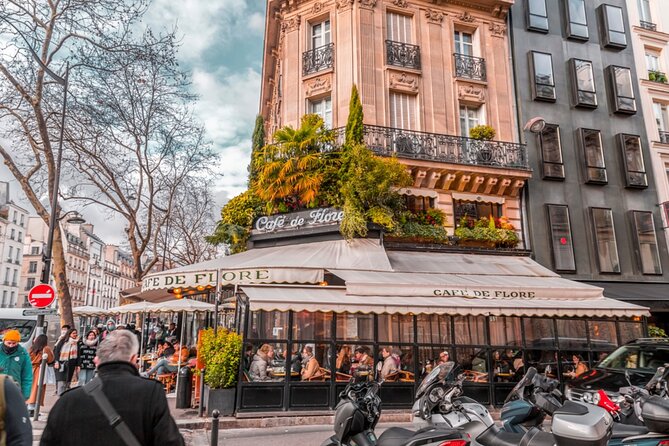
Stop 4: Café de Flore (Third Republic meeting place)
Café de Flore is a classic Left Bank institution, founded during the Third Republic in 1887. It was named after a sculpture of Flora, goddess of flowers and spring, across the boulevard.
I love how this kind of stop gives you an “in-between” pause in the walk. You’ll be looking for a clue, but you’re also surrounded by the kind of Paris scene that feels made for conversation. If you want a romantic moment that isn’t cheesy, this is where you naturally slow down.
Stop 5: Les Deux Magots (two figurines story)
Next is Les Deux Magots, named for two Chinese figurines connected to a shop that once occupied the same premises. The café was founded in 1812 at 23 Rue de Buci, then transferred to Place St-Germain-des-Prés in 1873. The two statues by the café now serve as a historical marker.
This stop works well if you like texture: not just sight, but character. The game approach makes you pay attention instead of drifting past. Even if you only spend a few minutes on the clue, you’ll still get the sense that this neighborhood has been doing the same social thing for a long time—chat, watch, repeat.
Stop 6: Saint-Germain-des-Prés (old church, deep time)
Saint-Germain-des-Prés is anchored by the abbey church, known as the Église de Saint-Germain-des-Prés, described here as one of the oldest churches in Paris. The background note includes Childebert in 542, raising his siege of Zaragoza after hearing the inhabitants placed themselves under the protection of Saint Vincent.
This is your moment to connect the romance of cafés to the longer timeline of the area. The clue keeps it active, but the church itself gives you a sense of scale—Paris doesn’t just look pretty. It has layers.
Stop 7: Procope (Palermo roots, 1686)
At Procope, you’re told it traces back to 1686, when Francesco Procopio dei Coltelli, from Palermo, Sicily, opened a coffee house on Rue des Fosses Saint-Germain, which is where the restaurant is still located.
If you’re the type who likes your Paris stops to feel both artistic and real, this fits. It’s the kind of place where the historical angle makes sense next to the modern street scene. For the game, you’ll look around to find the next answer before moving on.
Stop 8: Fontaine Saint-Michel (Second Empire monument)
Fontaine Saint-Michel is a monumental fountain in Place Saint-Michel, listed as a monument historique since 1926. It was built 1858–1860 during the French Second Empire, designed by architect Gabriel Davioud.
This is a good checkpoint for photos and for stretching your legs for a minute. The game still demands attention, but fountains are naturally readable: form, setting, and location. It’s also a useful pause point if you’re playing after a long day of walking.
Stop 9: Shakespeare and Company (bookshop opposite Notre-Dame)
Shakespeare and Company is an English-language bookshop on the banks of the Seine, opposite Notre-Dame. It opened in 1951 and is described as a meeting place for anglophone writers and readers, becoming a Left Bank literary institution.
This stop is one of the most “romantic on purpose” parts of the route. Even if you’re not buying a book, stepping into the space makes the Seine walk feel less like tourist time and more like story time. The clue nudges you to look carefully and keep moving, but you’ll still want to glance at the bookshop world around you.
Stop 10: Notre-Dame de Paris (Gothic landmark on Île de la Cité)
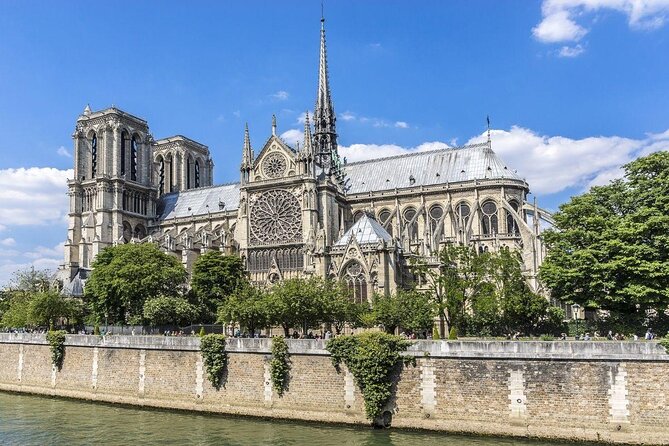
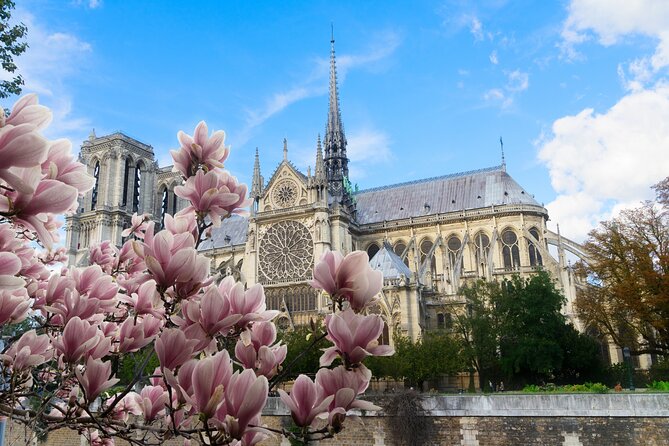
Notre-Dame is a medieval Catholic cathedral on the Île de la Cité in the 4th arrondissement, consecrated to the Virgin Mary and described here as one of the finest examples of French Gothic architecture.
This is where the route hits full “Paris postcard” energy. For the game, you’ll answer another look-around prompt. For your own brain, it’s a moment to take in scale: the building’s presence, the river surrounding the island, and the way the area feels like the historic center.
Stop 11: Conciergerie (former prison turned courts)
The Conciergerie is located on the west of Île de la Cité, described here as formerly a prison and now mostly used for law courts. It was part of the former royal palace, the Palais de la Cité, which included the Conciergerie, Palais de Justice, and the Sainte-Chapelle.
This stop adds contrast. After the big architectural moment of Notre-Dame, you shift into a place associated with justice and confinement. It’s still part of the romance, just the more dramatic version.
Stop 12: Statue équestre d’Henri IV (Pont Neuf)
The equestrian statue of Henry IV is a bronze statue completed by Pietro Tacca, currently on Pont Neuf. The note says it was indirectly commissioned by Marie de Médicis for her husband, King Henry IV.
A statue on a bridge has a special effect: it makes the walk feel like you’re moving through a living timeline. You’ll look for the game answer, but it also helps to just watch how people pass by in different directions.
Stop 13: Saule Pleureur de la Pointe (Île de la Cité origins)
Your last game prompt is at the Saule Pleureur de la Pointe. The background note here explains that Île de la Cité was once a Celtic settlement inhabited by the Parisii, a Gallic people, giving the city its name.
This finale works because it ties together what you’ve walked: a river island as a starting point. Even if the game is what leads you forward, the setting gives you a satisfying sense of “we arrived at the roots.”
Where the romance actually comes from
The route is intentionally made for couples or friends who want an activity but don’t want to sit through a lecture.
A few things create that vibe:
- You’re walking along the Seine with frequent chances to pause
- Café stops like Café de Flore and Les Deux Magots naturally support slow conversation
- The bookshop stop at Shakespeare and Company gives you a softer, human pace
- The final island-focused stop ties the walk to meaning, not just sights
And because you can start at any hour listed between 5:00 AM and 9:00 PM, you can match the mood. Late afternoon gives you classic light. Evening gives you a different energy on the riverbank. If you’re trying to avoid crowds, aim for earlier or later rather than midday.
Practical tips so the game feels smooth
A self-guided quest can be fun fast—if you set yourself up.
Here’s what helps:
- Start with patience at the first stop. Read the clue text calmly before you step away.
- Keep your phone charged. You’ll want your mobile ticket and the game interface ready.
- Wear shoes that forgive cobblestones. This is a walking route through central Paris.
- Take short breaks on purpose. Since each challenge is short (about 5 minutes), use a café window moment or fountain moment to reset.
One more tip: if you ever feel uncertain, don’t sprint to the next landmark. Slow down, double-check where you’re supposed to be, and then continue. A small mistake early can create a big detour.
Who should book this Seine quest
This experience fits best if you:
- Want an active, self-guided way to see central Paris
- Prefer a private format with no guide interrupting your pace
- Like mixing architecture with everyday culture, like cafés and bookshops
- Can commit to reading the prompts and walking between stops
It also works for small groups beyond couples: friends, a family unit, or anyone who wants a structured walk without the stress of navigation. The experience notes say most travelers can participate, and service animals are allowed.
If you want an audio guide or a live storyteller answering your questions in real time, you might find this too hands-on. But if you want to learn by looking, it’s a strong match.
Should you book Live, Laugh, Love Along the Seine?
I think it’s worth booking if you want a romantic Seine walk that you control. The price is low, the format is flexible, and the fact that you can play without internet removes a common stress point.
I’d skip it if you’d rather be guided mouth-to-ear with lots of narration, or if you hate reading directions while walking. This is not a do-nothing tour. It’s a “use your eyes and follow the clues” tour.
For many people, the sweet spot is a morning or afternoon when you have a couple hours and you want central Paris without feeling locked into a group schedule. If that sounds like your style, this Seine game is an easy yes.
FAQ
How long does the self-guided tour take?
It’s listed as about 2 hours (approx.), with individual stop challenges that are about 5 minutes each.
Do I need an internet connection to play?
No. The experience is designed so you can play offline and you do not need an internet connection.
Do I need a map or GPS?
No map, GPS, or internet connectivity is needed to play the game.
Is the tour available in English?
Yes, it’s offered in English.
Where does the tour start and end?
It starts at Arc de Triomphe du Carrousel (Pl. du Carrousel, 75001 Paris) and ends at 1 Square du Vert Galant, 75001 Paris.
What are the play hours?
The listed hours are Monday through Sunday from 5:00 AM to 9:00 PM.
Do I get a physical tour guide?
No. It’s self-guided and does not include a physical tour guide.
Is this a private experience?
Yes. It’s private, and only your group participates.
What is the cancellation policy?
Free cancellation is available up to 24 hours in advance for a full refund. If you cancel less than 24 hours before the start time, the amount paid is not refunded.
Is this suitable for people with service animals?
Service animals are allowed, and the information notes that most travelers can participate.