REVIEW · PARIS
Louvre Late Opening Guided Tiny Group Tour
Book on Viator →Operated by Toorers · Bookable on Viator
Evening at the Louvre feels calmer. You get max 6 people with an art historian who can tailor what you focus on, and you’ll hit major works like Venus de Milo and the Mona Lisa without the full daytime squeeze. One thing to plan for: it’s only about 2 hours, so you won’t have time to wander every room on your own.
I also love that the experience comes with a museum entrance ticket included and runs in English, so you can actually follow the story as you walk. The staff vibe matters too—one past guest highlighted Patricia and an intern helper, Louise, for being friendly and informative, which fits the whole idea of a guided evening visit.
In This Review
- Key Highlights You’ll Feel Fast
- Late-Opening Louvre With a Tiny Group and an Art Historian
- Price and Value: What You’re Really Paying For
- Meeting at Le Kiosque des noctambules and Getting Oriented
- Outside Stops: Modern Louvre Architecture and a Metro Landmark
- Inside Louvre: Medieval Times, Egypt, and Greece Antiquities
- Venus de Milo and Samotrace’s Victory: Seeing More Than a Postcard
- French and Italian Paintings, Including the Mona Lisa
- Why 2 Hours Feels Just Right in the Louvre
- What You’ll Notice About the Guide Experience (Patricia and Louise)
- Practical Notes: What’s Included and What You Should Bring
- Who This Tour Suits Best (And Who Might Skip It)
- Should You Book This Louvre Late Opening Tiny Group Tour?
- FAQ
- How long is the Louvre late opening guided tour?
- What is the group size?
- Is the museum entrance ticket included?
- What language is the tour offered in?
- Where do you meet, and where does the tour end?
- Is the tour ticket mobile?
- Are there free admission options for some visitors?
- What is the cancellation window for a full refund?
Key Highlights You’ll Feel Fast
- Tiny group (up to 6) means real questions and less drifting
- Late opening timing helps you see famous rooms with less chaos
- Art historian guidance turns random paintings into connected ideas
- Big-name classics plus less expected stops, without skipping the musts
- Admission ticket included, so you start museum time already set
Late-Opening Louvre With a Tiny Group and an Art Historian
The Louvre can be overwhelming fast. The late opening helps, but the real quality jump is the group size. With a maximum of 6 people, you’re not stuck listening through the back of a crowd.
This tour is led by an art historian guide. That matters because you’re not just looking at objects—you’re learning how the Louvre’s collections were built across time, and why certain works belong in the same room together. If your group has preferences, you can ask the guide to adjust the route within reason.
You’ll probably notice something else too: the evening pace lets you slow down for a moment. In daytime, your brain keeps sprinting from one famous thing to the next. At night, you’re more likely to actually look—at scale, composition, and details you’d otherwise miss while rushing.
You can also read our reviews of more guided tours in Paris



Price and Value: What You’re Really Paying For
At $215.32 per person, this isn’t the cheapest way into the Louvre. The value isn’t that you’re paying extra for convenience alone. It’s that your admission (€22 entrance ticket for adults) is included, and you’re paying for guided interpretation in a museum that can swallow hours.
Think of it like this: if you go solo, you can absolutely enjoy the Louvre—but you’ll spend a lot of time deciding what to see and piecing together what you’re looking at. With a guide, you get a guided route that hits the Louvre’s strongest hits across eras, plus some “why this matters” context so your eyes work smarter.
Also, the tour is in English and capped at 6. Paying for a smaller group and an expert guide is usually the biggest cost driver in tours like this. If you care about art context and want a focused evening plan, this price starts to make sense.
If you’re the kind of visitor who loves total freedom, you might prefer a self-guided visit. But if you’re trying to get the best use of your limited time in Paris, guided time is often the better trade.
Meeting at Le Kiosque des noctambules and Getting Oriented
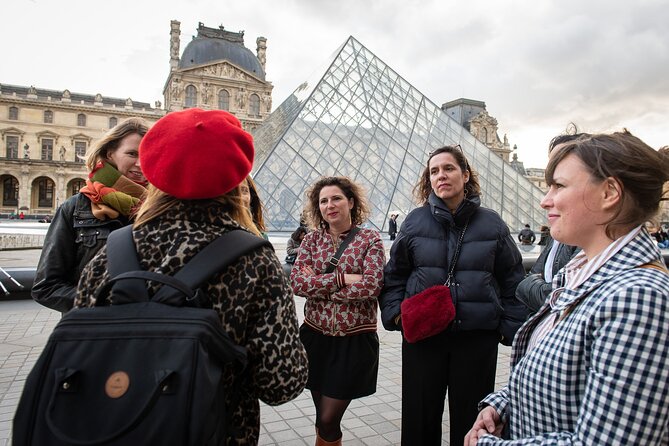
Your tour begins at Le Kiosque des noctambules, 12 Pl. Colette, 75001 Paris. It ends back at the same meeting point, so you’re not left figuring out how to reconnect with your evening plans.
This is also a convenient area for public transport. You’ll want that for a late start, because moving across Paris after dark is when timing gets messy. The tour includes a mobile ticket, which makes life easier—your entry isn’t sitting in a purse somewhere.
One small practical point: you’re not just touring inside. The start includes orientation, and you’ll also stop at notable points around the Louvre area before you settle into the main museum route. That keeps the experience feeling like a real walk-through, not a quick ticket line situation.
Outside Stops: Modern Louvre Architecture and a Metro Landmark
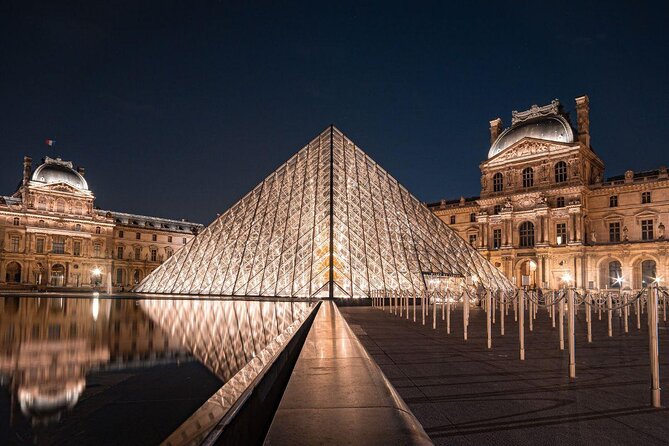
Before you reach the collections, you won’t skip the Louvre’s modern architectural feature. The tour also includes a stop at an iconic metro station, which starts the guided portion.
Even if you don’t care about architecture much, these outside stops help you “place” the Louvre in modern Paris. They also give your guide a chance to set expectations before you hit the first galleries. In a museum this massive, getting your bearings early helps your brain stop panicking.
The downside? If you’re only in Paris for a tight window and you want straight into the art, these extra stops add a little time before you enter the main works. Still, they’re short, and they help the evening flow better.
Inside Louvre: Medieval Times, Egypt, and Greece Antiquities
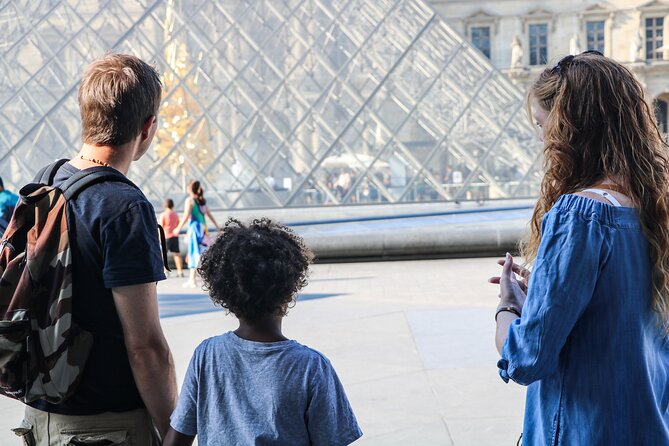
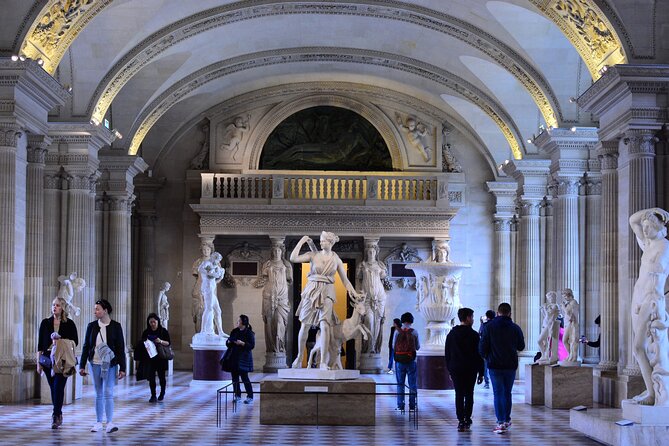
Once you’re in, the guide steers you through key eras of the Louvre’s collections. Expect a route that covers medieval times, then heads toward Egypt and Greece antiquities—with major masterpieces you’ll recognize immediately.
This is where the guided approach really pays off. The Louvre isn’t organized to teach you a story in the way a book does. A good guide links rooms and themes so you can understand what you’re seeing without guessing.
You’ll also be able to ask questions because the group stays small. If something in the Egypt or Greece section catches your eye, you can likely spend an extra minute—or even shift emphasis—depending on the guide’s timing and the group’s interests.
If you’re curious about how different cultures influenced art styles (and how the Louvre presents them side-by-side), this part of the tour tends to click fast. You’ll stop not just at famous statues, but at the ideas behind them.






Venus de Milo and Samotrace’s Victory: Seeing More Than a Postcard
Among the standout sculpture stops are Venus de Milo and Samotrace’s Victory. These are big-name works, but the guide’s job is to keep you from treating them like museum versions of a phone wallpaper.
What I like about this kind of stop in a small-group evening tour is how you can actually register size and posture. With statues, it’s easy to stand five feet away and think you’ve seen it. But a guide can point out relationships in form—how movement is implied, what the composition is doing, and why these works still land emotionally today.
Samotrace’s Victory in particular is the kind of sculpture that can feel more dramatic once you understand what you’re looking at. You might have seen images before, but in person it’s about angles and momentum—the feeling that the piece is mid-motion.
The Venus de Milo stop is often the same story. You know the name, but you may not know what to watch for. With guidance, you start looking at features that explain why this statue keeps being referenced in art education.
French and Italian Paintings, Including the Mona Lisa
After antiquities, the route shifts into French & Italian paintings, and yes, you’ll include the Mona Lisa. This is the part of the Louvre where many visitors get stuck in a famous-work sprint.
A guided small-group evening changes the experience. You’re not just aiming for one painting; you’re walking through a sequence where the guide can point out patterns in style and subject matter. That turns the Mona Lisa from a standalone moment into part of a broader conversation about portraiture and painting traditions.
The “cannot miss” works are handled in a way that doesn’t feel like a checkbox. The guide also points out other standout pieces along the way, so you get more value than simply taking a quick photo and calling it done.
One practical consideration: the Mona Lisa area draws crowds, even in the evening. A tiny group helps, but it doesn’t erase human nature. Plan to spend some time facing paintings rather than trying to sprint to every last room.
Why 2 Hours Feels Just Right in the Louvre

At about 2 hours, this tour is built for realistic museum time. The Louvre is too big for a single visit to do justice to everything, so you need a plan that gets you meaningfully connected without exhausting you.
In this timeframe, you’re guided through major highlights across centuries: medieval themes, Egypt and Greece antiquities, major sculpture, and then painting territory. That range is useful if you want an overview of what makes the Louvre “the Louvre.”
What you won’t get is unstructured browsing. If you’re the type who enjoys long, quiet study of a handful of works, you’ll need extra solo time after the tour. This is more like a smart first chapter—then you choose where to go next.
My advice for making the most of the two hours: pick one era to revisit later once you’ve seen the route. If you loved antiquities, go back to that zone on your own. If painting is your thing, spend your solo time around that section afterward.
What You’ll Notice About the Guide Experience (Patricia and Louise)
One repeat signal from past guests is the friendly, informative tone. One review specifically called out Patricia and Louise (noted as an intern helper) for their knowledge and warmth.
Even without knowing exactly what each guide does in each minute, you can expect the guiding style to match the format: clear explanations, enough time for questions, and a route designed to prevent you from wandering into the wrong wing.
In my experience, that kind of small-team energy makes a big difference in a museum environment. People don’t just want facts—they want someone who can explain why those facts matter.
If you’re worried that a guided tour will feel rigid, this one is built for interaction. The guide can adapt the itinerary based on what your group wants, which keeps the experience from turning into a scripted lecture.
Practical Notes: What’s Included and What You Should Bring
Your museum entrance ticket is included for adults (€22). The tour is also listed as offering a guided experience in English, and you’ll receive confirmation at booking time.
What’s not included is simple: coffee/tea, bottled water, and private transportation. If you hate hunting for water inside museums, bring a plan. Even if you don’t want to carry a bottle everywhere, it helps to know the tour won’t supply it.
This is also a near-public-transport meeting point, which is a good sign for late evenings. You won’t need complicated transfers to arrive—just show up near a transit hub and follow the group.
Who This Tour Suits Best (And Who Might Skip It)
This is a strong fit for art lovers who want a guided overview and don’t want to spend precious time figuring out the Louvre from scratch. If you’re excited by antiquities and painting big names, the route makes sense.
It’s also a good match if you’re traveling with limited time. Two hours is manageable after a busy day, and the late opening can feel more relaxed than daytime crowds.
If you’re a hands-on art nerd who wants to research specific artists or spend hours on one movement, you might find the time short. In that case, you could combine: take this as a kickoff tour, then return solo for deeper focus.
Should You Book This Louvre Late Opening Tiny Group Tour?
Book it if you want a small-group guided evening that hits the Louvre’s major highlights with context. The fact that your admission ticket is included, the group is capped at 6, and the tour is in English makes it a smart value for people who want more than a self-guided wander.
Skip it if you prefer long, quiet museum time without any structure, or if you already know exactly what you want to see and you’re confident navigating on your own. This tour is built for focused guidance, not endless roaming.
If you do book, do one thing to improve your odds of a great evening: decide before you go what you care about most—antiquities, painting, or sculpture. When the guide can adapt the emphasis, your choices matter.
FAQ
How long is the Louvre late opening guided tour?
The tour lasts about 2 hours.
What is the group size?
The experience has a maximum of 6 travelers.
Is the museum entrance ticket included?
Yes. The tour includes an adult museum entrance ticket (€22).
What language is the tour offered in?
The tour is offered in English.
Where do you meet, and where does the tour end?
You meet at Le Kiosque des noctambules, 12 Pl. Colette, 75001 Paris, France, and the tour ends back at the same meeting point.
Is the tour ticket mobile?
Yes. It includes a mobile ticket.
Are there free admission options for some visitors?
Free admission applies to visitors under 18 and EEA residents under 26, with valid ID and proof of residency.
What is the cancellation window for a full refund?
You can cancel up to 24 hours in advance for a full refund. If you cancel less than 24 hours before the start time, the amount paid is not refunded.