REVIEW · PARIS
Louvre Essential Private tour
Book on Viator →Operated by AWESOME GUIDE · Bookable on Viator
The Louvre feels huge—this tour makes it manageable. You get a licensed private guide and Louvre entry tickets included, so you spend your time looking instead of figuring things out. The only catch: at about 3 hours, you’ll hit big highlights, not every room.
I also like that the visit is private and customizable, so your guide can steer you toward what you care about most. When I hear guide names like Auriel, Olga, Vincent, and Miguel praised, the pattern is clear: you’re not just reading labels—you’re getting the stories behind what you’re seeing.
In This Review
- Key things to know about this Louvre Essential private tour
- Price and what you’re really paying for
- How the 2:00 pm start works with a 3-hour visit
- Stop 1: Louvre Museum highlights you’ll actually understand
- Start in the older fortress era
- Egypt in Paris: the Great Sphinx of Tanis
- Greek antiquities, including Venus de Milo and Victory of Samothrace
- Caryatides room: mythology told through space
- The Italian gallery (800 meters) and the Mona Lisa
- French painting scale: massive canvases
- Mesopotamia sculptures and the Hammurabi code
- Dutch department: Rubens, Vermeer, Rembrandt
- A tour that adapts to your questions
- Why the guide matters: Auriel, Olga, Vincent, and Miguel’s common theme
- Languages, tickets, and the practical side of entry
- Who should book this private Louvre tour?
- Tips to make the 2:00 pm start feel smooth
- Should you book the Louvre Essential Private tour?
- FAQ
- How long is the Louvre Essential private tour?
- Where does the tour meet?
- What time does the tour start?
- Is Louvre admission included in the tour price?
- Is this a private tour?
- What languages are available?
- What is the cancellation policy?
Key things to know about this Louvre Essential private tour
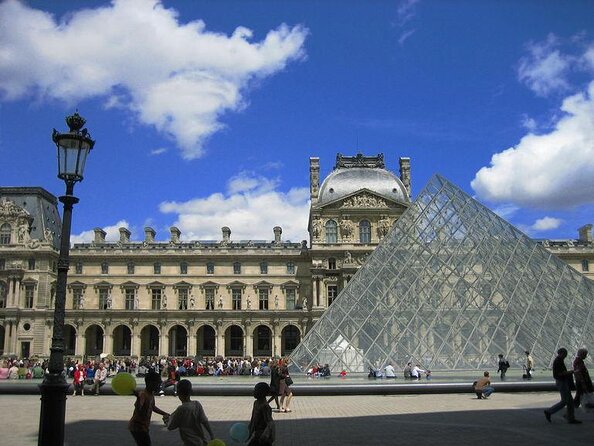
- A true private setup means just your party, with time to ask questions as you go
- Tickets are included, and the guide helps you get inside efficiently
- The route mixes eras: fortress roots, Egypt, Greece, Italy, France, Mesopotamia, and the Dutch Golden Age
- You can set the pace and focus, instead of being pulled along by a fixed group itinerary
- Multiple languages are offered (English, German, Italian, Spanish, and French)
Price and what you’re really paying for
At $357.42 per person for about 3 hours, this isn’t a budget move. You’re paying for the practical stuff: a guide who can turn the Louvre from a scary maze into a clear story you can follow, plus admission tickets included.
In the Louvre, time has a cost. A private guide helps you start in the right place, move in a logical order, and spend fewer minutes wandering. The reviews back this up with comments about getting into the museum smoothly and keeping the day organized, even when the building can feel chaotic.
If you’re traveling solo, you may feel the price more. If you’re a small group, private-per-person cost often starts to feel more reasonable because you’re sharing one guided experience instead of paying for separate self-guided strategies.
You can also read our reviews of more private tours in Paris



How the 2:00 pm start works with a 3-hour visit
This tour starts at 2:00 pm and meets at Arc de Triomphe du Carrousel, Pl. du Carrousel, 75001 Paris. It ends back at the meeting point. That matters because you’re not stuck guessing where you’ll end up.
A 3-hour window is a sweet spot for a first-time Louvre visit. You’ll get an orientation that helps you come back later (or at least helps you understand what you saw). It’s also long enough for the guide to connect themes—like how the museum’s collections relate to each other—without turning the visit into a rushed checklist.
The tour is also noted as being near public transportation and suitable for most travelers. That’s a helpful sign if you want a guide-led experience but still plan to do some walking on your own.
Stop 1: Louvre Museum highlights you’ll actually understand
You’ll spend the whole tour inside the Louvre, but the experience is built around a clear path through major departments and memorable rooms. Think of it less as a tour of every famous artwork and more as a guided “map” of the museum’s mind.
Start in the older fortress era
One of the best ways to begin the Louvre is to remember it wasn’t always a museum. Your guide takes you to one of the oldest rooms—about 800 years old—and you’ll feel that medieval change in atmosphere fast. It’s a smart opening because it explains why the Louvre’s spaces feel the way they do.
This is also where your guide’s storytelling becomes useful. If you’re the type who likes context, this part can make the rest of the collections click.
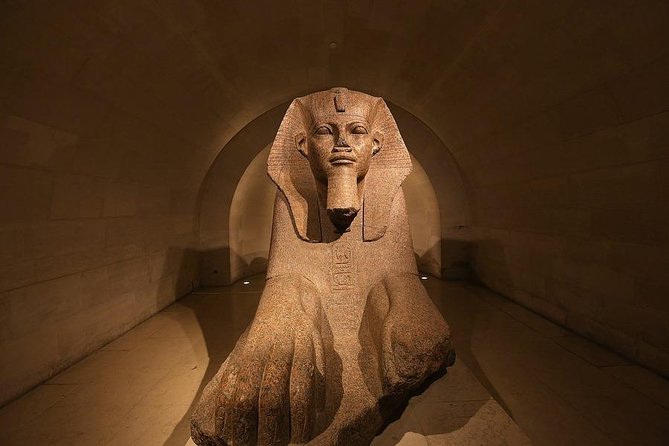
Egypt in Paris: the Great Sphinx of Tanis
Next comes a moment that ties Egypt to Paris in a very visual way: the Great Sphinx of Tanis. A guide can use one object to explain bigger connections—where it came from, how it ended up here, and why it mattered to the museum.
This is a big win for anyone who thinks the Louvre is only about paintings. Sculptures and ancient artifacts are central to the museum’s identity, and Egypt is a strong place to start.






Greek antiquities, including Venus de Milo and Victory of Samothrace
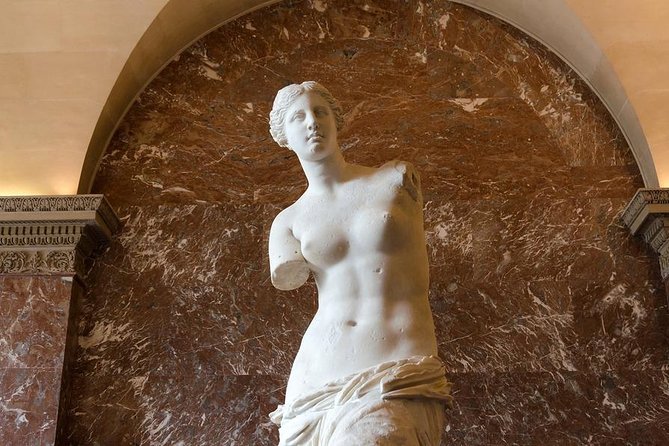
Then you’ll move through Greek antiquities, one of the museum’s richest areas. Expect standout names like Venus de Milo and the Victory of Samothrace. What helps here is that a guide can keep your attention from flattening into name-recognition.
You don’t just look at famous pieces—you learn what makes them important, and how the guide frames Greek myth and symbolism as something you can still read today.
Caryatides room: mythology told through space
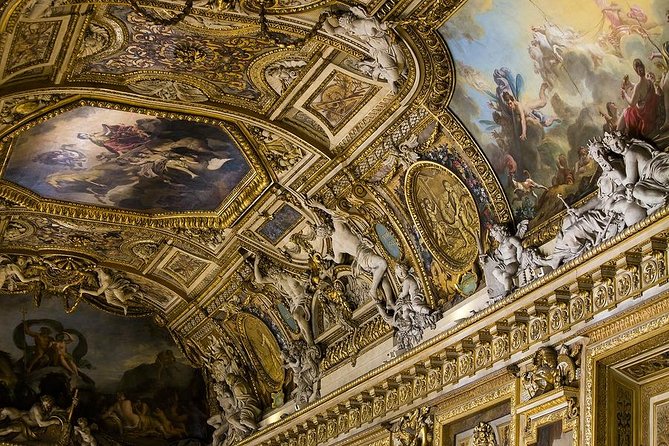
The tour includes the Caryatides room, described as a beautiful old ballroom of the castle. This is where you get mythology stories tied directly to the architecture and the figures.
One review specifically praised insights on the three ladies of the Louvre. That’s the kind of detail that makes a guided stop worth paying for. You’ll see the same statues everyone sees—but you’ll understand why they’re placed there and what the imagery signals.
The Italian gallery (800 meters) and the Mona Lisa
The route continues into the Italian galleries, including an 800-meter-long stretch where you’ll see major artists such as Mantegna, Raphael, Caravaggio, and Veronese. And yes, you’ll also see the Mona Lisa.
The best part of going with a private guide here is not just efficiency. It’s that you’re more likely to notice what changes across artists—lighting, drama, composition—rather than only standing there thinking, Why is this so famous?
Also, because your tour is private, the guide can manage the pace so you don’t feel like you’re being rushed through the biggest moment.
French painting scale: massive canvases
In the French department, you’ll see large paintings such as Sacre de Napoleon and La Mort de Sardanapale. The scale is described as bigger than many apartments in Paris, and that comparison is actually useful.
When you see huge works in person, you start to understand why the Louvre built rooms to hold them. A guide can also help you connect the subjects and styles to the period behind them, instead of leaving you with only the titles.
Mesopotamia sculptures and the Hammurabi code
Another key stop is Mesopotamia, including the Khorsabad Bulls and the Hammurabi code. This is a great balance if you want the Louvre to feel more than European art history.
It’s also where a guide’s explanations can prevent you from treating ancient works like decoration. You’ll be shown how these pieces are meant to communicate power, law, and belief.
Dutch department: Rubens, Vermeer, Rembrandt
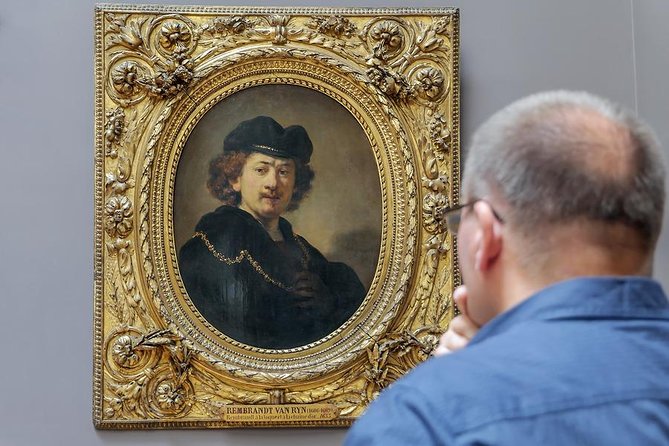
Finally, you’ll hit the Dutch department, with major names like Rubens, Vermeer, and Rembrandt. One of the notable advantages mentioned is that this area is less crowded, which can make your time feel calmer.
If you’re someone who needs quieter viewing time to take details in, this late-stage stop can be a big relief.
A tour that adapts to your questions
Throughout the whole visit, you can ask what you want to understand. The tour is described as allowing you to request focus areas and keep the flow at your pace. That flexibility is what makes private tours feel more personal than standard group tours.
Why the guide matters: Auriel, Olga, Vincent, and Miguel’s common theme
In these reviews, the guide is the main event. The pattern across different names is consistent: clear explanations, historical context, and people skills that match your group.
- Auriel gets praised for being very attentive to group needs and for giving excellent insights on the three ladies of the Louvre (the Caryatides).
- Olga is described as professional and kind, with context that helps you understand both art and how it’s presented.
- Vincent is singled out for getting people into the museum efficiently and for moving through the museum’s key areas in an orderly way at the group’s pace. He also adapted to interests people brought into the day.
- Miguel is credited with helping people approach the Louvre’s museology, basically showing you how the museum thinks and organizes meaning.
Here’s the practical takeaway: you’ll get more from the same rooms if your guide knows how to explain them without drowning you in dates. If you want to walk out able to say, I understood what I saw today, the guide-driven approach is the reason.
Languages, tickets, and the practical side of entry
This tour offers service in English, German, Italian, Spanish, and French. If you prefer to hear the story in your own language, this is a real value add. It’s also a relief in the Louvre, where normal museum signage can’t answer the big questions—Why does this matter? What am I looking at?
A mobile ticket is offered, and admission tickets are included for your visit. That saves you the hassle of coordinating entry on your own, and it keeps the tour focused on the artwork rather than logistics.
One more detail to note: free admission applies to visitors under 18 and EEA residents under 26 with valid ID and proof of residency. If that applies to you, your guide and the ticket setup should already be part of your plan, but it’s smart to bring your documentation with you.
Who should book this private Louvre tour?

This fits best if you:
- are visiting the Louvre for the first time and want an orientation that makes the building’s scale understandable
- prefer a slower, question-friendly pace rather than a group march
- care about the connections between different departments (Egypt → Greece → Italy → France, plus Mesopotamia and Dutch art)
- want a guide who can tailor focus to what you actually care about, whether that’s paintings, sculpture, or how the museum presents ideas
If you’re the type who loves spending hours wandering randomly with no plan, you might not feel the value as strongly. This tour is built for momentum and clarity.
Tips to make the 2:00 pm start feel smooth
Because the meeting point is at Arc de Triomphe du Carrousel (Pl. du Carrousel, 75001), plan your arrival so you’re not rushing right at 2:00 pm. Wear comfortable shoes and expect indoor walking.
Also, decide what you want most before you go. If you tell your guide you’re most interested in myths, ancient law, Renaissance painting, or French canvases, you’ll get a better result from the same 3-hour time slot. The tour is designed to be customizable, so your input matters.
Finally, bring a short list of must-sees (even just 3). That helps you enjoy the surprise moments too, because you’re not stuck thinking, I hope I didn’t miss something.
Should you book the Louvre Essential Private tour?
Book it if you want the Louvre to feel organized, understandable, and genuinely guided. With tickets included, a licensed guide, and a route that covers major departments plus famous works like the Mona Lisa, it’s a strong first-step plan—especially if you don’t want to spend your trip “figuring out the museum.”
Skip it or consider a different option if you’re chasing total coverage. In 3 hours, you’re getting the essentials, not the entire Louvre. And at this price point, it only feels like great value if you’ll actually use the guide to learn and choose where to focus.
If your goal is: I want to walk out knowing what I saw and why it matters, this is an easy “yes” to consider.
FAQ
How long is the Louvre Essential private tour?
It runs for about 3 hours.
Where does the tour meet?
The meeting point is Arc de Triomphe du Carrousel, Pl. du Carrousel, 75001 Paris, France.
What time does the tour start?
The start time listed is 2:00 pm.
Is Louvre admission included in the tour price?
Yes. The tour includes Louvre entry tickets.
Is this a private tour?
Yes. It is private, and only your group participates.
What languages are available?
The tour can be offered in English, German, Italian, Spanish, and French.
What is the cancellation policy?
Free cancellation is available up to 24 hours before the experience start time for a full refund. If it’s canceled because a minimum number of travelers isn’t met, you’ll be offered another date/experience or a full refund.