REVIEW · PARIS
Le Marais Guided Tour and Discover Paris’s Trendiest Areas
Book on Viator →Operated by Visit in Pakistan Treks, Tours and Expeditions · Bookable on Viator
Le Marais turns into a story in two hours. This guided walk links four very different Paris moods—City Hall grandeur, 16th-century streets, Baroque church art, and Centre Pompidou’s bold tech look—without wasting your time figuring out where to go next.
I really like that you get a small-group feel (up to 15 people). And I like that the stops are set up for quick, high-impact viewing, with the important places being free to see at each stop.
One thing to consider: it’s a tight schedule, and you won’t enter Centre Pompidou—so if you want museum time, plan that separately.
In This Review
- Key highlights at a glance
- A 2-Hour Le Marais Walk That Mixes Paris Styles
- Starting at Hôtel de Ville: More Than a Pretty Façade
- 66 Quai de l’Hôtel de Ville: A Food-Centered Pause by the Seine
- Rue François Miron: 16th-Century Charm on Narrow Cobblestones
- Église Saint-Paul-Saint-Louis: Baroque Architecture You Can Actually See
- Rue des Rosiers: Jewish Quarter Energy, Food Traditions, and Modern Shops
- Centre Pompidou Exterior Finish: Renzo Piano and Richard Rogers at Street Level
- Price and Pacing: Is $17 Worth It?
- Who This Tour Suits Best (and Who Might Prefer Something Else)
- Should You Book This Le Marais Guided Tour?
- FAQ
- How long is the Le Marais Guided Tour?
- How much does the tour cost?
- Where does the tour start?
- Where does the tour end?
- What’s included in the price?
- Are meals included?
- What size is the group?
- Is it possible to see Centre Pompidou from the outside only?
- Can I get a full refund if I cancel?
Key highlights at a glance
- Hôtel de Ville start point: neo-Renaissance building, with a rebuild story after the 1871 fire
- Seine-side food-focused stop: 66 Quai de l’Hôtel de Ville includes a recommended local restaurant moment
- Rue François Miron time travel: narrow cobblestones and half-timbered houses dating to the 16th century
- Église Saint-Paul-Saint-Louis: a Baroque church built between 1627 and 1641, known for its dome and details
- Rue des Rosiers focus: Paris’s Jewish Quarter with classic foods like falafel and challah
- Centre Pompidou exterior finish: Renzo Piano and Richard Rogers’ 1977 landmark, seen from the outside
A 2-Hour Le Marais Walk That Mixes Paris Styles
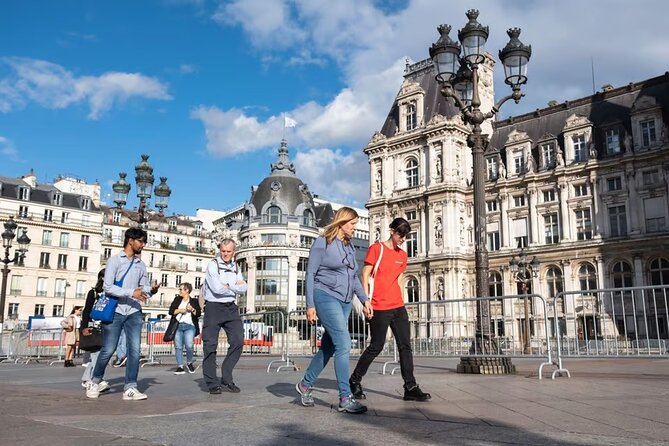
This tour works because it moves you through eras in a controlled way. In about two hours, you go from Paris’s civic heart (Hôtel de Ville) to medieval-feeling lanes (Rue François Miron), then up to Baroque church design (Église Saint-Paul-Saint-Louis), and finally into modern icon territory (Centre Pompidou).
If you like “see it, understand it, then keep walking,” this fits. The pacing is geared toward getting you oriented in Le Marais quickly—without requiring you to be an architecture expert. You’ll get enough context to notice what you’re looking at.
And with a maximum of 15 travelers, the vibe stays easy. It’s the kind of group size where you can ask a question if you’re curious, instead of shouting into a crowd.
You can also read our reviews of more guided tours in Paris



Starting at Hôtel de Ville: More Than a Pretty Façade
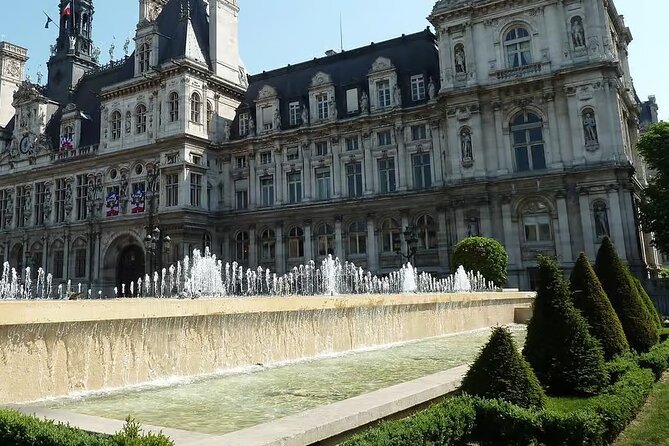
Most people think of Hôtel de Ville as a landmark you pass by. Here, it’s the launch pad, and that matters.
You’ll begin at the Hôtel de Ville (Paris City Hall), a building with a long life story: originally built in the 14th century, later rebuilt after a devastating fire in 1871. The façade you see today is neo-Renaissance, and the guide’s job is to connect that style choice to Paris’s identity—civic power, public art, and major historical moments.
Why I think this start is smart: it gives you a mental “map layer” before you start wandering. After seeing how the city’s government building reflects French history and resilience, the rest of Le Marais feels less random. The streets and churches stop looking like just photos and start reading like chapters.
Practical tip: wear shoes you can trust. Even at the start, you’re in the city’s movement zone, and Le Marais walking often means uneven surfaces nearby.
66 Quai de l’Hôtel de Ville: A Food-Centered Pause by the Seine
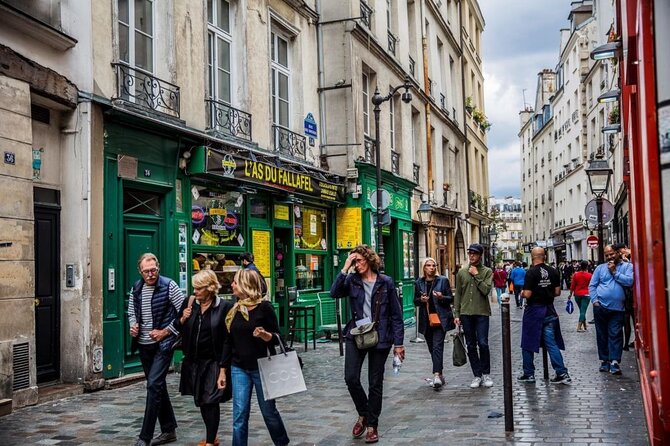
Right after the City Hall area, you head to 66 Quai de l’Hôtel de Ville. This is a different kind of Paris moment: you’re along the Seine, with that classic riverside atmosphere.
The tour uses this stop for two things:
- A “local life” flavor—there’s a renowned local restaurant introduced here.
- A short window that’s meant to spark ideas for what to eat next.
You’re not locked into a meal, but the guide sets you up with culinary direction. The description also hints at surprises at this stop, which usually means the guide isn’t just reciting facts; they’re pointing you to choices you’d likely miss on your own.
Value angle: this is where your $17 starts to make sense. You’re not just paying for movement—you’re buying time-saving recommendations so you’re less likely to end up with the tourist-menu stuff that costs more and tastes average.
Rue François Miron: 16th-Century Charm on Narrow Cobblestones
Rue François Miron is one of those streets that makes Le Marais feel like a preserved old Paris set—except you’re walking through real life shops too.
What you’ll focus on here is the physical texture:
- narrow cobblestones
- half-timbered houses
- buildings described as dating back to the 16th century
The half-timbered façade detail is the star. The guide helps you understand how these buildings relate to merchants and the street’s older role in the city. That context turns the street from “pretty street” into “why this street looks like this.”
Small consideration: cobblestones and narrow lanes can be slower underfoot than straight sidewalks. If you’re sensitive to uneven pavement, take your time here and keep your camera ready but your feet ready too.
Église Saint-Paul-Saint-Louis: Baroque Architecture You Can Actually See
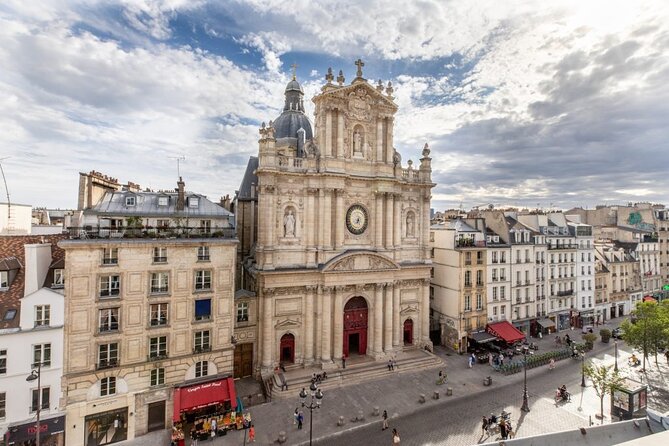
Next is Église Saint-Paul-Saint-Louis, and it’s a great example of why guided tours can beat solo wandering. With a guide, you know where to look and what you’re looking for.
This church is described as a Baroque masterpiece built between 1627 and 1641, requested by Louis XIII. You’ll spot:
- a grand façade with intricate detail
- a soaring dome
- a serene interior atmosphere
- notable artworks, plus a high altar as a focal point
The church also has a historical role in royal and spiritual moments tied to Paris’s past, so it’s not just “pretty inside.” You’re connecting the architecture to the kind of events this area hosted.
Why it’s worth the stop: a Baroque church can feel like it’s all decoration—until someone points out the structure and intent. Here, you get that framework quickly, so you don’t just admire it; you understand what the design is doing.






Rue des Rosiers: Jewish Quarter Energy, Food Traditions, and Modern Shops
Rue des Rosiers is where Le Marais turns into a mix of old and new you can feel in your walk.
This is presented as the heart of Paris’s Jewish Quarter, and the tour explains it through both culture and daily life. You’ll notice a blend of:
- traditional Jewish bakeries and kosher delis
- trendy boutiques and more modern places to eat
- classic foods that made the street famous, including falafel and challah
If you care about how neighborhoods change without fully disappearing, this stop is a good one. You’re seeing tradition alongside updated tastes and shops—same street, different layers.
Practical note: it’s a longer stop (about 30 minutes), so it’s the most time you get for atmosphere. If you want to grab a snack during or right after, this is where to start thinking about it.
Centre Pompidou Exterior Finish: Renzo Piano and Richard Rogers at Street Level
You end at the Centre Pompidou area (Place Georges-Pompidou). And the key detail: the tour doesn’t include entry. You’ll see the exterior, and that’s enough for many people because the design is unforgettable from street level.
This is the bold futuristic landmark with the industrial look:
- exposed pipes
- colorful escalators
- a futuristic structure design
It was completed in 1977 by architects Renzo Piano and Richard Rogers, and it’s treated as a symbol of modern innovation in Paris.
Why this ending works for your trip: you’re dropped in a place with lots of options nearby. The tour plan intentionally ends where you can quickly shift from walking mode to food or drinks.
If you wanted museum time inside Pompidou, you’d need to plan that separately. But as a final “wow,” exterior viewing gives you the modern Paris jolt without adding long lines to your schedule.
Price and Pacing: Is $17 Worth It?
Let’s talk value in plain terms.
For $17, you’re getting:
- a live expert guide
- about 2 hours of structured walking
- multiple stops built around major Paris visuals (City Hall, medieval-feeling street, Baroque church, Jewish Quarter, modern architecture)
- a mobile ticket
- smaller group size (up to 15)
Also important: each listed stop includes admission marked as free (meaning you’re not paying entry fees just to look at what the tour highlights). You’re essentially paying for the guide’s timing, context, and the flow between locations.
Pacing-wise, the itinerary mixes quick photo-and-meaning stops (like Hôtel de Ville) with deeper attention (Rue François Miron and Rue des Rosiers). That’s usually how you avoid the two extremes: either rushing everything, or spending too long on one place and feeling bored elsewhere.
Only heads-up: two hours is still two hours. You won’t have time for slow shopping or long museum detours inside buildings beyond what’s described. Think of this as an orientation tour with big payoffs.
Who This Tour Suits Best (and Who Might Prefer Something Else)
This Le Marais walk is a good match if you:
- want a guided start in Le Marais without overplanning
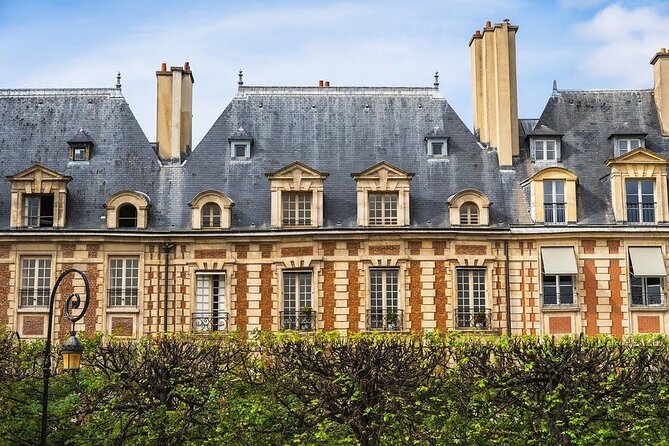
- like architecture that spans centuries (neo-Renaissance, 16th-century street façades, Baroque church design, modern icon)
- enjoy food neighborhood vibes, especially around Rue des Rosiers
- prefer a manageable walking block over a full-day “see everything” schedule
You might want another option if you:
- need indoor museum time as part of the main plan (because Centre Pompidou entry isn’t part of this tour)
- want a long sit-down break built into the itinerary (meals aren’t included, and the stops are time-boxed)
One more small perk: service animals are allowed, and the meeting area is near public transportation. That makes it easier to plug into a busy Paris day.
Should You Book This Le Marais Guided Tour?
I’d book it if you want a smart, compact way to understand why Le Marais feels like multiple Parises at once. The tour’s strongest selling point is its variety in a short window: City Hall history, medieval street detail, Baroque interior highlights, Jewish Quarter street culture and classic foods, and a modern architectural ending at Centre Pompidou.
Before you book, decide what you want from your day:
- If you want guidance, context, and a clean route, this is a strong choice.
- If you’re chasing museum entry or long meals, plan those separately and use this tour as your morning or early afternoon “foundation.”
FAQ
How long is the Le Marais Guided Tour?
It’s about 2 hours.
How much does the tour cost?
The price is $17.
Where does the tour start?
It starts at 25 Bd de Sébastopol, 75001 Paris, France.
Where does the tour end?
It ends at the Centre Pompidou area, Place Georges-Pompidou, 75004 Paris, France.
What’s included in the price?
An expert live tour guide is included. You’ll also use a mobile ticket.
Are meals included?
No. Meals are not included.
What size is the group?
The tour has a maximum of 15 travelers.
Is it possible to see Centre Pompidou from the outside only?
Yes. The tour ends at Centre Pompidou, but you will not be entering it.
Can I get a full refund if I cancel?
Yes. Free cancellation is available, and you can cancel up to 24 hours in advance for a full refund.
If you want, tell me your travel dates and what you love most (food, architecture, neighborhoods, photography), and I’ll suggest the best time of day to take this walk in Le Marais.