REVIEW · PARIS
Haussmannian Paris 2-Hour Private Walking Tour
Book on GetYourGuide →Operated by Paris in person private tours · Bookable on GetYourGuide
Haussmannian Paris hits you like a design manifesto. In just 2 hours, you see how 19th-century city planning still governs the way Paris looks and moves. I love that the walk explains the why, not just the what.
You also get to enjoy Opéra Garnier and its surrounding splendor, plus a real feel for the Haussmann-style streetscape you’ll keep noticing long after the tour ends. Still, the route is mostly on foot with some stairs and curb edges, so plan for normal walking pace and wear good shoes.
The second thing I like a lot is how the guide ties grandeur to everyday Paris. Park Monceau and the nearby elegant landmarks add breathing room, while the architecture stays linked to the same era. One consideration: it’s a short private tour, so you won’t cover every major site in the area in depth.
In This Review
- Key highlights worth knowing before you go
- Why Haussmann’s Paris makeover changes how you see the city
- Starting at Métro Opéra, in front of Café de la Paix
- Opéra Garnier: more than a pretty façade
- Boulevard Haussmann and Saint-Augustin: the Haussmannian street recipe
- Galeries Lafayette: elegant Paris shopping as city design
- Park Monceau and Jacquemart-André: a quieter kind of luxury
- Picasso’s favorite drinking dens: the human side of elegant streets
- Price and value: is $176 fair for a private 2-hour walk?
- Who should book this Haussmannian private tour?
- What the guides do well, based on real experience
- Should you book this Haussmannian Paris 2-hour private walking tour?
- FAQ
- Where is the meeting point for the Haussmannian Paris 2-hour private walking tour?
- How long is the tour?
- What does the tour cost?
- Is this a private tour?
- What languages are available?
- Does the tour run in bad weather?
- Is food included?
- Is the tour wheelchair accessible?
- What is the cancellation policy?
- Can I reserve without paying right away?
Key highlights worth knowing before you go
- Opéra Garnier as the walk’s visual anchor, with context on why it became such a symbol
- Boulevard Haussmann to see the Haussmannian style in its most textbook form
- Galeries Lafayette for the mix of elegance and city-building ambition
- Park Monceau as the calmer, softer counterpoint to the grand streets
- Picasso-era drinking den stories that give the polished boulevards a human edge
Why Haussmann’s Paris makeover changes how you see the city
This tour is built around one core idea: Haussmann’s intervention wasn’t just building upgrades. In the 19th century, most of Paris was flattened and rebuilt, with only two neighborhoods spared, creating a city that aimed to be functional, practical, and beautiful in one unified package.
And yes, that plan had a cost. You’ll hear that the process erased precious streets and buildings that were lost forever. What you end up with, though, is a streetscape so consistent that it can feel like the city has one long, coordinated design theme.
You can also read our reviews of more walking tours in Paris



Starting at Métro Opéra, in front of Café de la Paix
You meet at Métro Opéra, right in front of Café de la Paix, and your guide carries a red canvas tote bag. It’s a smart meeting spot because you’re right in the center of the action—easy to reach, easy to orient yourself, and close to the big sights you came for.
This is a private group walking tour, and you’ll have a live guide in English or French. The tour runs rain or shine, so bring a light layer and assume you’ll stay out on the street for the full experience.
Opéra Garnier: more than a pretty façade
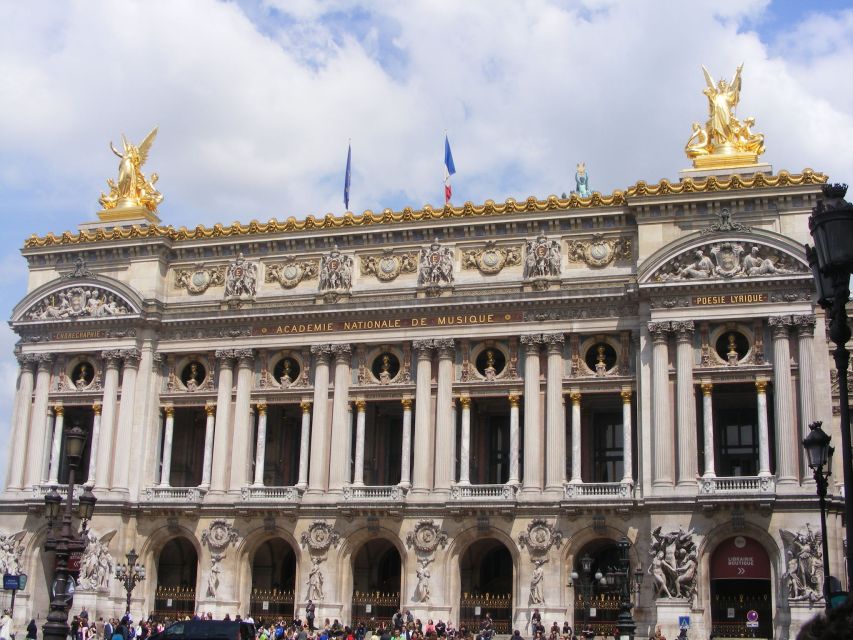
The walk starts strong with Opéra Garnier, widely described as one of Europe’s most beautiful buildings. Even if you’ve seen photos, being close changes everything. The scale, the theatrical look, and the feeling of deliberate showmanship all make sense once you understand the era’s confidence in grand public buildings.
More importantly, you’ll learn how this opera house fits into Haussmann’s larger goal: shaping Paris into a city with clear visual rules and big statements. It’s not just a landmark to point at—it’s a lesson in how architecture was used to project identity.
Boulevard Haussmann and Saint-Augustin: the Haussmannian street recipe
Next comes Boulevard Haussmann, the boulevard named after the man behind the transformation. On this stretch, you see the Haussmannian style the way it was intended to work: long sight lines, a sense of order, and buildings that match the rhythm of the street instead of fighting it.
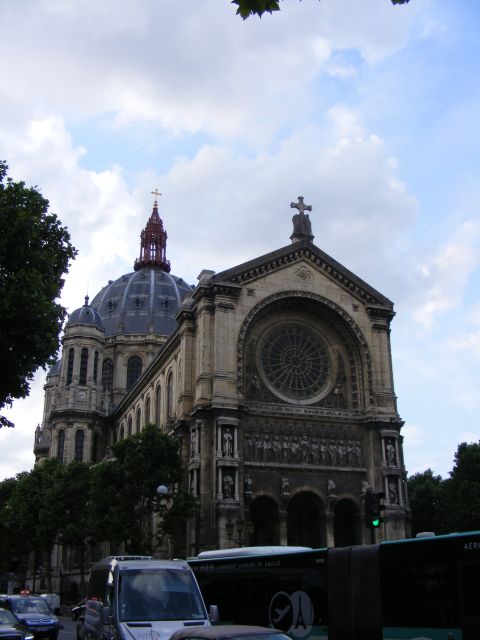
Then you move toward the Church of Saint Augustin, described as an architectural marvel. What I like about this stop is that it balances the opera-house drama with something that feels more anchored and civic. You’re not just learning about one building—you’re learning how religious architecture and city planning existed in the same world of ambition.
Galeries Lafayette: elegant Paris shopping as city design
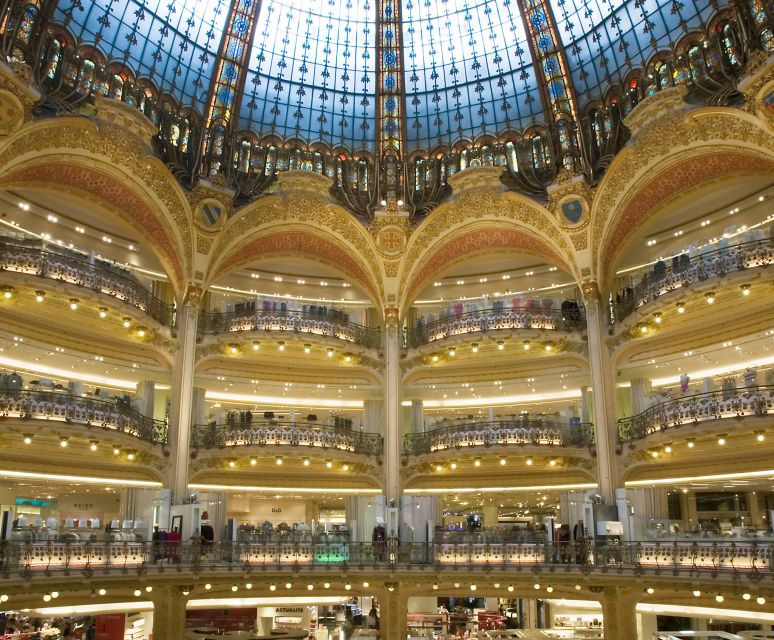
After the grand boulevards, you’ll reach Galeries Lafayette, highlighted as the most elegant shopping mall in Paris. Think of it as Haussmann’s legacy in a modern form: a big, public-facing interior space that still feels like part of the city’s architecture rather than an add-on.
You’ll also get a sense of how Paris keeps using impressive built spaces to pull people in. Even if your plan isn’t shopping, walking through the area helps you read the city like a designer would—streets, entrances, and sightlines all working together.
You can also read our reviews of more private tours in Paris






Park Monceau and Jacquemart-André: a quieter kind of luxury
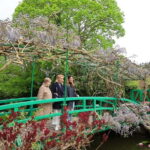
One of the most enjoyable shifts on this walk is heading toward Park Monceau, described as the city’s most elegant park. This is where the tour slows down visually. After the strict lines of boulevards and major landmarks, the park gives you a softer contrast—trees, open space, and a calmer pace that makes the grand architecture feel even grander.
You’ll also see the Museum of Jacquemart-André, described as a lavish and opulent villa of the period. Even without going deep into interior details, the presence of a property like this helps you connect Haussmann-era city planning with wealth, taste, and the way people displayed status through homes and collections.
Picasso’s favorite drinking dens: the human side of elegant streets
The best tours don’t just show monuments; they show the people who moved through the space. Here, you get stories tied to Picasso, including his favorite drinking dens, as part of the neighborhood context.
What you take from this is a useful shift in perspective. Those polished streets aren’t frozen in time. They held artists, conversations, late nights, and daily life—meaning your brain can place modern culture onto the same corridors that shaped the city’s look in the first place.
Price and value: is $176 fair for a private 2-hour walk?
At $176 per person for a 2-hour private walking tour, you’re paying for time, focus, and a guide who can answer questions in real time. This price can feel steep if you’re comparing it to a group bus ride with lots of strangers, but it’s different value: you’re buying smarter pacing and a tighter connection to the details you actually care about.
Also, the tour includes guided walking only. Food, snacks, and drinks aren’t included, so plan to eat before or after. If you’re sensitive to walking tours, you’ll be glad you’re not stuck guessing what to do at meal time—you’ll just handle your own breaks and keep your energy up.
Who should book this Haussmannian private tour?
This is a great fit if you like architecture with context, not just sightseeing checklists. If you’re the kind of traveler who pauses to ask why a building looks the way it does, you’ll get a lot out of the Haussmann planning story and the way it connects multiple stops.
It’s also ideal for a first-time Paris visit when you want a framework. After a tour like this, you’ll likely start spotting Haussmann-style patterns quickly—whether that’s the street proportions, the grand building rhythm, or the overall visual discipline that makes Paris feel designed.
And if you’re traveling with a small group or a partner who wants a calm, controlled pace, a private group format helps. You don’t have to rush with the crowd or miss questions because the schedule is packed.
What the guides do well, based on real experience
Two things keep showing up in the way people describe these tours: the guide’s energy and the clarity of the explanations. One guide named Tina has been praised as very kind and friendly, and another named Hanna has been recognized for focusing on urban planning, city history, and architecture, plus sharing extra practical tips for a Paris stay.
That combination matters. A good city guide doesn’t just talk at you—they help you turn buildings into understanding. Here, you’re not only looking; you’re learning the logic behind what you’re seeing.
Should you book this Haussmannian Paris 2-hour private walking tour?
Book it if you want a compact way to understand the Haussmann transformation and see several of the area’s biggest architectural stars without wasting time. It’s especially worth it if you care about how cities get designed and you like your Paris with real context, not just postcard views.
Skip it if you’re mainly chasing a long list of major attractions where you’ll want lots of time inside museums and churches. This is a walking experience built for perspective, not a full-day ticket to everything.
If you’re happy with two hours on foot and you want Opéra Garnier, Boulevard Haussmann, Galeries Lafayette, Park Monceau, and the architecture story that ties them together, this tour is an efficient, high-value way to get your bearings fast.
FAQ
Where is the meeting point for the Haussmannian Paris 2-hour private walking tour?
The meeting point is at Métro Opéra, in front of Café de la Paix. Your guide will carry a red canvas tote bag.
How long is the tour?
The tour duration is 2 hours.
What does the tour cost?
The price is $176 per person.
Is this a private tour?
Yes. It’s a private group walking tour.
What languages are available?
The live tour guide is available in English and French.
Does the tour run in bad weather?
Yes. The tour operates rain or shine.
Is food included?
No. Food, snacks, and drinks are not included.
Is the tour wheelchair accessible?
Yes. The tour is wheelchair accessible.
What is the cancellation policy?
You can cancel up to 24 hours in advance for a full refund.
Can I reserve without paying right away?
Yes. You can reserve now & pay later, meaning you can book your spot and pay nothing today.