REVIEW · PARIS
Half Day Walking Tour to Over 30 of the Top Sights of Paris
Book on Viator →Operated by Top Sights Tours · Bookable on Viator
Paris in 4–5 hours can feel like a win.
This half-day tour strings together 30+ top sights from Montmartre to the Latin Quarter, with a real guide narrating the whys behind places like Sacré-Cœur and the Louvre. I especially like how it mixes big-photo stops (Eiffel Tower, Moulin Rouge, Arc de Triomphe) with smaller street scenes (Place du Tertre, Le Bateau-Lavoir, Fontaines Wallace). One drawback to know up front: it’s fast-moving and you’re mostly watching, walking, and taking pictures—you won’t go inside major sites like the Louvre, and some stops depend on queue/time (like Sacré-Cœur).
Think of this as a smart first-stay plan: get your bearings, then you’ll know what to circle back for later. The route ends near the Louvre entrance, so it’s easy to continue on your own. Group size is capped at 15, which helps keep it from feeling like cattle.
If you’re the kind of visitor who wants long museum time or you need guaranteed interior access at every stop, this may feel a bit too “great hits.” If you want context, views, and efficient coverage, it’s a strong fit.
In This Review
- Key points before you go
- A Half-Day Taste of Paris: 30+ Stops From Montmartre to the Louvre
- What Your 4–5 Hours Look Like on the Walk
- Montmartre Morning: Sacré-Cœur, Artist Streets, and Working Theatre Vibes
- Central Paris Photos Without the Inside-Ticket Lines: Louvre, Eiffel Tower, Arc
- Quartier Latin, Île de la Cité, and the Places That Feel Like Paris
- Street-Level Stops: Fontaines Wallace, Sun Dial Photos, and Best-Eiffel Angles
- Plan Your Budget: $75.01 + Metro Passes + What’s Not Included
- Who This Tour Fits Best (and When It Might Feel Too Quick)
- Should You Book This Half-Day Walking Tour?
- FAQ
- How long is the tour?
- What does it cost?
- What language is the tour offered in?
- Do I need metro tickets for this tour?
- Are Eiffel Tower and Louvre entrances included?
- Where does the tour start and end?
Key points before you go
- 30+ sights in about 4–5 hours: wide coverage without the pressure of a full-day commitment
- Montmartre focus: Sacré-Cœur plus winding old streets and artist-area photo moments
- Big Paris icons, but outside/photo-first: Eiffel Tower, Arc de Triomphe, and Louvre area are not interior stops
- Metro built into the plan: you’ll ride several times, but you must bring the right tickets
- Small group (max 15): easier pace and more guide attention
- Free-feeling stops: many points are walk-bys or exterior scenes, keeping costs controlled
A Half-Day Taste of Paris: 30+ Stops From Montmartre to the Louvre
You start in Montmartre, right near 72 Blvd Marguerite de Rochechouart (75018), and you finish near the entrance to the Louvre (75001). That flow matters. By the time you reach the center of Paris, you’ve already learned how this city “layers” neighborhoods—art hill, royal/boulevard Paris, then the classic museum-and-cathedral zone.
The big value here is the mix of scale. You’ll see world-famous names like Sacré-Cœur, the Eiffel Tower, and Notre-Dame de Paris from outside or from viewpoints, but the guide’s stories connect them to everyday Paris. You’re not just collecting postcards; you’re picking up the logic of the city.
Most of the paid “ticket anxiety” is reduced because the tour doesn’t hinge on you getting inside every major monument. Still, you should understand the tradeoff: iconic interiors are largely off the table. If Sacré-Cœur is busy when you arrive, you might not get inside. If you’re hoping for guided time in the Louvre, you won’t get it here. You will, however, get a guided tour of what you should notice.
You can also read our reviews of more walking tours in Paris



What Your 4–5 Hours Look Like on the Walk
The itinerary is designed for constant forward motion—roughly 4 to 5 hours—with frequent short stops. Some are just a minute or two for photos and orientation. Others are longer, like Montmartre itself and the Latin Quarter.
Here’s the rhythm you’ll feel:
- Montmartre streets and viewpoints first, with chances for interior viewing at Sacré-Cœur depending on queue/time
- A sequence of central Paris icons (including Eiffel Tower and Arc de Triomphe), mainly as exterior/photo points
- Then a shift into neighborhood texture: Quartier Latin, fountains, bridges, and historic streets
- A few stops include sights tied to film culture and local urban details, not only architecture
Also, you’ll take the metro several times. The tour includes travel time, but you’re still responsible for having a metro pass (more on that below). This is smart. Instead of grinding across the city on foot, you get to conserve energy for the walkable highlights.
Montmartre Morning: Sacré-Cœur, Artist Streets, and Working Theatre Vibes
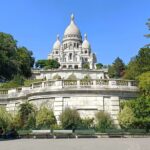
Montmartre is where this tour earns its “worth it” reputation. The morning starts at Sacré-Cœur, one of Paris’s most dramatic viewpoints. You’ll spend about 20 minutes, with admission ticket-free access to go inside depending on the time and queue. That small detail changes the experience. When you can get in, the visit adds depth fast; when you can’t, you still get the “why it matters” story tied to what you see around you.
From there, you move through Montmartre on foot—twisting older streets where famous painters once walked. This is where you stop feeling like you’re on a checklist. The guide’s narration turns familiar streets into a context map: who lived where, what eras shaped these blocks, and how the hill became a magnet for art.
You’ll also encounter Montmartre’s theater energy. Early on, there’s a note about an old, still-working theatre. Later, there’s another working theatre and beauty-spot stop. Even if you only pass by from the street, it gives you a real sense of Montmartre as a living neighborhood, not just an open-air museum.
Then come the artist-area moments. Stops like Place du Tertre and Le Bateau-Lavoir are less about scale and more about atmosphere. You’ll see the area where modern artists started out, plus the street scene where artists paint and you can even pick up a picture for home. If you want something small and tangible from the trip, this is one of your best chances.
You’ll also visit Eglise Saint-Pierre de Montmartre, described as one of the oldest churches in Paris. It’s not a “big ticket” stop; it’s more like a quiet reset during the busy walking stretch. And you’ll also have photo moments at several points tied to street-level Paris.
Central Paris Photos Without the Inside-Ticket Lines: Louvre, Eiffel Tower, Arc
Once you reach central Paris, the tour does something practical: it gives you iconic “recognize it instantly” landmarks without betting the schedule on museum entry.
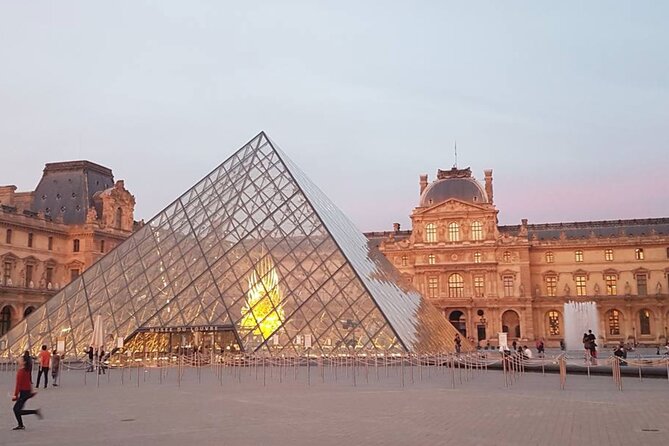
You’ll pass by the Louvre but you won’t go inside. That can feel disappointing if your dream day is all museum time, but it makes sense for a half-day tour. Instead of long line/locker/museum pacing, you get the guide’s stories about what the Louvre was and how it became what you see today—then you keep moving.
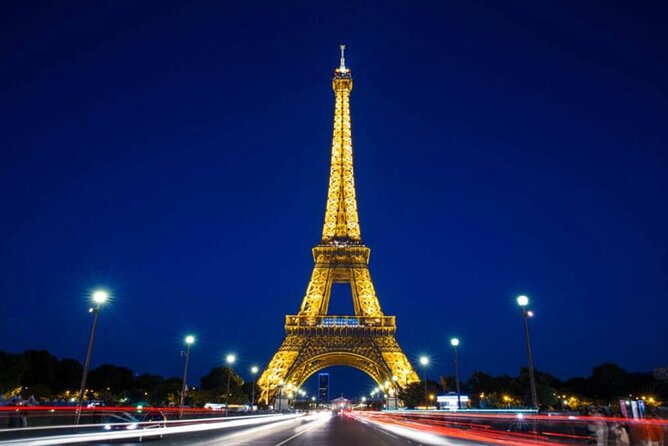
The same idea applies to the Eiffel Tower. You’ll spend about 10 minutes for the big view, but you won’t go inside. That’s exactly how most first-time visitors want to start: you see it, take photos, and understand what it represents, then you decide later if it’s worth paying for the experience up close.
You’ll also hear about the Arc de Triomphe and get great photo angles, but you won’t go up. It’s still worth it because the guide frames the monument with the right question—who started it and who finished it—so the structure feels less like a random traffic-circle statue and more like a story in stone.
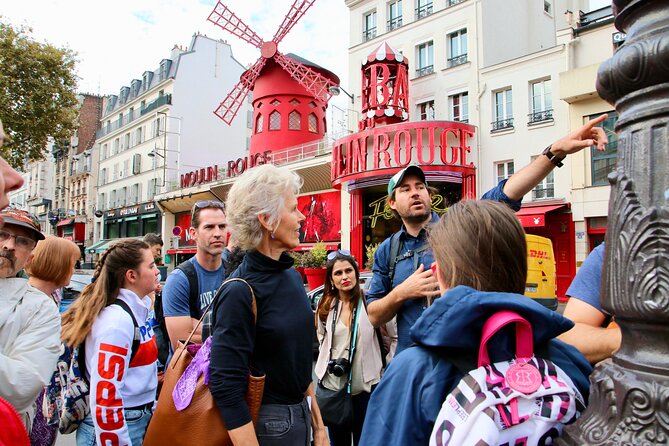
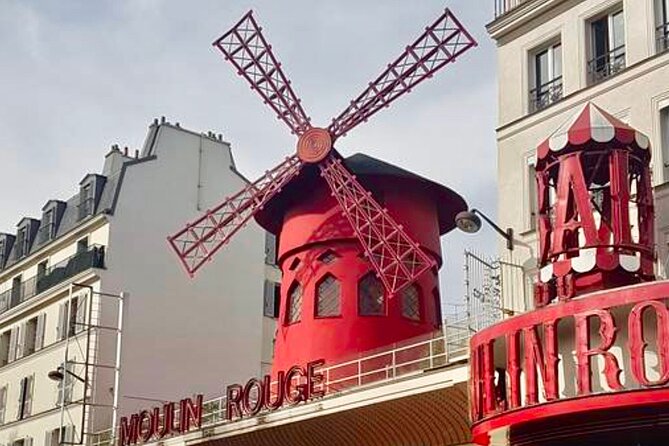
And yes, the tour includes a Moulin Rouge stop, about 10 minutes. You’ll hear the history and take photos, but access and show tickets are not included. That’s useful if you want the sight and story without getting pulled into a separate planning step.
Finally, you get time at spots that help connect the icons. The Champs-Élysées stop is brief, but it’s guided with context about what’s changing. Pair that with the photo view points and you’ll understand how the boulevard functions as a spine of the city.
Quartier Latin, Île de la Cité, and the Places That Feel Like Paris
As you move into the Latin Quarter, you shift from landmark scale to lived-in streets. The Quartier Latin stop is about 15 minutes, with stories about the neighborhood’s history and what it’s been known for over time. This part is valuable because it helps you understand the city beyond the “top sights” label. Paris isn’t just monuments—it’s neighborhoods with personalities.
Next, you’ll hit Jardin de Tuileries with a story linked to royal commissioning. Even if you don’t spend long there, the guide’s explanation helps you see the garden as part of Paris’s political and cultural machinery, not just a pretty pause.
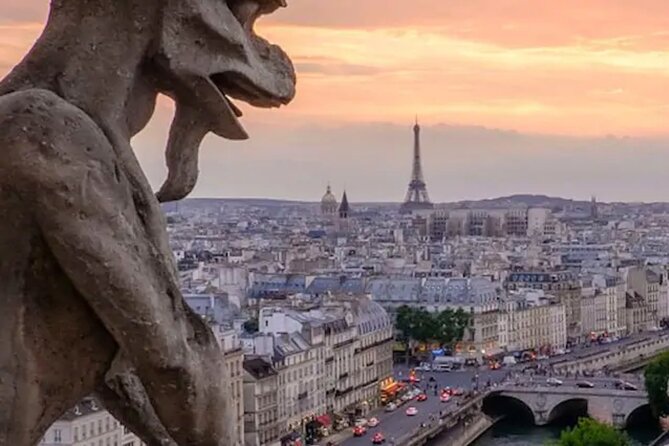
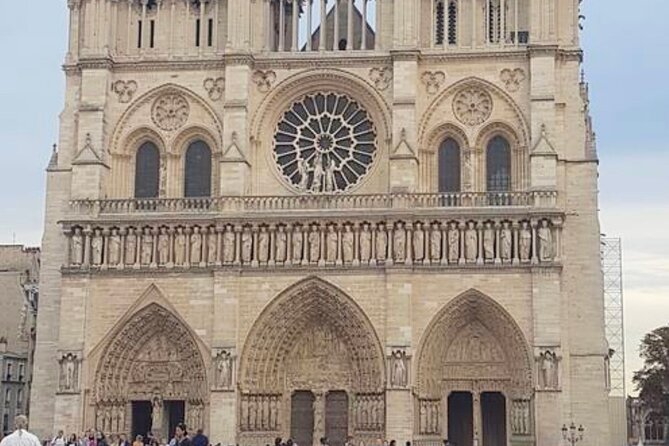
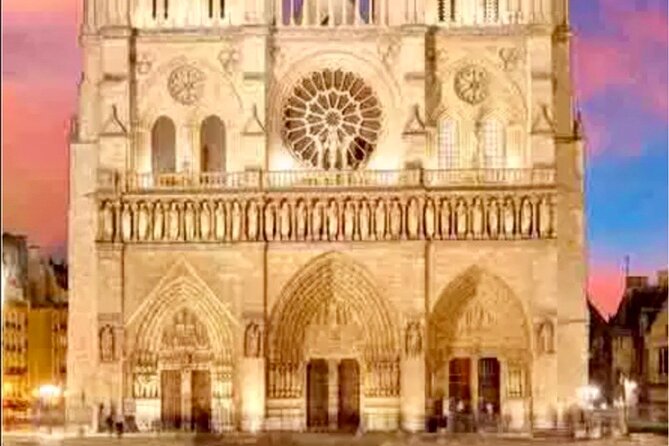
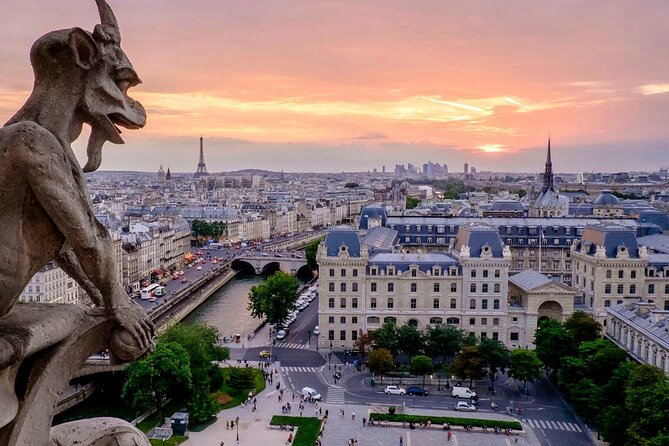
The tour also includes Île de la Cité, the island at the heart of Paris, plus Notre-Dame de Paris with a focus on the complex structure and its near-destruction from fire. You’ll get about 10 minutes here, and it’s a “look and understand” stop rather than a long sit-and-stare visit.
If you like crossing-the-city history with your feet, the tour includes photo moments at key bridges too. The itinerary specifically calls out the oldest bridge in Paris (with a note that the name suggests otherwise). That’s a fun kind of fact you can use later to impress yourself (and friends) on subsequent walks.
Then there’s an unmistakably Paris detail stop: Fontaine Saint-Michel, a spot you may recognize from Emily in Paris. The guide points out what you’re looking at, and you get the chance to do the quick “yep, that’s it” photo moment before moving on.




Street-Level Stops: Fontaines Wallace, Sun Dial Photos, and Best-Eiffel Angles
Paris rewards the patient eye, and this tour gives you enough time for that without slowing everything down.
You’ll see Fontaines Wallace—those famous public drinking fountains that show up all over the city—and the tour includes the “why” behind them, which makes the stop more than a random photo. There’s also a stop described as a sun dial moment, described as one of the largest in history, presented as sightseeing and photos.
There are multiple “best angle” moments for the Eiffel Tower area. One stop is explicitly positioned as a view point to get the best look at the tower. Another includes a broader area photo session that adds context, so you aren’t just standing at one corner taking the same picture everyone takes.
You’ll also see Café des Deux Moulins on Rue Lepic, connected to a famous French film. It’s not an extended meal break; it’s a recognition stop that makes the street feel like a movie set—without requiring you to schedule anything.
All these smaller stops stack up. They teach you how to “read” a neighborhood: fountains signal public life, bridges hint at older city planning, and viewpoints show you how Paris is built for sightlines.
Plan Your Budget: $75.01 + Metro Passes + What’s Not Included
At $75.01 per person, this is priced like a “guided overview package,” not a museum ticket bundle. And that’s the right way to think about it.
What’s included:
- An experienced guide
- The walking tour and the tour’s travel time within the duration
What’s not included (and you should plan for):
- Metro fare: you need an EASY PASS (12€) card and it must be topped up with a MOBILIS ticket for Zones 1 & 2 at €12.00 per person
- Moulin Rouge access and show
- Entrance to monuments such as the Eiffel Tower
A key nuance: Eiffel Tower and Louvre are not interior stops. The tour even signals clearly that you won’t be going inside the Louvre and you won’t be going inside the Eiffel Tower. Sacré-Cœur can be different because the guide notes free admission ticket access inside depending on queue/time. So, your budget mostly covers guiding and time, while transport and a few specific add-ons stay on you.
If you already have a metro card from earlier days, great. If not, factor in the EASY PASS deposit so the tour doesn’t feel cheaper on paper than it ends up being.
Who This Tour Fits Best (and When It Might Feel Too Quick)
This tour is a great match if you’re:
- In Paris for the first time and want quick orientation
- Excited by stories and context behind major monuments and neighborhoods
- Comfortable with a brisk pace and short photo stops
It may feel less ideal if you:
- Want long, inside time for the Louvre or guaranteed access to big interiors at each stop
- Prefer fewer stops and more sitting/rest breaks
- Need lots of cushion time for queues—because at Sacré-Cœur, getting inside depends on the queue and timing
It’s also worth noting the tour requires good weather. If weather turns rough, the experience may be offered on a different date or you can get a full refund. That’s not a reason to avoid it—just a reason to book with flexibility in mind.
Group size capped at 15 helps. You still move quickly, but it’s not a giant herd.
Should You Book This Half-Day Walking Tour?
Yes, if your goal is to get your bearings fast and learn how Paris “connects” from Montmartre to the center of the city. The biggest strength is the broad mix: huge names like the Eiffel Tower and Notre-Dame are paired with neighborhood texture like Place du Tertre, Le Bateau-Lavoir, and Fontaines Wallace. That combination helps you decide what to revisit on your own.
I’d say skip it or choose another option if your top priority is interior museum time, because the Louvre and other major landmarks are presented as outside/photo-first stops. Also, if you hate planning metro tickets, you’ll want to handle the EASY PASS + MOBILIS setup ahead of time.
Bottom line: for first-time visitors who want history, culture, and epic views without spending a full day, this tour is a strong value way to start.
FAQ
How long is the tour?
The tour runs about 4 to 5 hours.
What does it cost?
The price is $75.01 per person.
What language is the tour offered in?
The tour is offered in English.
Do I need metro tickets for this tour?
Yes. You need an EASY PASS (12€) card and you must top it up with a MOBILIS ticket for Zones 1 & 2 at €12.00 per person.
Are Eiffel Tower and Louvre entrances included?
No. The tour does not include entrance to monuments like the Eiffel Tower, and you won’t be going inside the Louvre.
Where does the tour start and end?
It starts at 72 Blvd Marguerite de Rochechouart, 75018 Paris and ends near the entrance to the Louvre Museum, 75001 Paris.