REVIEW · PARIS
Guided tour of Paris in Citroën Traction Avant or DS 21
Book on Viator →Operated by Vintage Traction · Bookable on Viator
Paris by vintage Citroën feels like a movie scene. You trade long walks for smart stops, and you get to choose between two iconic cars while someone else does the driving.
What I really like is the mix of style and access: the ride itself draws constant attention, and the driver often times the stops for photos so you don’t waste time hunting for good angles. The second big win is the private setup for up to four people, so you’re not stuck listening to a one-size-fits-all script.
One thing to weigh: the quality of the commentary can vary a lot, and a few guests found the English harder to follow or the narration more “point-and-name” than story-driven. If you’re booking mainly for deep cultural lectures, this might feel more like a chauffeur with highlights.
In This Review
- Key things to know before you go
- Vintage Citroën vs. regular sightseeing: why this feels different
- The Traction Avant or DS 21 choice: what you’re actually paying for
- Getting oriented from Concorde: the route logic behind the stops
- Arc de Triomphe: why a 5-minute photo stop can still work
- Eiffel Tower stop: quick views without turning the whole day into a line
- Moulin Rouge and Sacré-Cœur: Montmartre without the full hassle
- Louvre-area style pauses: Pyramid and museum viewing from the outside
- Notre-Dame and the Pantheon: two different tones, one route
- Cars, comfort, and photo strategy in real Paris streets
- The guide experience in English: what to expect and how to get more out of it
- Price and value: is $171.18 per group worth it?
- Who this tour suits best (and who should skip it)
- Should you book this vintage Citroën Paris tour?
- FAQ
- How much does the Paris guided tour in a vintage Citroën cost?
- How long is the tour?
- Is the tour private?
- Where does the tour start and end?
- Is pickup offered?
- What language is the tour available in?
- Are entrance tickets included?
- Do I need a paper ticket?
- Which major landmarks are included as stops?
- Can I cancel for a refund?
- FAQ
- Is this tour easy for people who don’t want to walk much?
- What should I bring for the tour?
Key things to know before you go
- Traction Avant or DS 21: you’re choosing between two classic Paris-era designs
- Private driver + photo stops: you spend more time framing the shot, less time getting there
- Big landmarks, short stays: the tour is built for ticking off icons efficiently
- Admission not included: you’ll want to bring your own tickets for anything you plan to enter
- English is offered: some guides communicate best when you keep questions simple
- Comfort matters in traffic: this is a smooth, city-friendly way to see Paris, not a walking tour
Vintage Citroën vs. regular sightseeing: why this feels different
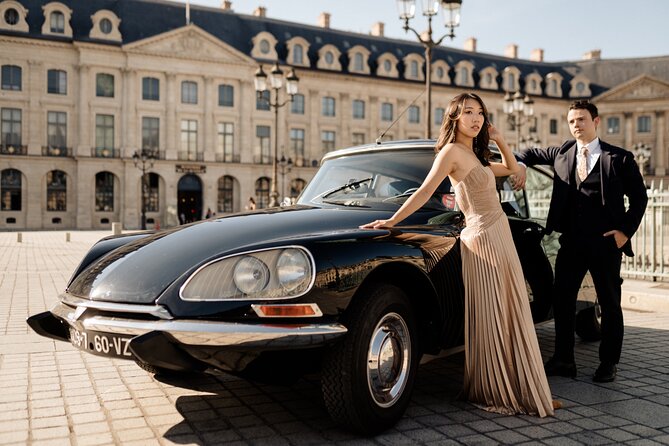
If it’s your first time in Paris, there’s a moment when everything starts to blur: the Eiffel Tower, the big plazas, the churches, and suddenly you’re exhausted before you’ve even hit your best photos. This tour solves that by doing the hard part for you: getting you from one landmark cluster to the next without foot travel and without the stress of driving.
The best part is that the car changes the rhythm of the day. A vintage Citroën doesn’t just move you around town. It makes the experience social and visual. Cars like these pull people into the street for a second glance, and that turns your “ordinary” photo stop into something more memorable.
You also get a strong fit for limited time. With about 1 to 3 hours on the clock, you can see major sights that normally require separate bus lines or long subway transfers.
You can also read our reviews of more guided tours in Paris



The Traction Avant or DS 21 choice: what you’re actually paying for
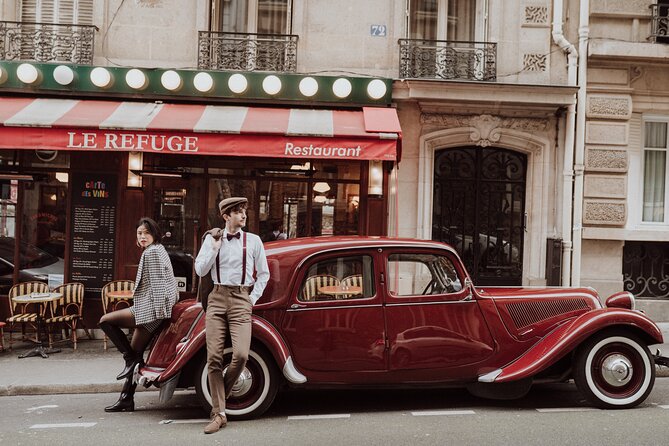
You’re paying for more than transportation. You’re paying for the whole “arrival” moment.
This tour lets you choose a vintage Citroën model: the classic Traction Avant or the DS 21. Both are visually striking, and both create that instant Paris connection. Expect lots of turning heads, easy conversation starters, and constant photo opportunities that you simply won’t get from a standard van.
In practical terms, a private car also means you can adjust to real Paris conditions. When traffic slows or crowds thicken, you’re not stuck in a rigid group schedule. Your driver can choose where to pause and how to position the car for photos.
One more value point: the price is listed per group (up to 4). That’s important. Two people paying for private transport can be expensive; four people paying together can feel more sensible, especially if you’re replacing multiple taxis, app rides, or separate tours.
Getting oriented from Concorde: the route logic behind the stops
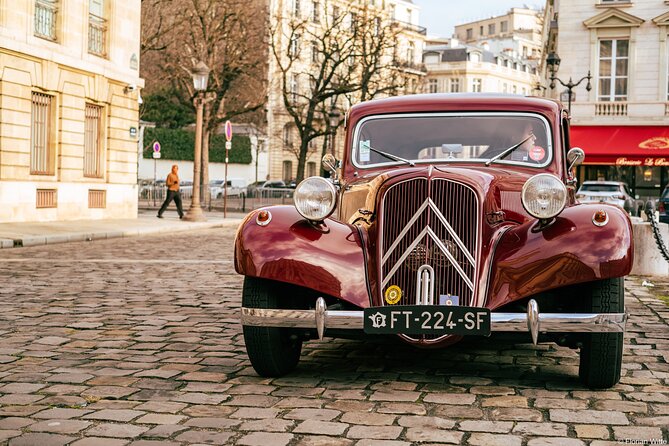
The tour starts at Concorde75008 Paris and ends back at the same meeting point. That is a smart base if you want to cover central landmarks quickly.
From there, you’ll hit the big “Paris headline” zone first. You’ll pause around major squares and avenues, then move into landmark photos at the big monuments. Later, the route shifts toward older neighborhoods and viewpoints—Moulin Rouge and Montmartre territory with Sacré-Cœur.
Along the way, you’ll also stop for a mix of Paris “greatest hits” and iconic architecture: bridge and palace-style views, plus stops tied to the Opera and the Louvre area, including the Pyramid and a museum stop. The tour finishes with classic “old Paris” moments such as Notre-Dame and the Pantheon.
The overall pattern is efficient: you get an overview of the city’s major districts without the usual maze of transit changes.
Arc de Triomphe: why a 5-minute photo stop can still work
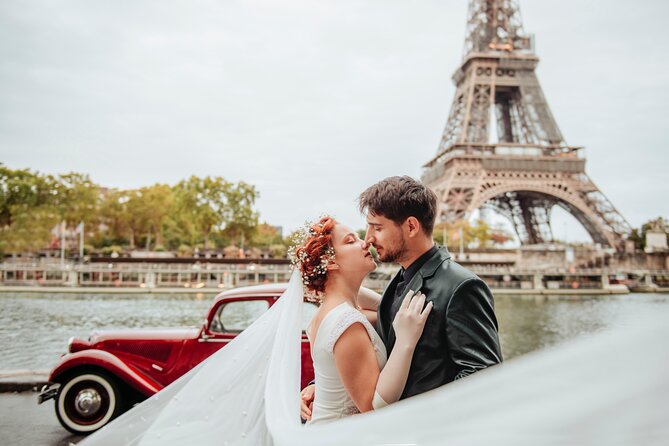
You’ll spend a short moment at Arc de Triomphe (admission not included). The goal here is not a museum-level visit. It’s the “I’m here” marker plus photos.
Arc de Triomphe is one of those sites where the surrounding streets and wide-open sightlines matter as much as the monument itself. With a driver positioning you near the right viewpoints, you can capture the structure without spending your energy walking in circles trying to get the best angles.
If you’re the kind of traveler who wants context, keep your expectations realistic. Some guides share richer stories; some simply name and date things. Either way, you’ll still get what you came for: clear landmark recognition and photos you can actually use later.
Eiffel Tower stop: quick views without turning the whole day into a line
Next up is the Eiffel Tower (again, admission not included). The tour’s short stop time is perfect if you’re planning to return later for an entry ticket, a tour of the grounds, or a nighttime visit.
Even if you don’t go inside, the value is orientation. Eiffel Tower photos depend on light, traffic, and crowd position. A private driver can often time the pause so you’re not standing in the wrong place while other people get the better shot.
If you want more than a photo moment, this is where you’ll likely pivot your day after the tour. Think of it as your “map of the next visit.” You leave knowing exactly where you’ll want to come back, and from what direction.






Moulin Rouge and Sacré-Cœur: Montmartre without the full hassle
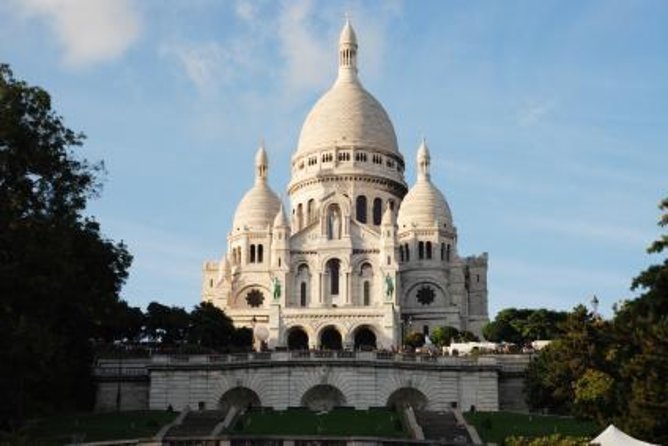
The tour stops at Moulin Rouge and then continues toward Basilique du Sacre-Coeur de Montmartre for a short photo-and-view window. This part is great for travelers who want Montmartre’s drama without turning the day into a steep, stop-start walk.
Sacré-Cœur is famous for its silhouette and viewpoint energy. Even with a short pause, you can understand why it’s one of the city’s most photographed hillsides. You’ll also get the advantage of arriving by car, which means you spend less time battling crowds just to reach the viewpoint.
Practical note: if you’re sensitive to street noise or crowds, plan your expectations around that. Montmartre can be busy even when the stop is brief, and your best photos often depend on timing more than “where you stand.”
Louvre-area style pauses: Pyramid and museum viewing from the outside
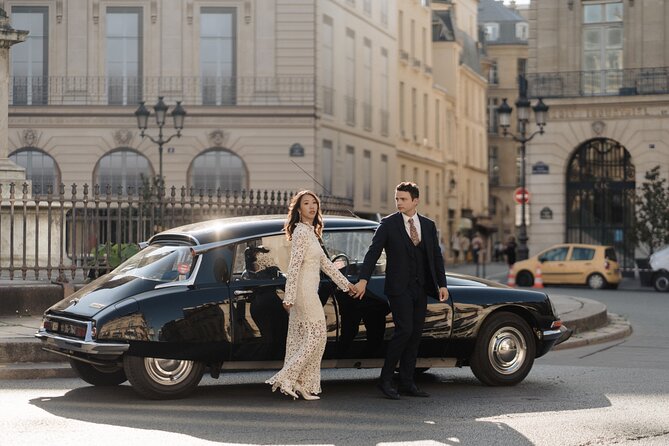
You’ll also make stops for a museum and the Pyramid. The Louvre complex can be overwhelming on foot because everything is important and everything is crowded. From a car, you get the big-picture experience: see what you recognize, confirm the placement, and understand how the area connects.
This is a good fit if you’re in Paris for the first time or if you’re returning later and want to plan entry. Admission is not included, so this isn’t built to replace a booked Louvre visit. It’s better as orientation and photo framing.
Notre-Dame and the Pantheon: two different tones, one route
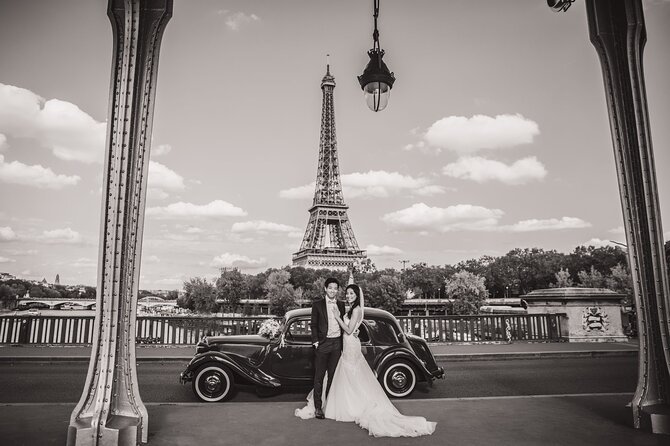
Later, the tour includes Notre-Dame and the Pantheon, two landmarks that feel very different even though both are central to Paris identity.
Notre-Dame often becomes a photo stop first, a story stop second, and a return visit forever. The tour’s short timing helps you see it without getting stuck for hours. You’ll likely leave with clear “what this is” clarity, which makes your later walk-through much easier.
The Pantheon works as a counterbalance. It’s more formal, more civic, and it adds variety to the day so your highlights don’t all feel like the same grand facade style.
If your guide’s English is clear, this is where stories help most. If the narration is light, you’ll still get the landmarks and the satisfaction of seeing them efficiently.
Cars, comfort, and photo strategy in real Paris streets
A big part of why people like this tour is simple: it’s comfortable. Instead of dragging your legs between distant points, you’re in a smooth-moving ride while someone else navigates.
From the feedback, a lot hinges on the driver’s handling and pacing. A skilled driver makes classic cars feel surprisingly manageable in tight streets. It also helps with photo timing because the car can pause exactly where you need it, instead of you scrambling for a good angle with traffic moving around you.
A practical thing to know: vintage cars can mean scent sensitivity. One guest mentioned gas fumes when windows were down, and that caused a headache. If you’re prone to headaches or smell sensitivity, ask for window ventilation that feels comfortable for you, and consider stepping out for a moment when pausing for photos.
For photos, here’s how to get the best results:
- Wear shoes you can stand in briefly for shots, even if you’re not walking far
- Bring a phone charger or extra battery so you can keep taking photos
- Tell your driver what you want most: skyline, street-level architecture, or portrait-style photos
The guide experience in English: what to expect and how to get more out of it
The tour is offered in English, and guide communication quality is the biggest variable in the experience. Some guides speak clearly and share enough context to make you feel like you’re learning something beyond the postcard.
Other guests found the English difficult to understand or the commentary more like quick labels than engaging history. In the most extreme cases, some people described the experience as feeling more like a chauffeur ride than a guided cultural tour.
So here’s the practical workaround: come with simple questions, not a demand for a long lecture. If you ask about what you’re seeing in plain terms—why it looks that way, what the building represents, what to notice first—you’ll get more out of the time regardless of the driver’s language comfort level.
Also, if you’re celebrating something special (birthday, anniversary, first-time trip), this is still a great format. The car and the photo stops can create the moment. Just don’t treat it like a substitute for a museum audio guide.
Price and value: is $171.18 per group worth it?
At $171.18 per group (up to 4), you’re not buying a bargain. You’re buying convenience plus a showpiece vehicle.
This becomes good value in three situations:
- You have up to four people sharing the group cost
- You want major sights in a short time window (without walking miles)
- You care about the photo experience and the novelty of a vintage Paris car
If you’re solo or a couple, it can still make sense for a quick overview, but it’s less cost-efficient than standard guided walking tours. The trade is speed and style, not deep immersion.
Also remember: admission tickets are not included, so plan separate budgets if you want to enter monuments or museums.
Who this tour suits best (and who should skip it)
This is a great fit if you:
- Want a first-visit overview that reduces walking strain
- Love classic cars and want a Paris experience that feels cinematic
- Travel with older relatives or mobility-limited companions and want less time on your feet
- Care about photo stops more than long explanations
It may be a weaker fit if you:
- Want a strict, scripted history lecture at every stop
- Need very clear English narration for every detail
- Are expecting a museum-grade visit with admissions included
One more reality check: a few people reported issues like vehicle problems or missed meet times. That’s not something you can fully predict, but it’s enough that I’d treat this as a “high-lifestyle, schedule-flexible” plan rather than a do-or-die appointment with zero backup.
Should you book this vintage Citroën Paris tour?
I’d book it if you want Paris highlights with less walking, a real classic-car atmosphere, and a format that makes sense for limited time. It’s also a strong choice when your group wants photos that don’t require hustling through crowds and transit.
I’d think twice if your top priority is detailed cultural commentary and consistent English narration. If that’s you, you might pair this with one or two proper museum or guided walking experiences later.
My final rule: if you book, treat the tour as your fast, stylish orientation round. Then use what you see to decide what deserves your time next.
FAQ
How much does the Paris guided tour in a vintage Citroën cost?
The price is listed as $171.18 per group, up to 4 people.
How long is the tour?
It lasts about 1 to 3 hours.
Is the tour private?
Yes. It’s a private tour/activity, and only your group participates.
Where does the tour start and end?
It starts at Concorde75008 Paris, France, and ends back at the same meeting point.
Is pickup offered?
Pickup is offered.
What language is the tour available in?
The tour is offered in English.
Are entrance tickets included?
No. Admission tickets are not included for stops like Arc de Triomphe and the Eiffel Tower, and other sights.
Do I need a paper ticket?
You’ll use a mobile ticket.
Which major landmarks are included as stops?
You’ll stop at places including Arc de Triomphe, the Eiffel Tower, Moulin Rouge, Basilique du Sacre-Coeur de Montmartre, plus stops tied to the Louvre Pyramid area, Notre-Dame, and the Pantheon, along with an Opera stop.
Can I cancel for a refund?
You can cancel for free up to 24 hours in advance for a full refund.
FAQ
Is this tour easy for people who don’t want to walk much?
Most travelers can participate, and the tour is built around getting you between landmarks by car rather than long walking.
What should I bring for the tour?
Bring comfortable shoes for short photo moments, and plan for separate payment if you want any entrances since admission is not included.