REVIEW · PARIS
Normandy D-Day Beaches with Juno Beach, bunkers & Canadian Cemetery from Paris
Book on Viator →Operated by Blue Fox Travel - Blue Bike Tours - Paris · Bookable on Viator
WWII Canada on Normandy sand is unforgettable.
This small-group day trip from Paris zeroes in on Juno Beach and the Canadian footprint of D-Day, with smooth A/C transport and expert guiding that turns place names into lived events. You’ll spend the morning on the beach, then move inland to bunkers, a museum, and two major memorial sites that hit hard without being sensational.
What I like most is the mix of hands-on stops and controlled pacing: the Juno Beach Centre includes access to closed-off German bunkers, and the schedule also makes room for the Beny-sur-Mer Canadian War Cemetery. The only real drawback to plan for is that this is a long day (about 12 hours), and lunch is on your own—so go in thinking ahead about food and comfort.
In This Review
- Key highlights worth planning around
- From Paris at 7:00am: why this route works
- Juno Beach walk: the morning sand where the story begins
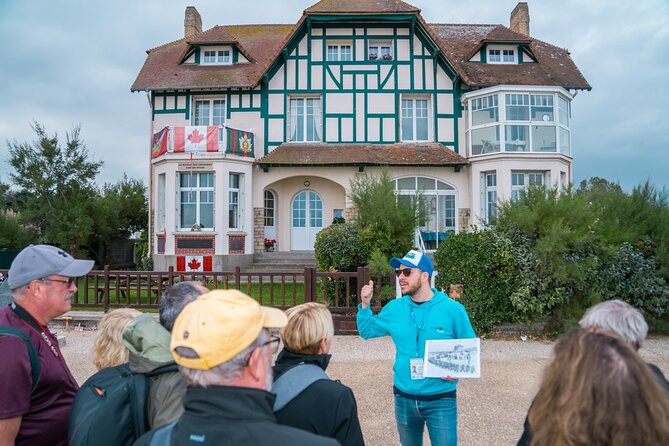
- Bernières-sur-Mer and Canada House: a small building with a big claim
- Juno Beach Centre: museum time plus a bunker tour that changes your perspective
- Courseulles-sur-Mer lunch break: how to use your free hour well
- Beny-sur-Mer Canadian War Cemetery: where emotion becomes context
- Hell’s Corner inland stop: the furthest advance you can measure
- Abbey d’Ardenne: remembering an execution, not just battles
- How the guides shape the day in a group of eight
- Price and value: what $290.36 really covers
- Timing and what to pack for an all-weather, 12-hour day
- Should you book this Normandy D-Day tour from Paris?
- FAQ
- Where is the meeting point and what time does the tour start?
- How long is the tour?
- How big is the group?
- Is the tour offered in English?
- Is lunch included in the price?
- Are entrance fees included?
- Does the tour run in all weather conditions?
- What is the minimum age to join?
Key highlights worth planning around
- Small group of 8 max keeps questions moving and the stops from feeling like a cattle line
- Juno Beach Centre bunker visit puts you inside German defensive spaces, not just on a beach photo stop
- Canada House plus Juno Centre gives you both a landmark moment and deeper context the rest of the day can build on
- Beny-sur-Mer Canadian War Cemetery is given real time to pay respects
- Hell’s Corner inland advance is short but meaningful, with a specific D-Day distance tied to Canadian troops
- Abbey d’Ardenne memorial focuses on a specific execution of Canadian soldiers by Hitler Youth members
From Paris at 7:00am: why this route works
If you want Normandy without the stress of driving, this is a sensible way to do it. You start at 7:00am in central Paris (meet at Dada12, Av. des Ternes, 75017), and you return to the same area at the end of the day. With a round-trip ride in an A/C minivan, the day stays focused on the sites rather than parking, tolls, or map headaches.
The tour is also built for attention. Up to eight people means you can actually hear the guide, ask questions, and follow the narrative as the day moves from coastline to countryside. It runs in all weather, so you’ll be out on the move no matter what Normandy throws at you.
English is the offered language, and you’ll get a driver/guide as well as official guidance at the Juno Beach Centre. That matters because D-Day can feel abstract if you only look at plaques; here, the commentary helps you connect the dots between beach geography, defensive positions, and what happened to Canadian units.
You can also read our reviews of more tours and experiences in Paris.



Juno Beach walk: the morning sand where the story begins
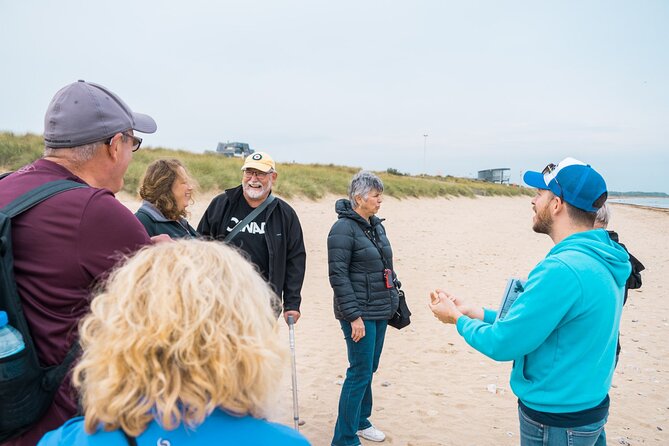
The day starts with a walk on Juno Beach, with a simple goal: put your feet on the same stretch of shoreline Canadian troops reached in June 1944. You’ll have about 30 minutes here, and the admission portion is free.
This is one of those stops where you don’t need to force it. The value is the sequence: beach first, then the rest of the Canadian story later. When the guide points out what you’re seeing—light, shoreline shape, and the way the coast opens inland—you start understanding why these beaches mattered and how “landing beaches” turned into brutal, close-range fighting almost immediately.
Practical tip: wear shoes that handle damp sand and uneven ground. Normandy can be breezy even when the sun shows up, and you’ll appreciate a light layer you can peel on and off.
Bernières-sur-Mer and Canada House: a small building with a big claim
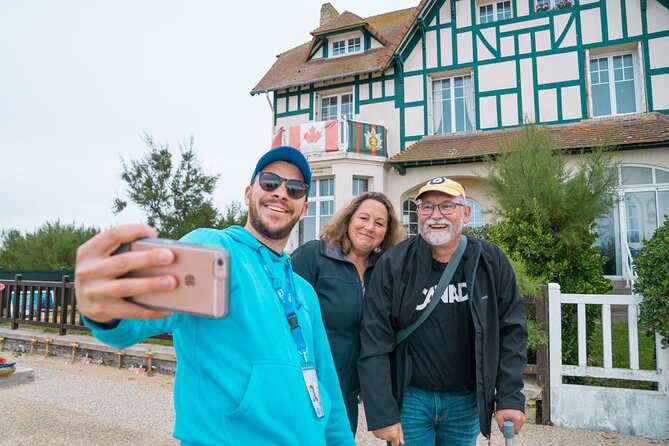
Next you head to Bernières-sur-Mer, where you can see Canada House on Juno Beach. You’ll get about 30 minutes, and the ticket cost here is free.
Canada House is described as the first house liberated in Normandy. Even if you don’t get lost in the legend-versus-proof debate (the guide should handle the nuance), the stop is useful because it shows how quickly the war shifted from landing to territory—out of the surf and into rooms, streets, and control of landmarks.
This is also a good photo moment, but I’d treat it as more than a backdrop. Use it to reset your brain from “beach” to “human scale,” because the D-Day story wasn’t only tanks and maps. It was also orders, shelter, and fragile control while fighting continued nearby.
Juno Beach Centre: museum time plus a bunker tour that changes your perspective
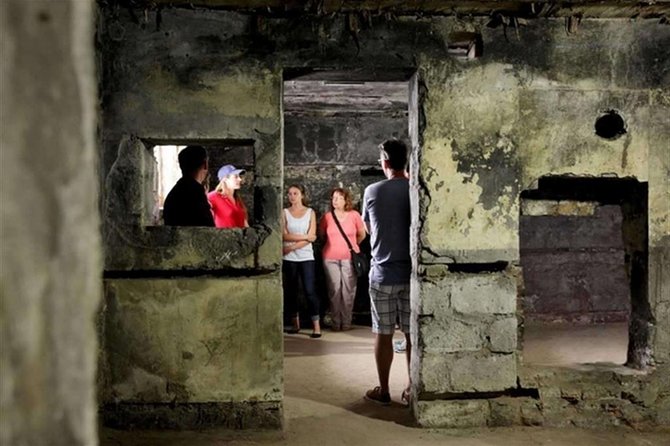
This is the heart of the Canadian experience: Juno Beach Centre. You’ll first join an official Juno Beach Centre guide for a bunker visit (about 45 minutes) that includes access to two German bunkers closed off to the general public. Admission is included.
Then you move right into the main Juno Beach Centre museum for about 1 hour. Admission is included here too.
Why this combination works: standing on the beach is geography. Entering bunkers is consequence. Once you see the defensive spaces that soldiers tried to overcome, it’s harder to treat D-Day as a single cinematic moment. The bunkers help you understand the cost of approach, the cover-and-fire logic, and the way terrain can turn “open space” into a trap.
What to watch for inside the museum: follow the guide’s pacing and don’t try to read every label at once. Even with a structured 1-hour visit, the exhibits cover a lot, and the experience is meant to be guided. If you’re the type who always wants more time in museums, keep your expectations realistic: there’s enough here to feel informed, but it’s still a set schedule.
One more practical note for your day-planning: the museum portion is included, but your total time is fixed. A few people found they wanted more reading time. If you know you’ll want extra minutes, take photos of what catches your eye and plan to return later if you’re able.
Courseulles-sur-Mer lunch break: how to use your free hour well
After the Canadian landmarks and the museum focus, you get time in Courseulles-sur-Mer for lunch. You’ll have about 1 hour of free time, and food isn’t included.
This is the moment to eat and reset. Since the schedule is tight, the best strategy is to go simple and local: grab something quick and then take a slow walk to digest what you just saw. Some guides on this route also help you think through lunch choices without turning it into a sit-down restaurant mission.
If you care about minimizing stress, do what many people naturally end up doing on tight schedules: choose a nearby grab-and-go option, eat outdoors if weather allows, and use the extra minutes to wander just enough to feel the town. The point isn’t a gourmet meal. It’s staying comfortable so you can handle the later cemetery and memorial stops.




Beny-sur-Mer Canadian War Cemetery: where emotion becomes context
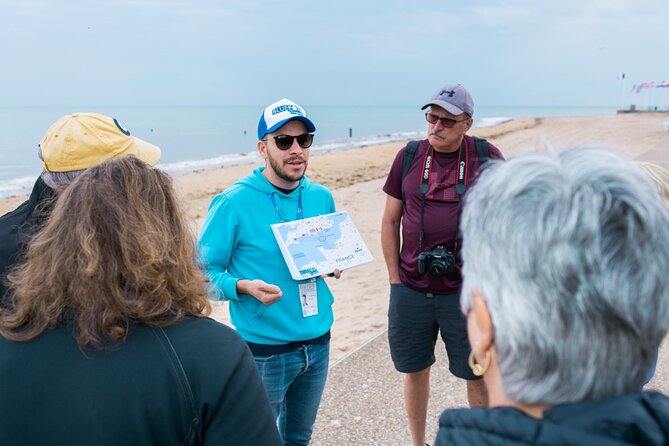
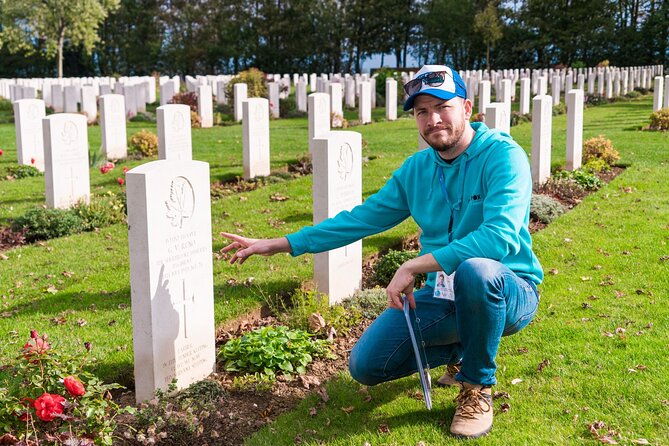
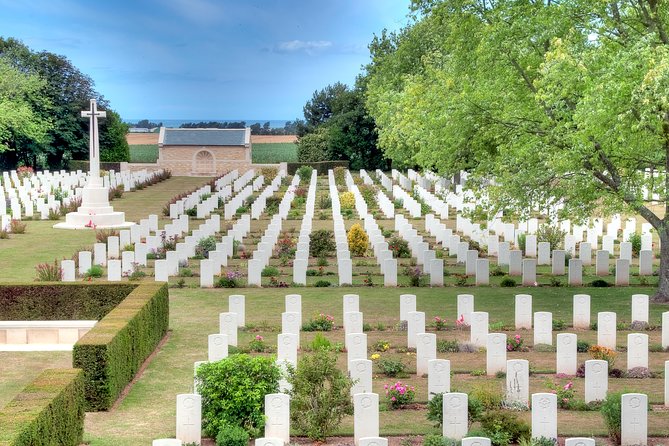
Next comes Beny-sur-Mer Canadian War Cemetery. You’ll spend about 30 minutes here, and admission is free.
This is one of the most important parts of the entire day. A cemetery can turn into a blur if you rush. Here, the schedule gives you enough time to slow down, read carefully, and reflect. The Canadian cemetery experience hits especially hard because the graves represent so many young soldiers, and it’s the kind of place where you feel the scale without needing numbers shouted at you.
If you’re visiting for a family connection, come prepared. If you have a name, take it with you (and any basic details you already know). It can be incredibly meaningful to locate a relative’s grave in a place like this, and the tour’s guided structure makes it easier to arrive focused rather than scattered.
Hell’s Corner inland stop: the furthest advance you can measure
A quick drive later, you reach Villons-les-Buissons, known as Hell’s Corner. You’ll get about 15 minutes at this stop, and admission is free.
This isn’t a long stop, and that’s okay. What makes it valuable is the specificity: it’s described as the furthest advance inland taken by Canadian troops on D-Day, about 5 miles from Caen. That kind of detail helps you picture the battlefield as more than a coast line. It shows how far the fighting pushed and how quickly the campaign moved—or stalled—under fire.
Because the time is short, treat this like a “connect-the-map” moment. Let the guide translate what you’re seeing into what it meant tactically, then move on without trying to over-stretch the stop.
Abbey d’Ardenne: remembering an execution, not just battles
Finally, you visit Abbey d’Ardenne. The stop lasts about 20 minutes, and admission is free.
This site centers on a specific atrocity: on June 1944, 20 Canadian soldiers were illegally executed at the abbey by members of the “Hitler Youth.” It’s a heavy stop, and it’s also a critical one. Battles are one kind of history; what happened after the fighting shows another side of the war’s cruelty and breakdown of rules.
Because the subject is dark, pacing matters. The value of having a guide isn’t to soften anything—it’s to keep the meaning clear, so you understand why this site exists and what it represents.
If you prefer lighter days, this is not that tour. But if you want the truth of D-Day in full, this stop is part of that honesty.
How the guides shape the day in a group of eight
A tour like this lives or dies on guidance, not just transportation. The driver/guide handles the flow between stops, and you’ll also get official guidance at the Juno Beach Centre.
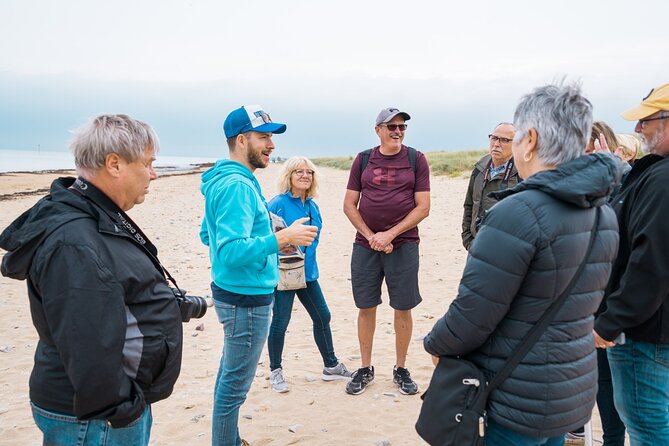
The best thing about this setup is that it’s not rushed through like a tick-box package. Many of the guides seen leading this route bring extra materials and personal storytelling—sometimes sharing copies of period visuals to help you connect the dots. Names you may encounter on this day include Julian, Brune, Clement, Mathieu, Enzo, Olivier, and HP.
One possible snag to keep in mind: a few guests noted issues like English being hard to follow or the van A/C not working well on hot days. That doesn’t erase the value, but it’s a good reminder to bring a backup layer and stay patient if conditions aren’t perfect.
Price and value: what $290.36 really covers
At $290.36 per person, this isn’t a budget impulse buy. But it also includes several items that would add up fast if you tried to do it on your own: round-trip transfer from Paris by A/C minivan, a driver/guide, small-group structure, and all entrance fees.
Even with some stops listed as free, the tour’s built-in cost matters most for the places that require tickets—especially the Juno Beach Centre (both the museum and the bunker access). That’s the part of the day you’re most likely to regret trying to DIY, because you want the right entry access and a guide’s framing before you walk into restricted spaces.
Food is the one clear extra. Lunch is on you during the Courseulles-sur-Mer hour, so budget for that. Also remember that you’re paying for a managed timeline: you’re not only buying attractions, you’re buying a full day that stays coherent from coastline to cemeteries.
Timing and what to pack for an all-weather, 12-hour day
The tour runs in all weather conditions, so dress like you expect fog, wind, or rain. Bring a light rain jacket or packable umbrella, and wear clothes you can layer. Normandy mornings can feel chilly, and by mid-afternoon you might be dealing with changing temperatures.
Don’t overpack, but do bring essentials:
- Comfortable walking shoes for beach sand and memorial grounds
- Water (especially if it’s warm)
- A light layer for wind at the coast
- A charged phone for maps and quick photos
Also, plan your morning like a pro: it starts early, and you’ll be glad you didn’t skip breakfast.
Should you book this Normandy D-Day tour from Paris?
Book it if you want a Canadian-centered D-Day day that goes beyond beaches and into bunkers, a major museum, and memorial sites with real time to reflect. The small-group size, the included Juno Beach Centre access, and the way the day is sequenced make it a strong choice for first-timers and for Canadians who want the story told in the perspective that matches their heritage.
Skip it (or at least rethink) if you’re mainly looking for a relaxed sightseeing day. This is structured, emotional, and long. Lunch is not included, and the museum time is set—so if your dream plan is to wander unhurried for hours, you may feel constrained by the schedule.
If you want an authentic, meaningful D-Day day with less stress and more context, this is a solid bet.
FAQ
Where is the meeting point and what time does the tour start?
The tour starts at Dada12 Av. des Ternes, 75017 Paris, France and the start time is 7:00am.
How long is the tour?
The duration is about 12 hours, and the tour ends back at the meeting point.
How big is the group?
The group is small, with a maximum of 8 travelers.
Is the tour offered in English?
Yes. The tour is offered in English.
Is lunch included in the price?
No. You’ll have about 1 hour of free time in Courseulles-sur-Mer for lunch, but food is not included.
Are entrance fees included?
Yes. All entrance fees are included, including the Juno Beach Centre bunker visit and the museum entry.
Does the tour run in all weather conditions?
Yes. It operates in all weather conditions, so dress appropriately.
What is the minimum age to join?
The minimum age is 7 years.