REVIEW · PARIS
Giverny & Monet’s House Audio Guided Half-day Tour from Paris
Book on Viator →Operated by Paris CityVision · Bookable on Viator
A day trip to Monet’s gardens feels like a shortcut to a painting. This half-day outing pairs round-trip transport from Paris with tickets and an audio guide so you can wander where he worked for over 40 years. One thing to note up front: the audio experience is phone-based, and Wi‑Fi is not available on the coach.
I love the simple rhythm here. You get time to explore on your own at Clos Normand, then visit Monet’s house and studio inside, before you’re sent back to Paris without stress.
My one caution is timing and tech. Giverny can be busy, and if your phone battery or audio access fails, you’ll still see the gardens, but you’ll lose the deeper story layer.
In This Review
- Key things that make this tour worth your attention
- How this half-day to Giverny really works (and why it’s a smart format)
- Paris to Giverny by comfortable bus: what to expect and what to prepare
- Clos Normand: where the water lilies, bridge, and flower rows tell Monet’s story
- Monet’s house and studio: blue rooms, reading spaces, and Japanese prints
- The audio guide on your phone: the best part, if you set it up right
- Crowds, queues, and “don’t get stuck” timing
- The bus return to Paris: why the exit details matter more than you think
- Value check: what you’re paying for at $102.30
- Who this tour is best for (and who should consider another option)
- Should you book this Monet & Giverny half-day tour?
- FAQ
- How long is the tour?
- What’s included in the price?
- Is the audio guide provided, or do I need to bring something?
- Do I get Wi‑Fi on the bus?
- How much time do I get at the gardens and house?
- Is this a guided tour with a person inside?
- What should I do about phone battery for the audio app?
- Where do I meet in Paris?
- Will the schedule change if there’s traffic?
- Is there free cancellation?
Key things that make this tour worth your attention

- Round-trip bus plus tickets included: You’re not trying to coordinate transit and entry times on your own.
- Two built-in modes: free roaming + structured house time: Gardens are flexible, the house visit is timed.
- Clos Normand water lilies, Japanese bridge, and weeping willows: This is the signature Monet view you came for.
- Audio guide in 10 languages via a downloadable app: You control the pace and can re-listen if you want.
- Small-group feel (max 40): Easier movement through crowds than giant tours.
- Guides can be very helpful when schedules get messy: Traffic delays have led to added time and even a quick village add-on on some departures.
How this half-day to Giverny really works (and why it’s a smart format)

This is a self-guided style tour built around one major goal: get you from Paris to Giverny and let you experience Monet’s world at your own pace. You start in central Paris, pick up your audio guide app, ride out to Normandy-style countryside, then spend the bulk of the day doing your own timing on site.
The visit splits nicely into two parts. First you walk the garden sequence at Clos Normand, with the famous water lily pond and Japanese bridge. Then you shift into Monet’s home and studio for a structured, time-limited interior look—plus the house’s Japanese print collection that shaped his eye.
For many people, the value is not just Monet. It’s the time savings. Giverny is far enough from Paris that sorting buses and admissions yourself can eat hours. Here, you buy that “planning load” down to one pickup, one bus, one return.
You can also read our reviews of more guided tours in Paris



Paris to Giverny by comfortable bus: what to expect and what to prepare
You’ll meet at 45 Av. de la Bourdonnais, 75007 Paris. From there, the drive takes about 1 hour 30 minutes through the Eure countryside region, so you’re not stuck on a long haul.
A few practical notes that matter for your comfort:
- There’s no Wi‑Fi on the coach, and the audio guide is phone-based.
- The coach does not provide restrooms.
- The tour includes a multilingual host, but you shouldn’t expect them to fix phone issues mid-visit.
Also, it helps to arrive a little early. One useful travel habit from the feedback: if you want a quick bathroom stop before boarding, there may be nearby café facilities at the meeting area. I’d rather you do it before you commit to the bus schedule.
Finally, bring your charger mindset. Some passengers reported audio and battery problems when using the app without enough power. Since the coach can be a Wi‑Fi dead zone, you’ll want your phone ready for audio immediately.
Clos Normand: where the water lilies, bridge, and flower rows tell Monet’s story

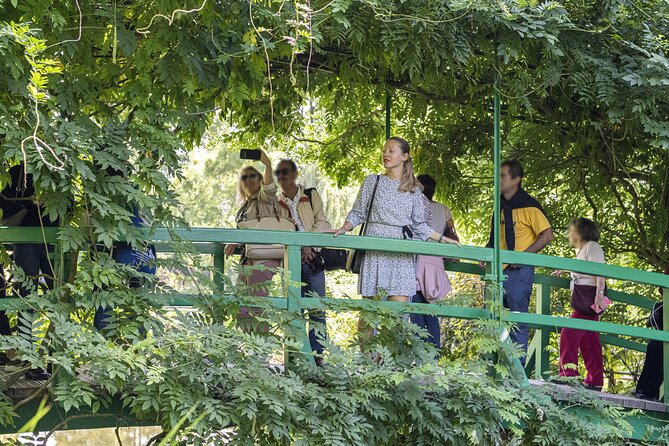
Clos Normand is the opener, and it’s a strong one. You’ll walk through Monet’s inspiring garden paths, cross areas with flowers tied to the garden’s history, and then move toward the signature water garden scene.
This section is your visual payoff. You’re looking for three big elements:
- The water lily pond
- The Japanese bridge
- Weeping willows around the pond
If Monet’s paintings feel familiar to you, this is where it clicks. It’s not just pretty. It’s also structured: views and sightlines that explain why the pond looks the way it does in his works. Even if you’re not an art scholar, the layout helps you “read” the image.
You’re given about 45 minutes for this first stop. That’s enough time to take in the key sights, but it’s not enough time to slow-walk every single path. If the gardens are your main priority, go in with a plan: prioritize the pond and bridge views first, then enjoy the surrounding flower beds once you’ve locked in the big landmarks.
Crowds are real here, especially in peak season. The trick is to use your timed block wisely. Don’t spend the first 10 minutes deciding where to go. Once you see the pond area, you’ll understand the route fast.
Monet’s house and studio: blue rooms, reading spaces, and Japanese prints
After the gardens, the tour shifts indoors. This is the part that helps you connect the garden landscape to the artist’s working life. You’ll have around two hours at the house and studio area to explore on your own using the audio app.
Inside, you can expect to move through rooms that map to how Monet lived and worked. The house includes features like the blue sitting room, a reading room that connects to a pantry where tea and provisions were kept, plus a dining room tied to the private family life. You’ll also see his studio, where he continued developing ideas that became impressionist masterpieces.
One detail that elevates this stop: Monet’s collection of Japanese prints. They’re not just decoration in this story. They were inspiration for his sense of composition and perspective, and seeing them in the rooms where he lived gives that influence a physical reality.
Is the interior worth it if you’re mostly a gardens person? Yes, because the interior time explains the choices behind what you’ll see outside. You’ll often understand why certain views repeat, and why he worked the way he did.
Do you need a guide inside? The tour is set up for audio and self-exploration, and that works well if you’ve got your phone sorted. If you don’t want to manage the audio app, you can still enjoy the rooms at a quieter pace—but you’ll miss some storytelling.
The audio guide on your phone: the best part, if you set it up right

This is the most important practical piece of the whole tour. You get an audio guide that runs through a downloadable app on your smartphone in 10 languages (Chinese, English, French, German, Italian, Japanese, Korean, Portuguese, Russian, Spanish). What you do not get is a separate headset device.
Here’s what to watch for:
- Wi‑Fi is not available on the coach, and some areas may also have no signal.
- Headphones are not included.
- You’ll want a fully charged phone, because the audio app may run for much of the visit.
A few passengers had real frustration when the audio didn’t connect properly or when battery life ran out. That doesn’t mean the tour is bad. It means you should treat setup like part of the experience.
My advice:
- Download the audio app and any content you can before you leave Paris.
- Bring your own wired earbuds or headphones.
- If you can, carry a small power bank.
If your tech behaves, the audio layer is what turns a checklist visit into a story-driven walk. You’ll understand why the garden plantings look the way they do and how Monet used the pond’s atmosphere as a subject.
If your tech struggles, the gardens and house still deliver. You’ll just see them more like a museum visit and less like a guided narrative.
You can also read our reviews of more tours and experiences in Paris






Crowds, queues, and “don’t get stuck” timing

Giverny is famous for a reason. That fame brings crowds, especially during high season and in the morning. Some people reported long lines for entry into the house area, including a wait around 30 minutes.
This is where your mindset matters. You should assume queues exist. Plan your self-guided time so you’re not stuck waiting at the wrong moment.
A practical strategy:
- If you want both gardens and house, prioritize getting to the house entrance early within your time window.
- Don’t leave your most important stop for the last 10 minutes. It’s amazing how quickly timing collapses when lines show up.
Also remember: you’re on a fixed bus schedule back to Paris. Even if you love it there, you still have to return on time.
The bus return to Paris: why the exit details matter more than you think
The return drive is straightforward. You’ll head back through the countryside and get dropped near the starting point in Paris.
But the last stretch on site can be stressful if exit paths and bus pickup areas aren’t easy to spot. Some feedback mentioned unclear signage about where to go to reach the bus and confusion about how far the bus might be parked from the exit.
That means your best move is simple: when you arrive, take 30 seconds to find the general direction of where you’ll exit later. Then when it’s time to leave, follow the staff cues and move early.
For seniors or anyone with mobility limits, the walking from entry areas to the bus can be a factor. The tour says a moderate physical fitness level is recommended, so be honest about what “walking in crowds for 5 hours” means for you.
Value check: what you’re paying for at $102.30

At $102.30 per person, you’re not just buying a bus ticket. You’re covering several core elements:
- Round-trip transportation from Paris
- Tickets included for the house and garden areas
- Audio guidance in multiple languages
- A multilingual host and a small-group cap (max 40)
If you tried to do this independently, you’d pay for transit time and tickets anyway, and you’d still face the same queues and time pressures. So the “value” question comes down to whether you’ll benefit from the audio app and whether your phone is ready.
If you’re expecting a physical headset or a full live guide walking you through every room, you may feel under-delivered. The concept here is self-guided with an audio layer, plus support from the host.
If you’re okay with that style, it’s a good value for a half day. You get a lot of Monet for the time, and you don’t have to manage complicated transportation.
Who this tour is best for (and who should consider another option)
This tour is a strong match if you:
- Love Monet’s gardens and want the pond, bridge, and weeping willow views up close
- Prefer self-guided wandering but still want context in multiple languages
- Want a low-planning trip from Paris with tickets handled
- Are traveling in a group size that won’t feel like you’re packed into a school assembly
It may be a weaker match if you:
- Don’t want to use your smartphone for audio
- Have low phone battery capacity or don’t like managing apps
- Need long, uninterrupted time in one area and get stressed by fixed schedules
- Have mobility concerns and want the least walking possible through queues and exits
One more personality note. If you want maximum interaction and live explanations, you might feel the audio model is not enough. For many people, that’s fine. For others, it’s the difference between memorable and just okay.
Should you book this Monet & Giverny half-day tour?
I’d book it if your goal is to see Monet’s house and the water lily pond with the Japanese bridge without spending your day planning transport. The included tickets plus round-trip bus remove the biggest friction for a half-day trip.
I’d hold off or choose a different format if you know you’ll struggle with phone audio. Download ahead, bring headphones, and keep your battery healthy, because that’s what makes the experience feel fully “guided.”
If you’re a Monet fan, this half-day hits the key notes fast. Just respect the crowd reality, manage your time inside the house window, and treat the audio app setup as part of your preparation. That’s when this tour feels like a clean win rather than a rushed checklist.
FAQ
How long is the tour?
The tour runs about 5 hours (approx.), including the drive time between Paris and Giverny and your time at the property.
What’s included in the price?
Round-trip transportation from Paris, admission/tickets for the Monet sites, and an audio-guided visit in 10 languages via a downloadable app, plus a multilingual host.
Is the audio guide provided, or do I need to bring something?
You’ll use your smartphone with the downloadable app. Headphones are not included, so bring your own if you want audio.
Do I get Wi‑Fi on the bus?
No. Wi‑Fi is not available on the coach, so plan for offline use.
How much time do I get at the gardens and house?
You get about 45 minutes for the Clos Normand gardens and about two hours for Monet’s house, studio, and gardens.
Is this a guided tour with a person inside?
The format is primarily self-guided with audio. There is a multilingual host, but the on-site experience is not described as a full live guided walkthrough inside.
What should I do about phone battery for the audio app?
Make sure your phone is fully charged before you start. Since there’s no Wi‑Fi on the coach, it’s smart to have the app ready before boarding.
Where do I meet in Paris?
The meeting point is 45 Av. de la Bourdonnais, 75007 Paris. The tour ends back at the same place.
Will the schedule change if there’s traffic?
Traffic can affect arrival time. In at least some cases, the operator has extended the tour time and added a short village component when delays happened.
Is there free cancellation?
Yes. You can cancel up to 24 hours in advance for a full refund.