REVIEW · PARIS
Fontainebleau Castle & Barbizon Half-Day Trip from Paris
Book on Viator →Operated by France Tourisme · Bookable on Viator
Paris to two art worlds, fast.
This is a tight, well-paced half-day that I really like for the small-group size and the chance to see Fontainebleau with a guide instead of wandering alone. You get a guided focus on royal and imperial France inside the château, then a short stop in Barbizon tied to Impressionism. The main drawback to plan for: the Barbizon part is brief, so you’ll want to keep expectations realistic about how much guided walking you’ll get.
In about three hours, the tour tries to balance big-name history with “on-the-ground” village atmosphere. You’ll still get meaningful time inside Fontainebleau—plus an audioguide—and that helps if you like details. Just remember: you’re not doing an all-day château marathon here.
In This Review
- Key Things You’ll Notice on This Trip
- Why Fontainebleau and Barbizon Works in a Half-Day
- Starting at 8am: Smooth Paris Pickup With a Real-World Plan
- Entering Château de Fontainebleau: Royal Rooms Without the 6-Hour Grind
- The gardens and atmosphere
- One consideration: two hours is a selection
- The Napoleon III Apartments and the Small Theater Detail
- Using the Included Audioguide (So You Actually Hear the Story)
- The Barbizon Stop: Corot, Millet, and a Quick Workshop Visit
- The tradeoff: it may feel less guided than you hope
- Guide Style and the Small-Group Advantage (Philippe’s Role)
- Price and Value: What You’re Paying For at $114.98
- Who Should Book This Trip (and Who Might Prefer More Time)
- Should You Book This Tour?
- FAQ
- How long is the trip?
- What is included in the price?
- How many people are in the group?
- Where does the tour start?
- Do I need a paper ticket?
- Is Barbizon part of the itinerary?
- What’s the cancellation policy?
Key Things You’ll Notice on This Trip
- Max 8 travelers keeps the pace human and the guide able to answer questions.
- Entrance fees + audioguide included so you spend less time figuring out logistics.
- Fontainebleau spans centuries (from François I to Napoleon III) in a compact visit.
- Napoleon’s 1814 moment is part of the story, including the Throne Room’s original state.
- Barbizon is a short stop, centered on Corot, Millet, and a quick look at Millet’s workshop.
Why Fontainebleau and Barbizon Works in a Half-Day
Fontainebleau and Barbizon are linked by the idea of seeing France through art and power. The château represents the political stage—kings, emperors, and court culture in one complicated building. Barbizon is the artistic counterpoint: an early-19th-century village that helped shape the look and language of Impressionism.
What I like about doing both in one morning is simple: you don’t lose your day driving around, and you don’t end up with the opposite problem of a day trip that feels like only “travel time.” This plan gives you two different kinds of payoff—architecture inside and creative inspiration outside—without pretending you can do everything at once.
The timing also helps if you’re in Paris for just a few days. You get a real change of scenery, but you’re still back early enough to keep your afternoon flexible.
You can also read our reviews of more tours and experiences in Paris
Starting at 8am: Smooth Paris Pickup With a Real-World Plan
This tour starts at 8:00am at 6 Rue de l’Amiral de Coligny, 75001 Paris. It runs as a limited group (max 8), and the company uses a professional guide for the day’s story. You’ll also have a mobile ticket, which is one less thing to manage in a city where you don’t want to waste time.
The morning format matters. Leaving early tends to make the château visit feel less rushed and gives you a better rhythm once you’re inside. I also like that the tour ends back at the meeting point, because it keeps your logistics straightforward—no guessing how you’ll get home after a long day of walking.
If you hate standing around, this kind of half-day schedule is a good fit. The tour is designed to move from “getting there” to “seeing” quickly.
Entering Château de Fontainebleau: Royal Rooms Without the 6-Hour Grind

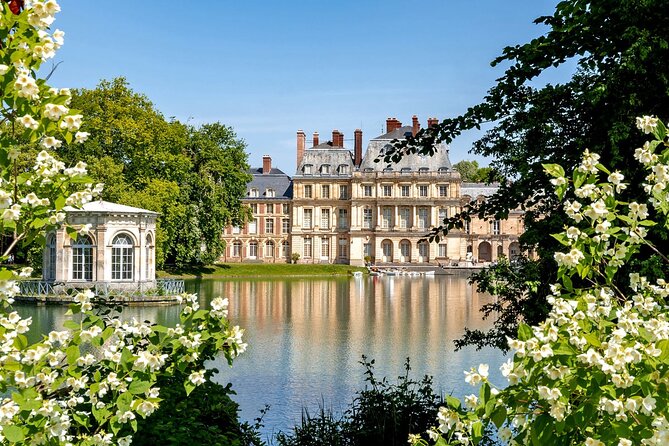
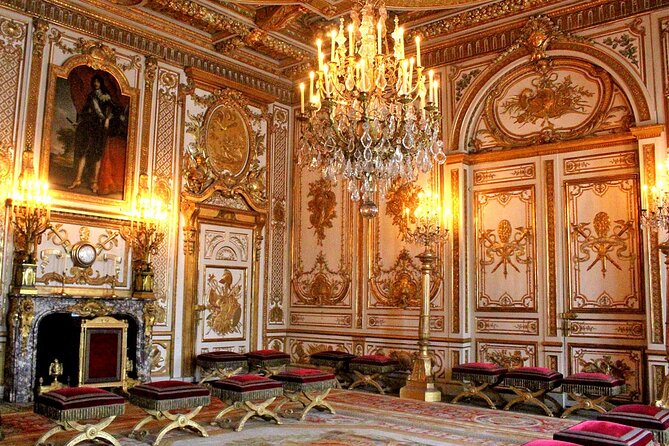
You spend about two hours at the Château de Fontainebleau, and that time is the heart of the experience. Fontainebleau is a UNESCO World Heritage site (since 1981), but the point for you isn’t just a label—it’s that the château has layers. It has been inhabited by French kings from François I to Napoleon III, which means you’re not looking at one single artistic era. You’re seeing how tastes, politics, and power shifted over centuries.
Two specific highlights the guide story tends to emphasize are:
- The way Fontainebleau reflects a mix of Italian and French art in both architecture and interior decoration.
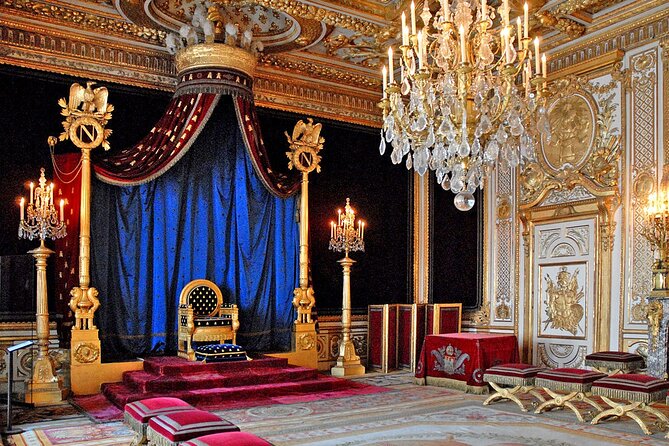
- The Napoleon threads, including the fact that it was at Fontainebleau that Napoleon abdicated for the first time in 1814, plus the Throne Room, one of the few spaces that kept its original state from that period.
I also like the practical value of visiting at a guided pace. Inside a palace this size, it’s easy to get lost or focus only on the biggest rooms. With a guide, the stops feel connected: you’re not just collecting rooms, you’re building a timeline.
The gardens and atmosphere
Even though your time is limited, the château’s surrounding gardens are part of the atmosphere. Fontainebleau isn’t only “rooms and portraits.” It’s a palace surrounded by space, and that changes how the experience feels compared with a palace that’s boxed in by city streets.
One consideration: two hours is a selection
Fontainebleau is big. Two hours means you’re going to see key parts, not everything. If you’re the kind of visitor who wants to linger in every corner, you’ll probably wish you had more time. The tradeoff is that you get a guided, high-signal visit instead of a long, exhausting one.
You can also read our reviews of more tours and experiences in Paris




The Napoleon III Apartments and the Small Theater Detail
One reason Fontainebleau is so often recommended is that it’s not all medieval stone and royal formality. It’s also known for the Napoleon III apartments, and those spaces can help you understand how the château kept adapting to new eras of French taste.
Another detail worth knowing: there’s a small theater recently restored. Even if you don’t consider yourself a theater person, this kind of room is a good reminder that these palaces weren’t just homes—they were places where performance, ceremony, and culture happened.
So in your two-hour visit, don’t treat the château like a museum checklist. Treat it like a living story where different rulers left different “chapters,” sometimes in the same building.
Using the Included Audioguide (So You Actually Hear the Story)
You get an audioguide included, which I think is a smart balance with a live guide. Live commentary is great for big themes and quick context. The audioguide helps you slow down just enough to catch the details you’d otherwise miss.
Here’s how to make it work without feeling glued to it:
- Use the audioguide when you’re in rooms where the guide’s explanation is mostly high-level.
- Turn it on in the spaces you’re most curious about—especially around the Napoleon-era moments.
- Keep it simple: if the live guide is talking, listen. If you’re moving through a room after the guide points things out, let the audioguide fill in the names and background.
That combination is often what turns a short visit from forgettable to memorable: you’re hearing both the big picture and the room-by-room clues.
The Barbizon Stop: Corot, Millet, and a Quick Workshop Visit
After Fontainebleau, the tour heads back toward Paris and stops in Barbizon. This part is about one hour, and it’s designed more as a taste than a deep immersion.
Barbizon matters because it became a magnet for painters and ideas in the early 19th century. The story tied to this village includes names like Corot and Millet, and you’ll also get a look at the Millet workshop—specifically a school workshop connected to his legacy.
What you can expect in practice:
- A short stop through the village atmosphere tied to Impressionism.
- Enough time to connect the art names to a place, not just Wikipedia facts.
- A quick focus on Millet’s workshop rather than a long museum-style experience.
The tradeoff: it may feel less guided than you hope
One practical heads-up: some visitors expected the Barbizon segment to feel more like a guided visit. If you’re hoping for a long, structured walk with commentary at every stop, you might feel the Barbizon portion is light. This is still worthwhile if you view it as a short, atmospheric pause with a targeted art reference—but don’t assume it replaces a full Barbizon-focused tour.
Guide Style and the Small-Group Advantage (Philippe’s Role)
The quality of the day often comes down to the guide. In these reviews, a guide named Philippe gets strong praise. People liked his historic and artistic perspective, and they found his approach made the route and information feel easy to digest.
That “easy to digest” part matters more than it sounds. Half-day tours can turn into a blur—especially if the group is large or the commentary is too dense. With this kind of small-group format, you’re more likely to get a calm pace and clear explanations, and that makes the château time feel more organized.
The best version of this tour is when the guide connects the dots: why certain rooms matter, how Napoleon’s timeline fits into the bigger château story, and what it means that painters like Corot and Millet were inspired by a village like Barbizon.
Price and Value: What You’re Paying For at $114.98
At $114.98 per person, this doesn’t position itself as the cheapest way to do Fontainebleau. But value here isn’t only about the destination—it’s about what’s bundled.
You’re getting:
- Transportation from Paris with a professional guide.
- Entrance fees included for the château.
- An audioguide included.
- A limited group (max 8), which often reduces the “herding cats” feeling.
If you tried to piece together transport, tickets, and audio for a tight schedule, you might end up spending similar money anyway—plus more time coordinating. The big reason I’d call this a good value is the time economy. You get a focused, guided highlights visit that fits into a half-day, with the added Barbizon stop to round out the art side.
In short: you pay for convenience and interpretation. If you love structure and storytelling, it’s a strong fit. If you prefer total freedom to wander slowly, you may feel the price is paying for a schedule you can’t fully control.
Who Should Book This Trip (and Who Might Prefer More Time)
This is a great fit if:
- You want Fontainebleau with guidance rather than self-guided guesswork.
- You like art and history but don’t want to spend an entire day.
- You’re comfortable with a short village stop and want something tied to Impressionism.
It might not be ideal if:
- You want a deep, slow, fully guided Barbizon experience. The Barbizon piece is short.
- You’re the type who needs hours in every room. Fontainebleau is too big for that here.
If you’re traveling with limited time—or you just want one standout “outside Paris” day that still leaves you time to enjoy the rest of your trip—this schedule makes sense.
Should You Book This Tour?
I’d book it if your goal is a well-structured half-day that gives you the core of Château de Fontainebleau plus a short, meaningful look at Barbizon—without turning your day into logistics.
The decision comes down to your tolerance for time limits:
- If you’re happy with a highlights-style visit, the guided approach and included audioguide are a strong combination.
- If you want lots of Barbizon time or a more extensive village walkthrough, consider a longer Barbizon-focused option instead.
FAQ
How long is the trip?
The tour runs for about 3 hours total, with around 2 hours at the Château de Fontainebleau and about 1 hour in Barbizon.
What is included in the price?
Entrance fees and an audioguide are included, along with transportation with a professional guide. Barbizon’s stop includes an admission ticket as well (Millet workshop related).
How many people are in the group?
The tour is limited to a maximum of 8 travelers.
Where does the tour start?
It starts at 6 Rue de l’Amiral de Coligny, 75001 Paris, France.
Do I need a paper ticket?
No. You’ll use a mobile ticket.
Is Barbizon part of the itinerary?
Yes. You’ll visit Barbizon on the way back toward Paris for a short stop, including a look at the Millet workshop school.
What’s the cancellation policy?
You can cancel for a full refund up to 24 hours before the experience’s start time. The tour also requires good weather; if it’s canceled due to poor weather, you’ll be offered another date or a full refund.