REVIEW · PARIS
Discover the Latin quarter
Book on Viator →Operated by Le Vrai Paris · Bookable on Viator
Paris sounds more human on foot. This private Latin Quarter walk is a fast way to see a historic slice of Paris while your guide explains what you’re actually looking at. You’ll move from fountain to universities to Roman ruins, all on foot.
I really like the personalized feel. With Guillaume leading the route, the stories come with side anecdotes, humor, and context at a pace that doesn’t feel like a lecture. I also love that you’re not stuck in a single famous landmark bubble—this route helps you notice details you’d usually walk past without a hint.
The main consideration: this is a walking tour and it needs good weather. When rain gets heavy, the guide can adjust with more time indoors, but you should still plan for outdoors on most of the stops.
In This Review
- Key things I’d plan for
- Why this private Latin Quarter walk feels more like Paris
- Where you start and where you end (and why it helps your day)
- Stop 1: Quartier Latin streets, where the neighborhood becomes the attraction
- Stop 2: Fontaine Saint-Michel, your quick orientation in 10 minutes
- Stop 3: La Sorbonne, universities explained without the textbook vibe
- Stop 4: Collège de France, a research institute moment (15 minutes)
- Passing an impressive mausoleum: a pause that adds depth
- Stop 5: Arènes de Lutèce, Roman history as the final scene (15 minutes)
- Guillaume’s guide style is a big part of the value
- Timing and pace: a 2 to 3 hour neighborhood sampler
- Price and value: $321.68 per person for a guided private route
- Who should book this tour?
- Should you book Le Vrai Paris’s Latin Quarter experience?
- FAQ
- How long is the Latin Quarter walking tour?
- Is this tour private, and is it offered in English?
- What stops will we see during the walk?
- Where do we meet and where does the tour end?
- What’s included in the price?
- What isn’t included (so I can plan meals and drinks)?
- What happens if the weather is bad?
Key things I’d plan for

- Private, English-only group: just your party, not mixed with strangers.
- Story-first route through the Quartier Latin, Sorbonne area, and Roman Paris at Arènes de Lutèce.
- Guidance is the value: admission is listed as free at the listed stops, so you’re paying for the commentary.
- Rain flexibility: at least one guide strategy is shifting time indoors when weather turns.
- Finish in a different neighborhood zone: you end at the Roman arenas, not where you started.
Why this private Latin Quarter walk feels more like Paris
The Latin Quarter is one of those Paris areas that’s hard to understand from guidebooks alone. Buildings and street names matter here because the neighborhood is layered—universities, research institutions, and even Roman remnants all coexist within walkable distance. On a private tour like this, you’re not just checking boxes. You’re learning how the place makes sense.
I’d put the biggest strength in two buckets. First, the tour is designed around walking, so you get the neighborhood’s rhythm rather than a series of separate sightseeing drops. Second, you’re led by a real storyteller—Guillaume shows up as friendly, engaging, and tuned to what you want to hear. That matters because the Latin Quarter can feel overwhelming if all you get are facts shouted at you.
One more practical point: the tour is in English, and it’s built for question-and-answer pacing. If something catches your eye—an architectural detail, a street corner name, a university connection—you’re in a setting where you can ask instead of waiting for a group to catch up.
You can also read our reviews of more tours and experiences in Paris.



Where you start and where you end (and why it helps your day)
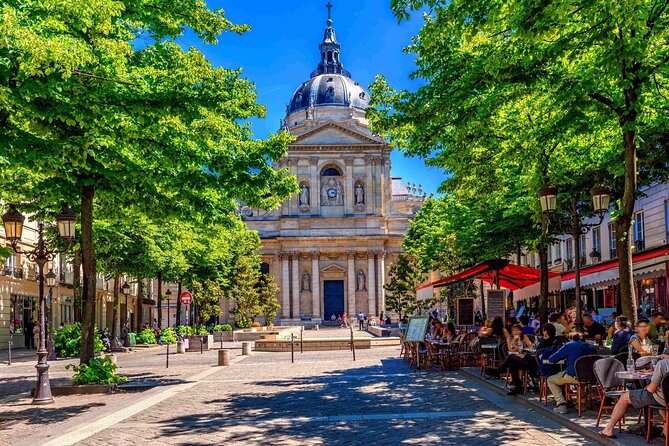
You meet at Square Samuel Paty, 2 Pl. Paul Painlevé (75005 Paris). That location puts you right where you can start moving through the Latin Quarter without spending time crossing the city.
You end at Arènes de Lutèce, 49 Rue Monge (75005 Paris). That’s a smart way to close, because it lands you in the Roman-history pocket of the neighborhood. If your plan includes a later meal or museum time nearby, you’re already in position.
Also, the experience is marked as near public transportation, which helps if you’re pairing it with other parts of the city. And because it’s a private format, you’re less likely to waste time regrouping.
Stop 1: Quartier Latin streets, where the neighborhood becomes the attraction

The heart of the tour is Quartier Latin—about two hours spent walking around the area. This is one of Paris’s oldest neighborhoods, so the payoff isn’t one single photo spot. It’s the way the guide connects what you see right now to what was happening here over time.
Why it’s valuable: the Latin Quarter works best as a “read” you can follow while you’re standing in the street. When your guide points out how the area’s educational identity grew, or why certain buildings matter, the neighborhood starts to feel like a story instead of scenery.
A possible drawback: because the schedule is walking-heavy, you won’t get the same “stand inside and explore at your own pace” feeling as you would on a ticketed museum visit. This is set up for commentary on the street and short stop moments. If you’re hoping for lots of long interiors, you might want to complement this with another stop elsewhere.
Stop 2: Fontaine Saint-Michel, your quick orientation in 10 minutes
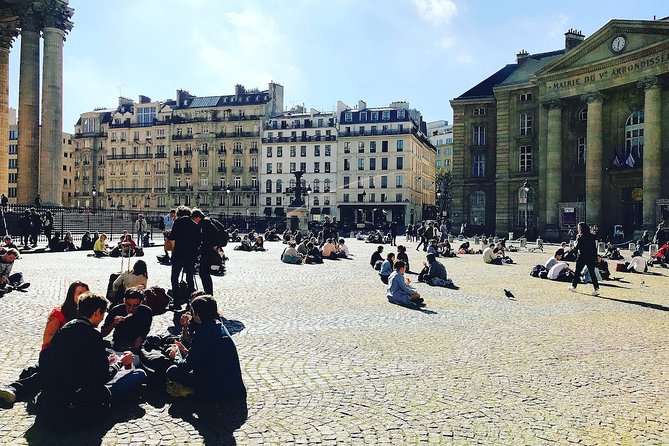
You start in front of Fontaine Saint-Michel, where the tour begins. The time is short—around 10 minutes—but orientation stops like this are underrated. You’re getting your bearings and a first thread of local history before you move deeper into the neighborhood.
This fountain is also a natural “anchor” point. It gives you a mental landmark, so later streets and buildings feel connected rather than random.
If it’s raining: you’ll be glad this isn’t a long stop. You’ll keep moving while the guide adjusts the pace and where you pause.
Stop 3: La Sorbonne, universities explained without the textbook vibe

Next up is La Sorbonne for about 30 minutes. The focus here is the universities of the area. This is where the Latin Quarter identity really clicks, because the neighborhood isn’t just old—it’s academic.
What makes this stop work on a walking tour is the way context is layered. Instead of treating Sorbonne as a single building, your guide connects it to the broader university landscape. That’s the difference between seeing a facade and understanding why the area has the reputation it does.
A consideration: the time is limited. You’ll get meaningful context, but it’s not a full campus tour. Think of it as a strong starter chapter before you head to the neighboring research powerhouse.



Stop 4: Collège de France, a research institute moment (15 minutes)
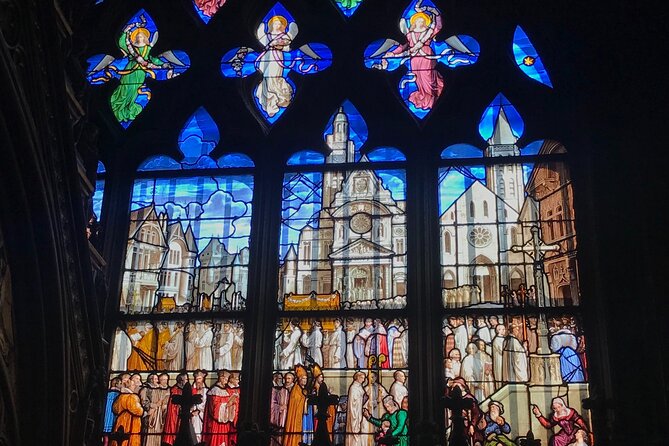
Then you’ll see Collège de France, about 15 minutes. The tour frames it as an important research institute—another piece of why the Latin Quarter has always felt like a place where ideas matter.
This stop is short, and that’s not a bad thing. A quick hit lets you keep momentum through the neighborhood while the guide adds another layer to the academic story.
The trade-off is the same as with many city walking routes: you’re learning in motion. If you’re the type who wants to linger, you may find yourself wanting extra time here after the explanation ends.
Passing an impressive mausoleum: a pause that adds depth
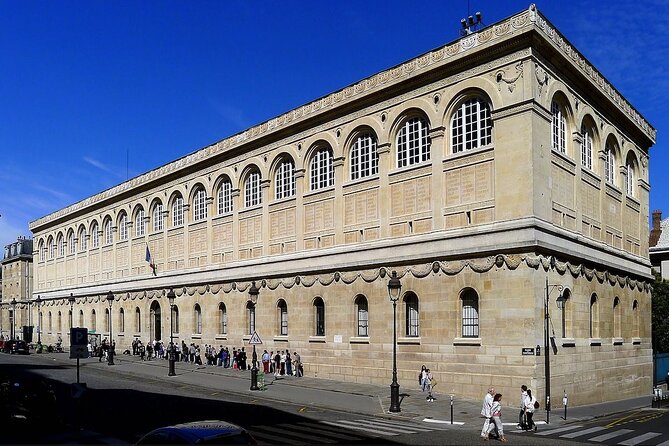
There’s also a segment where you’ll pass through an impressive mausoleum. No additional named site is provided in the tour outline, but the point is clear: the Latin Quarter isn’t only about classrooms and scholarship. It also holds quieter historical layers.
Why it’s worth including: when a walking tour adds one unexpected somber stop, it makes the whole neighborhood feel more human. It reminds you that these streets have held more than one kind of story.
Because it’s described as something you pass through, you likely won’t have long “sit-and-stare” time here. But it can still be a memorable moment if your guide links it to the neighborhood’s broader timeline.
Stop 5: Arènes de Lutèce, Roman history as the final scene (15 minutes)
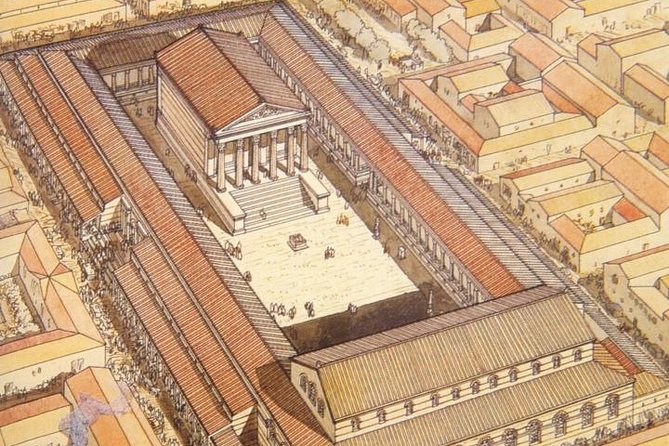
The tour ends at Arènes de Lutèce and includes time—around 15 minutes—talking about Roman history. This is the kind of finish that changes how you look at Paris the rest of the day. You’re standing where the Roman layer shows up in the modern city, and your guide helps you connect the dots.
Why it’s a smart finale: the tour has been building a “Paris layers” theme—old neighborhood, university institutions, and then the Roman past. Ending on Roman arenas makes the whole route feel like a sweep of time rather than separate sightseeing moments.
If you’re hungry or ready to rest after: you’ve got a clear endpoint and a specific location to plan around.
Guillaume’s guide style is a big part of the value
The guide service is included, and the experience is rated 4.8 overall from six reviews. The common thread in the feedback is the way Guillaume brings the area to life—friendly, engaging, and able to balance historical context with humor and anecdotes without turning it into an overload.
One review highlights how the guide was flexible with weather, adjusting the time to include indoor options such as a church or bar when rain got heavier. That’s not a guarantee in every situation, but it tells you how the tour tends to respond when conditions change.
This is also a good sign if you don’t want a rigid script. A private walking tour works best when the guide can steer based on your interest level—and the reviews point to that kind of attentiveness.
Timing and pace: a 2 to 3 hour neighborhood sampler
This experience runs about 2 to 3 hours. The schedule gives a sense of how the time is distributed: most of the walking effort is in Quartier Latin, with shorter stops at Fontaine Saint-Michel, La Sorbonne, Collège de France, and then the Roman arenas.
What that means for you:
- You’ll see more than the usual “two big photo stops” approach.
- You’ll leave with a mental map of how the Latin Quarter is structured and why it matters.
- You won’t spend the whole day stuck in one place.
What to plan around: because you’re moving on foot, wear comfortable shoes. And bring something for weather variability if you’re traveling in shoulder seasons—this tour clearly expects decent conditions.
Price and value: $321.68 per person for a guided private route
At $321.68 per person, this isn’t a budget walking tour. But it is a private experience, and the listed value is practical: you’re paying for a guide service that organizes your walk, points out details, and adds stories that make the neighborhood feel readable.
A helpful way to think about value here is admissions and time. The tour outline lists admission as free at the stops, so you’re not funding ticket costs. You’re funding interpretation: the guide connecting street-level sights to the area’s university and Roman layers.
If you’re traveling with a small group or going solo and you want something more focused than a group bus tour, the private format can feel fair—because you get pacing, questions, and flexibility that larger tours often can’t offer.
Who should book this tour?
This tour is a strong fit if you:
- Want a neighborhood tour instead of a checklist of major sights
- Like history, but prefer it explained through what you see on the street
- Plan to spend time around 5th arrondissement sights and want a tight route
- Care about having a guide who adjusts to your energy and the weather
Because the tour is marked as most travelers can participate and near public transportation, it’s also practical for a wide range of visitors. Service animals are allowed, and the tour provides a mobile ticket, which can simplify day-of logistics.
If you’re chasing only the biggest iconic landmarks, you might feel less satisfied because the appeal is in the Latin Quarter’s context and side details. But if you want to understand the place, that’s the point.
Should you book Le Vrai Paris’s Latin Quarter experience?
I’d book it if you want to walk with a guide who makes the Latin Quarter feel connected—university identity, research institutions, and Roman history—without turning it into a museum day. The route is thoughtfully structured, and the reviews consistently emphasize Guillaume’s friendly, engaging approach and the way he explains what most people would miss.
Skip it (or pair it) if you’re only interested in major landmarks with lots of interior time. This is mainly a street-level, story-led experience.
If you do book: plan for walking and aim for a day with good weather. If the sky doesn’t cooperate, the tour model shows it can adapt with indoor time.
FAQ
How long is the Latin Quarter walking tour?
The tour lasts about 2 to 3 hours.
Is this tour private, and is it offered in English?
Yes. It’s a private tour/activity, and it’s offered in English for your group only.
What stops will we see during the walk?
You’ll spend time in the Quartier Latin area, visit Fontaine Saint-Michel, see La Sorbonne, visit Collège de France, pass through an impressive mausoleum, and end at Arènes de Lutèce.
Where do we meet and where does the tour end?
You start at Square Samuel Paty, 2 Pl. Paul Painlevé, 75005 Paris. You end at Arènes de Lutèce, 49 Rue Monge, 75005 Paris.
What’s included in the price?
The included item is the guide service. Admission tickets at the listed stops are free.
What isn’t included (so I can plan meals and drinks)?
Lunch, coffee and/or tea, and bottled water aren’t included.
What happens if the weather is bad?
The experience requires good weather. If it’s canceled due to poor weather, you’ll be offered a different date or a full refund.