REVIEW · PARIS
Exclusive Walking Tour of Central Paris With Local Guide
Book on Viator →Operated by PromeneParis · Bookable on Viator
Two hours, and Paris starts making sense. This small-group private walk threads together the Latin Quarter and the Louvre area with clear, human-scale storytelling. I like that it hits both the big-name sights and the side details that explain why Paris looks the way it does.
I also like the stop-by-stop format: you get context right when you’re standing in front of the buildings, bridges, and courtyards. The one drawback is that this is a quick orientation rather than a long museum day, and you’ll not enter the Louvre as part of the tour.
In This Review
- Key highlights on the Saint-Michel to Louvre route
- Why This Latin Quarter to Louvre Walk Works
- Fontaine Saint-Michel: Your Start Point for Understanding Paris
- Notre-Dame de Paris: Origins, Power, and the People Behind the Stone
- Sainte-Chapelle’s Crown of Thorns and Its Survival Story
- Palais-Royal: Marie Antoinette, a Former Jail, and the 650-Year Clock
- Pont Neuf: The Bridge with Personality
- Pont des Arts to the Louvre Area: Love Locks and Cour Carree Quiet
- Carrousel du Louvre: How Gardens and Even the Eiffel Tower Get Connected
- Price and What $240.32 per Person Really Buys
- What It Feels Like on Foot: Pace, Group Size, and Shoes
- Who Should Book This Tour (and Who Should Skip It)
- Should You Book It?
- FAQ
- How long is the walking tour?
- Where does the tour start and where does it end?
- What language is the tour offered in?
- Does the tour include entry into the Louvre Museum?
- How big is the group?
- What should I wear or bring?
- What is the cancellation policy?
Key highlights on the Saint-Michel to Louvre route

- Private guide for up to 15 people, so questions don’t get lost in the crowd
- English-language tour that keeps history understandable for first-timers and families
- Notre-Dame and Sainte-Chapelle explained in plain terms, including Sainte-Chapelle’s Crown of Thorns story
- Palais-Royal clock with centuries of timekeeping, plus Marie Antoinette’s prison connection
- Pont Neuf and Pont des Arts stopovers for bridge architecture and love-lock lore
- Cour Carée and Carrousel du Louvre without the heavy museum workload
Why This Latin Quarter to Louvre Walk Works
Paris can feel like a pile of famous stops unless someone connects the dots. This tour does the connecting in a smart way: you start at Fontaine Saint-Michel, then you move along the river-world toward the Louvre area, building a timeline as you go.
The big win for me is pacing. At roughly 2 hours, you’re not stuck in one place. You also get a sequence that makes sense on foot: religious Paris, royal Paris, and then the government-and-culture Paris you see around the Louvre and Tuileries.
It’s also a good fit if you’ve been to Paris before. Even if you think you know the main sights, the guide’s job is to point out the side stories you usually miss—like what certain bridges were known for, or why particular buildings mattered when they were built.
You can also read our reviews of more walking tours in Paris



Fontaine Saint-Michel: Your Start Point for Understanding Paris
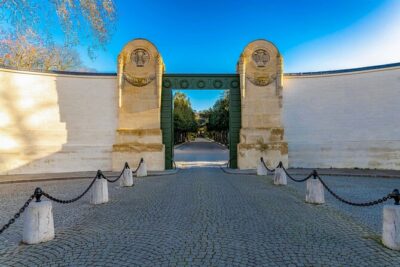
You begin at the Fontaine Saint-Michel in the Latin Quarter area. That fountain might look like just another pretty landmark at first glance, but it’s a solid starting cue for the tour’s theme: why the city developed the way it did.
The guide sets the stage by explaining how Paris took shape over time—so when you reach later stops, you understand what you’re looking at and why it’s in the places it is. It’s the difference between seeing monuments and learning the logic behind them.
This opening also matters practically. Getting your bearings early helps you enjoy the walk more, especially if you’re arriving in Paris for the first time or you want to avoid the feeling of sprinting between highlights.
Notre-Dame de Paris: Origins, Power, and the People Behind the Stone
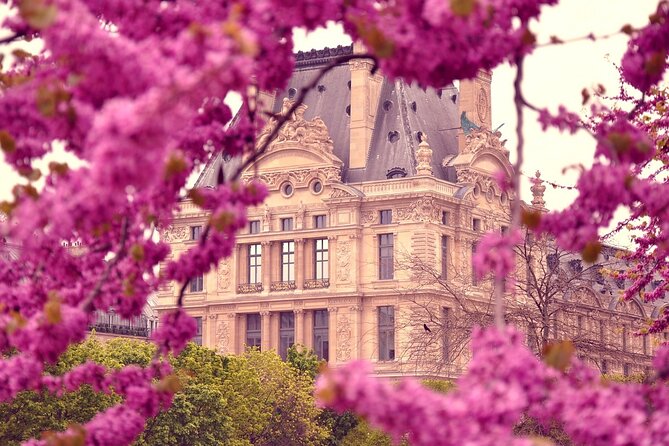
Next comes Cathedrale Notre-Dame de Paris. Here the focus is on the historic origins of the city and the figures linked to the cathedral’s role in Paris’s story.
Instead of treating Notre-Dame like a single photo-op, you’ll get a sense of how major characters shaped what later generations inherited. That makes the cathedral feel less like a fixed monument and more like a product of decisions, politics, and faith.
One practical note: this is a walking tour, so it’s best to expect viewing and explanation, not a long inside-the-cathedral experience. Even if you already know Notre-Dame’s name, the added context is what turns the stop into something you’ll remember later.
Sainte-Chapelle’s Crown of Thorns and Its Survival Story
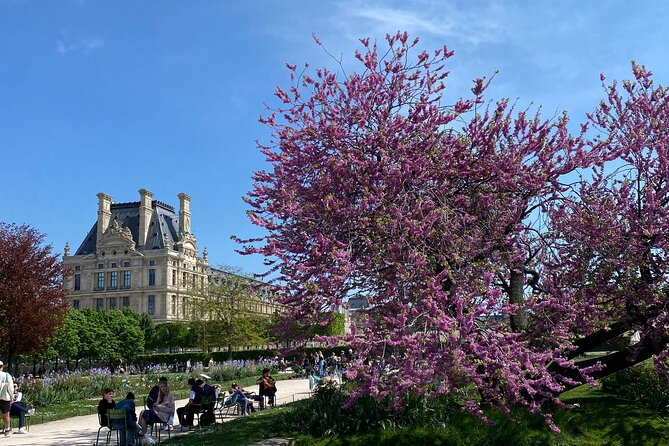
Then you’ll reach Sainte-Chapelle, often described as the little sister of Notre-Dame. The guide ties it to its royal significance and the story associated with the Crown of Thorns, including why its survival is part of what makes it so compelling.
This stop works especially well because it’s short, but not superficial. When a guide links an object and its meaning to the building that housed it, the walls stop being generic and start feeling like a container for real events.
If you’re traveling with kids or teens, this is also a strong moment. Stories tied to royalty and legendary relics are easy to follow, and the contrast with Notre-Dame helps keep attention.
Palais-Royal: Marie Antoinette, a Former Jail, and the 650-Year Clock
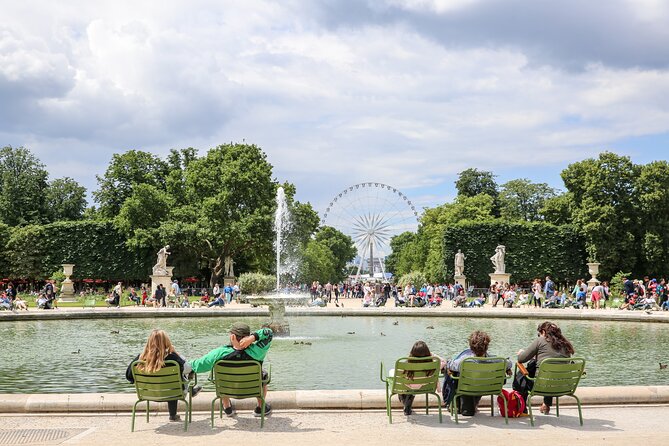
At Palais-Royal, you’re in a space that once served royal purposes and even had a darker chapter linked to Marie Antoinette—specifically as part of the former jail connection mentioned in the tour.
Then there’s the clock. The tour points you toward the gorgeous timepiece that has kept Paris’s time for over 650 years. Even if you’re not a clock person, it’s a fun way to understand how long institutions and design choices can last in the city.
This is also a good “reset” stop. You’re moving between major landmarks, and Palais-Royal gives you a moment to slow down and notice details you might otherwise miss—especially the visual design and the way this area sits within the city’s central flow.
You can also read our reviews of more guided tours in Paris






Pont Neuf: The Bridge with Personality
You’ll meet Pont Neuf, the bridge the tour describes as the most endeared and enduring one in Paris. The guide focuses on charm you can actually see: the arches, and the garden-like area below.
Then comes a story element: you’ll learn about the fate of one criminal on Pont Neuf. Even if you only catch the outline, these little human anecdotes make the bridge feel lived-in, not just built.
This stop is a nice example of why a guided walk beats a solo wander. On your own, you might notice architecture. With a guide, you also get the cultural “why”—how people used the bridge and what it meant to the city.
Pont des Arts to the Louvre Area: Love Locks and Cour Carree Quiet
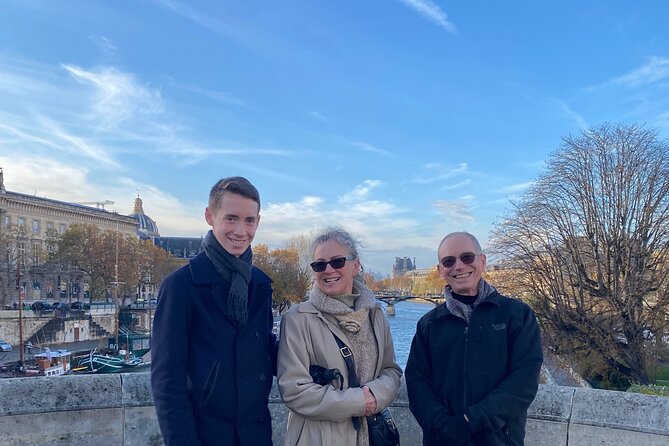
After Pont Neuf, you reach Pont des Arts, famous for the love locks and the way that trend left an impression on the city. The guide uses that moment to connect modern Paris with the tradition of public spaces becoming symbolic.
Then you pivot toward the Louvre area, where the tour brings you into the Cour Carree. The point here is to introduce how the Louvre has existed through different incarnations—so you’re not just walking past a giant museum, you’re learning what it used to be and how it became what you recognize today.
The Louvre stop also includes an attention-grabbing story thread: a theft, a revolution, and lovers. That mix is very Paris—high drama with layers of art and politics—and it helps you understand the Louvre beyond its reputation.
Carrousel du Louvre: How Gardens and Even the Eiffel Tower Get Connected
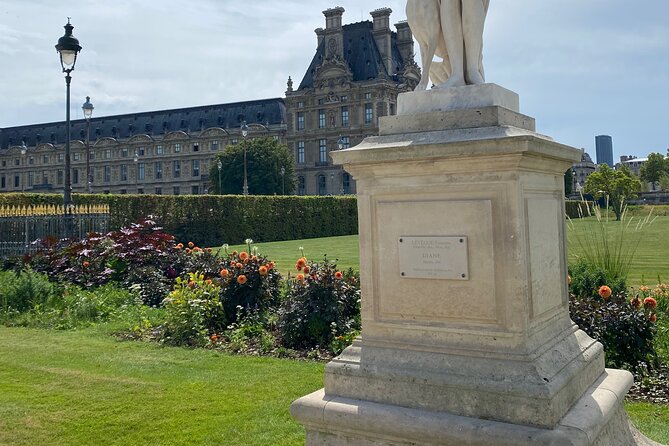
You finish with Carrousel du Louvre and a look at the people who played roles in shaping the gardens of the Tuileries and the connections tied to the Eiffel Tower. The tour ends with a view of the Eiffel Tower and the Tuileries garden, which is a great way to close the loop on what “central Paris” feels like in real life.
This final stretch works because it turns your attention outward. After all the stone, stained-glass stories, and bridges, you get a wider view and a sense of scale—how the city’s major landmarks sit next to green space and public pathways.
And since you’re not required to spend extra hours inside the Louvre, you leave with momentum. You can keep exploring afterward with a clearer idea of where your interests fit—art museum, royal history, river bridges, or modern Paris symbolism.
Price and What $240.32 per Person Really Buys
At $240.32 per person for a tour that’s about 2 hours, the cost isn’t aimed at casual sightseeing. It’s priced for an experienced local guide and a private format (your group up to 15 people).
So the value question comes down to how you like to travel. If you enjoy learning on the move, want context at each stop, and prefer not to build your own route, this price can feel reasonable. You’re paying for someone to handle the story line, timing, and explanations—while you simply walk and absorb.
If your dream day includes deep time inside museums, this tour is not that. Since the plan is not to enter the Louvre, you should treat this as an orientation plus context. You’ll still get the Louvre area story, but you won’t get the hours-long museum experience.
What It Feels Like on Foot: Pace, Group Size, and Shoes
The good news: the terrain is described as fairly flat. That means the walk is generally manageable as long as you wear comfortable shoes and plan for a typical city walking pace.
The group is private, limited to your party (up to 15). That matters more than you’d think. You’re less likely to feel like you’re just being herded. You can ask quick questions, and the guide can steer the conversation toward what you care about—history, architecture, or story-driven details.
It’s also in English, with a mobile ticket. If you like having a simple check-in and moving without fuss, that’s a plus.
One practical consideration: this tour needs good weather. Paris can change its mind quickly, so if the forecast looks iffy, keep a flexible mindset.
Who Should Book This Tour (and Who Should Skip It)
This tour is a great match if you’re:
- A first-timer who wants Paris explained in a logical sequence
- A family traveling with kids or teens who need stories that move fast
- An English-speaking group that wants a private guide rather than a large group bus setup
- Someone who wants the Louvre area story without committing to a museum day
You might want to skip or pair it with something else if you’re:
- Mainly focused on spending hours inside museums (since the Louvre isn’t entered)
- Trying to see everything at a breakneck schedule and don’t want to walk for 2 hours straight
- Sensitive to weather changes, since the experience requires good conditions
Should You Book It?
Yes, if you want a practical, story-led introduction to central Paris. The route makes sense on foot, the pacing is short enough to keep energy up, and the guide-led explanations turn famous stops into meaningful ones.
Also, pay attention to the guide style. One guide name that shows up in past experiences is Ezrah, described as personable and fun, and able to keep even experienced visitors discovering new angles. That kind of approach is exactly what helps a 2-hour walk feel worth your time.
If you’re planning multiple days in Paris, consider this tour early. It helps you understand what you’ll want to see in more depth later.
FAQ
How long is the walking tour?
It runs for about 2 hours.
Where does the tour start and where does it end?
It starts at Fontaine Saint-Michel (Pl. Saint-Michel, 75005 Paris) and ends at 6 Av. du Général Lemonnier, 75001 Paris, with a view toward the Eiffel Tower and the Tuileries garden.
What language is the tour offered in?
The tour is offered in English.
Does the tour include entry into the Louvre Museum?
No. The tour does not include entry into the Louvre Museum.
How big is the group?
It’s a private tour for your group, up to 15 people.
What should I wear or bring?
Wear comfortable shoes. The route is fairly flat, but you will be walking.
What is the cancellation policy?
You can cancel for a full refund up to 24 hours before the experience starts. It requires good weather, and if it’s canceled due to poor weather you’ll be offered a different date or a full refund.